











Raffle for free products
All recipients of our newsletter are entered into raffles for free products. Sign up today and be in the running!

Flexible skeleton w. spinal nerves, 177 cm

This item is part of our Print on Demand solution, which means that the item is manufactured to order and shipped directly to you.
We cover the shipping to the nearest parcel shop via e.g. GLS or Postnord. The parcel number will be provided as soon as your order is ready for shipment.
Pickup currently not available
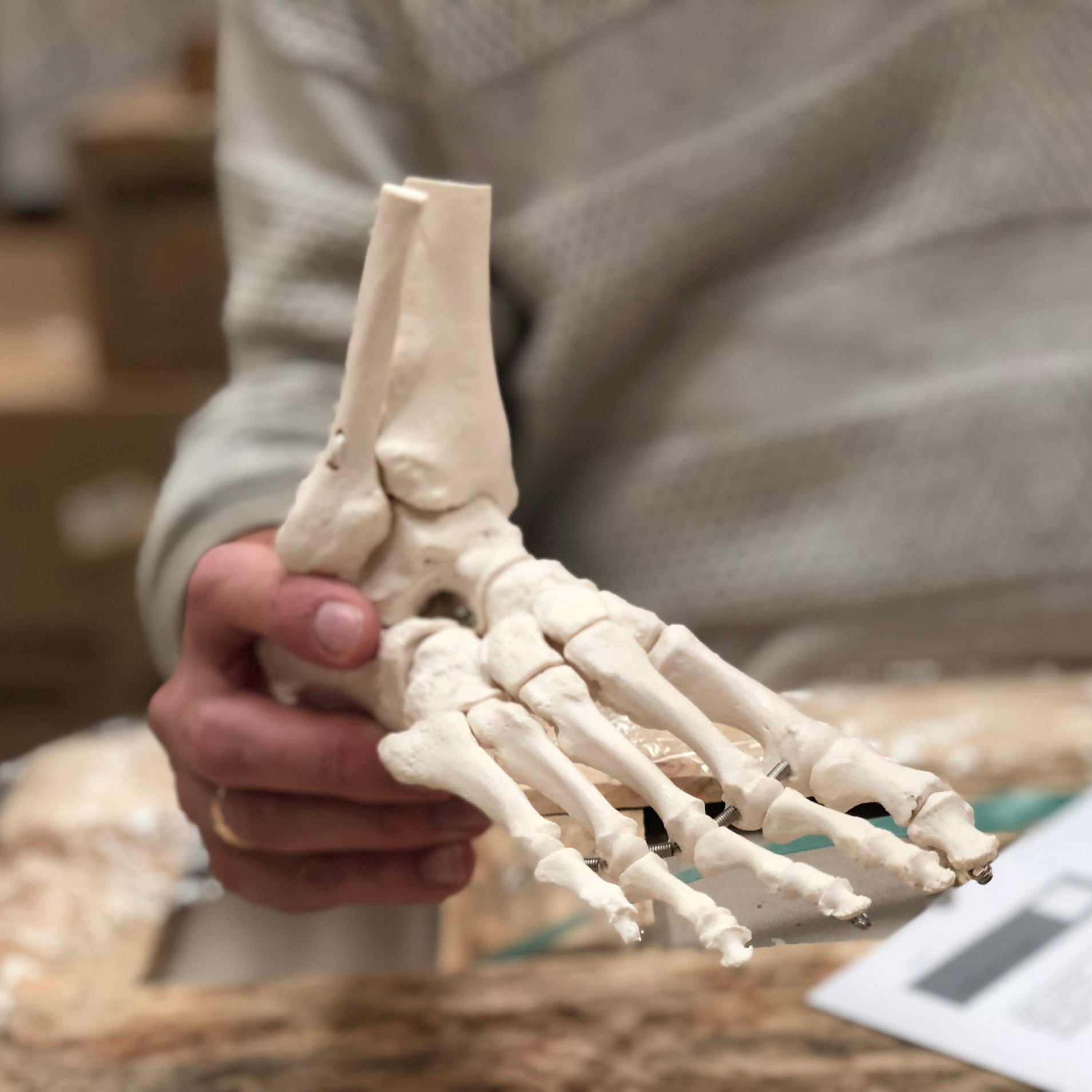
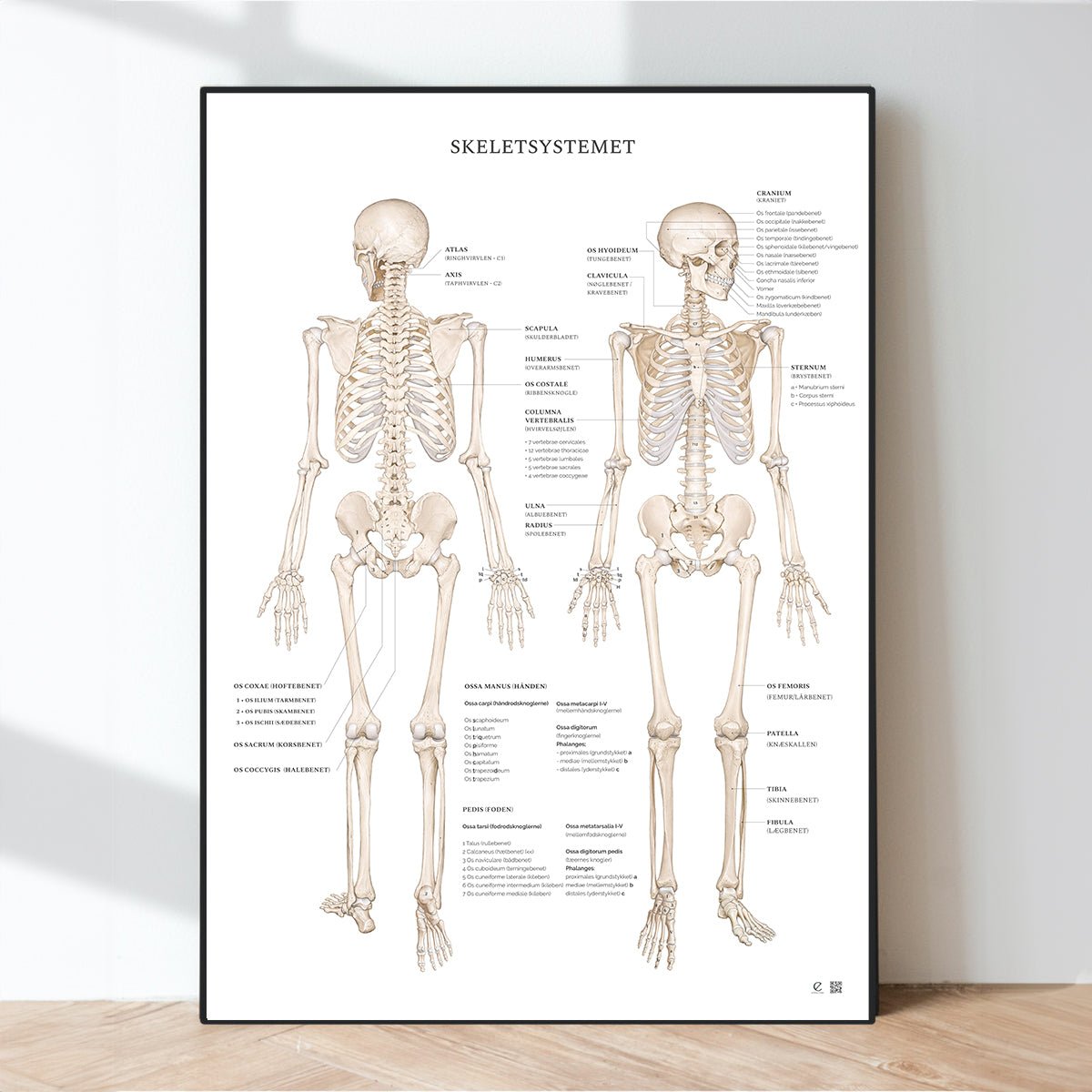
This skeleton model shows the entire skeleton in life size from head to toe, as well as the vertebral artery, the spinal nerves and a lumbar disc herniation. As something special, the skeleton also has a very flexible spine.
Mounted on a stand, the plastic skeleton measures approx. 177 cm in height. The level of detail on the bones is really good, and virtually all joints are held together by metal buckles/metal, which allows limited ability to demonstrate the natural movements of the joints, as well as the ability to completely dismount (for example, one arm). The spine, on the other hand, is extremely flexible, and the movement is described below.
The skeleton rests on a solid stand, which can be easily moved because at the bottom it consists of a 5-branched column base with a corresponding number of wheels.
CUSTOMER SERVICE
If the product is stated as a made-to-order item, it means that the product is of such a size or such a high quality level that the product is only available on order. Delivery time may vary, but the price will always remain the same! Contact us for more information if you wish to order.
If the item is listed as in stock , it is physically located at our address in Frederiksberg and can therefore be shipped or picked up. When ordering, choose what you want.
If you wish to pick up the item, this can often take place immediately after ordering, but must be agreed with us. If you wish to have it shipped , this will be done via Postnord and often the same day the order is received.
If the item is listed as ' shipped directly from the factory ', the delivery time is usually 2-5 business days, but depends on the factory's stock status. If you want more precise information, you can always contact us before ordering.
 Facts about eAnatomi
All recipients of our newsletter are entered into raffles for free products. Sign up today and be in the running!