Reduced knee with sagittal section of the joint

Reduced knee with sagittal section of the joint

$77.00
Sale price  $77.00 Regular price 
Skip to product information
Reduced knee with sagittal section of the joint
1/4

Reduced knee with sagittal section of the joint

SKU: 1000170

Produktet er udgået af vores faste sortiment. Søger du specifikt dette produkt? Kontakt os for mere information.

The product is no longer part of the permanent assortment

If you are interested in this product, we would be happy to check if we can source it for you. Please contact us.
Description

If you are looking for a knee model in a practical size, where the focus is on the internal structures of the joint, this package solution is ideal.


The package solution consists of a model that shows the knee with a reduction of 50% compared to the knee of an adult person and a small supplementary model that shows a cross-section of the joint. It therefore does not require that much space.


The whole thing weighs 0.32 kg and the dimensions are 10 x 14 x 24 cm. The knee model is delivered on a stand, where the small supplementary model is also mounted.

Anatomically speaking

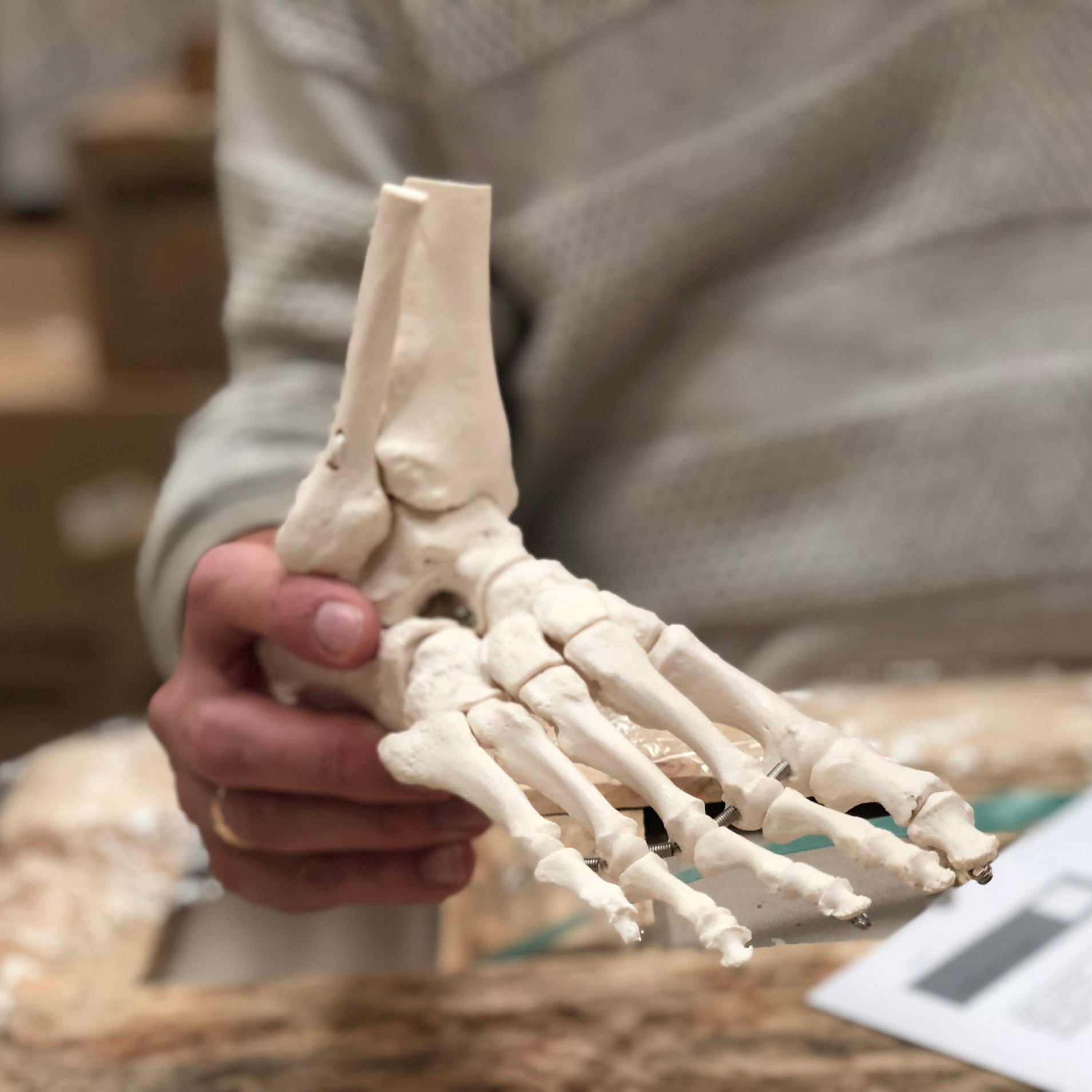
Anatomically, the knee model shows part of the thigh bone (femur), part of the shin bone (tibia), part of the calf bone (fibula) and the kneecap (patella). Furthermore, cartilage-covered joint surfaces are colored in a light blue color.


The small supplementary model with a cross-section of the knee joint shows both the bone structure and soft parts such as fat and bursae (mucous sacs).

Movement-wise

In terms of movement, the joint model is not flexible. As the knee joint is held together using metal, the joint can only be flexed (bent) and extended (stretched). Other movements cannot be demonstrated at all.

Clinically speaking

Clinically speaking, this package solution is ideal for understanding osteoarthritis of the knee (knee osteoarthritis), bursitis (inflammation of the mucous sacs) and rheumatoid arthritis (rheumatoid arthritis). It can also be used to understand disorders such as patellar luxation (slippage of the kneecap), patellar fractures and fractures close to the knee joint.


The model can perhaps also be used to understand disorders such as ligament injuries, meniscal lesions and runner's and swimmer's knees.

Contact us

Our anatomical product range
Raffle for free products

All recipients of our newsletter are entered into raffles for free products. Sign up today and be in the running!