Lower extremity model with all bones mounted on elastics (incl. hip bone)

Lower extremity model with all bones mounted on elastics (incl. hip bone)

$191.00
Sale price  $191.00 Regular price 
Skip to product information
Lower extremity model with all bones mounted on elastics (incl. hip bone)
1/2

Lower extremity model with all bones mounted on elastics (incl. hip bone)

SKU: EA1-6069

Produktet er udgået af vores faste sortiment. Søger du specifikt dette produkt? Kontakt os for mere information.

The product is no longer part of the permanent assortment

If you are interested in this product, we would be happy to check if we can source it for you. Please contact us.
Description

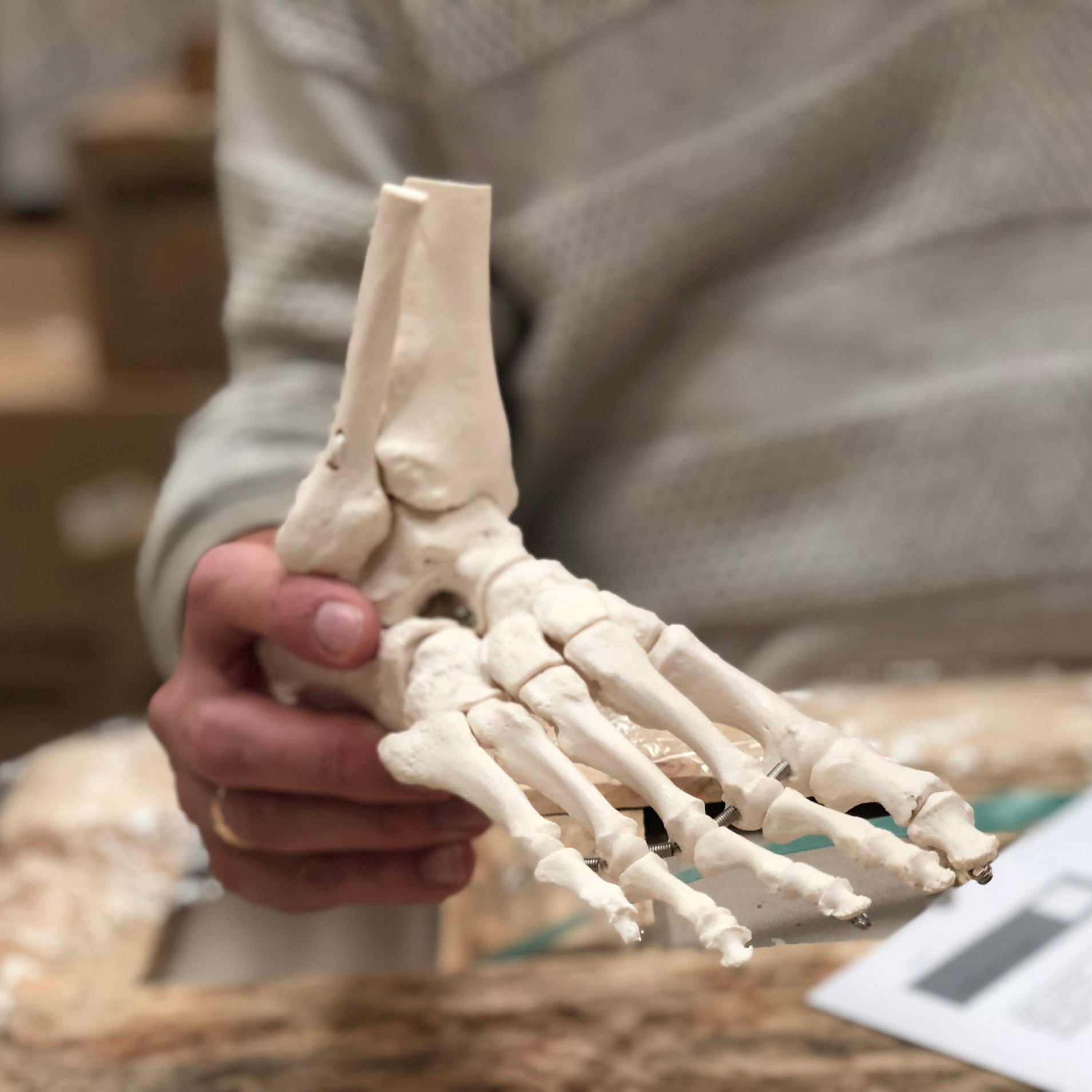
This lower extremity model shows the entire leg from the toes to the hip bone (sacrum not included). The model is extremely flexible in that all parts are mounted on elastic bands.


The "bone skeleton" shows the bones in natural adult size. The level of detail on the bones is good and all the joints are held together by elastics, allowing unlimited opportunity to demonstrate the natural movements of the joints.


It is possible to divide the skeleton into hip socket, femur, lower leg and foot.

Anatomically speaking

Anatomically, the skeletal part shows all the bones in the foot, the 2 bones of the lower leg, the kneecap, the femur and the hip bone. Sesame bones are not visible.


The level of detail on the bones is really good and shows very precise reproductions of the anatomical details.


The scope of "osseous landmarks" includes both large details such as the major and minor trochanters on the femur as well as smaller details such as tuberositas ossis metatarsalis V.

Movement-wise

In terms of movement, all joints are very flexible because they are held together by elastics.


In the hip joint, all natural movements can be demonstrated, and the femur can be detached from the hip bone, because a lock is fitted to the elastic.


In the ankle joint (the talocrural joint between the lower leg bones and the base of the foot), the angular movement called "plantarflexion-dorsiflexion" can be demonstrated, and in the lower ankle joint (the subtalar joint under the talus/roller bone) "inversion-eversion" can be demonstrated.

Clinically speaking

Clinically speaking, the bone is ideal for understanding diseases, disorders and disorders in this part of the skeleton.

Contact us

Our anatomical product range
Raffle for free products

All recipients of our newsletter are entered into raffles for free products. Sign up today and be in the running!