
Did you know that your face contains over 40 individual muscles that work together to shape every expression and affect both your appearance and your health? Many people overlook how important facial muscles are to our well-being and communication.
The purpose of this guide is to give you a complete insight into how facial muscles work and how you can effectively train them in 2026. Knowledge of muscle anatomy and training not only enhances your appearance, but can also improve your quality of life.
In this article, you will get an overview of the anatomy, functions, most common problems, effective training techniques and the latest trends in facial training. Read on and discover how you can use this knowledge to enhance both your expression and your health.
Facial Anatomy: Overview of the Muscles
Did you know that the muscles of the face are made up of many different groups that together control both your expressions and basic functions? Understanding the muscles of the face is essential for both health and well-being. Let's delve into the structure and importance of these fascinating muscles.
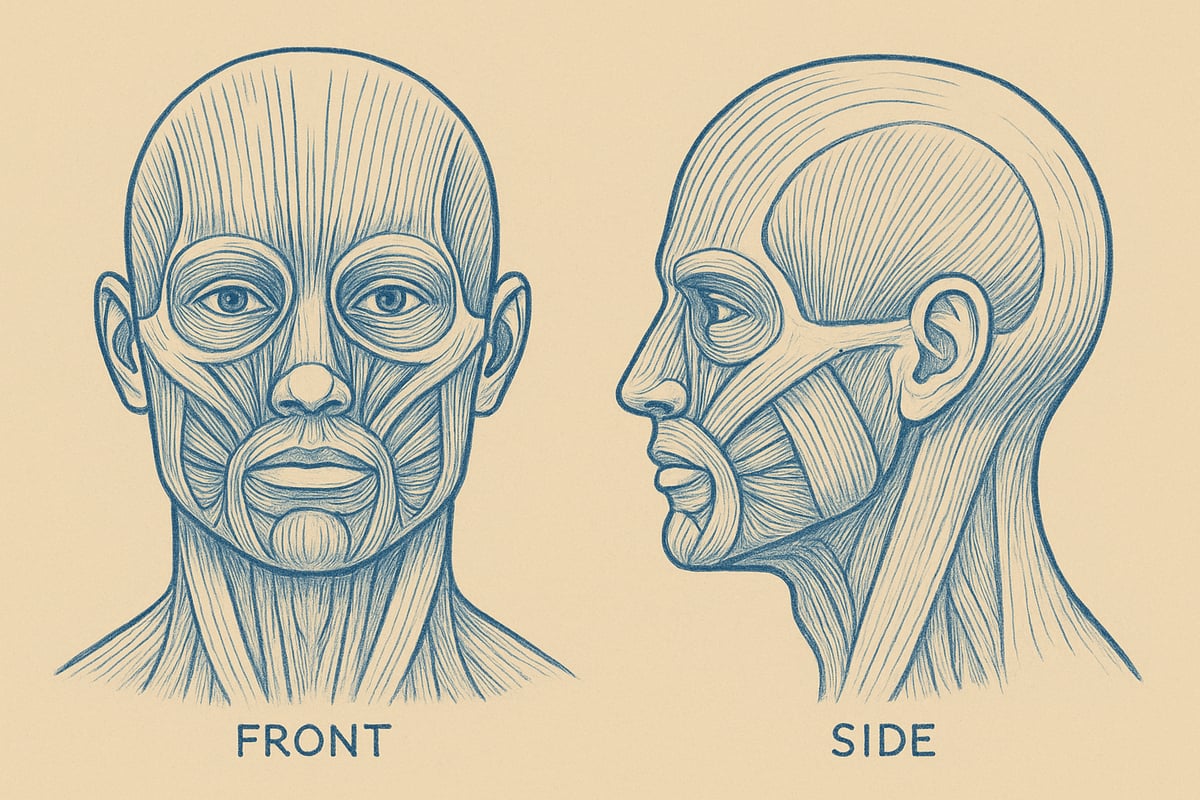
The main facial muscles and their location
The muscles of the face form a complex network, with the most prominent being the facial muscles, masticatory muscles and eye muscles. The facial muscles control our expressions, while the masticatory muscles are responsible for moving the jaw. The eye muscles allow us to blink and frown.
For example, the zygomaticus major helps to lift the corners of the mouth, which is essential for a smile. The cheeks have several layers that work closely with the muscles around the mouth and eyes. At the top of the forehead is the frontalis muscle, which raises the eyebrows.
If you want a deeper insight into muscle groups and their functions, you can read more at Facial muscles and functions , where you will get a comprehensive overview of the anatomy.
Function and interaction between muscles
The muscles of the face do not work in isolation, but are part of a dynamic interaction that enables a myriad of expressions. When you smile, not just one muscle is activated, but several, such as the m. orbicularis oculi and the m. corrugator supercilii. Together, they create both smile lines and a lively face.
It is precisely this interaction that makes the facial muscles so unique. The muscles respond quickly to emotions and external stimuli, making them central to nonverbal communication. At the same time, speaking, chewing, and blinking also require precise cooperation between multiple groups.
This complex network means that even small changes in one muscle can affect the entire facial expression.
Statistics: How many muscles does the face have?
Scientifically, the facial muscles consist of approximately 43 to 50 individual muscles, if you count both the face and neck. In comparison, the hand has about 34 muscles, emphasizing the fine motor precision of the face.
| Area | Number of muscles |
|---|---|
| Face/neck | 43-50 |
| Hand | 34 |
| Foot | 29 |
This large amount of facial muscles enables subtle movements that are important for both facial expression and communication. The facial muscles make it possible to express nuanced emotions and quickly adapt to different social situations.
Typical mistakes and misunderstandings about facial muscles
Many people mistakenly believe that facial muscles cannot be trained or that training will make the face bigger. The truth is that muscles can be strengthened and improved, just like the rest of the body, without unnaturally increasing the size of the face.
Another common misconception is that all muscles work in isolation. In fact, it is the interaction of several facial muscles that creates natural expressions. The myth that a smile only uses two muscles is also wrong – a smile often involves up to ten different muscles.
Correct knowledge of the facial muscles helps avoid misinterpretations and ensures that training and daily care are more effective.
Facial Muscles: Functions and Importance
Facial muscles play a central role in our daily lives, whether we smile, chew or communicate emotions. These muscles not only affect our appearance, but also our health and well-being. To understand their importance, it is important to take a closer look at how they work together and what functions they have in everyday life.
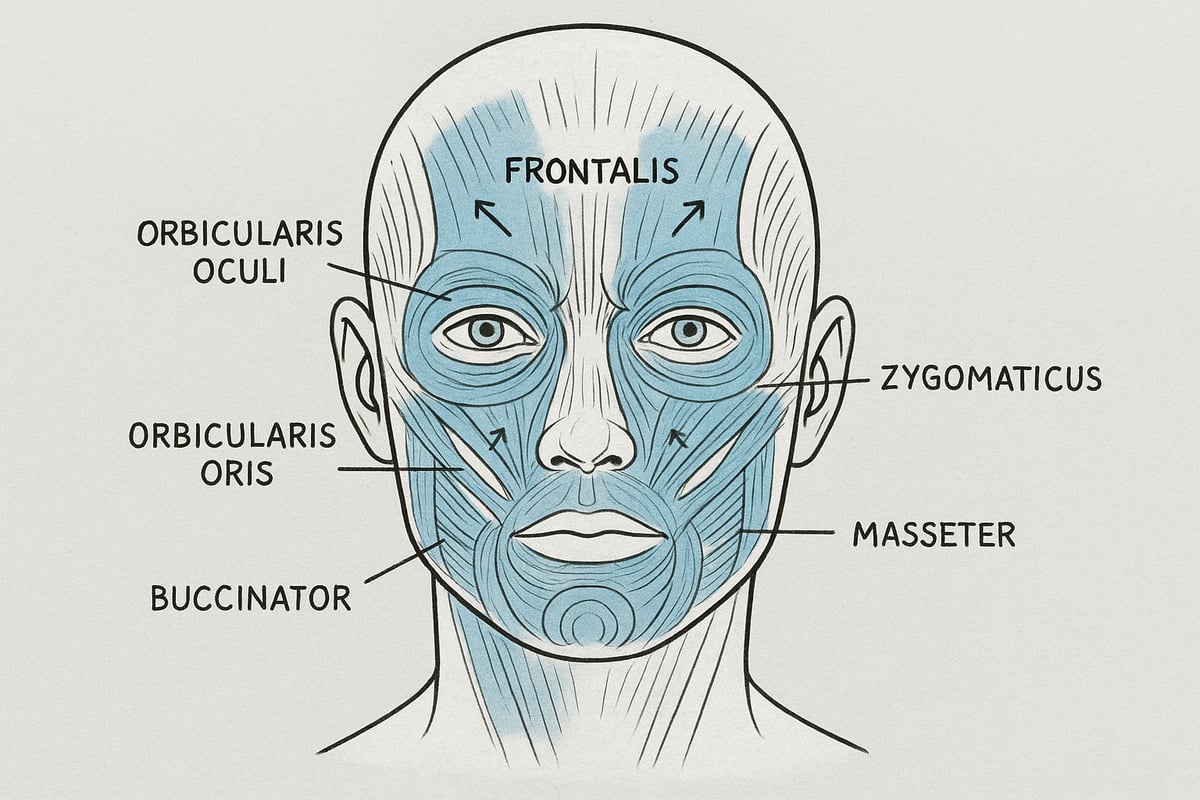
Facial expressions and emotional communication
The muscles of the face are key to our ability to express emotions. When you smile, the zygomaticus major muscle is activated, while the depressor anguli oris muscle lowers the corners of the mouth when you are sad. The delicate interplay between the muscles around the eyes and mouth makes it possible to express joy, surprise, or anger without words.
- Smiling requires the coordination of multiple muscles
- Eye muscles signal true emotions
- Small muscle movements affect how others perceive you
Nonverbal communication is only possible because facial muscles work precisely and quickly. The ability to read and express emotions is crucial for social relationships.
Speech, chewing and other practical functions
Without facial muscles, we would not be able to chew, speak, or perform daily activities such as drinking or breathing. Masticatory muscles, especially the masseter and temporalis muscles, provide the force behind chewing, while smaller muscles shape the lips and control the tongue during speech.
- Chewing requires both strength and coordination
- Muscles around the mouth control articulation
- Facial expressions are important for clear speech
When we speak, the muscles of the face work together to form sounds and pronounce words correctly, making them indispensable for both communication and nutrition.
Aging and muscle function
As we age, facial muscles gradually lose strength and elasticity. This can lead to sagging skin and changes in facial contours. From the age of 30, the loss of muscle mass begins to affect appearance and function.
- Less muscle mass results in less fullness in the face
- Elasticity decreases, which can lead to more wrinkles
- Exercise can slow down age-related changes
Regular exercise of facial muscles can help maintain a fresher appearance and better function, even as we age.
Health aspects: Tensions and dysfunctions
Many people experience tension, pain or dysfunction in their facial muscles. Typical problems include headaches, jaw tension and TMD, often resulting from stress or misuse of the muscles. Overuse can lead to pain and reduced mobility.
- Jaw tension can cause headaches
- Stress negatively affects muscle tension
- Proper exercises can relieve discomfort
If you want to work purposefully on relaxing and strengthening the muscles of the face, you can find inspiration for exercises at Face and Mimicry Training , which presents practical methods and good advice.
Beauty and aesthetics: Natural facelift
Facial muscles contribute to the shape, volume, and contour of the face. By exercising these muscles, you can achieve a more toned, youthful appearance without surgery. Specific exercises can lift cheekbones, reduce wrinkles, and improve blood circulation.
- Muscle training as an alternative to cosmetic treatments
- Natural rejuvenation through targeted exercises
- Increased blood flow results in fresher skin
By focusing on the muscles of the face, you can enhance both your appearance and well-being, and achieve long-term, natural results.
Facial Muscle Training: Methods and Techniques
Strengthening and maintaining facial muscles is not just for aesthetics. It also contributes to health and well-being. Modern methods make it possible to target training so that you can both prevent wrinkles and increase muscle tone. Let's take a closer look at how you can effectively train facial muscles in 2026.
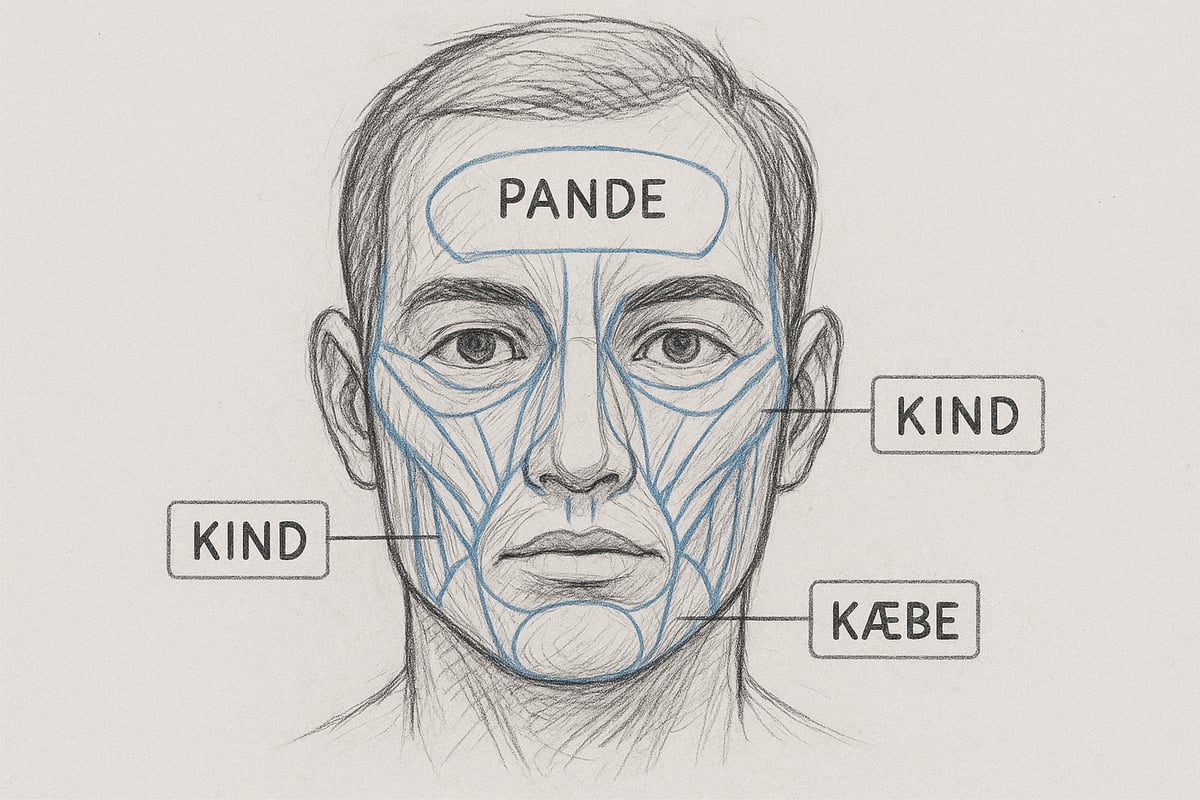
Why train facial muscles?
Exercising your facial muscles can provide a number of benefits that go far beyond appearance. By activating these muscles, you increase blood circulation, which can improve the glow and elasticity of your skin. At the same time, you strengthen muscle tone, so your face appears firmer and early signs of aging can be prevented.
Facial muscles are also important for your overall well-being. They help relieve tension from stress and contribute to balance in facial expressions. Research suggests that regular exercise can reduce the development of fine lines and wrinkles.
Basic exercises for beginners
When you start working out your facial muscles, it's important to focus on simple, safe exercises. Basic exercises activate multiple muscle groups and can be done without any equipment. Here are three examples:
- Raise your eyebrows: Slowly raise and lower your eyebrows ten times.
- Fish mouth: Suck in your cheeks and make a smile, hold for 5 seconds.
- Balloon cheeks: Fill your mouth with air, shifting the air from cheek to cheek.
Repeat each exercise daily to build strength and coordination in your facial muscles. Start gently and gradually increase the number of repetitions.
Advanced techniques and programs
Once you have mastered the basic exercises, you can further challenge your facial muscles with advanced techniques. Here, resistance training, the use of tools, and combination exercises can provide additional effect. Examples of tools include facial rollers and small weights designed for the face.
| Technique | Description | Purpose |
|---|---|---|
| Resistance training | Use hands as resistance | Increases strength |
| Face rollers | Massage and muscle stimulation | Improves circulation |
| Combination exercises | Multiple muscles are activated simultaneously | Coordination |
These methods make it possible to target training and achieve more visible results in the facial muscles.
Training plan: How to get started
To achieve optimal results with facial muscle training, it's a good idea to follow a set plan. Here's an example of a weekly plan:
- Monday, Wednesday, Friday: Basic exercises (5-10 minutes)
- Tuesday, Thursday: Advanced techniques or tools (5 minutes)
- Weekend: Light massage or relaxation
It is recommended to train 3-5 times a week. Remember that regularity is key when working on facial muscles.
Avoid injuries and overtraining
Although exercising facial muscles is generally safe, overtraining can lead to soreness or discomfort. Common mistakes include using too much force or not warming up before exercising. To avoid injury, you should:
- Always warm up with a light massage
- Avoid squeezing the muscles too hard.
- Give your facial muscles time to recover.
Listen to your body and stop if you experience pain. Variety and breaks are important for a healthy exercise routine.
Scientific documentation and results
Recent studies from 2019-2025 document that targeted training of facial muscles can increase muscle tone by up to 30 percent. This leads to firmer skin and a more youthful contour. Physical exercise also improves blood flow, which supports skin health.
Research also supports that exercise can slow the loss of muscle mass, which often starts at age 30. For further insight into the effect of physical exercise on muscle mass and function, read more in The Effect of Physical Exercise on Muscle Mass .
In summary, the documentation shows that training facial muscles can both improve appearance and support a healthy and well-functioning face.
Common Facial Muscle Problems and Solutions
Many people experience challenges with facial muscles throughout their lives. These problems can range from tension and pain to paralysis or asymmetry. Understanding the most common problems is essential to achieving better facial well-being and function. Here you will get an overview of symptoms, causes and solutions so that you can take care of your facial muscles in everyday life.
Tension, pain and jaw problems
Facial muscle tension is very common, especially around the jaw and temples. Typical symptoms are soreness, stiffness and headaches, often caused by stress or teeth grinding at night. Many people experience that their muscles feel tired after a long day, or that they wake up with sore jaws.
To remedy these problems, you can:
- Do light massage exercises daily.
- Avoid chewing gum for extended periods of time.
- Be aware of jaw relaxation throughout the day.
Persistent tension in the facial muscles can lead to discomfort or worsening symptoms if not addressed in a timely manner.
Facial paralysis and rehabilitation
Facial paralysis, such as Bell's palsy, can lead to reduced control of the muscles of the face. This can affect facial expressions, speech and the ability to close the eye. Rehabilitation is often based on simple exercises, where you repeat movements such as smiling, raising your eyebrows or puffing out your cheeks. Video-based training can make a big difference to rehabilitation, as described in Facial expressions on video for patient assistance .
Consistency and patience are key elements in facial muscle rehabilitation. Professional guidance is recommended for paralysis.
Asymmetry and muscle imbalance
Many people notice that the muscles of the face do not always work perfectly symmetrically. This can be due to habits, previous injuries or natural differences. Asymmetry often manifests itself as crooked smiles or different eye heights.
Corrective exercises can help balance the muscles, such as:
- Targeted stretches and contractions of the weaker side.
- Mirror training to increase awareness of movements.
- Consultation with a physiotherapist in case of persistent imbalance.
By working purposefully with the muscles of the face, you can achieve more harmonious features and better function.
Prevention and daily routines
Prevention is the key to healthy facial muscles. Simple daily routines can reduce the risk of tension, pain, and other problems. Good habits include:
- Regular relaxation of the jaw and forehead.
- Light facial massage morning and evening.
- Attention to posture and breathing.
Daily relaxation exercises, such as closing your eyes and relaxing your entire face, strengthen facial muscles and prevent discomfort. By integrating these routines into your daily routine, you protect both function and appearance.
Trends and Innovations in Facial Training 2026
Digital solutions and new technology are revolutionizing the way we work with facial muscles. Several apps guide the user through daily routines with personalized feedback. Wearables, such as sensors and smart mirrors, analyze facial expressions and track muscle activity. AI-based training programs adapt exercises to individual needs and development. To understand the anatomy behind these technologies, anatomical models of the face and head can be an effective complement to digital training.
Popular training forms and methods
In 2026, face yoga and facial massage remain among the most popular methods for strengthening facial muscles. Microstimulation, where weak electrical impulses activate the muscles, is also gaining ground. Statistics show that more people are choosing natural solutions over surgical interventions. Many supplement daily training with visual aids, such as anatomical posters for facial muscles , to target the exercises and better understand muscle locations.
Expert interviews and cases
Physiotherapists and cosmetologists share their experience with facial muscle training and see significant results in clients. Through interviews, individual courses are highlighted where exercises have improved both muscle tone and symmetry. Experts emphasize the importance of correct technique and continuity in training. Successful cases inspire more people to prioritize daily care and invest in knowledge about facial muscles.
Future prospects: What can we expect?
Research suggests that facial training will become even more personalized by 2026. New studies are investigating how genetics and lifestyle affect facial muscles and how training can be tailored to the individual. Expect an increase in the use of AI-assisted feedback to optimize results. With an increased focus on natural beauty and health, this trend will continue, and more people will discover the benefits of exercising their facial muscles regularly.
Resources and Visual Aids for Learning
Understanding facial muscles often requires more than just text and pictures in a book. Visual and practical aids can make a significant difference in the learning process, whether you are a student, a therapist, or just curious. Here you will get an overview of the most effective resources that can strengthen your knowledge and training of facial muscles.
Anatomical posters and models as learning tools
Visual aids are essential when it comes to understanding the location and function of facial muscles. Anatomical posters and three-dimensional models provide a concrete overview that makes it easier to visualize how the muscles work together.
Using such aids makes it possible to connect theory with practice. For example, a poster with facial muscles can be hung in the training room or clinic so that both professionals and private individuals always have a quick reference point. This reinforces learning and makes exercises more targeted.
eAnatomi ApS: Anatomical Models and Posters
eAnatomi ApS specializes in developing detailed posters and models that illustrate facial muscles with great precision. Their products are widely used in both education, training and clinical practice.
Many healthcare professionals use anatomical posters from eAnatomi to explain to clients how facial muscles work. Individuals who want to target their training also benefit from the clear illustrations. Such resources increase understanding and make it easier to identify the right muscles during training.
Online videos, apps and interactive guides
Digital resources like videos and apps make it possible to learn about facial muscles in a flexible way. Many online guides offer exercises that can be followed step by step, making it easy to get started at home.
Apps with daily workout programs can help create structure and stay motivated. Interactive guides where you can see animations of facial muscles in motion provide an extra layer of understanding, especially for beginners.
Books and articles about facial muscles and training
Non-fiction is still one of the most thorough ways to acquire knowledge about facial muscles. Good books explain both anatomy and training methods in depth, often with images and cases.
Popular titles include books on facial training, myofascial release, and facial anatomy for therapists. Scientific articles provide up-to-date knowledge on new trends and research findings in facial muscle training.
Courses and workshops
Courses and workshops provide an opportunity to learn about facial muscles in practice, often with direct feedback from experts. Both physical and online offerings are available, so you can choose the format that best suits your needs.
Physiotherapy workshops often focus on exercises and manipulations that can relieve tension or improve facial contours. Online masterclasses make it possible to learn from home but still have access to professional guidance.
Tips for choosing the best resources
When choosing resources to learn about facial muscles, you should focus on credibility and timeliness. Feel free to combine visual aids with digital solutions and literature to get a holistic understanding.
It may be beneficial to start with materials targeted at students, such as Student Resources on Anatomy , which will guide you to understand facial muscles more effectively. Always choose resources that have been developed by experts and that take into account both theory and practice.
Now that you have a thorough understanding of how the facial muscles work and which training techniques can enhance both expression and well-being, it can be valuable to delve even deeper into the anatomy. By using visual aids such as posters and models, you get a concrete overview that makes it easier to target your training and understand the location of the muscles. If you want to see how professionals and private individuals use detailed resources in practice, you can find inspiration and the latest products at Read more here
0 comments