Fleksibel model af fodens skelet med ledbånd og akillessenen samt lidt af skinne - og lægbenet - eAnatomi

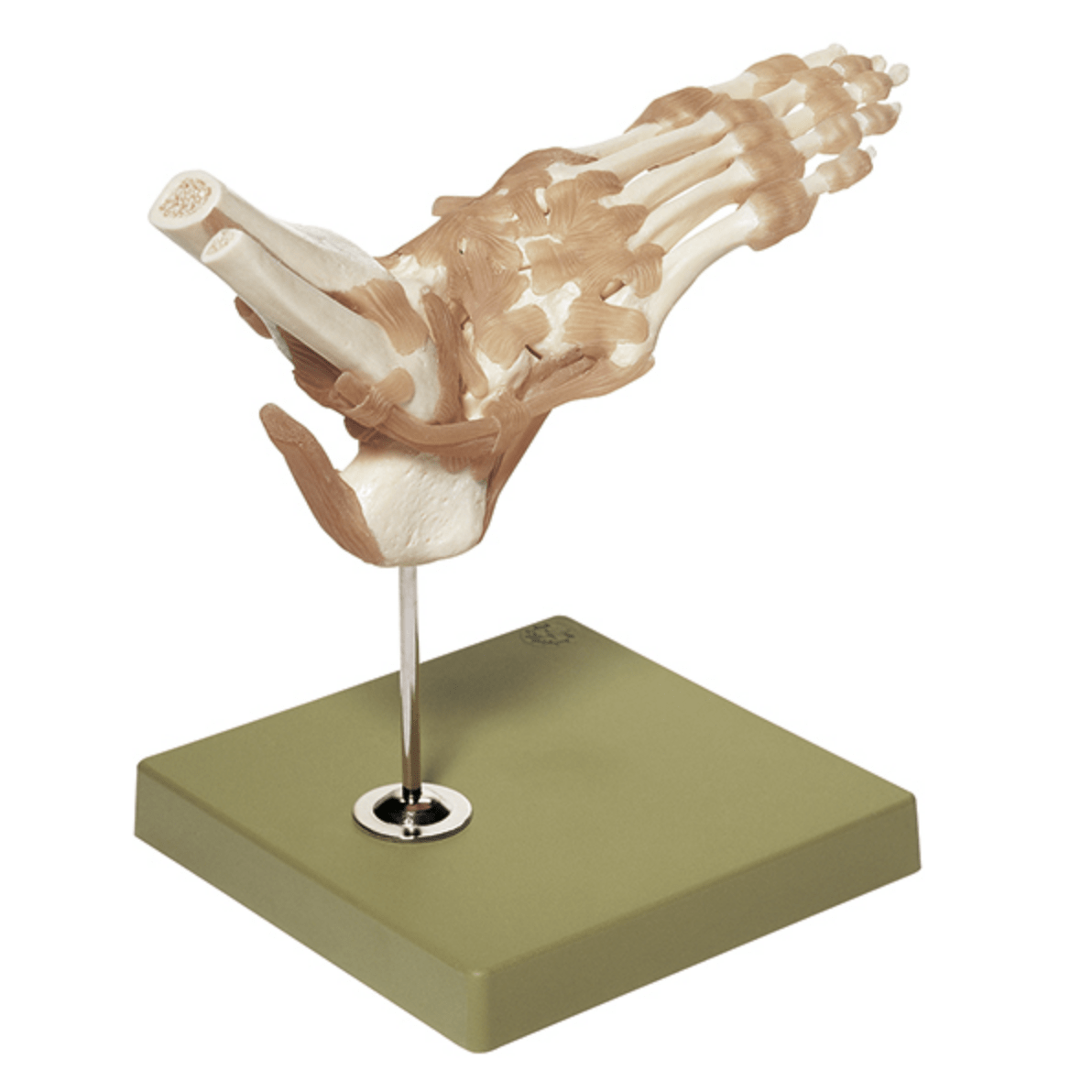
Foot with ligaments, flexible anatomical model

9,100.00 kr
Sale price  9,100.00 kr Regular price 
Skip to product information
Fleksibel model af fodens skelet med ledbånd og akillessenen samt lidt af skinne - og lægbenet - eAnatomi
1/3

Foot with ligaments, flexible anatomical model

Artikelnummer: NS 54

This product cannot be ordered online. Please contact us for more information.

The product is no longer part of the permanent assortment

If you are interested in this product, we would be happy to check if we can source it for you. Please contact us.
Description

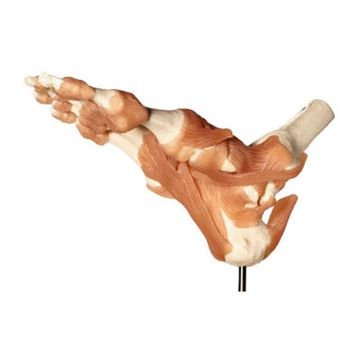
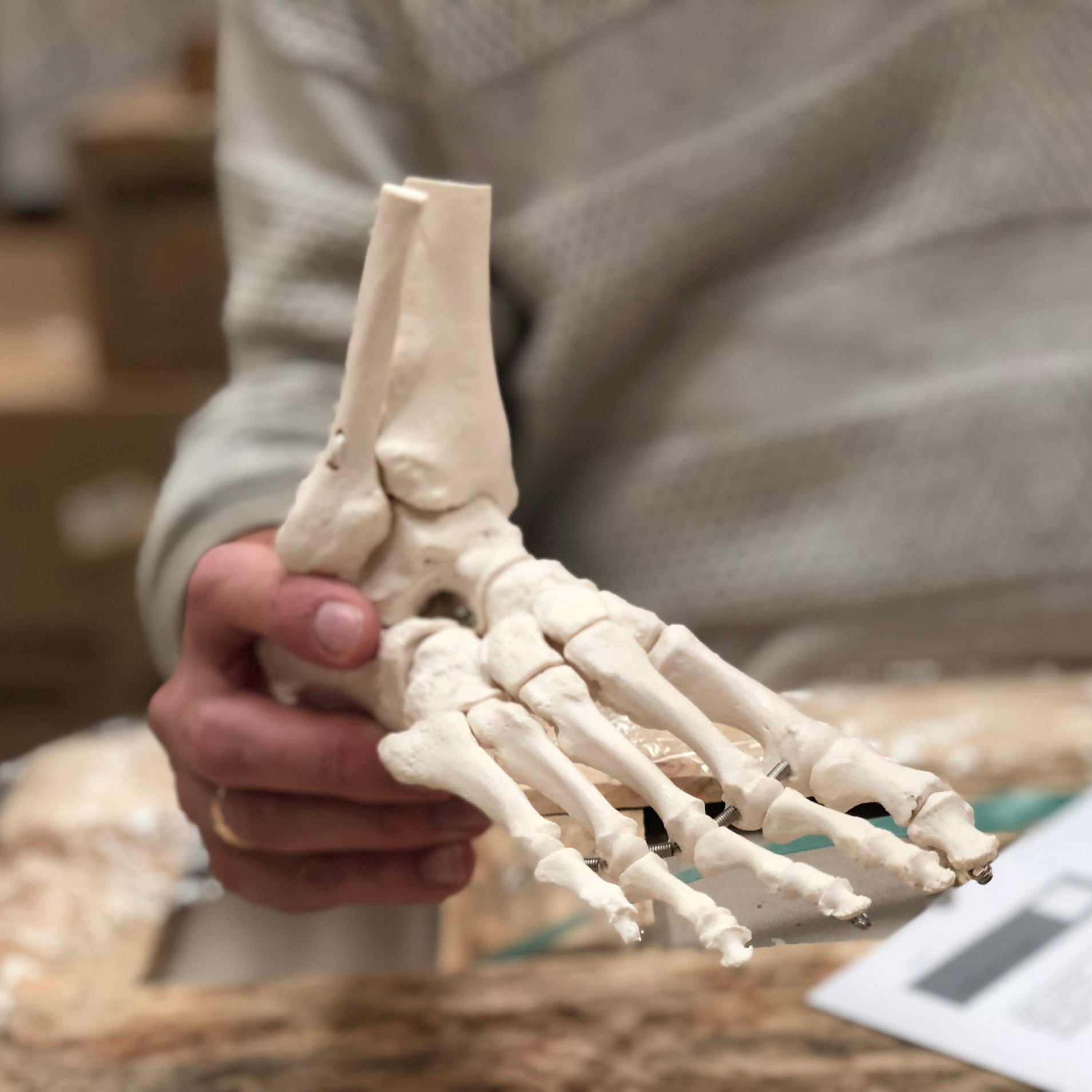
This foot model shows the most important ligaments of the foot. The model is produced in SOMSO plastic by the manufacturer SOMSO, which is world-renowned for very high quality. This means quality materials, a sense of accuracy and longevity.


The model is made in the natural size of the foot, and the dimensions are 18 x 28 x 25 cm

(length x width x height). It weighs 0.9 kg and is delivered on a removable stand with a green base.

Anatomically speaking

Anatomically speaking, the foot model shows a bit of the shin bone (tibia), a bit of the calf bone (fibula) and the entire foot (pedis) with its 26 bones. The bone structure is extremely realistic. Furthermore, all the most important ligaments are seen as well as some other important anatomical structures such as

membrana interossea cruris, the Achilles tendon and the tendon from m. peroneus longus.

Movement-wise

In terms of movement, this model is flexible. The bones of the foot are held together via elastics and the ligaments can give a little. Full range of motion is possible in the ankle joint (the talocrural joint between the lower leg bones and the base of the foot) and

the lower ankle joint (the subtalar joint below the talus/roller).


The model can therefore be used both to demonstrate the angular movement of the foot joint called "plantarflexion-dorsiflexion", because this movement is primarily performed in the ankle joint, and "inversion-eversion" because this movement primarily takes place in the subtalar joint.

Clinically speaking

Clinically speaking, the model is ideal for understanding ligament lesions, Achilles tendon rupture and

luxations (joint slips).


In addition, the model can also be used to understand many types of ankle fractures, metatarsal fractures, toe fractures and foot deformities such as flat feet, clubfoot, metatarsus varus, hallux valgus (big toe bunion), hallux rigidus and hammer toe.


The model can perhaps also be used to understand disorders such as osteoarthritis in the foot (arthrosis) and rheumatoid arthritis (rheumatoid arthritis).

Contact us

Our anatomical product range
Raffle for free products

All recipients of our newsletter are entered into raffles for free products. Sign up today and be in the running!