

Did you know that the use of facial modeling in the healthcare sector is expected to increase by over 40 percent by 2025? This development is due to advanced technology, digitalization, and an increased focus on precise training.
In this article, we dive into seven innovative ways in which facial modeling is shaping the future of medical training, cosmetic treatments, education, research, AI development, art, and patient communication.
Are you curious about concrete examples and how these models can change practice and learning? Read on and gain insight into the possibilities of the future.
The Evolution of Facial Models: From Tradition to 2025
The development of facial modeling has undergone a remarkable transformation in recent years. Where simple plastic models were previously used, we now see much more advanced and realistic solutions. This development has opened up new opportunities for both research, education and clinical practice.
Technological advances and materials
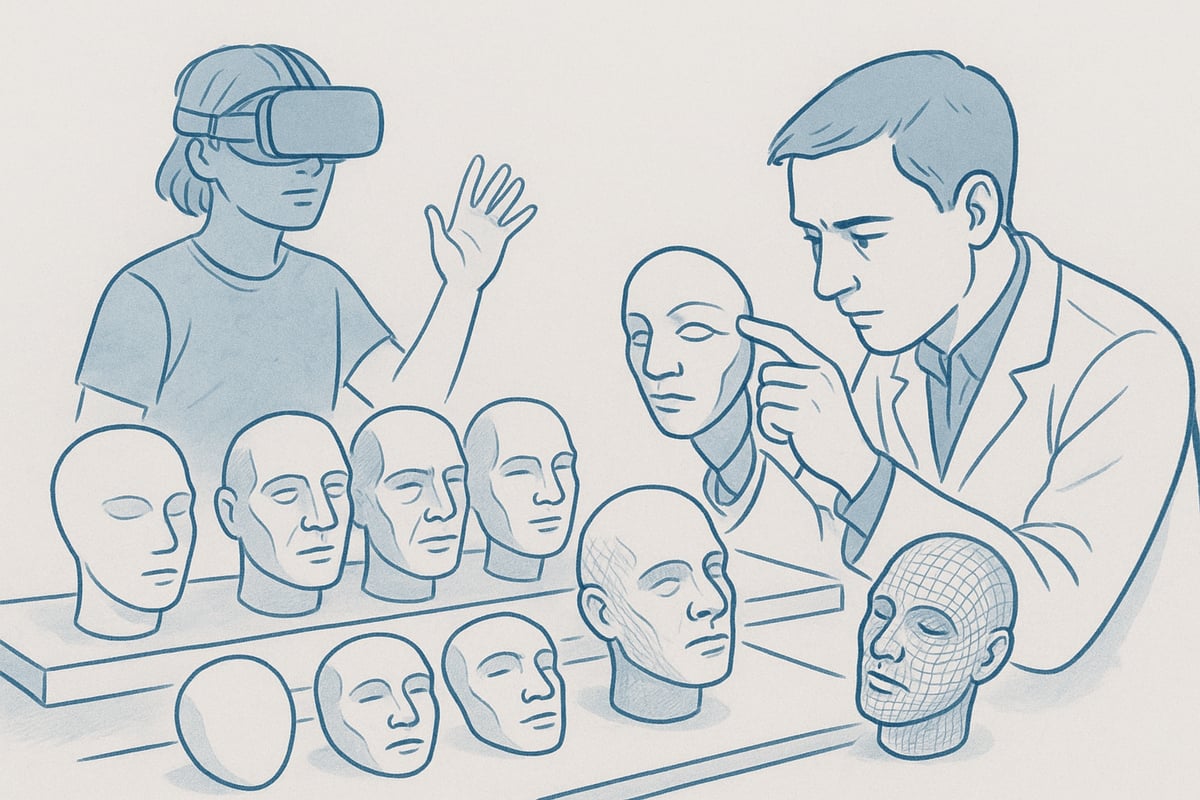
The transition from traditional plastic models to today’s advanced facial models has been driven by technological advances. New materials such as silicone mimic the elasticity and texture of skin, while 3D printing allows for the creation of detailed models with embedded muscles, blood vessels, and nerves. This level of realism is important for training because users can practice scenarios that resemble reality.
Embedded structures in the facial model make it possible to simulate both surgical procedures and cosmetic treatments. For example, injection techniques can be trained without risk to patients. The development of models is wide-ranging, and the selection is constantly growing. An overview of the possibilities can be found in this collection of face and head models , which illustrate the range of modern facial models.
This technological development has not only improved precision, but has also made it easier to adapt models to specific needs, strengthening both research and teaching.
Digitalization and virtual simulation
Digitalization has given facial modeling a whole new dimension. With AR and VR technology, users can now interact with virtual facial models, making it possible to train and simulate procedures without physical material. Especially in healthcare education, the use of virtual models has increased significantly in 2025.
Virtual simulations allow students to repeat exercises as many times as they want without increasing the cost or wear and tear. It also means that distance learning and safe training become more accessible to more people. Digital simulation of the facial model also allows scenarios to be customized to individual learning goals, increasing the benefit for both teachers and students.
Safety is improved because no patients are exposed to risk during training, and the digital format ensures consistent quality every time.
Extended areas of application
Facial modeling is no longer only used in medical contexts. Today, we also see use in cosmetics, art, and the development of artificial intelligence. This development is due to closer collaboration between manufacturers, healthcare professionals, and technology companies.
For example, artists can use facial models as reference for portraits and animation, while AI developers use them to train facial recognition algorithms. Cosmetic surgeons and cosmetic surgeons work closely with manufacturers to ensure that the models meet both practical and ethical requirements.
The future holds even more opportunities, with facial modeling expected to play a central role in research, education and technological innovation. The possibilities for individualization and interdisciplinary collaborations are growing, which bodes well for both the healthcare sector and the creative industries.
7 Fascinating Ways to Use Facial Modeling in 2025
In 2025, facial modeling will have a central role across health, research, education, technology and art. Technological advances in recent years have significantly expanded the possibilities, making it possible to use facial modeling far more innovatively than before. Below are seven groundbreaking ways in which facial modeling is revolutionizing practice and knowledge in modern society.
1. Realistic Cosmetic Injection Training
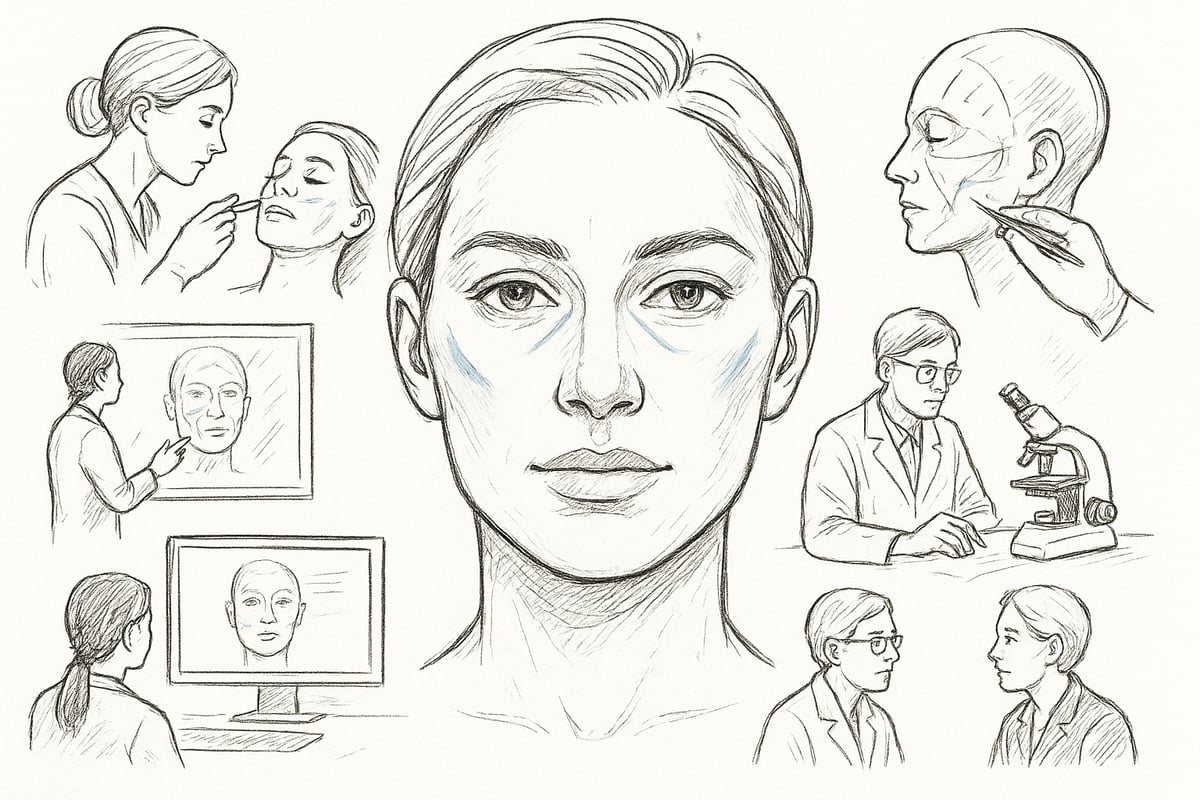
The increasing demand for aesthetic treatments has made facial models indispensable in the training of cosmetic procedures. Modern models are equipped with embedded blood vessels and nerves, which allow practitioners to practice Botox and filler injections with high precision.
- Realistic feedback from skin and underlying tissue
- Possibility of repeated exercises without risk to patients
- Especially used in clinics and cosmetology training
According to industry analysis, the use of advanced facial models for cosmetic training is expected to increase by over 35% by 2025. This development is due to an increased focus on patient safety and precision. The disadvantages are primarily the high costs associated with the most advanced models. However, the benefits often outweigh the investment in terms of reducing errors and improving learning.
Facial modeling allows both new and experienced practitioners to develop their skills in a safe environment, especially important in an industry where small mistakes can have major consequences for a patient's appearance and well-being.
2. Surgical Planning and Simulation
In surgery, facial modeling has undergone a true revolution. 3D-printed, patient-specific models now make it possible to prepare for complex surgeries much more precisely. Surgeons can practice incisions, implant placement, and reconstructions, reducing operating time and improving patient outcomes.
- Used for reconstructive surgery, jaw surgery and plastic surgery
- Allows for simulation of different scenarios before the intervention
- Improves team collaboration and preparation
Traditional methods of planning interventions based on two-dimensional images cannot match the precision that facial models provide today. The challenge, however, is that it requires access to advanced image data and technology, which may limit its adoption in smaller clinics.
Surgical simulation with a facial model has been shown to reduce complications and increase patient satisfaction, supported by international studies documenting significant improvements in both efficiency and outcomes.
3. Teaching Anatomy for Students and Professionals
Facial models have become a key teaching tool in both universities and healthcare education. The tactile learning that the models offer allows students to understand the complex structures of the face far better than with traditional textbooks.
- Provides ethical alternative to using cadavers
- Supports hands-on workshops and exam preparation
- Increases understanding of variations in anatomy
Statistics show that over 70% of European medical students today use facial models in their education. However, investment in quality models is necessary to achieve the best learning outcomes.
For educators, it is possible to combine physical models of the face with digital resources, providing an in-depth and interactive teaching experience. Read more about the possibilities of anatomical models for teaching , where the selection ranges from simple to hyper-realistic solutions.
4. Research into Neurological and Musculoskeletal Diseases
Researchers use facial models to simulate disease progression and test new treatment methods without risk to patients. This provides a unique opportunity to investigate the effect of different therapies on, for example, facial paralysis or spasms.
- Used in studies of both neurological and musculoskeletal disorders
- Allows comparison of different treatment protocols
- Supports the development of new medical tools
The number of research projects using synthetic models of the face has increased significantly in 2025. However, there are limitations in the accuracy of the models, which means that the results must always be validated in clinical studies.
However, facial modeling provides an ethical framework for experiments that would otherwise be problematic on real patients. It increases the pace of medical innovation and facilitates collaboration between research groups.
5. Development and Testing of Artificial Intelligence for Facial Recognition
Facial modeling plays a crucial role in the development of artificial intelligence, especially for healthcare and biometric security. Physical models are used to train and validate AI algorithms in a controlled and standardized environment.
- Enables data collection without ethical dilemmas
- Used for developing diagnostic tools and emotion recognition
- Supports testing of biometric security systems
The connection between physical models of the face and digital datasets is essential to ensure that algorithms work correctly in real life. However, a significant challenge is ensuring that AI trained on models also works on real people.
Facial modeling has made it possible to accelerate the development of intelligent systems, which is of great importance for both health and safety in society.
6. Artistic Creation and Anatomical Illustration
Artists and designers use facial models as a reference when working on portraits, animation or digital art. The accurate reproduction of facial expressions and proportions makes it possible to create more realistic works.
- Used in drawing lessons and creative education
- Allows for detailed study of facial expressions
- Increasingly in demand in creative industries
The demand for specialized facial modeling has increased significantly, especially in the film and gaming industries. The downside is that advanced models can be expensive and not always readily available.
For artists, a facial model is an invaluable tool that opens up new possibilities for creative expression and precision in work.
7. Improved Patient Communication and Expectation Alignment
Facial models are now increasingly used to visualize patient treatment processes. This strengthens communication between healthcare professionals and patients, as it becomes easier to explain what a treatment entails.
- Provides increased understanding and reassurance to the patient
- Enables realistic expectations alignment
- Used in dentistry, plastic surgery and orthodontics
Patient feedback shows that using facial models in consultations increases satisfaction and reduces misunderstandings. The challenge is that staff need to be trained to use the models effectively, and that it can take up extra time during the consultation.
Modeling the face thus has not only a technical, but also a human dimension, where empathy and communication are at the center.
eAnatomi ApS: Innovative Development of Facial Models for the Needs of the Future
eAnatomi ApS has been a significant player in the development and distribution of anatomical models in Denmark for several years. The company is particularly known for its wide and specialized range, where facial models play a central role in both teaching, research and clinical practice.
The collaboration between eAnatomi ApS and healthcare specialists ensures that each facial model is developed with high scientific accuracy and quality. The range ranges from classic plastic models to advanced silicone and 3D printed solutions that enable precise simulation of anatomical structures. This allows users to choose exactly the facial model that suits their needs.
One of the company's strengths is its focus on sustainability and formalin-free materials, which is a great advantage for both the environment and the users. In addition, eAnatomi ApS offers the possibility of special orders, so that you can have a model of the face tailored for special purposes, e.g. for advanced surgical training or artistic work. The production is done with respect for both quality and the environment, which makes the models sought after both in Denmark and internationally.
The target group is broad: Students, teachers, healthcare professionals, researchers, artists and private enthusiasts all find value in the company's products. The models are used, among other things, in university hospitals, cosmetology programs, clinical training centers and creative education programs. For those who want to know more about the company's background and expertise, About eAnatomy and Face Models is recommended as a good introduction.
For further information, special orders or advice, it is recommended to visit eanatomi.com, where you can explore the entire range and easily get in touch with the experts behind eAnatomi ApS.
Future Perspectives: What Can We Expect from Facial Models in 2030?
The future of facial modeling looks like an exciting journey towards even more advanced technology and greater application possibilities. We are already seeing how artificial intelligence, IoT and sensor technology are starting to merge with the classic facial model. In 2030, this development is expected to accelerate significantly.
Imagine a model of the face that not only reproduces anatomical structures, but also responds to touch, pressure, and electrical impulses. Adaptive and interactive models will be able to simulate physiological responses in real time, allowing users to train and experiment in conditions close to reality.
Personalization will be a key word. With access to advanced imaging technologies and three-dimensional anatomical data generation with neural networks, it will be possible to produce a model of the face that is tailored to the individual patient. This opens new doors for precision medicine, where both surgeons and researchers will have a personal starting point for training and planning.
Telemedicine and distance learning will also benefit from the development. Digital versions and networked models allow specialists to collaborate across borders. Students can perform exercises on a model of the face in virtual environments, while experts provide guidance and feedback in real time.
However, the challenges are evident. The price of advanced technology remains high, and access to the necessary hardware and software is not uniform globally. Furthermore, international standardization is required to ensure that a model of the face works across systems and countries. Ethical considerations around the use of AI in the healthcare sector are more important than ever. Here, the Danish Data Ethics Council's recommendations on AI in healthcare can provide valuable guidance for responsible development.
The facial modeling market is expected to grow significantly by 2030. Forecasts point to annual growth of up to 14 percent, driven by technological advances and increasing demand in both the research and education sectors. We are already seeing international collaborations where universities, technology companies and healthcare institutions are sharing data and experiences to develop the next generation of facial models.
The future model of the face will be more intelligent, more accessible and more personalized. With the integration of AI and sensors, as well as a focus on ethics and standardization, the models will be able to transform both research, education and patient care. The development will require investment and collaboration, but the potential for innovation is greater than ever.
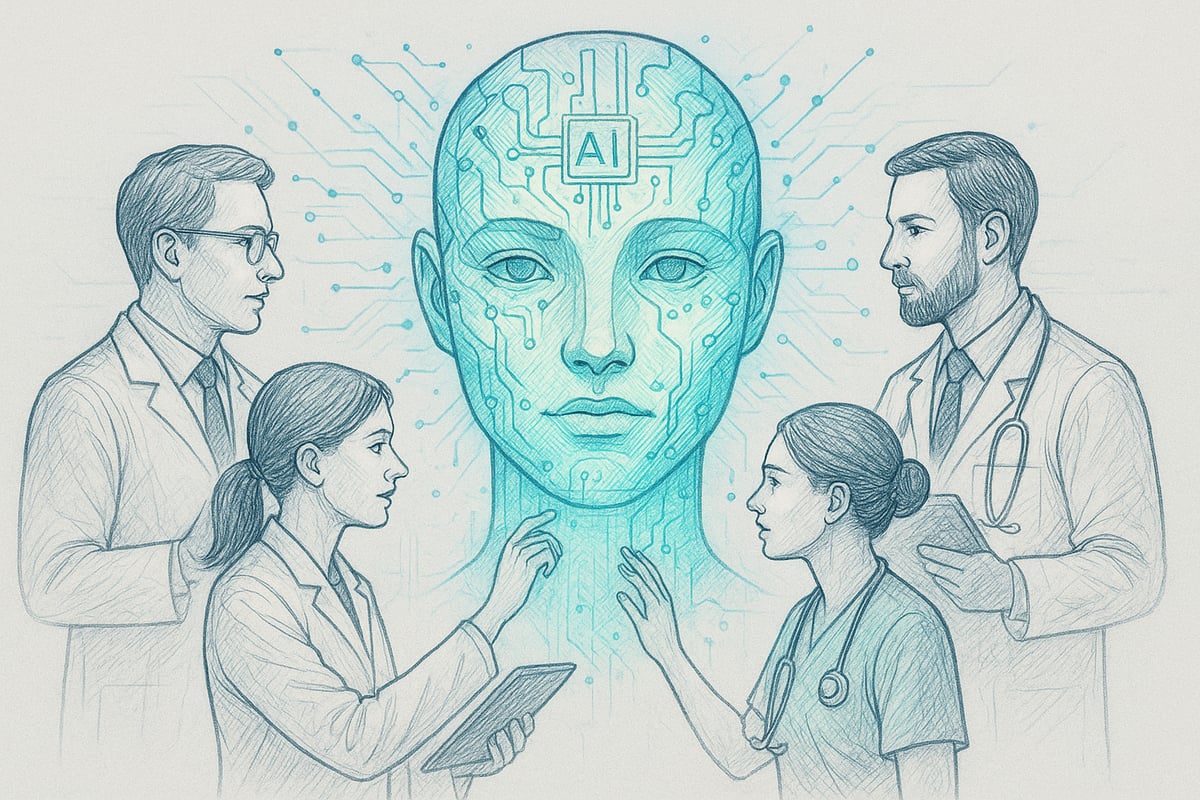
Now that you have gained insight into how facial models are revolutionizing everything from medical training and research to art and patient communication, you can probably see the potential for both learning and innovation. Whether you are a student, teacher, healthcare professional or just curious about the possibilities of the future, it is important to have access to models that match your needs. At eAnatomi ApS, we work closely with specialists to deliver accurate and sustainable solutions that enhance your daily practice or teaching.
Read more about the possibilities and find inspiration for your next project here: Read more here
0 comments