

Have you ever wondered how the brain actually works and why it is so complex? Many people are looking for the answer to the question: how is the brain structured?
The purpose of this guide is to give you an easy-to-understand and updated introduction to the structure and function of the brain, so that you can understand why this particular knowledge is important for your health, learning and daily well-being.
New research and modern technologies are constantly opening up new mysteries about the brain. Do you want to understand your own brain better and act on the latest knowledge?
Read on and get an overview of the anatomy of the brain, main areas, how nerve cells communicate, the latest research advances and practical advice to strengthen your brain.
The General Structure of the Brain
The brain is a fascinating organ, and if you've ever wondered how the brain is made, you're not alone. To understand its complexity, we need to delve into the key parts, layers, and systems that make up our most advanced organ. Let's take a closer look at the structure of the brain from the outside in.
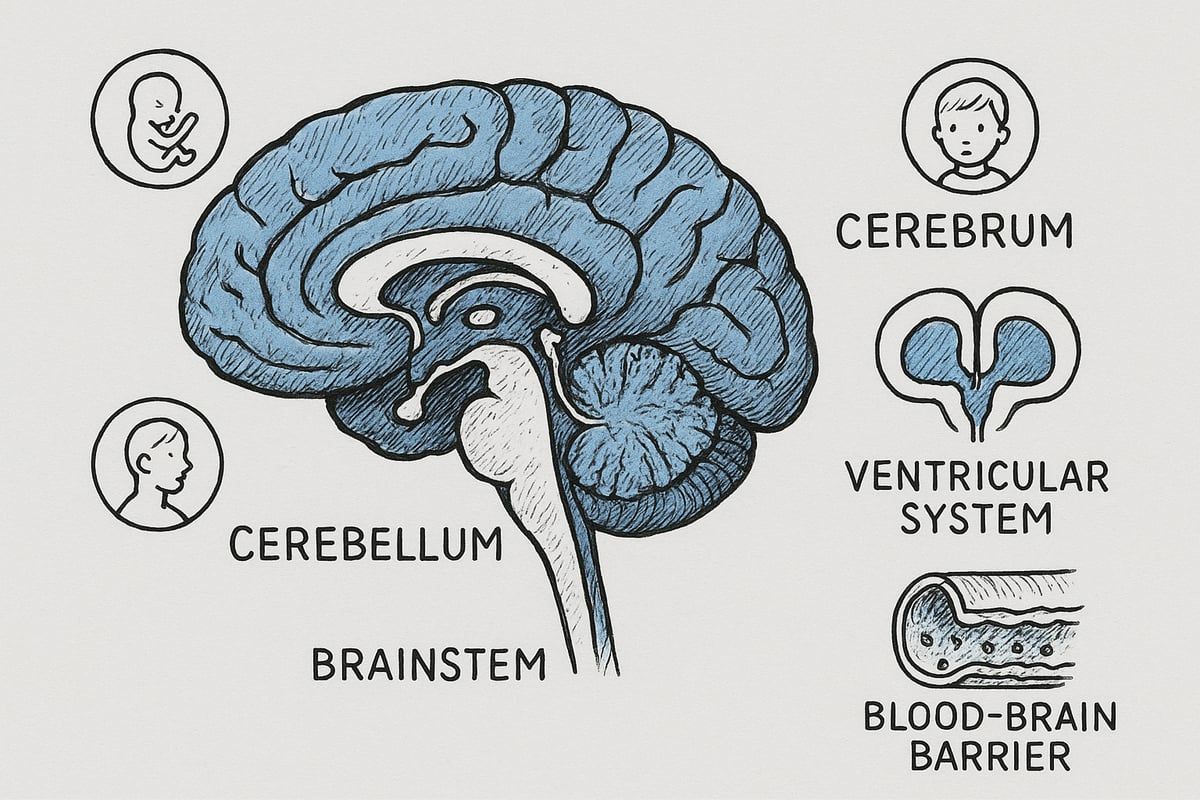
The main parts of the brain: the cerebrum, the cerebellum, and the brainstem
When we examine how the brain is structured, it is divided into three main areas: the cerebrum, the cerebellum, and the brainstem. The cerebrum takes up most of the skull and controls higher functions such as thinking and senses. The cerebellum lies at the back under the cerebrum and controls balance and coordination. The brainstem connects the brain to the spinal cord and controls vital functions such as breathing.
Each area has specific roles. For example, Parkinson's disease can occur when the brainstem is affected. By understanding this division, you will have a solid foundation for diving deeper into Brain Anatomy and Functions , where you can read more about the individual parts and their interactions.
Structure and function of the cerebral cortex
An important aspect of how the brain is structured is the cerebral cortex. The cerebral cortex is divided into several layers of gray matter, which consists of nerve cell bodies, and underlying white matter, which contains nerve fibers. This is where complex thought processes, sensory impressions, and motor skills are processed.
The cerebral cortex is particularly developed in humans, enabling advanced language, logic, and planning. Damage to the cortex can lead to impaired ability to solve problems or understand sensory input.
The ventricular system and the cerebrospinal fluid
To understand how the brain is structured, you need to know about the ventricular system. It consists of four cavities (ventricles) filled with cerebrospinal fluid that circulates around the brain and spinal cord. The fluid protects the brain from shock, transports nutrients, and removes waste products.
If the ventricular system is not functioning optimally, pressure in the brain can increase, as seen in hydrocephalus. The ventricles are therefore central to the health and stability of the brain.
The blood-brain barrier
A crucial part of how the brain is built is the blood-brain barrier. This barrier protects the brain from harmful substances from the bloodstream and only allows selected molecules to pass through, such as oxygen and glucose.
For example, many bacteria and toxins cannot pass the barrier, while certain drugs and alcohol can. The blood-brain barrier is therefore essential for maintaining a stable environment for nerve cells.
Brain weight and size
The size of the brain varies between species, but in adult humans it weighs an average of about 1.4 kg. When we ask how the brain is structured, a comparison can provide perspective:
| Nature | Average brain weight |
|---|---|
| Human | 1.4kg |
| Chimpanzee | 0.4 kg |
| Dog | 0.07kg |
| Mouse | 0.002g |
However, size does not tell the whole story about intelligence, as structure and connections play an even greater role.
Development from fetus to adult
How is the brain built throughout life? Development begins in the fetal stage, where nerve cells are formed and connected. During childhood, massive development of connections occurs, which form the basis for learning and behavior.
In adults, the brain continues to form new connections, especially if stimulated through learning and social activity. This lifelong development highlights the brain's unique plasticity and adaptability.
Functional Areas of the Brain and Their Roles
The brain is a fascinating organ, with each area having unique roles that together control our thoughts, feelings, and actions. To understand how the brain is structured, it is crucial to know the functional areas and their importance to our daily lives.
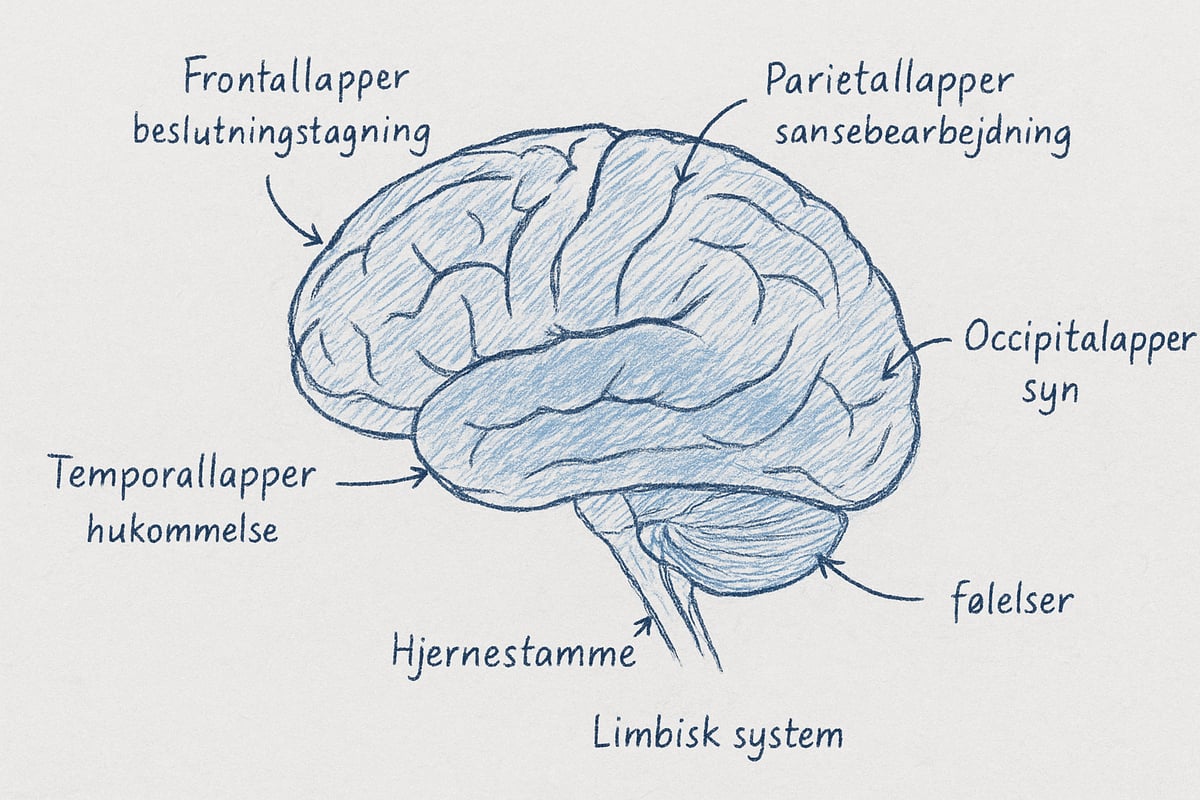
The Frontal Lobes: The Control Center
The frontal lobes are located at the front of the brain and serve as the control center for complex cognitive functions. They are where decisions are made, actions are planned, and personality is shaped. This area is also essential for impulse control and social skills.
Damage to the frontal lobes can cause significant changes in behavior and judgment, clearly illustrating how the brain is structured, not just in terms of anatomy, but also in terms of function. To visualize these areas , anatomical models of the brain can provide unique insight into the structure.
Parietal lobes: Sensory processing
The parietal lobes lie behind the frontal lobes and control sensory processing, especially spatial orientation and the sense of touch. This area helps us understand where our body is in space and processes tactile impressions.
An example of a disorder in this area is neglect syndrome, where a person ignores parts of their body or surroundings. When we ask how the brain is structured, the parietal lobes are central to explaining our ability to navigate the world.
Occipital lobes: center of vision
The occipital lobes are located at the back of the brain and are responsible for visual processing. Here, visual impressions are transformed into images that we can understand and respond to.
Damage to the occipital lobes can lead to severe visual impairment or even blindness, highlighting how the brain is structured around specialized areas that perform very specific functions.
The Temporal Lobes: Memory and Hearing
The temporal lobes are located on the side of the brain and play a crucial role in memory, language, and the interpretation of sounds. This is where we recognize voices, understand language, and store memories.
If the temporal lobes are damaged, it can lead to amnesia or language difficulties. In the discussion of how the brain is structured, this area is central to our ability to communicate and remember experiences.
Cerebellum (cerebellum): Motor skills and balance
The cerebellum, or cerebellum, is located below the cerebrum at the back. It coordinates movements and ensures balance and precision in motor skills.
Disorders in the cerebellum can lead to ataxia, which is a problem with coordination and balance. This shows that when we look at how the brain is structured, even smaller areas play a big role in our daily functioning.
The Brainstem: Vital Functions
The brainstem connects the brain to the spinal cord and controls vital functions such as breathing, heart rate and blood pressure. Damage to this area is often fatal, as it affects the most basic survival functions.
When examining how the brain is structured, the brainstem appears to be the foundation from which all other functions arise.
Limbic system: Emotions and motivation
The limbic system includes structures such as the amygdala and hippocampus, which regulate emotions, motivation, and emotional memory. It processes anxiety, joy, and memories, which have a major impact on behavior and well-being.
Disturbances in the limbic system can lead to anxiety or emotional disturbances. This area is a key element when asking how the brain is structured because it ties cognition and emotion together.
How Nerve Cells Communicate
Nerve cells, also called neurons, are the basis for how the brain is built and functions. A typical neuron consists of dendrites, which receive signals, a cell body, where the signal is processed, and an axon, which sends the signal on. The axon ends in synapses, where communication with other cells occurs. To get a visual overview of the structure of the neuron and the different areas of the brain, you can find posters about brain anatomy , which illustrate these complex connections. Each part of the neuron has a specific role in the overall network of the brain.
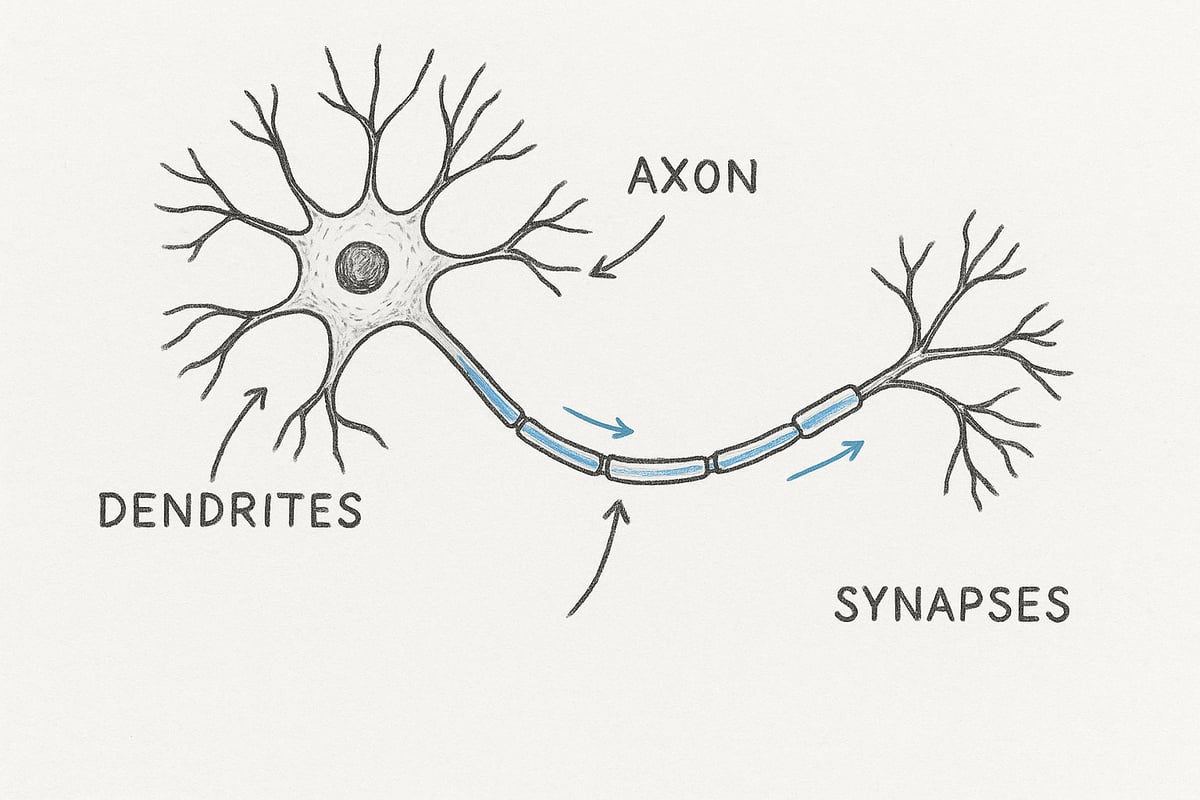
Structure of a nerve cell (neuron)
A nerve cell consists of several central parts. Dendrites act as receivers that pick up signals from other neurons. The cell body contains the nucleus and controls the cell's life processes. The axon sends electrical impulses to the synapse, where the signal is transmitted to the next cell. To understand how the brain is built, it is important to know about this structure, as the entire brain network depends on a close interaction between these components.
Electrical and chemical signals
Signal transmission in the brain occurs both electrically and chemically. When a neuron is activated, an action potential is formed, which is an electrical signal that travels along the axon. At the synapse, the signal is converted into chemical substances called neurotransmitters, such as dopamine and serotonin. These substances play a crucial role in how the brain is structured at the functional level, as they regulate everything from mood to movement and thinking.
Synaptic transmission
Synaptic transmission describes how signals are transmitted from one neuron to another. When the action potential reaches the synapse, neurotransmitters are released into the small space between the cells, called the synaptic cleft. Here they bind to receptors on the next neuron and pass on the signal. Disturbances in this process can lead to diseases such as depression, underscoring how critical synaptic communication is to how the brain is structured and functions optimally.
Plasticity: The brain changes
Neuroplasticity is the brain's ability to change and adapt throughout life. New connections are formed, while others weaken or disappear. This plasticity is crucial for learning, memory and rehabilitation after injuries. Statistics show that the brain can form new connections even in adulthood, which is central to how the brain is built dynamically and can adapt to new challenges and experiences.
Diseases related to cell communication
When communication between neurons fails, it can lead to serious diseases. Examples include multiple sclerosis, where signal transmission is disrupted by damage to the axon's protective layer, and epilepsy, where uncontrolled signals trigger seizures. These disorders show how vulnerable the system is and why understanding how the brain is structured at the cellular level is crucial for developing new treatments and prevention.
The Latest Research and Technology in 2026
Brain research has never progressed faster than it does now. To understand how the brain is structured, we need to take a closer look at the technological breakthroughs shaping the field in 2026.
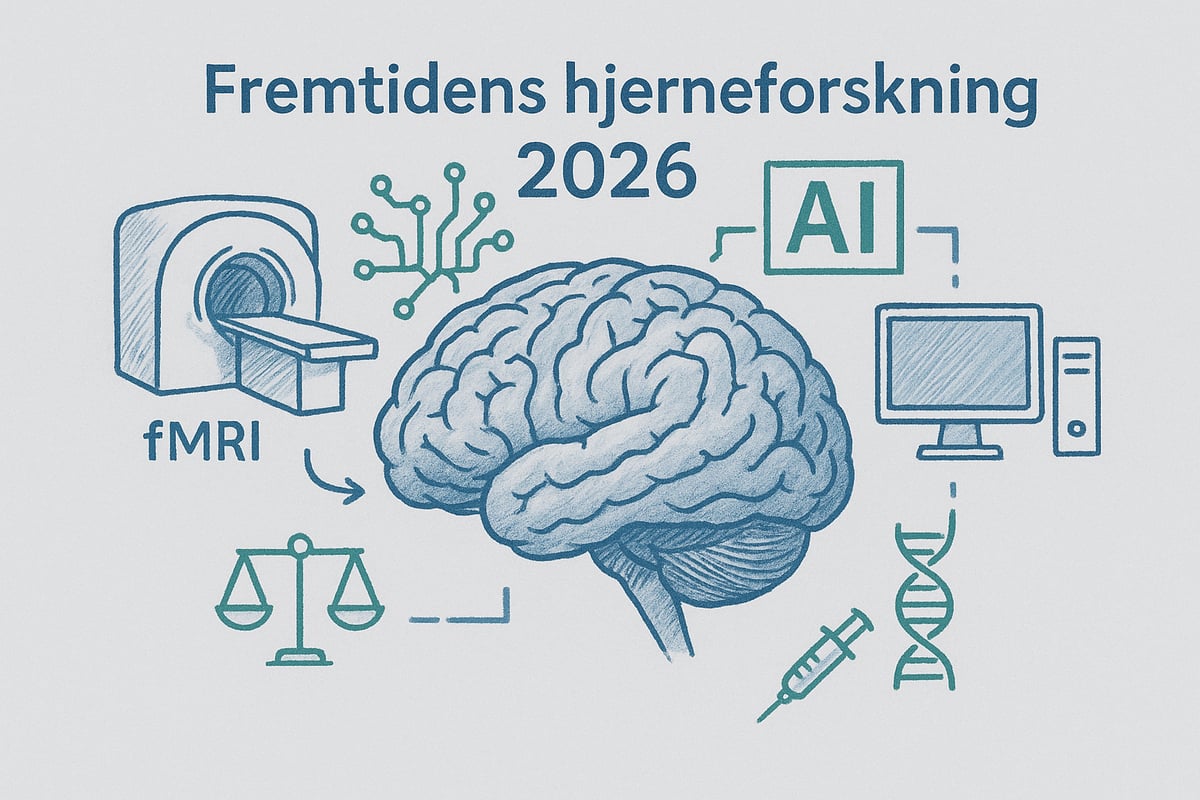
Cutting-edge imaging technologies
New imaging technologies have revolutionized our understanding of how the brain is structured. fMRI and PET scans are now used to map thought processes in near real time. These methods allow researchers to observe how different areas are activated during specific tasks. This provides unique insights into the structure and function of the brain.
For example, fMRI has made it possible to identify networks that control memory and attention. PET scanning is used in particular to follow metabolism and identify diseases early. If you want to delve deeper into brain anatomy and research, you can find more updated articles onthe Blog about anatomy and the brain .
Artificial intelligence and brain models
Artificial intelligence has taken research into how the brain is built to the next level. AI algorithms can now analyze vast amounts of data from scans and genetic studies. This means that researchers can discover patterns that would otherwise be hidden.
AI is also being used to simulate brain function. These digital models help predict the development of neurological diseases. The accuracy of predictions has increased significantly in recent years, giving hope for better treatments.
Gene therapy and neuroregeneration
One of the most promising developments in understanding how the brain is built is in gene therapy and neuroregeneration. Scientists are working to repair damaged brain cells using genetic techniques. Trials of gene therapy for Alzheimer's disease have already shown promising results.
Neuroregeneration is about stimulating the brain to form new cells. It opens up possibilities for treating diseases such as Parkinson's and stroke. Development is progressing rapidly, and several clinical trials are underway.
Brain-to-machine connection (BCI)
Brain-Computer Interfaces (BCI) is a field that makes it possible to connect the brain directly to computers or prosthetics. By understanding how the brain is structured, researchers can develop systems where people control artificial limbs with the power of thought.
Examples from 2026 show that people with paralysis can regain movement through BCI. The technology is developing rapidly, and its applications are growing both in medicine and everyday life.
Ethical challenges and societal debate
The technological advances in understanding how the brain is structured also raise difficult ethical questions. Who should have access to brain data? How do we protect privacy when the brain can be read so precisely?
Experts and ethicists are participating in the debate on manipulation, dependence on technology, and social justice. It is important that society follows developments and sets clear frameworks for the use of new opportunities.
Future perspectives for brain research
Even with all these advances, there are still many unanswered questions about how the brain is built. Scientists are working to understand the nature of consciousness, the causes of mental disorders, and the brain's ability to heal itself.
The expectation is that the next five years will bring breakthroughs that could change our view of both health and technology. The complexity of the brain will continue to fascinate, and the road to new discoveries has only just begun.
How to Strengthen Your Brain: Practical Advice
Understanding how the brain is structured is the first step towards strengthening it. But how can you specifically improve your brain's health and function in everyday life? Here are six practical and research-based tips that make a noticeable difference to both cognition and well-being.
The importance of diet for the brain
Your brain needs high-quality fuel. Omega-3 fatty acids are found especially in fatty fish and walnuts. They support signal transmission and protect against inflammation. Antioxidants from berries and vegetables protect nerve cells from damage.
Studies show that there is a clear link between healthy eating and improved cognitive function. When you understand how the brain is built, it becomes clear why nutrition is so crucial to its health.
Physical activity and brain health
Exercise is not only good for the body, but also for the brain. Regular physical activity promotes the formation of new nerve cells and strengthens the connections between them. This is especially important for the elderly, where exercise can improve both memory and learning.
If you want to know more about how exercise affects the brain, you can read the article Exercise and Brain Health . When we look at how the brain is structured, we understand that physical activity stimulates several areas simultaneously.
Sleep and recovery
Quality sleep is essential for memory, learning, and emotional balance. During sleep, the brain processes the day's impressions and strengthens important connections. Research shows that sleep deprivation can significantly impair cognitive abilities.
If you want to delve deeper into the role of sleep, we recommend The Importance of Sleep for the Nervous System . When asked how the brain is structured, recovery plays a crucial role in its function.
Mental stimulation and learning
The brain loves challenges. Learning a new language, solving puzzles, or playing an instrument trains the brain's plasticity. Lifelong learning can prevent dementia and keep the brain sharp.
To understand how the brain is structured, one must recognize its ability to form new connections throughout life. Mental stimulation is the key to harnessing this plasticity.
Stress management and mindfulness
Long-term stress can damage brain cells and impair memory. Mindfulness and meditation help lower stress levels and protect brain structure. Even short daily exercises make a difference.
When we examine how the brain is structured, we see that the balance between activity and calm is essential for mental health.
Social relationships and brain well-being
Social ties strengthen brain networks. Studies show that loneliness significantly increases the risk of dementia. Cultivating relationships and participating in social activities stimulates multiple areas of the brain.
Understanding how the brain is structured shows that interaction with others is crucial for both well-being and cognitive abilities.
Frequently Asked Questions about the Brain
Understanding how the brain is structured can provide answers to many questions we often ask about the mysteries of the brain. Here you will gain insight into the most common questions about the anatomy, function and development of the brain.
How many neurons does the brain have?
When we ask how the brain is structured, the number of neurons is a central element. The human brain contains approximately 86 billion neurons. These cells create networks that enable everything from thought to movement. In comparison, a mouse has about 70 million neurons, illustrating the complexity of the human brain.
| Nature | Number of neurons |
|---|---|
| Human | 86 billion |
| Mouse | 70 million |
| Elephant | 257 billion |
The many neurons are the basis for how the brain is structured, and they work closely with support cells.
Can the brain heal itself?
Many people wonder how the brain is built when it comes to its ability to heal itself. The brain has a certain degree of plasticity, which means it can form new connections after damage. However, its ability to restore lost neurons is limited. Research shows that certain areas, such as the hippocampus, can form new cells, especially when stimulated through learning or exercise.
This ability to change is crucial for rehabilitation after stroke or trauma. However, more severe injuries can lead to permanent functional impairments.
How does age affect brain function?
Age has a major impact on how the brain is structured and functions. As people age, most people experience a natural decline in certain cognitive functions, such as memory and reaction time. This is due, among other things, to a decrease in the number of synapses between nerve cells and a reduction in blood flow to the brain.
However, there is great individual variation. Many older people retain sharp mental abilities, especially if they keep their brains active with challenges and social interaction.
What diseases most often affect the brain?
When we look at how the brain is structured, it is important to mention diseases that can affect different areas. Common brain diseases include dementia, stroke, epilepsy and depression. Each disease affects specific parts of the brain and can cause very different symptoms.
If you want to learn more about diseases and medical conditions of the brain, you can see overviews and posters at Diseases and Medical Conditions of the Brain .
Is there a difference between men's and women's brains?
Research shows that there are small differences in how the brain is built in men and women, especially in relation to certain structures and connections. However, the functional differences are often minimal and overlapping. Many myths about large gender differences have been debunked, and individual differences are far greater than gender differences.
It is important to focus on the similarities rather than the differences when examining the structure of the brain.
Can you train your brain to become smarter?
Yes, mental training can strengthen the brain's abilities. When we challenge ourselves with new tasks, language, or problem-solving, new connections are formed between neurons. This process is part of how the brain is built and its ability to adapt throughout life.
Studies show that lifelong learning and activity can prevent cognitive decline and increase the brain's resilience.
What role do genes vs. environment?
Both heredity and environment play a role in how the brain is built and develops. Genes determine the basic structure and certain dispositions, while the environment, such as upbringing, education, and diet, shapes brain function over time.
Researchers believe that it is the interaction between genetic factors and life experiences that determines how the brain's networks are formed and maintained.
Now that you have gained insight into the fascinating structure of the brain and how new research is giving us ever deeper understanding, you are better equipped to both take care of your own brain and understand the signals it sends you every day. Perhaps you have become curious to explore even more or want to see the structures of the brain up close. At eAnatomi you can find detailed models and posters that make complex knowledge tangible and relevant – whether you are a student, a teacher or just curious about the mysteries of the body.
Read more here
0 comments