

How can you transform your classroom into a place where students not only learn, but also become curious? This guide shows you how to make students curious with anatomical classroom design. You will get concrete steps, research-based inspiration and practical examples. Modern learning environments can awaken student engagement, strengthen the desire to learn and turn design into an active tool. Take the first step today and see how small changes can make a big difference.
Why Anatomical Design Increases Students' Curiosity
The Brain's Learning and Visual Stimuli
How can we best make students curious with anatomical layout of the classroom? The answer lies in the way the brain processes visual impressions. When students encounter concrete objects and colorful posters, both curiosity and memory are activated.
Research shows that 83% of students learn better through visual stimuli. Anatomical models and posters make complex topics easier to understand because the brain perceives shapes and colors more easily than text alone.
By integrating anatomical models into the classroom, both the senses and thought processes are stimulated, increasing the student's desire to ask questions and engage with the material.
Visual elements thus create a bridge between theory and practice. Make students curious with anatomical layout of the classroom by making the abstract tangible.
Examples from Schools and Educational Institutions
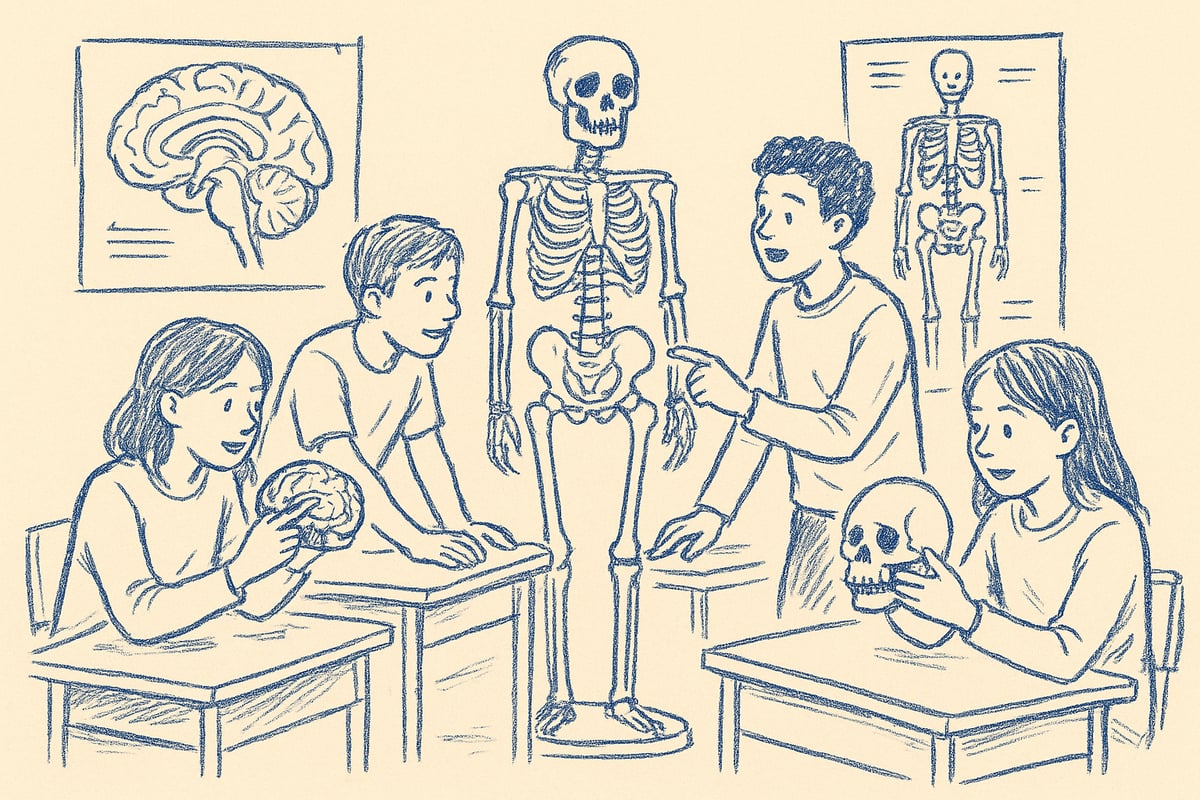
Many schools have already chosen to make students curious by using anatomical layouts in the classroom. Experience shows that the physical presence of models and posters leads to more active participation.
In a Danish elementary school, large skeleton models and organ posters were installed. Teachers quickly noticed that students began asking more questions and participating more in discussions.
International case studies confirm these findings:
- Improved student participation in science lessons.
- Several interdisciplinary projects were initiated.
- Greater interest in scientific subjects.
When we make students curious with anatomical design of the classroom, the door opens to a more vibrant and engaging teaching.
Creating an Inspiring Learning Environment
An inspiring learning environment is essential to make students curious with anatomical layout of the classroom. The environment affects both motivation and desire to learn.
When the classroom is decorated with relevant models and posters, the teacher quickly notices a positive change. Students become more attentive and curiosity flourishes.
It's not just about decoration, but about creating a setting that invites discovery and dialogue. Small changes in the interior design can yield big results for both well-being and professional engagement.
When we make students curious with anatomical layout of the classroom, the teacher gets a powerful tool to promote active participation.
Academic Anchoring and Interdisciplinarity
Make students curious with anatomical classroom design by using elements that support multiple subjects. Anatomical models can be used in biology, physical education, and science.
For example, a skeletal model can illustrate both the body's movements in sports and the structure of bones in biology. This strengthens understanding and makes the material more present.
Interdisciplinary projects are brought to life when students can touch, see, and examine the models. This opens up collaboration between teachers and gives students multiple perspectives on the topics.
By making students curious with the anatomical layout of the classroom, the common thread in the school's teaching is strengthened.
Future Competencies
In 2026, curiosity is a core competency. Make students curious with anatomical classroom design and prepare them for the demands of the future.
When students' curiosity is stimulated, they develop critical thinking and the ability to learn new things, which is essential for higher education and health professions.
Classrooms that prioritize curiosity encourage students to explore and ask questions. The investment in anatomical design is therefore also an investment in students' future success.
By making students curious with anatomical design of the classroom, the foundation for lifelong learning and engagement is created.
Planning: How to Select Anatomical Elements for the Room
Planning is key when you want to make students curious with anatomical design of the classroom. A well-considered process ensures that the design supports both learning, well-being and engagement. Here you will get a step-by-step guide to selecting the right anatomical elements for your particular room.

Needs analysis and target group understanding
The first step is to understand who the design will benefit. Map grade levels, academic goals, and student prerequisites. Involve teachers and students in the process to uncover needs and desires.
Ask: What subjects will use the space? What themes are the students interested in? When you make students curious with anatomical layout of the classroom, you create space for dialogue and engagement.
Use questionnaires or workshops to gather input. The better the needs analysis, the more targeted the design will be. This provides a strong foundation for the next steps.
Selection of Anatomical Models and Posters
When choosing materials, variety is key. Consider skeletal models, brain models, organs, and posters of body systems. Think about both level of detail and durability.
Larger models can be used for demonstration, while smaller ones are suitable for group work. If you want to make students curious with anatomical design of the classroom, choose visual materials that inspire questions and exploration.
A good place to start is to explore anatomical posters for the classroom , which can serve as eye-catchers and daily learning tools. Also, remember to consider whether the models can be used across subjects.
Location and Visibility
The placement of anatomical elements is very important. Place models and posters where they are visible and easily accessible to students. Studies show that 70% more students interact with materials that are centrally located in the room.
Consider placing the skeleton model at the entrance so that it becomes a natural topic of conversation. When you make students curious with anatomical design of the classroom, it is about creating curiosity already at first glance.
Use group rooms and walls for posters so that all students benefit from the visual stimuli. Also think about lighting conditions so that the elements appear clearly.
Security and Availability
Safety is a must, especially in educational settings. Choose models without hazardous chemicals and look for formalin-free alternatives. This will protect both students and teachers.
Accessibility is equally important. Make sure that all students, including those with special needs, can interact with the materials. When you engage students with anatomical design in the classroom, everyone should have the opportunity to actively participate.
Also, check that the models are robust and can withstand daily use. Review safety data sheets and create clear guidelines for use.
Budgeting and Resources
Finances play a big role in planning. Create a budget and investigate opportunities for recycling and sharing materials between different disciplines. This can result in savings and increased utilization.
Consider joint purchases with other schools or institutions. For example, School X has saved 20% this way. When you make students curious with anatomical layout of the classroom, sponsorships or local foundations can also be a way.
Compare prices and quality to get the most out of your resources. Prioritize materials that can be used in multiple contexts.
Sustainability and Ethics
Sustainability is becoming increasingly important. Choose synthetic models over real organs to consider both the environment and ethics. Eco-friendly posters and recyclable materials are also good choices.
When you make students curious with anatomical design of the classroom, you also show responsibility towards future generations. Consider the supplier's ethical standards and inquire about the production.
Think long-term: Sustainable solutions last longer and support the school's green profile. This is an important signal to both students and parents.
Step-by-Step Guide: Decorate Your Classroom Anatomically
Engaging students with anatomical classroom design requires a systematic approach. Follow this step-by-step guide to create an engaging learning space that puts students’ curiosity and learning at the center. Each step builds on the previous one, so both students and teachers get the most out of the design.
Step 1: Preparation and Idea Development
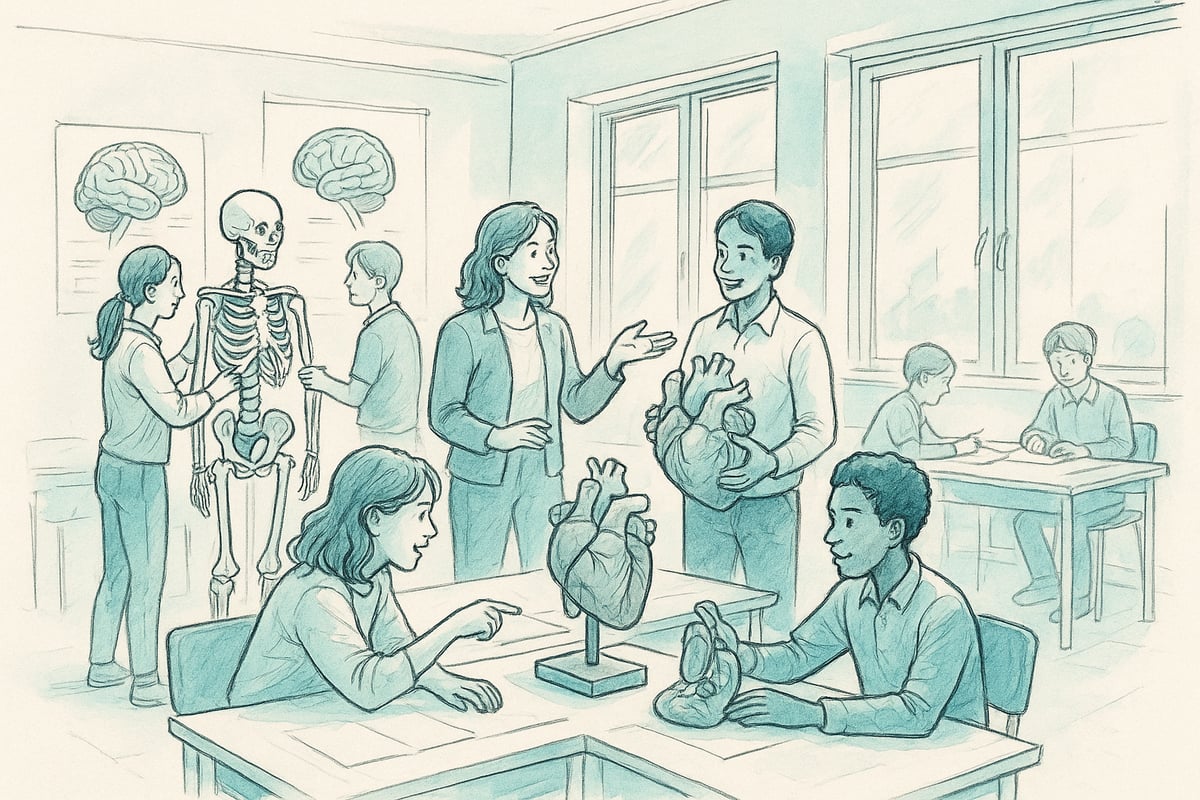
The first step to making students curious about anatomical classroom design is to assemble a committed team. Involve both teachers and students from the beginning. Plan an initial meeting where everyone can contribute ideas and wishes for how the room can best inspire learning.
Use tools like mood boards, sketches, or digital whiteboards where everyone can contribute images, colors, and suggestions for model placement. Discuss which subjects and grade levels will use the room the most, and which learning goals the design should support.
Let students present their own suggestions. This increases ownership and ensures that the design actually appeals to their curiosity. End the ideation phase with a plan that prioritizes the most motivating elements and sets clear goals for how you will make students curious with anatomical design of the classroom.
Step 2: Select Materials and Resources
Once the vision is in place, you need to choose the right materials to make students curious about anatomical design of the classroom. Start by mapping out which models, posters and possibly digital solutions will best support your learning goals.
Consider different types: skeletal models, organ models, posters of the brain and nervous system. Think about the level of detail, size and durability so that the materials are relevant for both small and large classes. For example, skeletal models for school use can be used in both biology and physical education and create interdisciplinary connections.
Compare prices, quality and options for combining physical models with digital resources. Consider budget and the ability to reuse or share materials across subjects. Inspire students with anatomical classroom design by choosing materials that invite exploration and touch.
Step 3: Practical Setup and Setup
Now the layout needs to be realized. To make students curious with anatomical layout of the classroom, you should focus on visibility and accessibility. Place models and posters so that they are easy to see and reach for both students and teachers.
Examine the lighting conditions in the room. Place the most detailed models near windows or in group rooms where students work together. Make sure there are no obstacles and that movement in the room is not hindered by the setup.
Safety is important. Assemble heavy models safely and choose materials that are free of harmful substances. Make sure all students, including those with special needs, can interact with the materials. Make students curious with anatomical classroom design by creating a space that invites them to investigate, explore, and ask questions.
Step 4: Integration into Teaching
To make students curious about anatomical design of the classroom, anatomical elements must be actively incorporated into the teaching. Develop assignments where students must use the models or posters as a starting point for group work, discussion or experiments.
Teachers can develop interdisciplinary courses, for example, where a skeleton is used in both biology and physical education, or where brain models form the basis for conversations about learning, memory, and well-being. Use the models as visual supports when reviewing new topics.
Create small stations in the room where students can investigate materials themselves. Let them ask questions and present their discoveries to the class. This way, it becomes natural to make students curious with anatomical layout of the classroom.
Step 5: Evaluation and Adjustment
Evaluation is crucial to maintain the effect and continue to make students curious about anatomical classroom design. Collect feedback from both students and teachers on an ongoing basis, for example through questionnaires or interviews. Ask which models are used most and which areas motivate more questions.
Use the feedback to adjust placements, replace or supplement materials, and develop new tasks. Consider rotating models and posters to provide ongoing visual stimuli in the classroom.
Create regular maintenance routines so that the materials always appear inviting. This way you ensure that it is still possible to make students curious with anatomical design of the classroom – also in the long term.
Examples and Inspiration
To illustrate the effect of making students curious with anatomical classroom design, you can draw inspiration from schools that have implemented similar projects. Many find that students ask more questions, engage more deeply, and remember the material better.
An example: A school chose to decorate a group room with a large skeleton and colorful posters of the brain. Before the change, participation was low, but after the decoration, the number of questions and discussions increased significantly.
Quote from a teacher: “Students ask more questions and remember better when the models are in the room.” Use before/after pictures or short descriptions to show how you have succeeded in making students curious with anatomical design of the classroom. Be inspired and adapt the ideas to your own needs.
Practical Tips for Maintenance and Long-lasting Effect
A well-designed classroom requires more than just setting up materials. To make students curious about anatomical classroom design in the long term, it is important to prioritize maintenance, updating and involvement. Here you will get practical advice on how to ensure that anatomical models and posters continue to inspire and support learning.
Cleaning and Storage
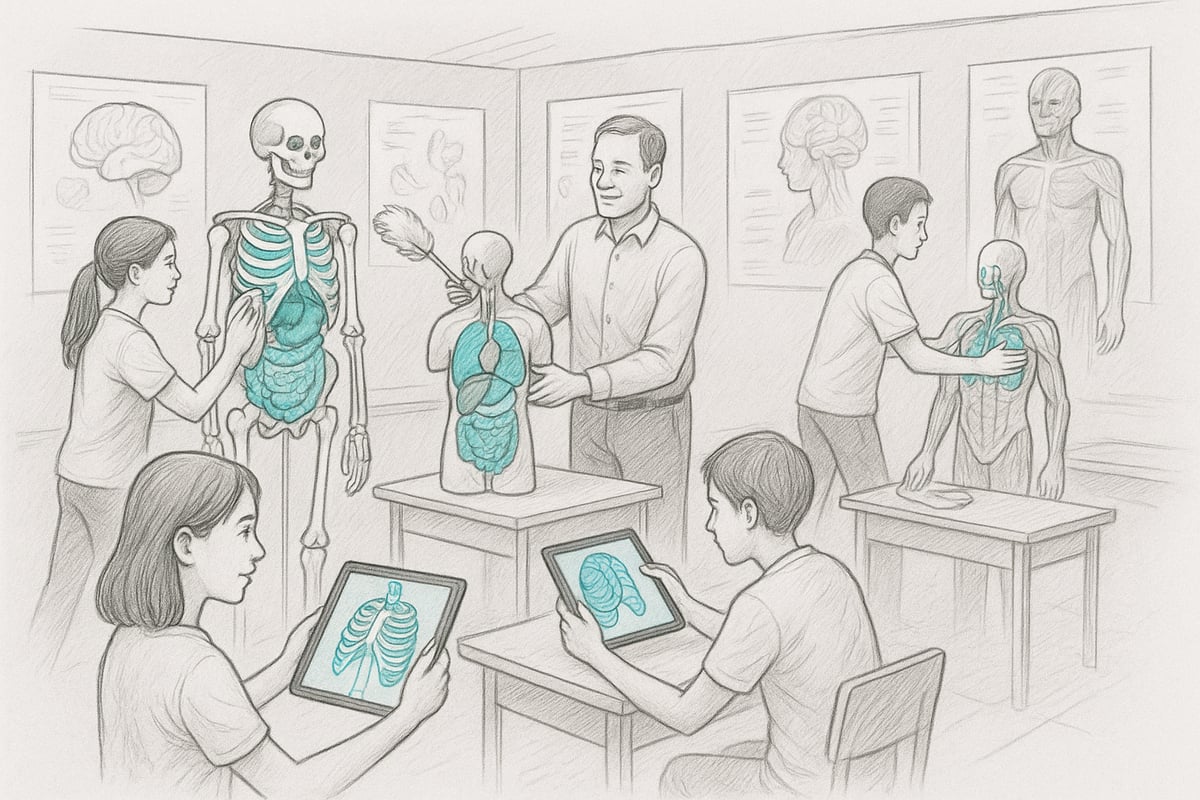
Regular cleaning is essential to keep students curious about the anatomical layout of the classroom. Use mild cleaning agents and soft cloths to avoid damaging the materials. Avoid chemicals that can damage the surfaces.
Store models and posters in cabinets or on shelves where they are protected from dust and direct sunlight. Having a consistent storage routine will ensure that models last longer and are always ready to use. Consider using easily accessible storage solutions so that students can take out the models themselves and engage in the lesson.
A good tip is to clearly label boxes and shelves so that it is easy to find the right materials. This helps both teachers and students to keep an overview and ensures that all equipment remains in good condition.
Update and Replacement
To make students curious with anatomical classroom design, you should regularly assess whether the materials are still up-to-date and motivating. Worn or outdated models can lose their pedagogical effect.
Consider a plan for replacement – for example every three years. By rotating materials and supplementing with new posters or models, teaching will remain fresh and inspiring. Many schools have had success sharing or swapping materials across subjects or grades.
Read more about how anatomical models in teaching can improve learning and make teaching more tangible and engaging. Continuous updating ensures that the layout always supports modern learning goals.
Involvement of Students
When you want to make students curious about anatomical design in the classroom, it is obvious to involve them in maintenance. Let students help with cleaning, setting up and organizing models and posters.
By giving students responsibility for the materials, ownership and engagement are built. Many teachers find that students take better care of the equipment when they are involved in the process. It can also increase motivation to work with the anatomical elements in the lesson.
Create small tasks or rotate “materials managers” in the class. This way, maintenance becomes a natural part of everyday life and strengthens collaboration.
Digital Expansion
The combination of physical and digital resources is effective if you want to make students curious about anatomical layout of the classroom. Use AR/VR applications or interactive apps to supplement models and posters.
Statistics show that 60% of students are more motivated when they can both touch models and explore anatomy digitally. Consider integrating tablets or smartboards where students can immerse themselves in 3D visualizations or simulations of the human body.
A digital extension makes it easier to adapt teaching to different learning styles. At the same time, it keeps students' curiosity alive as they can continuously discover new aspects of anatomy.
Ongoing Competency Development for Teachers
Teachers' knowledge and commitment are crucial to making students curious about anatomical design of the classroom. Offer ongoing courses in the use of models, posters and digital tools.
Exchange of experiences between teachers and institutions can provide new inspiration for teaching. For example, create network groups or hold workshops where you share experiences with maintenance and pedagogical use of the materials.
When teachers feel confident in using both physical and digital elements, it affects student motivation. An updated and engaged teacher is the best guarantee that the design continues to arouse curiosity and support learning.
Anatomical Design in the Classroom of the Future 2026
What does the classroom of the future look like when we actively make students curious with anatomical design of the classroom? It's not just about following the trends of the time, but about creating learning environments where students' curiosity and engagement are strengthened daily. Here we delve into how the latest technologies, inclusion, educational reforms, collaboration and investments are shaping the way forward.
Trends and Technologies
By 2026, technologies like AR, VR, and 3D printing will revolutionize how we engage students with anatomical design in the classroom. Students can explore the body in digital universes where they not only see but experience anatomy up close. Many schools are already experimenting with interactive solutions where students can “walk inside” a virtual heart or explore the function of organs. According to The Classroom of the Future: XR Technologies, XR technologies open up new, sensory learning experiences that maintain attention and enhance understanding.
Inclusion and Differentiation
When we make students curious with anatomical classroom design, all students must be able to participate. The design of the future will be adapted to different learning styles and needs, so that visual, kinesthetic and auditory students have optimal conditions. Special schools have shown how adapted models and tactile materials can make complex subjects accessible to everyone. Teachers use flexible solutions so that no one feels excluded, and everyone has the opportunity to explore anatomy on their own terms.
Interaction with Education Reforms
New reforms focus on curiosity as a driving force for lifelong learning. When we consciously make students curious with anatomical design of the classroom, we support the skills that society demands. The design can be linked to interdisciplinary learning goals, where biology, physical education and science merge. The article Anatomical architecture shows how space and design can integrate expertise across disciplines and motivate students to explore new contexts.
Collaboration Across Disciplines and Institutions
Collaboration is key when it comes to engaging students with anatomical design in the classroom. Schools, libraries, and museums can share resources, organize joint projects, or events where students work with anatomical models across disciplines. This gives students the opportunity to see anatomy in a larger context and learn from both experts and each other. Collaboration also promotes creativity and strengthens the social community in the learning environment.
Future-proofing the Investment
When we invest in solutions that make students curious with anatomical classroom design, we think about both the present and the future. Durable, flexible and updatable materials ensure that the design can keep up with technological and pedagogical developments. Schools are increasingly choosing models and posters that can be adapted to new learning goals and methods. It is an investment that pays off – both for students' learning today and for society tomorrow.
Now that you have concrete ideas on how to transform your classroom into a space where students’ curiosity truly flourishes, the next step is to put your inspiration into action. You don’t have to do it alone – we’ve gathered in-depth knowledge, practical examples and the latest trends in anatomical design so you can choose solutions that suit your specific needs. If you want to delve deeper into the possibilities, see more models and get inspiration for enhancing student learning through visual and engaging materials, you can Read more here .
0 comments