

Proper suturing training is essential for any medical student or healthcare professional who wants to master precision and patient safety. This guide gives you a complete overview of suture mat selection, use, and maintenance in 2025.
You will gain insight into the latest types, materials and benefits so that you can make the best choice for your development. Are you curious about the latest trends and practical tips? Read on and be equipped to choose the optimal solution for your training.
What is a suture mat?
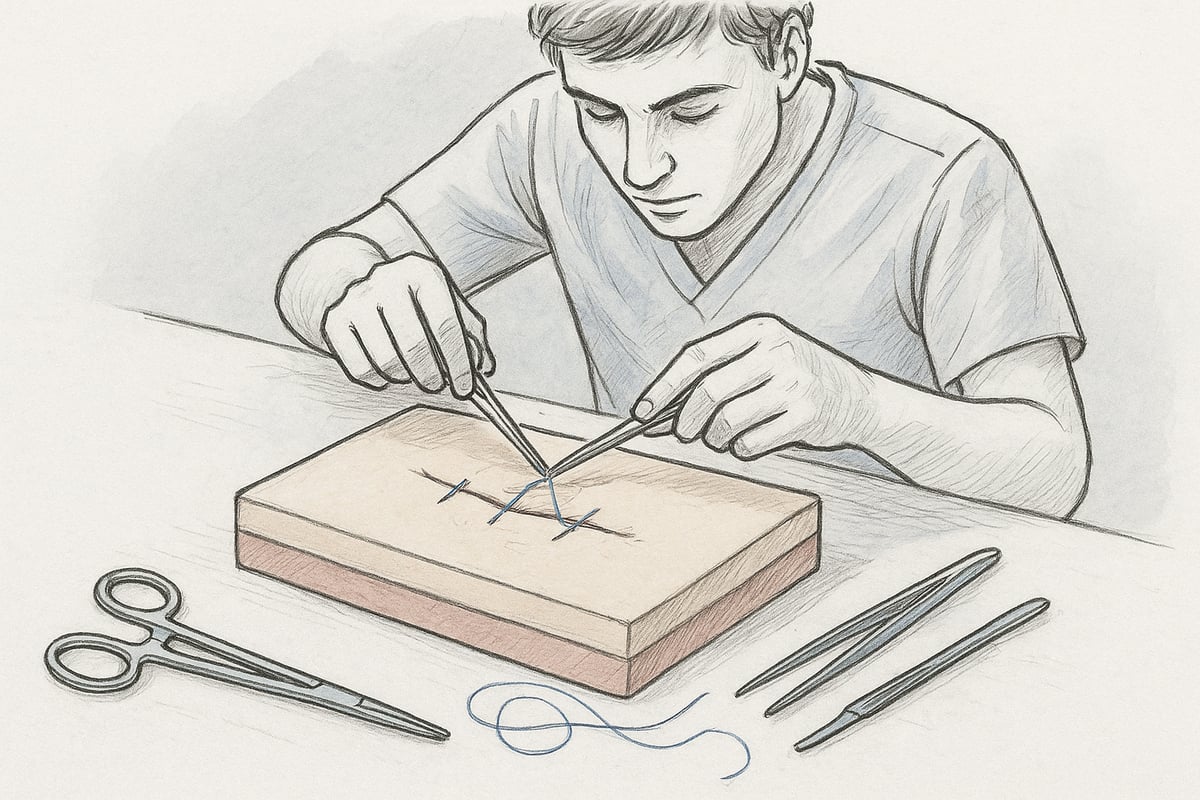
Understanding what a suture mat is is essential for anyone who wants to master practical skills in medicine and healthcare. A suture mat is a specially designed training tool that mimics human skin and tissue layers. It allows suturing techniques to be practiced in a safe learning environment without risk to the patient. In educational settings, suture mats are often used as part of simulation training, where they provide realistic conditions and the opportunity for repeated practice. The importance of simulation is supported by research in medical education , where evidence-based training is highlighted as central to the development of clinical competencies.
Definition and purpose
A suture mat is designed to provide a realistic experience of suturing human skin. It typically consists of several layers that imitate skin, fat and muscle tissue. The purpose is to make it possible to practice different suture techniques under controlled conditions. With a suture mat, students and healthcare professionals can improve their dexterity, precision and understanding of tissue resistance. In teaching, this provides a foundation for safe and effective patient treatment. The suture mat is therefore an indispensable tool in both basic and advanced training.
Historical development of suture mats
Before modern suture mats were available, natural materials such as oranges, pork or even banana peels were often used to practice suturing. However, these methods only provided limited realism and durability. As technology developed, silicone-based and synthetic mats were introduced. These provide a much more faithful simulation of the structure of the skin and tissue. The transition to advanced materials has significantly improved the quality of training and contributed to increased patient safety. A modern suture mat can therefore meet the demands of modern medical training.
Who uses suture mats?
Suture mats are relevant to a wide range of healthcare professionals. Medical students use them for basic skills training, while nurses and doctors use them for continuing education and specialization. Veterinary students also benefit from practicing on suture mats, as the techniques are often similar to those used on animals. In teaching, suture mats are used in practical lessons, exam preparation and simulation of complex scenarios. Their wide range of applications makes them a central element of modern healthcare education.
Benefits of training with a suture mat
Training on a suture mat offers a number of benefits. First and foremost, you can practice without risk to the patient or animal. This creates a safe learning space where mistakes can be corrected and techniques honed. Repeated use improves both confidence and precision, as there is the opportunity to repeat procedures many times. The suture mat also allows for the simulation of different wound types, which strengthens the user's skills and prepares them for real-world situations. The flexible training allows for the development of both basic and advanced skills.
Types and materials of suture mats in 2025
Choosing the right suture mat is essential for effective training and learning. In 2025, the market offers a variety of advanced options that cater to different needs from beginners to experienced professionals. Here, we review the most popular types, materials, construction, innovations, price points and specialized mats so you can make the best choice.
Overview of the most popular types
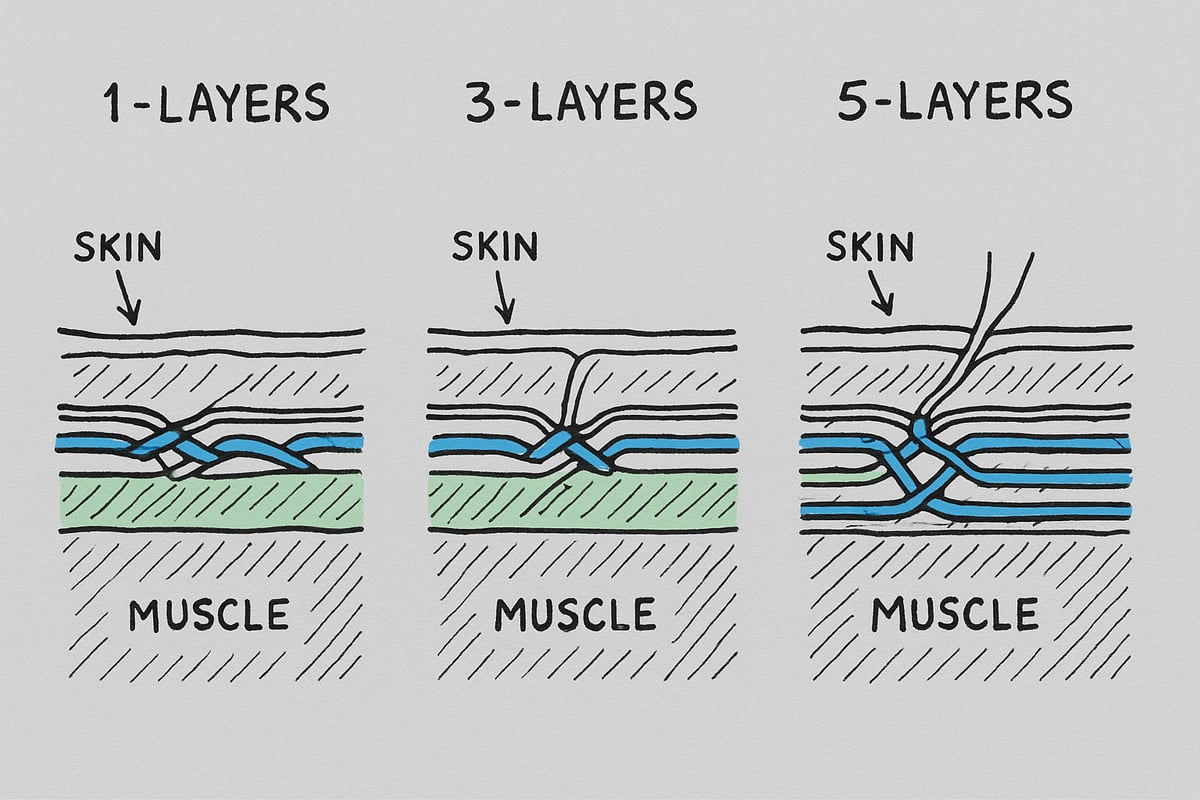
Suture mats come in several types, each with its own unique advantages. The most common are 1-layer, 3-layer and 5-layer models. A 1-layer suture mat is suitable for very basic training, where the focus is on basic stitches. The 3-layer model simulates skin, fat and muscle, providing a more realistic training experience. The 5-layer version is designed for advanced training and includes multiple layers of tissue to mimic real tissue resistance.
Specially designed mats with different wound lines and depths allow you to practice a wide range of suturing techniques. Choosing the right type ensures that your suture mat matches your training level and goals.
Materials: Silicone, latex and alternatives
The choice of material has a major impact on the experience with a suture mat. Silicone is the most popular choice in 2025, as it is durable, easy to clean and very realistic in terms of tissue resistance. Latex is still used in some cheap alternatives, but can cause allergic reactions and often lasts shorter.
Several manufacturers now also offer allergy-friendly alternatives without latex, making it easier for everyone to find a suitable suture mat. For an overview of relevant equipment options, please visit Training Equipment for Medical Students .
Realistic layers and texture
An important feature of a modern suture mat is how realistic its layer structure is. The most advanced models have up to five layers that mimic skin, subcutaneous fat and muscle. This makes training much more realistic and better prepares the user for clinical situations.
For example, Studentlab's 3-layer suture mat has different densities in each layer, so the resistance varies when the needle is passed through the mat. Good layering is therefore essential for effective learning and correct technique.
Innovations in 2025
Technological advances have made suture mats more advanced than ever before. By 2025, smart mats with built-in sensors and feedback systems will gain traction, allowing the user to objectively assess stitches and technique. These innovations will help both students and professionals optimize their skills.
At the same time, there is an increasing focus on environmentally friendly materials and sustainable production. More manufacturers are now using recyclable or biodegradable components in their suture mats to reduce environmental impact.
Price levels and quality
Price and quality are often linked when choosing a suture mat. Prices range from approximately 99 DKK for simple 1-layer models to over 399 DKK for advanced 5-layer versions with additional features. See the table below for comparison:
| Type | Price (DKK) | Durability | Realism |
|---|---|---|---|
| 1-layer | 99-149 | Low | Limited |
| 3-layer | 199-299 | Between | Good |
| 5-layer/smart | 299-499+ | High | Very high |
When you invest in a quality suture mat, you get longer durability and a better training experience. It is therefore worth considering both price and features before making your choice.
Special mats for advanced training
For those who want to refine advanced techniques, suture mats with built-in vessels, nerves or specially designed tissue structures are now available. These models are ideal for surgical specialization, such as in vascular surgery or orthopedics.
The ability to train on an advanced suture mat means you can simulate complex wounds and procedures without risk to the patient, increasing both precision and user confidence.
How to choose the right suture mat
Choosing the right suture mat is crucial to getting the most out of your training, whether you are a beginner or an experienced practitioner. The market in 2025 offers many options, so it takes insight to find exactly the suture mat that suits your needs and ambitions. Here we guide you through the most important considerations so that you make an informed choice.
Needs analysis: Who are you and what do you need to train?
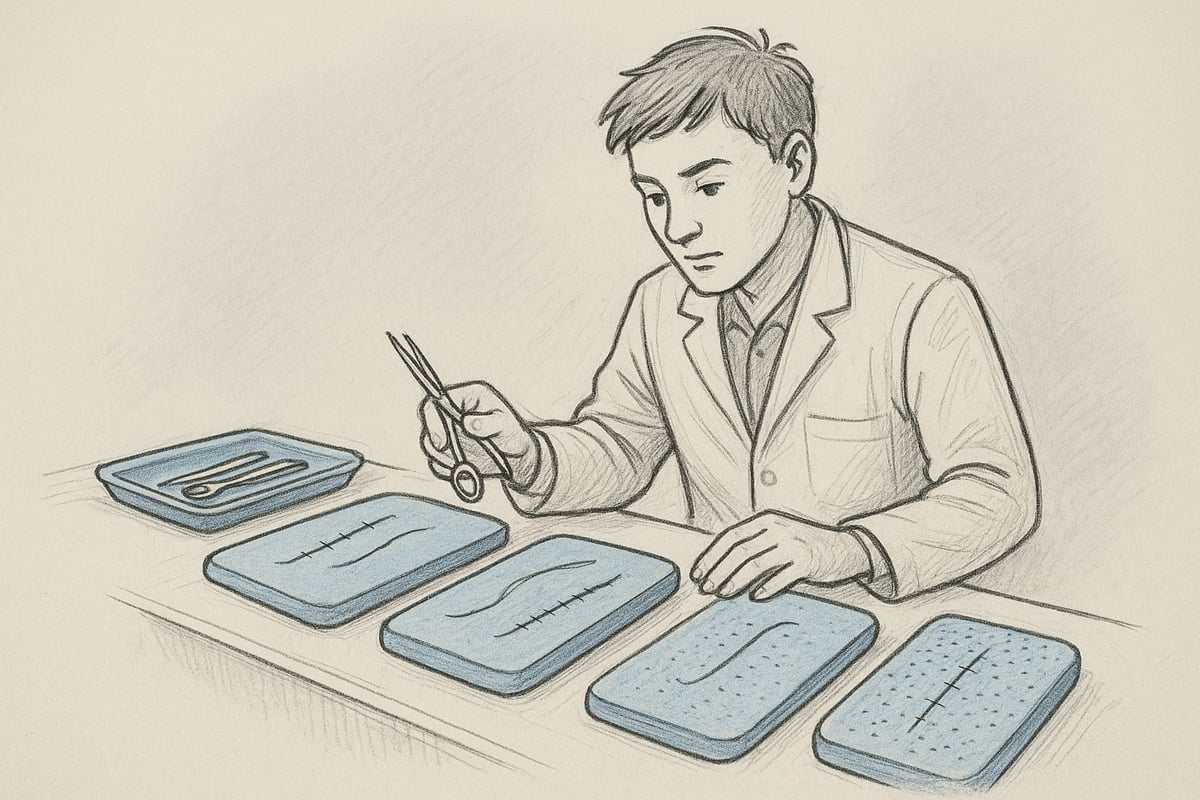
Before choosing a suture mat, you should reflect on your level and purpose. Are you a medical student learning the basic techniques or are you a doctor looking to hone advanced skills?
A suture mat for beginners often has simple wounds and fewer layers, while advanced users may benefit from models with multiple layers, built-in vessels or nerves. Also consider what suturing techniques you want to practice – simple surface sutures or more complex, deep incisions. Your goals should be reflected in your choice of suture mat to get the most out of your training.
Important selection criteria
When choosing a suture mat, there are several criteria you should consider. Realism is key – the more a suture mat resembles real tissue, the better. Layering, thickness and texture affect the experience and learning outcomes.
The size of the suture mat should be appropriate for your exercises and compatible with the needles and threads you use. Also, check if the material is hypoallergenic, especially if you or your students have a latex allergy. Finally, you should consider how durable and easy to clean your suture mat is, so that it can withstand repeated use.
Checklist for selecting a suture mat:
- Realistic layering and structure
- Suitable size for training needs
- Compatibility with needles and threads
- Hypoallergenic material
- High durability
Compare popular models
The suture mat market in 2025 is broad. Here is an overview of the most commonly used models:
| Model name | Layer | Material | Price (DKK) | Special features |
|---|---|---|---|---|
| Student lab 3-layer | 3 | Silicone | 199 | Multiple wound types, realistic |
| Basic latex mat | 1 | Latex | 99 | Simple, affordable |
| Advanced 5-layer | 5 | Silicone | 399 | Built-in vessels and nerves |
A mid-range suture mat will often cover most needs, but advanced variants allow for specialized training. Cheap alternatives may be sufficient for basic practice, but often lack durability and realism.
Tips to avoid mistakes when buying
It's easy to fall for the cheapest suture mat, but it can be expensive in the long run if it wears out quickly or doesn't meet your requirements. Avoid mats that feel too soft or hard, as they don't realistically simulate tissue.
Be careful with the choice of materials, especially if you have allergies. Read reviews and ask colleagues about their experiences. A good tip is to buy from reputable suppliers, where you can get advice and possibly return the product if it does not meet expectations.
Where do you buy suture mats?
You can buy suture mats online, in specialty stores, or through your educational institution. Many people choose online stores because the selection is large and the prices are transparent. However, also consider the benefits of shopping with retailers who can provide personal guidance or offer additional resources.
If you are an educator or responsible for major purchases, you may want to visit the Guide for Educators in Medical Training , where you will find good advice and materials about suture mats and related equipment. Always check customer service, shipping conditions and return policy before making a decision, so that you get the best experience and the right product.
Practical use: How to train effectively on a suture mat
Getting the most out of your training requires more than just buying a suture mat. Effective use ensures you develop precision and confidence while avoiding bad habits. Here's a step-by-step guide to optimizing your training so you can take your skills to the next level.
Preparation and setup
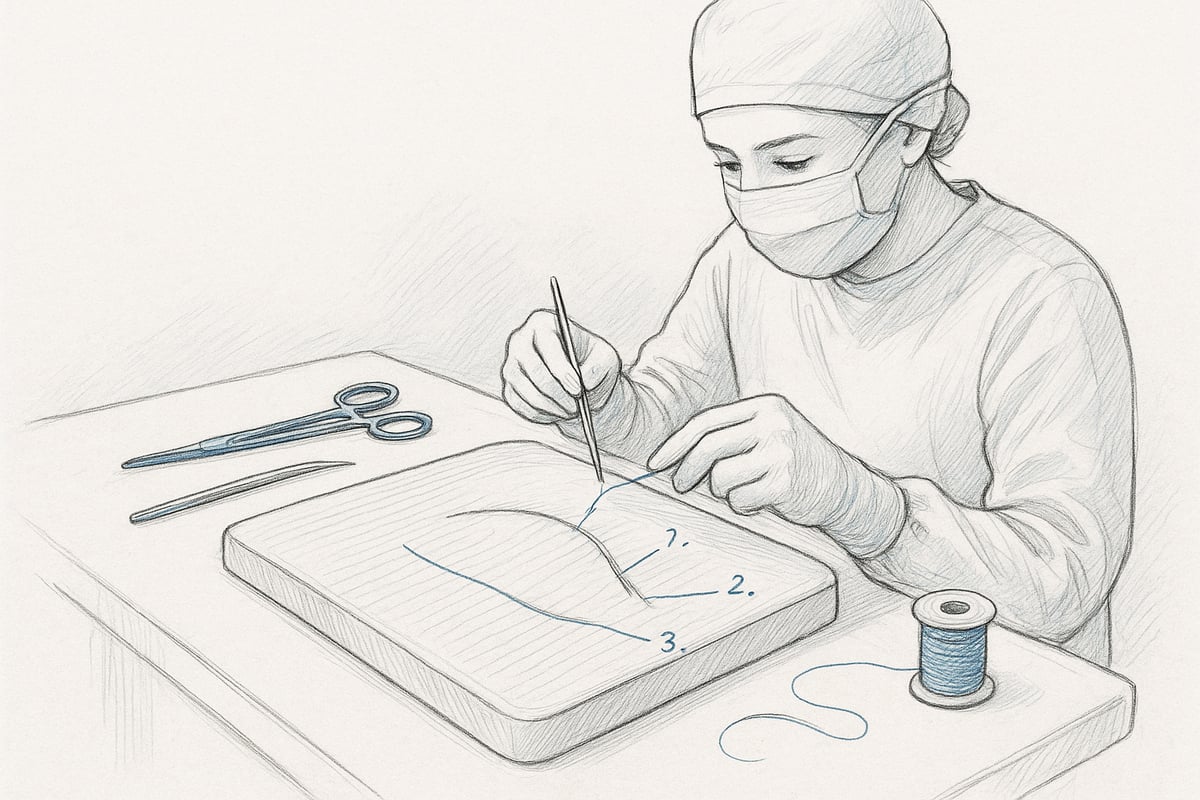
Before you start practicing, place your suture mat on a stable and clean surface. Wash your hands thoroughly and make sure there is no dust or dirt on the mat. Select the necessary instruments such as needle holder, forceps and surgical scissors.
Use only sterile or clean instruments as this will extend the life of your suture mat. Ensure that there is good lighting so that you can clearly see the structure and layers of the mat. Consider setting up an ergonomic workstation to prevent fatigue during longer training sessions.
Basic suturing techniques
Start with the classic techniques often used in clinical practice. On your suture mat, you can practice simple interrupted sutures, running sutures, and mattress sutures. Start by marking the wound line with a marker to help you stay focused.
Follow these steps:
- Pass the needle through all layers of the suture mat in a smooth arc.
- Use the needle holder correctly and avoid twisting the needle.
- Tighten the thread, but avoid damaging the material.
Repeat each technique several times to build muscle memory and routine. Assess the approximation of your wound edges to ensure optimal technique.
Advanced techniques and challenges
Once you get the hang of the basics, challenge yourself with more complex cuts and layers. Some suture mats have built-in vessels or nerves that require extra precision. Try suturing deep cuts where you need to go through multiple layers without damaging underlying structures.
Practice making subcutaneous sutures and try techniques used in plastic surgery or acute trauma. Using advanced features in your suture mat will help you develop a versatile portfolio of skills.
Typical mistakes and how to avoid them
Even experienced users can make mistakes while training on a suture mat. A classic mistake is pulling the thread too hard, which can lead to the mat tearing or wearing out prematurely.
To avoid this:
- Use appropriate thread tension.
- Ensure correct needle guidance through the layers.
- Avoid inserting the needle too steeply as this may damage the structure of the mat.
If you experience resistance, stop and adjust your technique. It is important to learn from your mistakes to improve both your technique and your results.
Maintenance and cleaning
A well-maintained suture mat will significantly extend its lifespan. After each training session, remove all thread residue and clean the mat with a mild soap solution. Avoid harsh chemicals as these can degrade the material.
Dry your suture mat thoroughly before storing. Store flat and away from direct sunlight or extreme temperatures. If small tears occur, they can sometimes be repaired with silicone adhesive – but larger damage often requires replacement.
Motivation and learning strategies
To get the most out of your suture mat training, set specific goals. Record your progress and use video recordings to analyze your technique. Peer review and feedback from fellow students can provide new perspectives and ensure faster learning.
Feel free to combine the use of a suture mat with visual aids such as anatomical posters and learning environments to better understand wound anatomy and layering. By varying training methods and environments, you will get a more effective and motivating learning experience.
Expand your training kit: What equipment should you have?
When working with a suture mat, it is important to have the right equipment. Proper equipment ensures that you get the most out of your training and can develop your skills effectively. Here we review what you should include in your training kit so that you are as well prepared as possible.
Suture threads and needles
The choice of suture threads and needles is crucial for optimal training on a suture mat. Both monofilament and multifilament threads are available, with monofilament causing less tissue trauma, while multifilament is easier to handle for beginners.
Typical materials include nylon, silk, and polypropylene. It is important to choose threads that match the layers of your suture mat so that you can practice in realistic conditions. Needles come in different shapes, such as round and cutting, and the size should be adjusted to the technique you want to practice.
A good rule of thumb is to have several types of threads and needles in your kit. This way you can adapt your training to both simple and more advanced suturing techniques.
Suture instruments and accessories
To work accurately on a suture mat, you need the right instruments. A basic suture kit should include a needle holder, toothed forceps, and sharp scissors.
It may also be beneficial to invest in additional accessories, such as tissue clamps or small trays for organizing equipment. Several manufacturers are now developing ergonomic instruments that reduce fatigue during longer training sessions. If you want to read more about how new equipment and innovation have evolved, see Our History and Development .
When choosing equipment, it should match the size and type of your suture mat so that you get optimal control and precision during training.
Supplementary training equipment
In addition to the suture mat itself, there are a number of additional tools that can enhance your learning experience. Skin models with different layers or anatomical posters allow you to understand how tissues are structured.
Digital resources such as instructional videos and training apps can help you learn new techniques and get feedback on your skills. By combining multiple training formats, you can achieve a more versatile and realistic workout that strengthens your skills on the suture mat.
Also consider using marker pens to draw wound lines or tasks directly on the mat so you can vary your workout.
Upgrading your training environment
A good training environment makes a big difference when practicing on a suture mat. Make sure you have an ergonomic workstation so you can work comfortably for longer periods of time.
Good lighting is essential to see details and avoid mistakes. You may want to use a desk lamp with an adjustable angle. A camera or mobile phone can be used to record your exercises so you can evaluate your technique or get feedback from fellow students.
Feedback tools, such as apps or peer review, can help you improve your skills and stay motivated when practicing on the suture mat.
Frequently asked questions about suture mats
Questions often arise when choosing and using a suture mat in medical training. Here you will find answers to the most common topics about durability, price, repair and alternatives, so you can confidently choose the best equipment for your learning.
How long does a suture mat last?
The durability of a suture mat depends on the material, how often it is used, and how well it is maintained. A quality silicone suture mat can often last 6-12 months with regular use. Latex models and cheaper alternatives tend to wear out more quickly, especially if exposed to a lot of force or the wrong needles.
Factors affecting durability:
- Material type (silicone, latex, hybrid)
- Training frequency
- Using correct needles and threads
- Cleaning and storage
By investing in a good suture mat and following recommendations for care, you can significantly extend its lifespan. Hands-on training with a durable suture mat is an important part of the learning process, which is also emphasized in Research Training for All Doctors .
Can a suture mat be repaired?
Small damages or cuts in a suture mat can sometimes be repaired, especially if they are superficial cracks in the silicone. Silicone glue or special repair kits can be used, but it is important to only use products intended for medical training equipment. If deeper layers are damaged, the mat often loses its realism and function.
When should you consider replacing your suture mat?
- If the layers separate or become too soft
- If the mat no longer holds needles or thread
- In case of repeated repairs without effect
A well-functioning suture mat ensures that you can practice correct technique without unnecessary distractions. This emphasizes the need for effective training tools in healthcare education, which is also mentioned in the Research Conditions at the Medical Preclinic .
How much does a good suture mat cost?
The price of a suture mat varies depending on the quality, layers and brand. A good 3-layer silicone suture mat typically costs between 199 and 399 DKK. Advanced models with built-in vessels or nerves can cost up to 600-800 DKK. Cheaper alternatives are available from around 100 DKK, but they often have a shorter lifespan and a less realistic structure.
| Type | Price (DKK) | Durability |
|---|---|---|
| 1-layer, basic | 100-150 | Low |
| 3-layer, standard | 199-399 | Between |
| 5-layer, advanced | 400-800 | High |
It is worth investing in a better suture mat if you want longer durability and more realistic training. Always consider what matches your needs and budget.
Are there alternatives to suture mats?
Yes, there are alternatives to a professional suture mat. Many students start by practicing on oranges, pork, or other biological materials. These solutions are inexpensive and provide some feel for the needle and thread, but they lack layering and cannot be reused in the same way as a silicone suture mat.
Advantages of alternatives:
- Low price
- Easily accessible
Disadvantages:
- Lack of realism in layers
- Short shelf life
- Hygiene problems
A professional suture mat provides the most authentic experience and allows for repeated, safe training. Therefore, it is recommended to use a suture mat as your main tool, especially when you want to build routine and precision.
Now that you have a solid overview of why proper suture mat training is so important and how to choose the right mat for your needs, there is even more to explore about the latest materials, practical tips and advanced models. At eAnatomi you will not only find detailed knowledge, but also access to the best products developed in collaboration with healthcare experts. If you want to delve even deeper into the possibilities, compare models or find the perfect equipment for your training, you can read on and get inspiration here:
Read more here
0 comments