

Have you ever wondered how a body poster can transform your understanding of anatomy? This guide is designed to help you choose, use, and understand body posters in 2025. Visual learning tools have become indispensable in education, healthcare, and the home.
You'll gain insight into the latest trends, learn how to choose the right poster, and get concrete tips for setup. Read on and discover how you can make learning more engaging and effective.
What is a Body Poster?
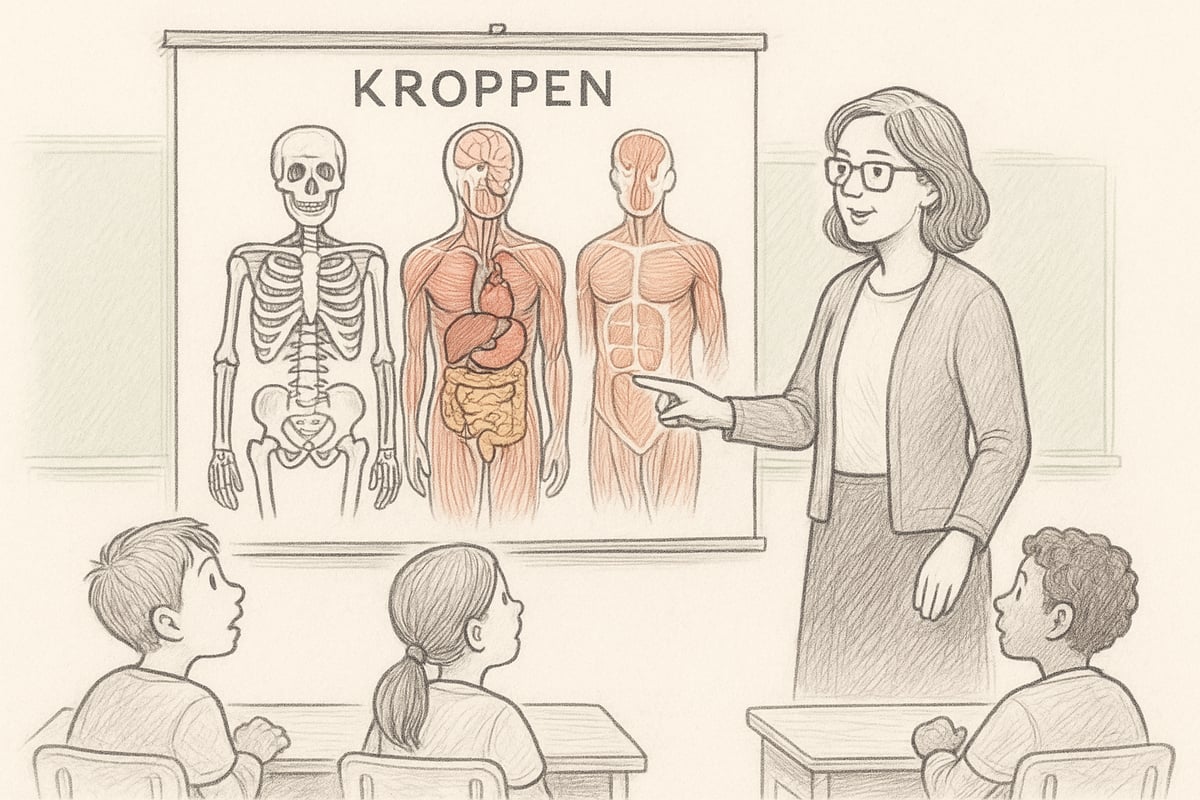
A body poster is a visual learning tool that illustrates the human anatomy in an easy-to-understand way. Originally, the first body posters were created as detailed drawings in the 19th century, often hand-painted and used in universities and hospitals. These early posters were primarily black and white and focused on accurate depictions of organs and the skeleton.
Over time, posters about the body evolved in step with new printing techniques and better color reproduction. Today, digitalization has revolutionized both production and accessibility. Modern posters can now be printed in high resolution, made interactive or customized to individual needs. This means that everyone – from students to health professionals – can find a poster about the body that suits their specific purpose.
Definition and History
A body poster has undergone significant development since the first anatomical illustrations were introduced in the 19th century. At that time, the focus was on accuracy and the posters were used in medical circles. Classic examples include the famous anatomy plates from European universities, where detailed drawings helped to convey complex knowledge.
As technology has advanced, the production of posters about the body has become more accessible. Digital printing has made it possible to create posters with beautiful colors, 3D effects and updated illustrations. Now everyone, from elementary schools to hospitals, can use posters in education and awareness.
Types of Anatomical Posters
There are many variations of body posters, depending on the target audience and purpose. For children, posters are often colorful, with simple illustrations and pictograms. Students and educators typically choose posters with detailed descriptions of the skeletal system, muscles, organs, or nervous system.
Health professionals often prefer posters that focus on specific areas such as circulation or digestion. For decorative use, stylized versions are seen that combine learning and aesthetics. According to the Ministry of Education, by 2023 more than 60 percent of Danish schools will use a poster about the body as part of biology lessons.
Purpose and Applications
A body poster is widely used in both education and healthcare. In classrooms, posters help students visualize complex topics and enhance group work. In clinics, they are used to explain anatomy, diagnoses, or treatment courses to patients in an easy-to-understand way.
Gyms and physical therapists use posters to illustrate muscles and joints, making it easier for clients to understand training programs or injuries. At home, a poster about the body can motivate children to learn more about anatomy and health. For example, many doctors use posters as an educational tool during patient counseling.
Benefits of Visual Learning Tools
Visual aids such as body posters have a documented effect on learning. Studies show that visual materials increase information retention by up to 42 percent. Posters can make complex anatomical topics more accessible because illustrations break down difficult concepts into concrete images.
Compared to traditional textbooks, posters promote faster understanding and engagement. For teachers and students, this is supported by research showing how visual learning processes strengthen skills and creativity . A poster about the body therefore serves as an indispensable tool in modern learning environments.
Examples of Popular Posters in 2025
In 2025, there are several trends in posters about the body. Many choose posters with 3D effects, which make it easier to understand the layers and structures of the body. Interactive posters with QR codes that link to videos or quizzes are gaining popularity in both schools and clinics.
Sustainability is also in focus, with manufacturers offering posters printed on recycled paper or environmentally certified materials. Among the most popular manufacturers are both Danish and international players, who deliver posters with updated knowledge and modern design. A poster about the body today is therefore much more than just a picture – it is a dynamic learning tool that adapts to the needs of the time.
How to Choose the Right Body Poster
Choosing the right poster about the body requires an overview of both needs, quality and target audience. Whether you are a teacher, student or simply curious about anatomy, there are several important factors to consider to get the most out of your investment.
Purpose and Target Group
Before choosing a poster about the body, you should clarify the purpose. Will it be used for teaching, patient information, decoration or studies? The target audience has a great influence on the content and level of detail of the poster.
Child-friendly posters about the body often have simplified illustrations and bright colors, while posters for healthcare professionals or students show more detailed anatomical structures. Adults and professionals typically prefer high professional precision and up-to-date knowledge.
Content and Professional Accuracy
The content of a poster about the body must be both correct and up-to-date. It is crucial that the illustrations are based on the latest knowledge and validated by experts. Posters without professional validation can confuse or spread misinformation.
According to the Danish School Leaders' Association (2024), 78% of teachers prefer posters developed in collaboration with health professionals. Always compare posters that have a quality seal with less well-designed alternatives.
Design and Readability
The design of a poster about the body plays a major role in readability. Color choices, clear contrasts, and a clear layout make it easier to understand the content. Large, clear labels and logical division of information help the user find the relevant information quickly.
Posters with too many details packed tightly together can be confusing, especially to younger or untrained eyes. Always choose a design that matches the user's level and needs.
Comparison table: Design choices
| Property | Clear poster about the body | Tightly packed poster about the body |
|---|---|---|
| Labels | Large, readable | Small, hard to read |
| Colors | Contrasting | Many, mixed |
| Layout | Clearly arranged | Complex |
Material and Durability
The choice of material for a body poster has a great impact on its lifespan. Paper posters are often cheaper, but more vulnerable to wear, moisture and sunlight. Laminated posters or those printed on recycled materials are both more durable and environmentally friendly.
Water-repellent surfaces make the poster easy to clean and suitable for both classrooms and clinics. Also consider environmentally certified materials if sustainability is important to you.
Size and Location
Posters about the body are available in several standard sizes such as A2, A1 and 70x100 cm. The choice of size depends on where the poster will be used. Large posters are suitable for classrooms or clinics where many people need to be able to see the information from a distance.
For smaller spaces, study spaces or home use, a smaller poster about the body may be more practical. Remember to choose a location with good lighting and at eye level for optimal visibility.
Price and Availability
The price of a quality poster about the body varies from approximately DKK 199 to DKK 899 in 2025. Factors such as size, choice of material and professional quality affect the price. You can buy posters both in physical stores with educational materials and on specialized webshops.
Some webshops also offer the option of special orders, so you can get a poster about the body in exactly the format or language you want.
eAnatomy: Expert in Anatomical Posters
When it comes to choosing a poster about the body, it can be an advantage to choose a supplier with documented expertise. eAnatomi is a leading Danish player that collaborates with healthcare specialists and offers scientifically correct illustrations.
Their wide range includes everything from large posters to tailor-made solutions for both educators, students and individuals. Read more about the company's expertise and selection on the About eAnatomy and expertise page.
Posters about the Body in Education and the Health Sector
Posters about the body play a central role in both educational settings and the healthcare sector. Visual tools make complex topics more accessible and understandable. Let's explore how these posters are used and create value in different contexts.
Use in Schools and Institutions
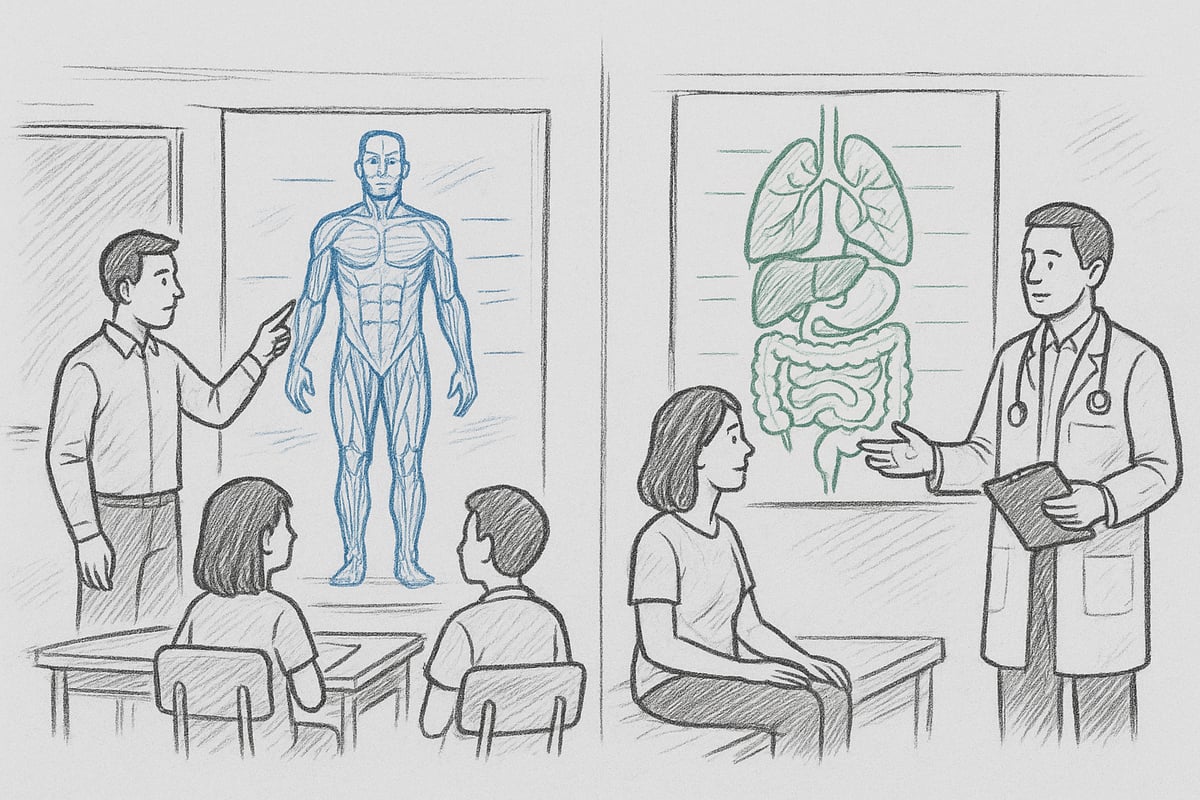
A body poster is a fixture in many Danish classrooms. It helps students visualize the structures and functions of the body, which strengthens their understanding of biology and health subjects. The posters are often used as a starting point for group work, where students analyze and discuss different parts of the body.
In exam preparation, a body poster serves as a quick reference that makes it easier to review complicated material. Many teachers choose posters that have been developed in collaboration with experts to ensure professional accuracy. To learn more about how to choose and use the most effective posters for teaching, visit Anatomy Posters for Teachers .
Value for Healthcare Professionals
In the healthcare sector, body posters are used as an educational tool for patient guidance. Doctors and nurses use posters to explain diseases, treatments and anatomy in an easy-to-understand way.
According to the Danish Association of Practising Physicians, 63 percent of Danish clinics have a poster about the body in their consultation rooms. This makes it easier for patients to understand diagnoses and treatment options. The posters contribute to a more open and informative dialogue between healthcare professionals and patients.
Educational Benefits
Visual aids such as body posters enhance both memory and engagement in students and patients. When complex anatomical concepts are clearly illustrated, learning becomes more effective.
Physical therapists often use posters to show muscles, joints, and movements when explaining injuries and treatment to their patients. This approach makes it easier for the individual to take an active part in their own rehabilitation or learning.
Digital vs. Physical Posters
The choice between a digital and a physical body poster depends on your needs and setting. Physical posters are easy to access and require no technology, making them ideal for classrooms and clinics.
However, digital posters can supplement learning with interactive elements such as QR codes that provide access to videos, 3D models or quizzes. The table below summarizes the advantages and disadvantages:
| Type | Advantages | Disadvantages |
|---|---|---|
| Physical | Accessible, robust, manageable | Limited interactivity |
| Digital | Interactive, updatable | Requires technology |
Inclusion and Accessibility
A modern poster about the body is often designed with a focus on inclusion. Easy-to-read illustrations and large letters make it easier for children and people with reading disabilities to understand the content.
Additionally, posters are available in multiple languages so they can be used in international environments and by people from different backgrounds. This increases accessibility and ensures that everyone receives the necessary knowledge about the body.
Learning Environments of the Future
As learning environments evolve, we see an increasing use of large posters about the body in open and flexible classrooms. The posters are becoming an integral part of blended learning, where digital and physical media are combined.
This development makes it possible to adapt teaching to different learning styles and needs. The future points to even more interactive and engaging solutions, where posters about the body will continue to play a central role.
Design Trends and Innovations for Posters about the Body in 2025
In 2025, body posters will experience a true design revolution. New technologies, environmentally conscious materials and personalized aesthetics are shaping the market. What trends should you know if you want to choose a modern and up-to-date body poster?
Modern Illustration Styles
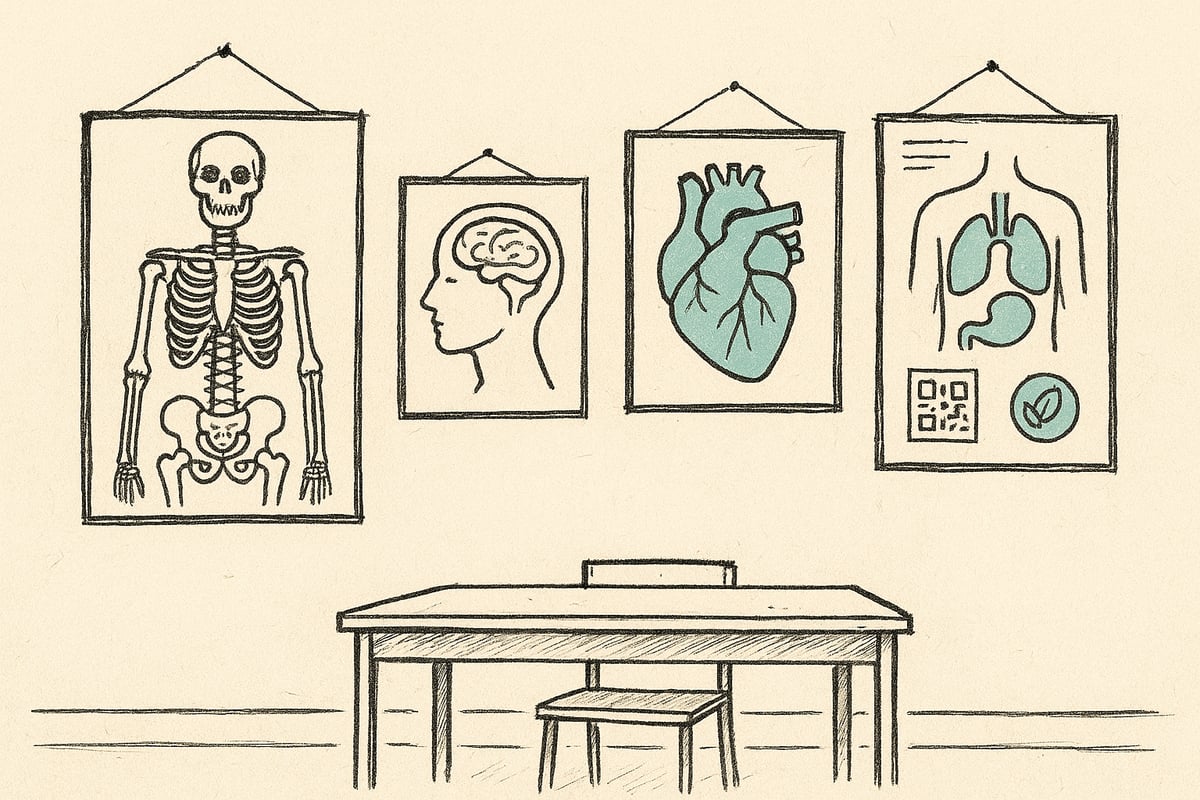
Today, body image posters embrace a wide range of visual styles. Minimalism and infographics dominate, where clear illustrations make complex topics easier to understand. Realistic drawings and 3D visualizations add depth, which especially enhances learning.
A significant innovation is the use of augmented reality. Students can now scan a poster about the body and experience organs or movement in 3D. This development is clearly seen in Anatomical posters designed in Denmark , where aesthetics and professionalism are combined in modern expressions. Several manufacturers are also experimenting with hand-drawn elements and color codes to make the content even more accessible.
Sustainability and Environmentally Friendly Production
Sustainability has become a key word for posters about the body. By 2025, 41% of new posters will be produced with environmentally friendly and recyclable materials. Printing methods with a low carbon footprint and FSC-certified paper are now standard with many Danish suppliers.
More schools and clinics are demanding posters that are both durable and environmentally friendly. Laminated surfaces without harmful substances extend the lifespan and protect the colors from sunlight. Focusing on sustainability is not just a choice, but a requirement for both public institutions and private individuals who choose posters about the body.
Digital Integration and Interactivity
Digitalization opens up completely new possibilities for posters about the body. Many posters are equipped with QR codes that link to videos, quizzes or 3D models. This makes learning much more interactive and appealing for both children and adults.
Apps and online platforms make it possible to combine the physical body poster with digital resources. Students and patients can immerse themselves in the topic, while teachers can offer differentiated instruction. This integration strengthens both engagement and understanding.
Personalization and Custom Design
Personalization is key when choosing a body poster. Several manufacturers now offer custom posters with specific illustrations, language, or audience adaptations. This means that the poster can match both teaching plans and individual needs.
As a gift idea for medical students or healthcare professionals, a unique poster about the body is particularly popular. The option to add your own logo, name or color theme makes it easy to create a personal touch. This trend is making posters more relevant and engaging than ever before.
Aesthetics and Interior Design
Aesthetics play an increasingly important role when posters about the body are to be included in modern learning environments or homes. Trends point to subdued colors, elegant frames and integration with existing decor. The poster functions not only as a learning tool, but also as a decorative element.
Large formats and frameless layouts are popular choices in 2025. The combination of professional depth and stylish design makes posters about the body have broad appeal. Inspiration for aesthetic and functional design can be found in specialized manufacturers that combine knowledge and visual innovation.
How to Set Up and Maintain Your Body Poster
Getting the most out of your body poster requires both careful setup and good maintenance. Thoughtful placement and proper handling ensure that the poster retains its expression and educational value for a long time.
Correct Setup
When you hang your body poster, choose a location where it is easily visible to everyone in the room. Hang the poster at eye level so that both children and adults can see the illustrations without difficulty. Avoid locations with direct sunlight, as this can fade the colors over time.
Consider using frames, adhesives or magnets for hanging. Frames give a professional look and protect against dust. Magnets are ideal on metal surfaces, while adhesives work well on smooth walls. Make sure the poster hangs flat and securely so it doesn't fall.
A well-placed poster about the body creates a visual center in the room and promotes curiosity.
Protection and Cleaning
Protect your body poster from sunlight, moisture and dust to extend its lifespan. Laminated posters are particularly resistant to dirt and can be easily wiped clean with a damp cloth. For paper posters, it is recommended to only dust the surface gently with a dry, soft cloth.
Avoid placing the poster near heat sources or in rooms with high humidity. If the poster gets wet, dry it immediately to prevent wrinkling or discoloration. Regular cleaning will keep the illustrations clear and easy to read.
A well-maintained poster about the body ensures that the information remains clear and attractive to both students and visitors.
Extend the Life of the Poster
To extend the life of your body poster, you can choose to frame it with glass or acrylic. This effectively protects against physical damage and UV rays. When moving or storing, it is important to roll the poster loosely and store it in a cardboard tube.
If the poster will be used in high-touch environments, such as classrooms or clinics, you should invest in durable materials. Watch for signs of wear and tear and replace the poster if the illustrations become unclear or damaged.
A good storage routine will help you preserve your body poster for many years.
Update and Rotation
It is important to regularly assess whether your poster about the body is still up-to-date with the latest knowledge and the best illustrations. New research results or educational trends may make it relevant to replace or supplement existing posters.
Consider rotating several posters throughout the year. This can increase interest and stimulate learning in students or patients. A varied approach keeps the learning environment fresh and engaging.
By updating and rotating your poster around the body, you ensure that the content is always current and inspiring.
Make the Poster an Active Part of the Learning Environment
Actively involve students, patients or family members in using your body poster. Create quizzes, tasks or small exercises where participants have to identify organs or explain functions based on the poster. This increases engagement and strengthens understanding.
For students, it can be useful to combine the poster with digital learning materials or interactive exercises.Anatomy Posters for Students provides inspiration and study tips for making optimal use of posters in the learning process.
When the poster is used actively, it becomes more than decoration – it becomes a central tool in learning and communication.
Now that you have gained insight into how visual learning tools like anatomical posters can enhance both understanding and engagement in the home, classroom or healthcare sector, you may be considering finding the right solution for yourself. Whether you want updated illustrations, sustainable materials or a design that suits your needs, it is important to choose quality and professionalism. At eAnatomi you will find an extensive selection developed in collaboration with experts. Want to know more or see the latest trends for 2025?
Read more here
0 comments