

Imagine understanding the body's complex movements with a single glance at the wall. A poster about the musculoskeletal system makes anatomy easily accessible, whether you are a student, teacher or therapist. This guide shows you how to choose and use the right poster to get the best results in 2025. We review anatomy, structure, selection criteria, practical applications, new trends and give you concrete tips for integrating visual aids into your everyday life.
What is the musculoskeletal system?
The musculoskeletal system is the foundation for the body's movement and stability. To get the most out of a poster about the musculoskeletal system, it is important to understand the basic structures and their importance in daily life.
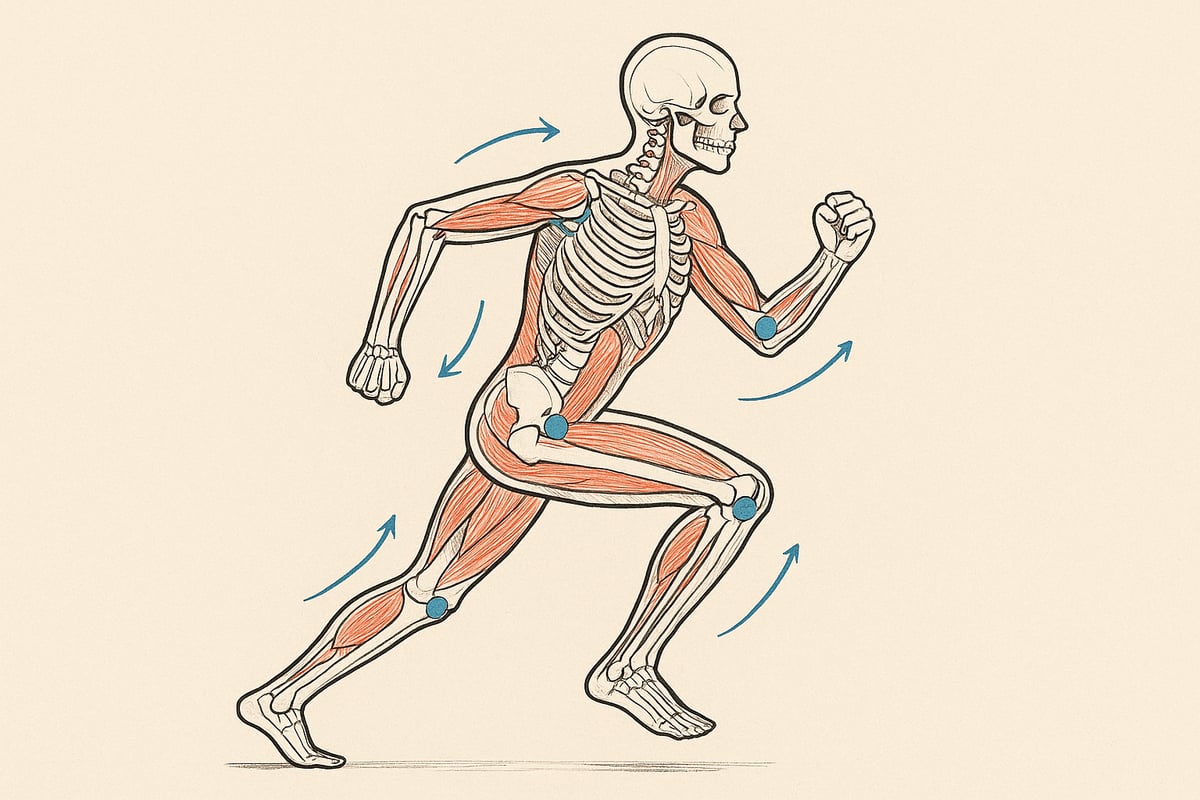
Main anatomical components
The musculoskeletal system consists of four main parts: the skeleton, muscles, joints, and tendons. These elements work closely together to enable movement, stability, and strength. The skeleton forms the body's framework and consists of over 200 bones, which form a solid foundation.
Muscles, which number more than 600 in the body, are responsible for creating movement by contracting and relaxing. Joints connect bones and provide flexibility, while tendons attach muscles to bones. A classic example is the knee, where the thigh muscle, the structure of the knee joint, and the surrounding tendons work together to enable walking, running, and jumping.
To understand how a musculoskeletal poster can be used effectively, it is key to look at the interplay between structure and function. For example, the hip joint is designed for both stability and movement, making it vulnerable to wear and tear and injury.
Here is a simple overview:
| Component | Function | Number (approx.) |
|---|---|---|
| Bones | Structure, support | 206 |
| Muscles | Movement, force | 600+ |
| Joint | Flexibility | 360+ |
| Tendons | Connects muscles | 4000+ |
For both students and clinicians, it is important to understand the whole picture. Knowledge of anatomy can help identify typical injuries such as sprains, meniscus tears, or osteoarthritis. If you want to delve deeper into the subject, Musculoskeletal Anatomy is recommended as a solid academic reference.
The role of the musculoskeletal system in everyday life
The musculoskeletal system is in use all day long, whether you are walking, running, sitting at your desk or lifting shopping bags. Every activity places demands on muscles, joints and tendons. Therefore, a poster about the musculoskeletal system is not only relevant for students, but also for anyone who wants to understand how the body works in practice.
Everyday stresses can lead to overuse injuries or pain, especially if you repeat the same movements. Runner's knee and office worker's back are classic examples of how a lack of knowledge about the musculoskeletal system can lead to problems. Having anatomical insight makes it possible to prevent injuries through proper movement and training.
Musculoskeletal disorders are among the most common causes of sick leave in Denmark. Statistics show that up to 30% of all sick leave is due to problems in the musculoskeletal system. By using a poster about the musculoskeletal system as a visual aid, both educators and therapists can make complex relationships more understandable and thus strengthen prevention.
In short: The musculoskeletal system is the foundation for everything we do physically. With the right knowledge and visual support, you can optimize both learning and health.
Why choose a poster about the musculoskeletal system?
Choosing a poster about the musculoskeletal system is an active step towards a better understanding of the body's anatomy. Visual aids such as posters make it possible to transform complex biological relationships into clear illustrations. For students, teachers and clinicians alike, this is an advantage in everyday life, where precise knowledge and rapid recognition of structures are essential.
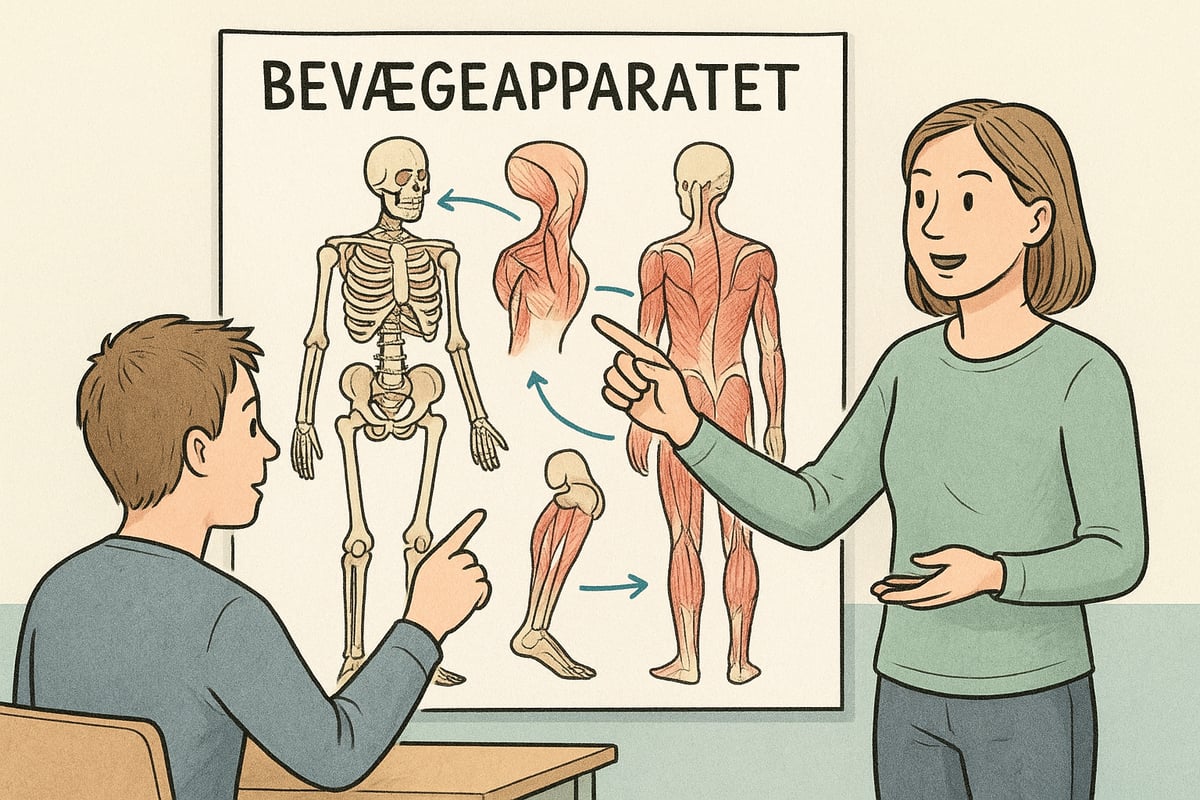
Benefits of visual anatomy aids
A poster about the musculoskeletal system provides an easy-to-understand overview of the body's structures. Illustrations make it possible to see the connections between muscles, bones, joints and tendons at once. This enhances learning because the brain processes visual information faster than text.
Posters make it easy to explain complex topics, both in teaching and patient guidance. For example, physiotherapists often use a musculoskeletal poster to show patients where an injury is located. Students can review anatomy by looking at the poster daily, which increases long-term memory.
Statistics show that students remember up to 65 percent more when visual aids are included in the teaching. This is because images engage multiple senses and create stronger mental connections. Posters therefore serve as a supplement to books and digital materials.
The benefits of a musculoskeletal poster are especially evident when multiple people need to learn or understand the same topic. In classrooms or clinics, everyone can quickly get the same visual reference point. This promotes collaboration and dialogue about anatomy.
When complex concepts are made visual, they become more accessible. A poster about the musculoskeletal system can therefore be the key to translating theoretical knowledge into practical understanding.
Types of posters and their uses
The selection of posters about the musculoskeletal system is wide, so it is possible to find the right one for both learning and clinical use. The most popular formats are A1 and XXL, but smaller or specially designed versions are also available. The materials vary from classic paper to laminated surfaces that withstand frequent cleaning and handling.
The level of detail can vary. Some posters show the entire musculoskeletal system in overview form, while others focus on specific areas such as muscles, joints or pathological conditions. For example, a muscle overview can provide a quick overview of muscle groups, while a detailed joint poster is used to explain specific injuries.
User groups range from students and educators to clinicians and patients. Students often prefer overview posters, while practitioners may need specialized illustrations. Posters are also used in patient education, where they help explain diagnoses and treatments in a simple way.
When choosing a poster about the musculoskeletal system, you should consider the purpose, target audience and the desired level of information. If you want a deeper insight into the different options, the Guide to Anatomy Posters can provide an overall overview and help you choose the right solution.
A musculoskeletal poster can therefore be adapted to any need. Whether you are looking for an educational tool for teaching or a practical tool for patient communication, there is a poster that fits the purpose.
How to choose the right poster about the musculoskeletal system
Finding the right musculoskeletal poster can make a significant difference to learning, teaching and everyday use. Your choice should be based on your needs, the purpose of the poster, and the practical context in which the poster will be used. Here, we review the most important considerations so you can choose with confidence and get the most out of your investment.
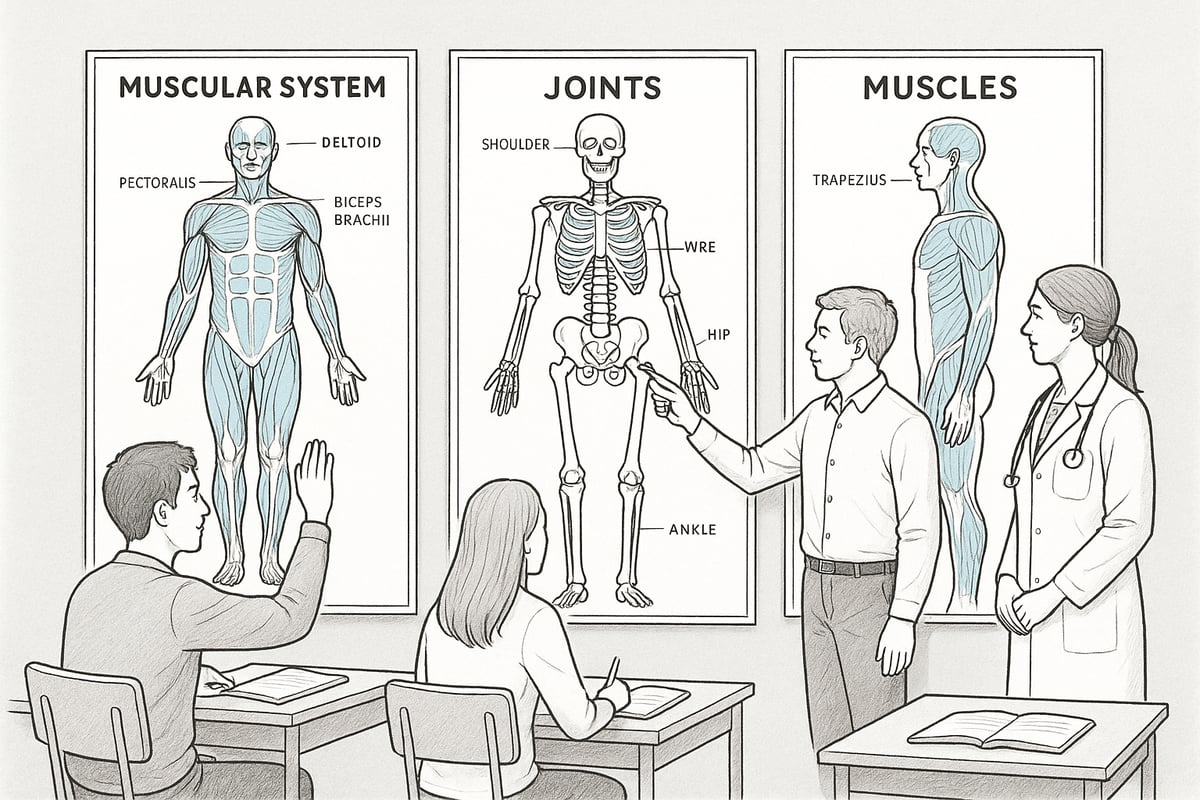
Assess your needs and objectives
Before choosing a musculoskeletal poster, consider who will use it and for what purpose. Are you a student, teacher, clinician, or individual? Students often need detailed illustrations for exam preparation, while teachers can benefit from overview posters that convey complex concepts quickly.
Clinicians often use posters as a dialogue tool with patients, where clarity and easy-to-understand illustrations are essential. In private homes, a poster about the musculoskeletal system can serve as both decoration and a learning aid.
For example, a physiotherapist will focus on muscles and joints, whereas a medical student may want more anatomical details and Latin terms. Defining your purpose early on makes it easier to choose the most relevant musculoskeletal poster.
Criteria for choosing a poster
Once you have clarified your needs, the next step is to assess the characteristics of the posters. An updated poster about the musculoskeletal system should follow the latest anatomy standards for 2025, so you avoid outdated knowledge. It is important to consider which language the poster should be in: Danish, Latin or English.
The format also plays a role, as A1 and XXL are often best suited for classrooms or large clinic rooms, while smaller formats can fit in the home or office. The choice of material is crucial for durability. Laminated posters are more robust and easy to clean, while paper posters are often cheaper.
Colors and graphic style should support readability. Choose a musculoskeletal poster with clear contrasts, logical color codes, and clear illustrations to ensure that both students and patients get the best out of it.
Practical considerations
When investing in a musculoskeletal poster, you should think about where and how it will be hung. Consider whether the poster will need to be moved or cleaned frequently. Laminated posters are ideal for high-traffic areas, such as classrooms or clinics, where hygiene is important.
The placement should ensure that the poster is visible to everyone. Hang it at eye level and avoid direct sunlight to prevent fading. Also consider your budget. A school class with many students may benefit from multiple posters, while a home setting typically only requires one poster about the musculoskeletal system.
If space is limited, framed posters or magnetic solutions can be an advantage as they are easy to move and protect the motif. These practical choices ensure that your musculoskeletal poster will stay beautiful and useful for many years.
Comparison of popular posters
The musculoskeletal poster market has evolved significantly, with several players offering specialized solutions for different needs. Two of the most popular choices in 2025 are “Muscle Poster EA5” and “Musculoskeletal Anatomy EA1.” Both posters are known for their high professional quality, modern design, and detailed illustrations.
Below is a comparison table:
| Poster name | Format | Language | Material | Application |
|---|---|---|---|---|
| Muscle poster EA5 | A1, XXL | Danish | Laminated | Teaching, clinic |
| Anatomy of the musculoskeletal system EA1 | A1, XXL | Latin/Danish | Laminated | Studies, practice |
The demand for large, detailed posters is increasing, and many choose to combine multiple designs for a complete learning environment. Read more about the popular Anatomy Posters EA1 and EA5 for in-depth information and user reviews.
By comparing features, design and ease of use, you will get the best basis for choosing the right musculoskeletal poster that matches your requirements and your learning environment.
How to use the poster effectively in teaching and practice
A musculoskeletal poster can transform teaching and practice from abstract theory to concrete understanding. The visual approach provides students, educators, and clinicians with a strong, common point of reference. When you integrate the poster into your environment, you create a foundation for active learning and improved patient communication.
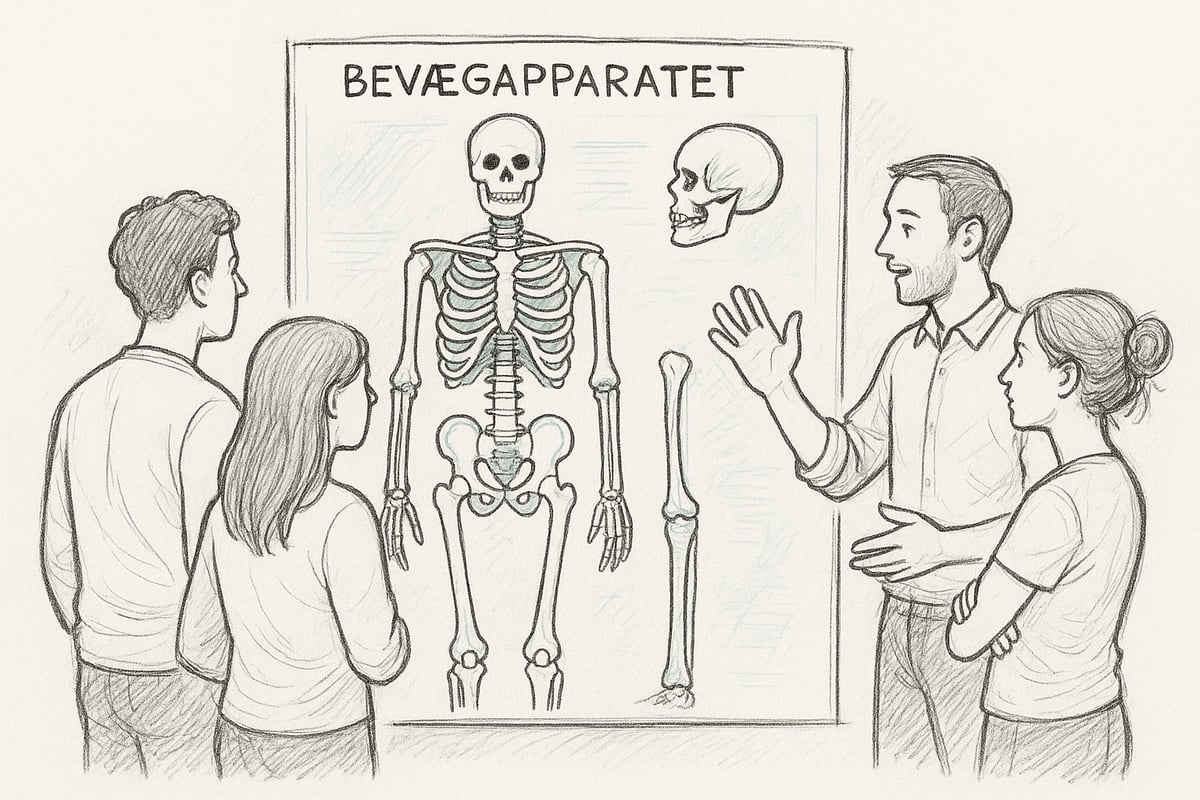
Integration into the educational environment
When you want to reinforce teaching, it is an obvious idea to place a poster about the musculoskeletal system in the classroom, clinic or training room. The poster acts as a visual anchor that quickly creates an overview. Many teachers use the poster as a supplement to textbooks and digital resources, so that students can easily connect theory with practice.
A concrete example is the use of “Musculoskeletal Anatomy EA1”, where the poster becomes a reference point during case-based exercises. Students can quickly point to, discuss and compare anatomical structures directly on the poster. Several medical students have shared their experiences, which you can read about in this review of the EA1 musculoskeletal poster .
To get the most out of your musculoskeletal poster, hang it at eye level and in a central location where it is visible to everyone. Repeated exposure strengthens memory and makes it easier to retain knowledge.
Active learning methods with poster
A poster about the musculoskeletal system provides an opportunity to engage both groups and individuals in active learning. Quizzes and group work, where participants must identify muscles, bones or joints, make the teaching lively and interactive. It strengthens understanding when students themselves point to the poster and discuss functions and relationships.
An effective method is to visualize movements or injuries directly on the poster. For example, you can ask participants to follow the path of movement of a joint or mark typical areas of injury. Practical exercises where a muscle or bone must be found on the poster make the learning tangible.
By integrating the musculoskeletal poster into exercises and dialogue, you get a dynamic tool that promotes both collaboration and individual reflection. The poster becomes a natural part of the learning space and strengthens visual memory.
Patient information and dialogue
Posters about the musculoskeletal system are a valuable tool in patient guidance and consultations. By using the poster as a starting point, you can explain diagnoses, treatments or rehabilitation courses in a more pedagogical way. Many patients find it easier to understand their situation when they see a visual representation of, for example, meniscus injuries or osteoarthritis.
In practice, you can point to the relevant area on the poster and show where the problem is. This opens up dialogue and questions, which increases the patient's understanding and motivation to follow treatment recommendations. The poster thus supports both information and compliance.
When you use a musculoskeletal poster in the conversation, many people find that communication becomes more concrete and trusting. Patients feel seen and included in the process.
Self-study and rehearsal
A musculoskeletal poster is also a powerful tool for self-study and daily practice. By hanging the poster in your home, office, or gym, you can continually refresh your anatomical knowledge. Repeated visual exposure has been shown to strengthen long-term memory.
For optimal effect, you can incorporate regular routines where you use the poster daily to test yourself or review specific areas. Many find it helpful to combine the poster with short quizzes or to mark important structures with small post-its.
Whether you are a student, teacher or clinician, a musculoskeletal poster can provide you with a lasting overview and motivate you to continue learning. The poster supports both in-depth learning and rapid repetition.
Trends and developments for anatomy posters in 2025
The development of musculoskeletal posters has accelerated in 2025. New technologies, sustainable materials and individualized solutions are shaping the market. For both educators and clinicians, this opens up more opportunities than ever before. A modern musculoskeletal poster is no longer just a static image, but an active tool for learning and communication.
Digitalization and hybrid solutions
Digitalization is one of the most significant trends for musculoskeletal posters in 2025. Many educational environments are now combining classic posters with digital solutions. QR codes on posters make it possible to scan and access videos, 3D models and extended explanations directly on the mobile phone.
Several manufacturers offer hybrid posters that use augmented reality (AR) to bring anatomy to life, making it easier to understand complex movements and structures. Students and patients can interact with the content and enhance their understanding of the musculoskeletal system.
For those who want a comprehensive overview of the possibilities, there are good resources such as Overview of Anatomy Posters , where you can see how digital and physical posters complement each other in practice. With digitization, the musculoskeletal poster becomes a flexible and updatable tool that can be used in many contexts.
Updated content and design
In 2025, there is a strong focus on updating both the content and design of the musculoskeletal poster. The illustrations are continuously revised to reflect the latest knowledge and anatomical standards. Color coding is used more systematically to make complex relationships easier to understand.
Diversity and inclusion are also at the center. New posters show variation in age, gender, and ethnicity, so that all users can reflect on the material. This makes the musculoskeletal poster more relevant for children, adults, and the elderly.
Many now choose posters with a clear graphic style, where the information is easy to decode and visually appealing. This enhances both learning and the aesthetics of the space. Updated posters ensure that knowledge remains current and useful – whether in teaching or clinical practice.
Sustainability and material selection
Sustainability has become an important parameter when choosing a musculoskeletal poster. In 2024-2025, a 40 percent increase in demand for environmentally friendly posters was recorded. Manufacturers are now using recycled paper, FSC-certified materials and water-based inks.
Laminated posters are manufactured with consideration for the environment, so they are both durable and easy to clean without burdening nature. More educational institutions are choosing posters that can be recycled or decomposed after use.
This development makes it easier to choose a musculoskeletal poster that meets both academic needs and environmental considerations. It is an important step towards a more responsible and future-proof educational culture.
Specialization and individualization
Another clear trend in 2025 is the ability to customize your musculoskeletal poster. Several suppliers offer custom-designed posters that target specific patient groups or educational needs. These can be posters for children, the elderly, or athletes that focus on their specific challenges.
Individual solutions mean that both content and language can be tailored. For example, many teachers choose posters with either Danish, Latin or English terminology. For those who want a classic and scientific expression, the Anatomy of the Musculoskeletal System, poster in pure Latin is a popular choice.
This specialization makes it possible to use posters about the musculoskeletal system as a targeted tool that supports learning, communication and patient dialogue at the right level.
Tips for caring for, hanging and maintaining your musculoskeletal poster
A musculoskeletal poster is not just a decorative element, but a valuable learning tool. To ensure optimal benefit and longevity, it requires correct hanging, regular maintenance and careful storage. Here you will find concrete tips for getting the most out of your musculoskeletal poster in everyday life.
Correct suspension for optimal visibility
When choosing a location for your musculoskeletal poster, always consider visibility and accessibility. The poster should be hung at eye level so that students, patients, and colleagues can easily see the details. Avoid placing it near windows, where sunlight can cause glare or fade the colors over time.
A good rule of thumb is to place the center of the poster approximately 150-160 cm above the floor. If you have multiple posters, you can arrange them side by side for a cohesive learning environment. Use sturdy hanging solutions, such as frames or moldings, so that your musculoskeletal poster hangs stably and securely.
By prioritizing correct placement, you will get maximum impact from your musculoskeletal poster, whether it is in a clinic, classroom, or at home.
Protection and cleaning
A musculoskeletal poster is often used in environments with a lot of touch and activity. Therefore, it is important to choose a laminated version or a poster made of durable material if you want easy cleaning and long durability. Laminated posters can be wiped with a soft, damp cloth and a mild detergent without causing damage.
Avoid using harsh chemicals or rough sponges, which can scratch or damage the surface. Paper posters require extra care as they are more easily damaged by moisture or impact. Also consider placing your musculoskeletal poster away from sources of moisture such as sinks or air ducts.
If you are looking for more in-depth guidance on the musculoskeletal system, a resource like The Musculoskeletal System - Book 1 can supplement your posters with detailed knowledge.
Storage and transportation
If your musculoskeletal poster is to be stored for a period of time, you should roll it up carefully and place it in a sturdy cardboard tube. This will protect it from creases, bends and dust. Avoid storing the poster in damp places, as moisture can lead to discoloration or mold.
When transporting, it is important to ensure that the poster is not exposed to pressure or weight from other objects. If necessary, use tissue paper between several posters for extra protection. A well-preserved musculoskeletal poster will retain both color and structure for many years.
If you often move your teaching materials, it may be beneficial to invest in laminated posters, which are more robust during transport.
Update and replacement
The science behind the musculoskeletal system is constantly evolving, and it is important that your musculoskeletal poster is always up to date with the latest standards. Keep an eye out for changes in anatomical nomenclature or new visualizations that provide better understanding.
You should consider replacing your poster if the illustrations become outdated or damaged. Many suppliers offer updated editions every year, so your teaching environment is always up-to-date. To keep up with the latest updates, you may want to consult the Anatomical Guide to the Musculoskeletal System , which is continually updated with current knowledge.
By regularly updating, you ensure that your musculoskeletal poster remains an effective and credible tool for both teaching and patient dialogue.
Inspiration: Creative use of posters
A poster about the musculoskeletal system can easily be used for more than traditional teaching. Try creating themed walls where you combine several posters about the body's systems to provide a holistic overview. This can transform a boring room into an engaging learning environment.
Consider using posters as a decorative element in waiting rooms, fitness centers or children's rooms. They can also be included as visual aids in group work or patient dialogue, strengthening understanding through shared reflection.
By thinking creatively, you will get even more out of your musculoskeletal poster and inspire others to explore the anatomy of the body in new ways.
Now that you have gained insight into the anatomy of the musculoskeletal system, the benefits of visual aids and the most important criteria for choosing posters, you are already well on your way to strengthening your understanding or teaching. Whether you are a student, teacher or working clinically, the right poster can make a noticeable difference in your everyday life. If you want to delve even deeper into the selection of original anatomy posters, get inspiration for practical applications or see the latest trends, you can always Read more here
0 comments