

Anatomy plays a crucial role in many modern educations and forms the basis for understanding the body and its functions. Whether you dream of working in the healthcare sector, in a laboratory or in rehabilitation, anatomy studies are often an indispensable part of your educational journey.
The purpose of this article is to give you a thorough overview of education programs that involve anatomy studies and show how this knowledge opens doors to a wide range of career paths.
You will gain insight into seven different educational fields where anatomy studies are central – from medicine and dentistry to physiotherapy and bioanalysis.
Are you curious about where your interest in anatomy can take you? Read on and be inspired for your next educational choice.
Why are anatomy studies important in education?
Understanding human anatomy is the foundation of many health education programs. When you look at programs that involve anatomy studies, you quickly see that this knowledge is at the core of everything from medicine to physiotherapy. Anatomy connects theory and practice, allowing future professionals to understand and explain the structure and functions of the body. This insight is not only important for learning, but also for being able to act safely and effectively in clinical situations.
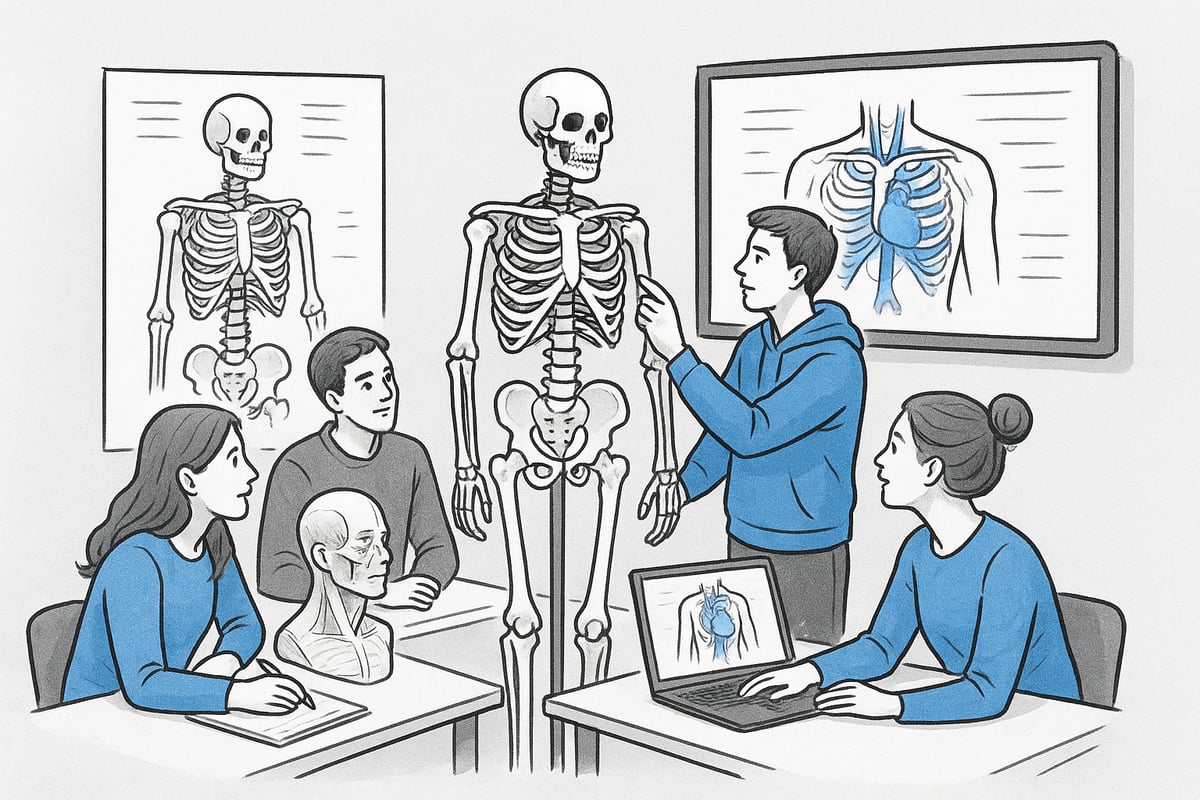
Anatomy studies provide a concrete understanding of the body's functions, which is essential for identifying diseases and explaining symptoms. This applies to doctors, dentists and other professions where patient contact and treatment are central. For example, nurses and physiotherapists use their anatomical insight to assess patients' conditions and plan care or rehabilitation. When assessing an overview of education programs that involve anatomy studies, it is clear that practical application of this knowledge occurs daily in everything from diagnosis to patient education.
Theoretical and practical teaching of anatomy go hand in hand. Students work with both books, digital platforms and physical models to achieve a deeper understanding. According to university surveys, over 90% of medical students consider anatomy studies to be crucial for their professional development. Many teachers emphasize that it is the combination of theory and practice that makes anatomy teaching effective. This is further strengthened when you look at the broad overview of education programs that involve anatomy studies.
Technological advances have revolutionized the way anatomy studies are integrated across education programs. Digital solutions and 3D models make it possible to repeat exercises and visualize complex structures. Many institutions today use anatomical models for teaching , which complement both theoretical and practical learning. This means that an overview of education programs that involve anatomy studies now also includes new, innovative methods that strengthen both understanding and motivation among students.
7 Amazing Overviews of Degrees That Involve Anatomy Studies
Getting an overview of education programs that involve anatomy studies opens the door to a world of possibilities. Anatomy forms the basis of several of the most sought-after healthcare programs, and understanding it is crucial for both theory and practice.
In the following seven sections, you will gain a deep insight into how anatomy is incorporated into everything from medicine and dentistry to physiotherapy and bioanalysis. Each education has its own methods, cases and career paths, but what they all have in common is that they all require a strong foundation in anatomy to create skilled professionals.
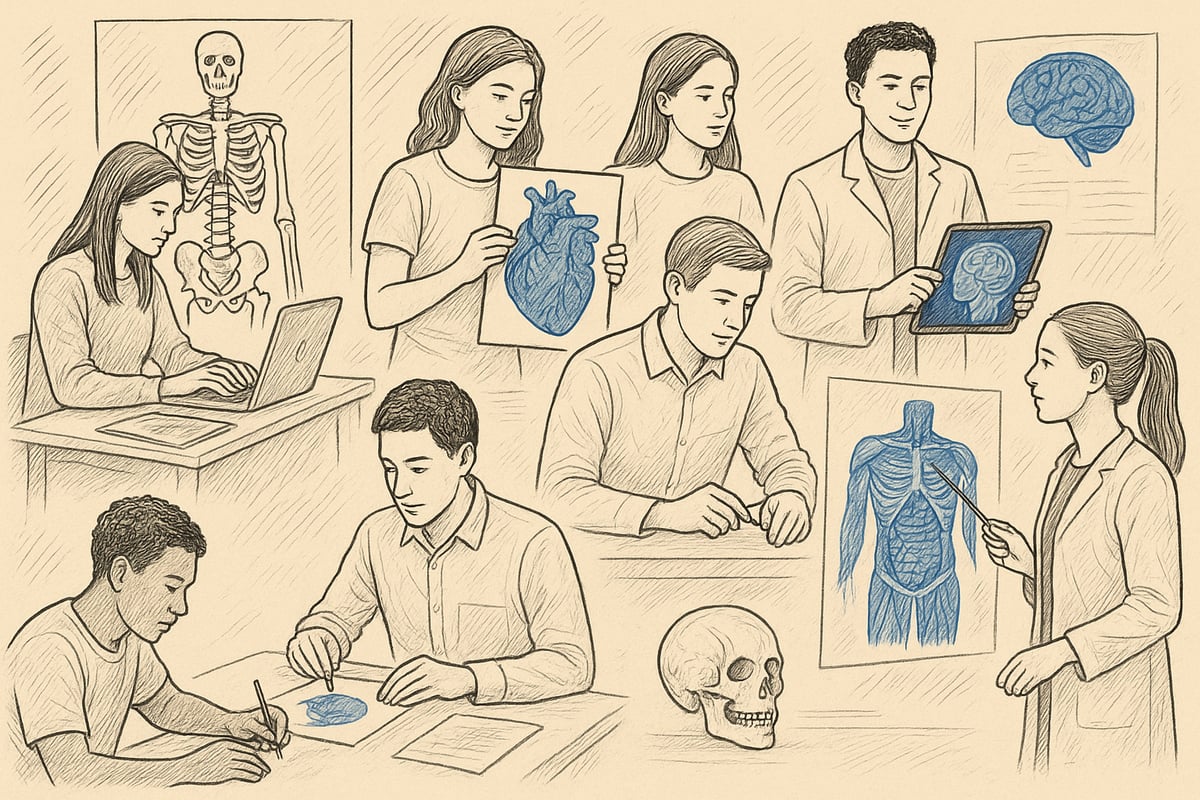
1. Medical education
Medical education is often the first choice when looking for an overview of education programs that involve anatomy studies. From the first semesters, students are introduced to the structure of the body through both theoretical teaching and practical exercises.
The teaching method is broad. Classical dissection of cadavers remains a core element, but digital 3D models and virtual platforms are gaining ground. These allow for repetition and immersion, which strengthens the understanding of the body's complex structures. Many students highlight this as crucial for their later clinical practice.
Statistics show that 100% of medical students in Denmark undergo mandatory anatomy education. The course typically spans the first two years of study, where you work with both macroscopic and microscopic anatomy. Here you learn not only about organs and tissues, but also about the connection between structure and function – knowledge that is central to diagnosis and treatment.
There are many career paths: doctor, surgeon, general practitioner or researcher. Regardless of specialization, a solid knowledge of anatomy is indispensable. Students often mention that the challenge lies in combining detail with clinical relevance, but that this balance is precisely what makes the subject exciting.
Danish and international education programs are similar in content, but Danish schools place particular emphasis on the integration of theory and practice. If you would like to read more about the structure of the medical education program and its anatomy teaching, you can find information on the Medical Education Program at Aarhus University .
2. Dental education
When you are looking for an overview of education programs that involve anatomy studies, dental education is inevitable. Here, understanding the mouth, jaw and face is the alpha and omega. Anatomy is thus a basic subject, especially in the first year of study.
Teaching takes place in laboratories with models of teeth, jaws and face. This is supplemented with clinical cases and simulations that bring the material to life. Many students find that precision and detail in anatomy are crucial, especially when working with small structures such as nerves and blood vessels in the oral cavity.
The statistics speak for themselves: 85% of Danish dental programs have at least one year of dedicated anatomy education. This ensures that everyone gains a thorough knowledge of both macroscopic and microscopic anatomy.
The link between anatomy and treatment is clearly seen in practice. Understanding the temporomandibular joint, tooth roots and facial muscles is essential when diagnosing and performing treatments. Many choose to further their education in surgery, orthodontics or research, where the level of detail in anatomy becomes even more important.
Students often highlight the steeper learning curve at the beginning, but at the same time experience that anatomy teaching quickly pays off in the clinic. The overview of education programs that involve anatomy studies shows that dentistry in particular requires great precision and continuous updating of knowledge.
3. Veterinary education
Veterinary education is a cornerstone of any overview of education that involves the study of anatomy, especially for those with an interest in animals. It delves into both the similarities and differences between human and veterinary anatomy.
The teaching is based on animal models, skeletons and digital tools. This gives students the opportunity to compare anatomy across species. Many find anatomy to be the most demanding subject, which is reflected in the fact that 70% of veterinary students consider it their biggest challenge.
In practice, anatomical knowledge is indispensable when diagnosing and treating both small and large animals. Specializations range from small animal clinics to large animal practice and research. In agriculture, understanding the musculoskeletal system and internal organs is essential for both prevention and treatment.
Cases from animal clinics illustrate how an overview of education that involves anatomy studies is not just about theory. A veterinarian must be able to quickly assess a dog's lameness or a cow's digestive problems based on his anatomical knowledge. Therefore, both practical and digital education are given high priority.
4. Physiotherapist training
The physiotherapy program is an obvious choice if you are looking for an overview of programs that involve anatomy studies with a focus on the musculoskeletal system. Here, anatomy is the foundation for all work with muscles, joints and movement.
The teaching combines models, practical exercises and simulations. Students often work in groups, where they examine each other's movements and identify muscles and tendons. Statistics show that 95% of physiotherapy students actively use their anatomical knowledge during clinical placements.
A close interaction between anatomy, biomechanics and rehabilitation characterizes everyday life. Patient processes, where a shoulder injury is treated, for example, require precise knowledge of structures and functions. The theoretical knowledge is continuously translated into practice through simulation and feedback.
Continuing education and specialization are widespread, including in sports physiotherapy and neurological rehabilitation. An overview of education programs that involve anatomy studies shows that physiotherapists often work interdisciplinary to achieve the best results for patients.
5. Nursing education
In any overview of education programs that involve anatomy studies, nursing education is central. Here, students learn to understand, assess, and care for patients' conditions based on anatomical knowledge.
Teaching is done with posters, models and digital resources. This allows for visualisation of the body's structure and understanding of the relationships that are important in practice. 80% of nursing students find that anatomy strengthens their clinical decision-making.
Anatomy is essential for proper medication administration, wound care and patient monitoring. Examples from practice show that understanding blood vessels and tissues makes a difference in everything from injections to wound assessment. Many nurses later choose to specialize in intensive care, surgical nursing or pediatrics.
Lifelong learning is an integral part of the profession, and an updated overview of education programs that involve anatomy studies is necessary to maintain and develop competencies throughout the career.
6. Bioanalytical training
The bioanalyst training program is an important element in an overview of education programs that involve anatomy studies, especially for those interested in laboratory work and biomedical analysis.
Anatomy is essential for understanding biological samples and analyses. The teaching includes laboratory work, microscopy and the use of anatomical illustrations. Statistics show that 60% of biomedical engineering students consider anatomy to be the basis for their analyses.
There is a close link between anatomy, physiology and pathology, making it possible to identify disease mechanisms in blood, tissue and other samples. Work areas range from hospitals and laboratories to research. Specialisation in diagnostics is popular, as it requires a solid anatomical foundation.
An overview of education programs that involve anatomy studies shows that bioanalysts often work closely with doctors and researchers to ensure accurate analyses and results.
7. Occupational therapy education
The occupational therapy education rounds off any overview of education that involves the study of anatomy. Here, the understanding of hand function, movement and daily activities is at the center.
The teaching is based on models, simulations and practical exercises. 88% of occupational therapy students apply their anatomical knowledge in clinical situations, which emphasizes the practical nature of the subject.
Anatomical knowledge is essential for assessing the need for assistive devices and planning rehabilitation. Interdisciplinary collaboration with physiotherapists and doctors is widespread, as many patient processes require a holistic approach.
The areas of work range from children to adults and the elderly. An overview of education programs that involve anatomy studies shows that occupational therapists often work with everything from rehabilitation after injuries to adapting daily routines for citizens with disabilities.
New technologies and methods in anatomy studies
Technological developments have significantly transformed the study of anatomy, creating new opportunities for both students and educators. A solid overview of education programs involving anatomy studies shows how digital solutions and 3D models are increasingly integrated into teaching. This development makes it possible to adapt learning methods to the modern educational environment and strengthens the understanding of complex anatomical structures.

Digital platforms and 3D models
Traditional dissections and physical models have long been the cornerstones of anatomy studies. Today, many are experiencing a paradigm shift, where digital platforms and advanced 3D models complement or even replace classic methods. This development is evident across the broad overview of education programs that involve anatomy studies, with medicine, dentistry and veterinary medicine in particular using digital solutions.
Virtual labs and augmented reality allow for layer-by-layer exploration of the body, enhancing learning. Statistics show that over 60% of Danish universities now offer digital anatomy solutions in their teaching.
Advantages and challenges
Digital tools bring a number of benefits. First, they increase accessibility, as students can repeat exercises from home and adjust the pace as needed. Safety is improved, as digital simulations eliminate risk when handling biological material. It is also easier to visualize complex structures, as clearly demonstrated in an updated overview of education programs involving anatomy studies.
However, there are also challenges. Not everyone has equal access to advanced technology, and both teachers and students need to acquire new digital skills. It takes time and resources to implement new methods effectively in teaching.
Examples and future perspectives
Specifically, we see that platforms such as 3D anatomy courses at the University of Copenhagen enable students to interact with detailed 3D models of the head and teeth via e-learning. Likewise, the Handbook of 3D Models from Aalborg University documents the many digital methods that are now included in both theoretical and practical teaching.
This development opens up opportunities for distance learning and lifelong learning, where an updated overview of education programs involving anatomy studies is essential to stay up to date with the latest technologies. The future of anatomy studies will undoubtedly be characterized by continued innovation and increased use of digital tools.
Career paths and future perspectives for education programs with anatomy studies
The career paths for those seeking an overview of education programs involving anatomy studies are wide-ranging and open doors to a wealth of opportunities in both the Danish and international labor markets. Whether you dream of becoming a doctor, bioanalyst, physiotherapist or veterinarian, anatomy is a core competency that is in demand across the healthcare sector.
Over 75% of graduates with a strong focus on anatomy work in the healthcare sector. Here they are involved in clinical functions, research and development, but also in teaching and consulting. Many choose to further their education or specialize, for example through supplementary courses or master's degrees. For bioanalysts, there is, for example, the bioanalyst training program and courses that expand career opportunities within laboratory and research environments.
Interdisciplinary job functions are also gaining ground. Here you can combine your knowledge from an overview of educations that involve anatomy studies with communication, teaching or development of digital learning materials. Many former students today work as medical illustrators, teachers or as specialists in the development of educational materials. Digital resources such as anatomical posters for students support both teaching and clinical practice, which strengthens learning and dissemination.
The demand for specialists with in-depth anatomical knowledge is increasing, especially as technological solutions and digitalization place new demands on competencies. The future labor market expects flexible employees who can navigate between practice, innovation and communication. Several cases show that former students with a solid overview of educations that involve anatomy studies can move from clinical work to leadership roles, research or development, where their knowledge is crucial for the development of both patients and society.
The possibilities are many, and with a strong anatomical background you are well-equipped to shape your own career path within health, education, research or industry.
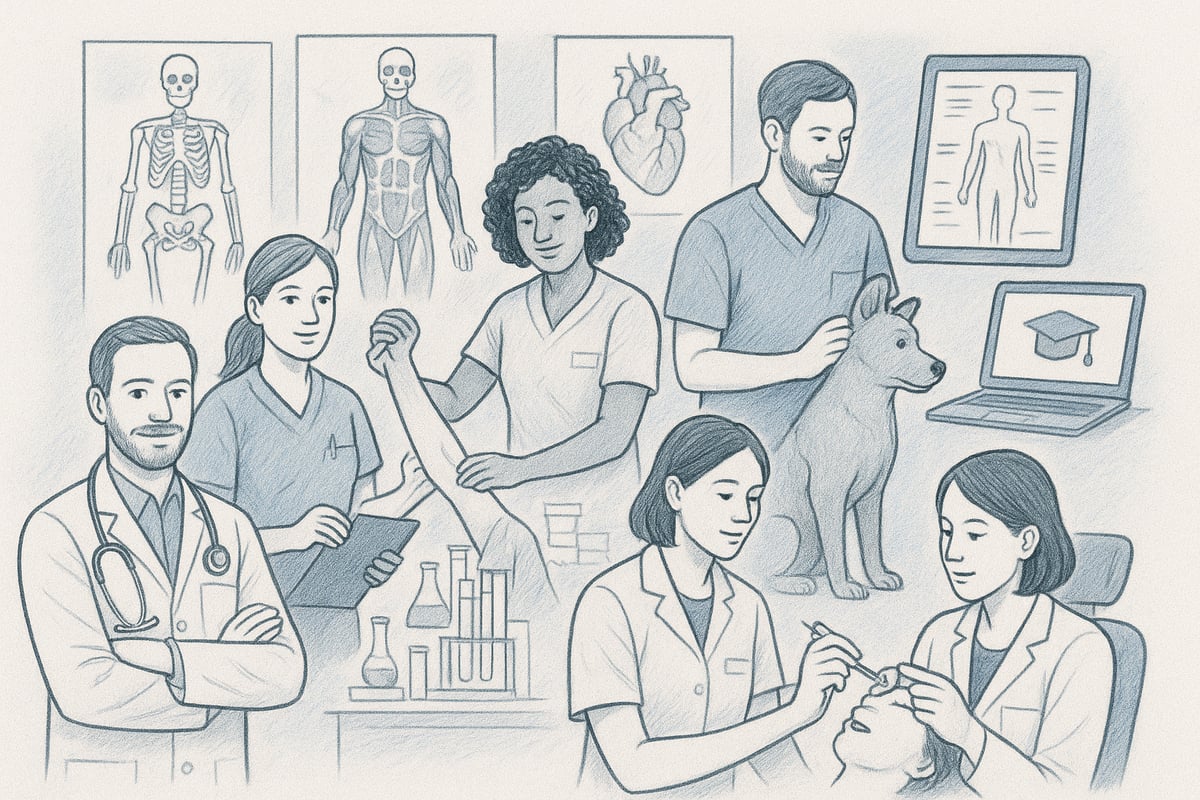
When you read about the many exciting educational paths where anatomy studies are central, it is clear how important a solid understanding of the body is for both your professional development and future career. Whether you are considering medicine, dentistry, veterinary medicine or one of the other directions we have reviewed, the right educational materials can make a big difference. At eAnatomi, we collaborate with experts to create models and posters that support your learning and curiosity at all levels. Want to know more about how you can strengthen your anatomy studies?
Read more here
0 comments