

Did you know that a dog's skeleton consists of over 300 bones, which allow dogs to jump, run and balance with impressive precision? Each joint and bone plays an important role in a dog's daily life.
This guide gives you an in-depth look at the canine skeleton, including its structure, function, and importance to health and movement. Whether you are a dog owner, veterinarian, or simply curious, you will gain knowledge that can improve your dog's life.
We review the most important parts of the dog skeleton, differences between breeds, development from puppy to adult, common skeletal problems, and practical advice for optimal health.
Do you want to understand your dog's anatomy and give them the best possible start? Read on for expert advice on the dog skeleton.
The General Structure of the Dog Skeleton
A dog's skeleton is the foundation of a dog's entire body. It provides support, protects vital organs, and enables all movements – from fast runs to precise balance. Without a healthy dog skeleton, neither play, hunting, nor daily activity would be possible.
The average dog skeleton consists of around 319 bones. The number can vary depending on breed and tail length. Each bone has a specific function, and together they form a strong but flexible structure that adapts to the dog's lifestyle and tasks.
The skeleton is divided into five main regions: skull, spine, thorax, forelimbs, hindlimbs, and tail. The skull protects the brain and sensory organs, while the spine acts as the axis of the body, connecting the head to the tail. The thorax protects the heart and lungs, and the legs support the weight and enable movement. The tail balances the body, especially during rapid maneuvers.
To understand the difference between a dog skeleton and a human skeleton, one can look at flexibility and adaptation. The dog skeleton is much more flexible, especially in the spine, which gives the dog the ability to accelerate quickly and change direction with ease. The human skeleton is adapted for upright walking, while the dog's skeleton is optimized for running and jumping.
| Property | Dog skeleton | Human skeleton |
|---|---|---|
| Number of bones | Approximately 319 | 206 |
| Spine flexible | Very | Moderate |
| Customization | Running, jumping, hunting | Upright gait, grip |
| Tail | Yes (balance, signal) | No |
There is great variation between breeds. Greyhounds have long, slender legs and flexible backs, which make them lightning fast. Bulldogs, on the other hand, have compact skeletons and short legs, which provide stability but less speed. Dachshunds have long backs, while greyhounds have extremely light bones for maximum speed.
- Greyhounds: long legs, flexible back
- Bulldogs: compact skeleton, short legs
- Dachshunds: elongated spine
- Greyhounds: light, slender bones
The structure of a dog's skeleton is crucial to its movement pattern and ability to perform specific tasks. Hunting and herding dogs have skeletal types that support rapid acceleration and sudden changes in direction, while companion dogs often have more robust skeletons that ensure stability.
The health and quality of life of a dog depends largely on a well-functioning dog skeleton. Malpositions or deformities can lead to pain, reduced movement and limited life expression. It is therefore important to understand the structure and function of the dog skeleton, both to prevent problems and to respond quickly to any symptoms.
For deeper insight and visual understanding of the dog skeleton , anatomical models and dog skeleton posters can be a valuable tool, especially for teaching and learning.
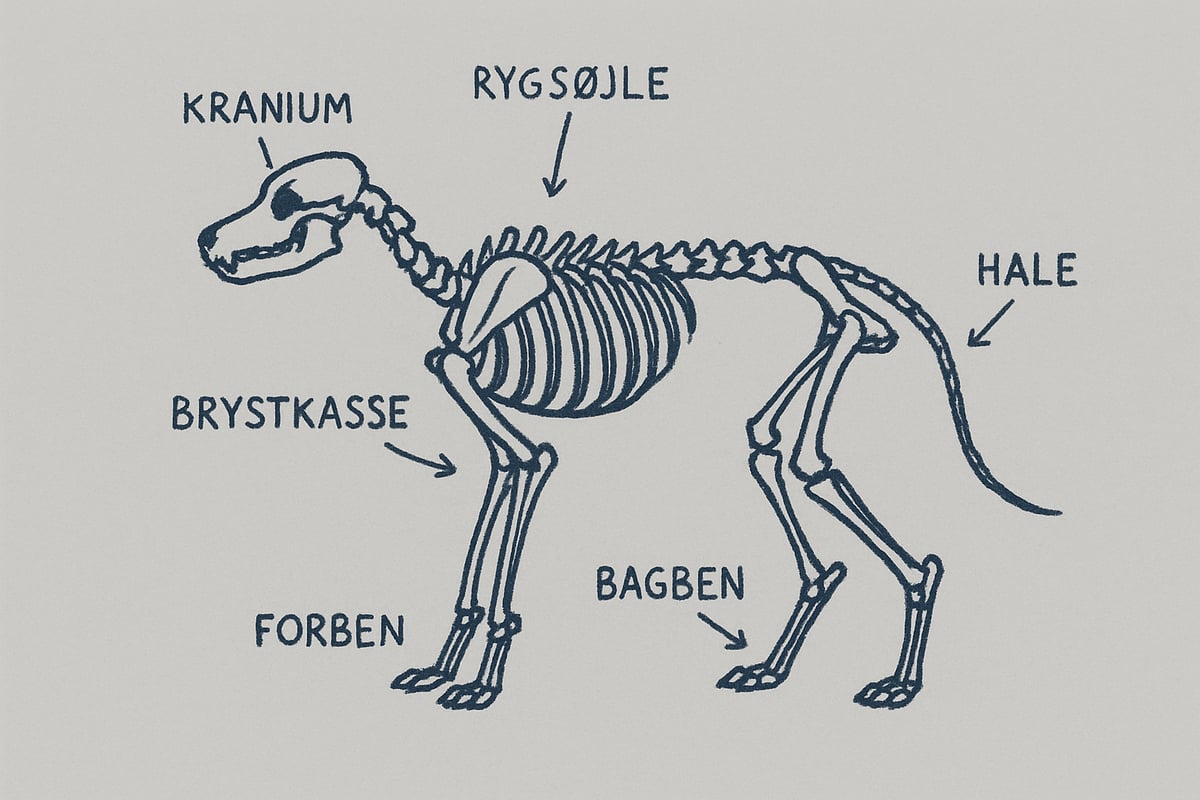
Important Bones and Their Functions
When we delve into the dog skeleton, it is essential to understand the roles of each bone. Each bone contributes to the dog's movement, strength and health in different ways, and a well-functioning dog skeleton is the foundation for both well-being and activity.
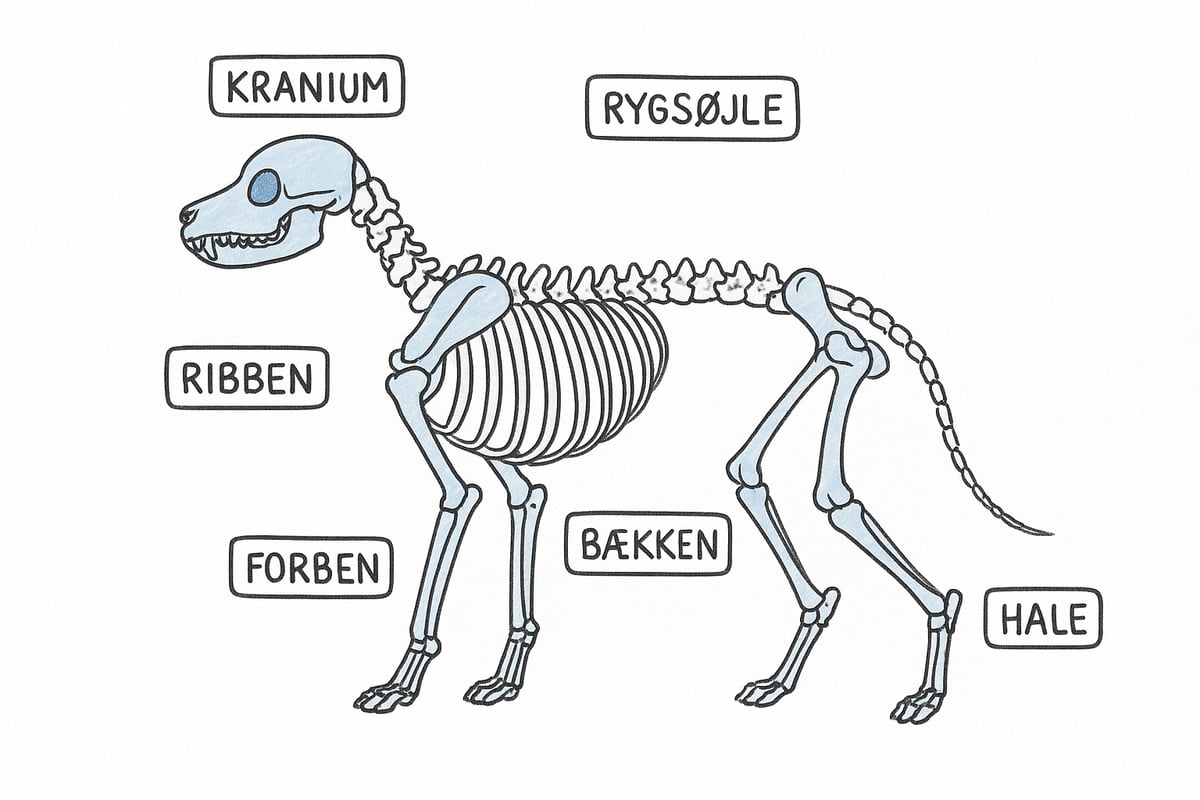
Skull
The skull in a dog's skeleton protects the brain and provides a framework for sensory organs such as the eyes, ears and nose. It also provides support for the jaw muscles, which are essential for bite strength and chewing function. The shape of the skull varies greatly between breeds and has a great impact on both appearance and function.
Spine
The spine is central to the flexibility and stability of the dog's skeleton. It consists of the neck, chest, lumbar, sacrum and tail vertebrae. The spine protects the spinal cord, which acts as a communication pathway between the brain and body. A healthy spine is essential for movement, balance and signal transmission.
Shoulder blade and humerus
The shoulder blade and humerus are important parts of the forelimb of the dog's skeleton. The shoulder blade provides mobility, while the humerus transfers force from the body to the leg. These bones allow the dog to run, jump, and perform precise movements. Injuries here can lead to reduced mobility.
Pelvis and Femur
The pelvis and femur work together to transfer power from the hindquarters to the rest of the dog's skeleton. This power transfer is especially crucial when running and jumping. The shape of the pelvis varies depending on the breed's original function. The hip joint connects the femur and pelvis, and problems here can cause lameness and pain.
Rib
The ribs in a dog's skeleton surround and protect vital organs such as the heart and lungs. The flexibility of the ribs allows the rib cage to expand during breathing. A strong and flexible rib cage is important for both protection and efficient breathing during activity.
Tail vertebrae
The tail vertebrae are the end of the dog's skeleton and are important for balance. The tail is also used for communication, with movements and position signaling mood and intentions. The number of tail vertebrae varies between breeds and has an impact on both balance and expression.
Paws and Toes
The paws and toes in a dog's skeleton act as shock-absorbing contact points with the ground. They ensure grip, stability and balance, especially when running, playing or hunting. The paws are adapted to different terrains and tasks, from soft hunting paws to powerful pulling paws.
Example: Hip Joint Injury
An injury to the hip joint in a dog's skeleton can lead to reduced mobility, pain and lameness. Large breeds are particularly prone to hip dysplasia, where the joint does not fit together properly. This can significantly affect the dog's quality of life and often requires both treatment and adaptation in everyday life.
Statistics and Perspective
According to veterinary sources, hip dysplasia is one of the most common skeletal problems, especially among large breeds. Statistics show that up to 20 percent of large dogs are diagnosed with this condition. This highlights the importance of understanding the canine skeleton in order to prevent and manage these problems. The shape and size of the bones in the canine skeleton are closely aligned with the breed’s original purpose, whether hunting, herding, or companionship.
Development of the Dog Skeleton: From Puppy to Adult
The development of the dog's skeleton is a fascinating but complex process, where small changes can have a big impact on the dog's quality of life. From birth, bones begin to grow and change, and this development continues well into adolescence.
In puppies, large parts of the dog's skeleton initially consist of soft cartilage. Over time, a gradual ossification occurs, where cartilage is converted into hard bone tissue. This process is called ossification and is essential for the dog to achieve a strong and functional bone structure.
An important part of development is the growth plates, also known as epiphyseal plates. These are found at the ends of the long bones and act as growth centers. New bone tissue is formed here, allowing for longitudinal growth. As the dog approaches adulthood, the growth plates close and the bones stop growing.
The timeline for bone fusion varies depending on the size and breed of dog. Small breeds often have their growth plates closed by around 8-12 months of age, while large breeds can continue to grow until 18-24 months. The skull, spine, and legs often finish growing in different orders, making monitoring development extra important.
It is important to be aware of special risks during the growth period. Overexertion, improper nutrition or injuries can lead to permanent changes in the dog's skeleton. Large breeds are particularly at risk, as their longer growth period increases the risk of growth disorders. In fact, up to 20% of large dogs experience growth-related skeletal problems.
See the table below for an overview of typical growth periods:
| Dog type | Closure of growth zones | Risk of growth disorders |
|---|---|---|
| Small breeds | 8-12 months | Low |
| Medium-sized breeds | 12-18 months | Moderate |
| Large breeds | 18-24 months | High |
To support a healthy dog skeleton, you should provide a correct and balanced diet, adapted to the breed's size and growth needs. Overfeeding can lead to too rapid growth, which puts strain on bones and joints, while malnutrition can inhibit development. Exercise should be adapted to age and breed, so that growth zones are not overloaded.
Breeding and selection also play a significant role in the development of the dog skeleton. Many skeletal problems can be traced to hereditary factors, and responsible breeding is therefore essential to minimize the risk of diseases and deformities.
For more detailed insight into the puppy's developmental stages and how it affects the dog's skeleton, you can read Puppy Development Stages , where both growth, nutrition and health are reviewed step by step.
The dog's skeleton develops in several phases, and each phase requires special attention from the owner. By understanding these processes, you can give your dog the best conditions for a long and healthy life.
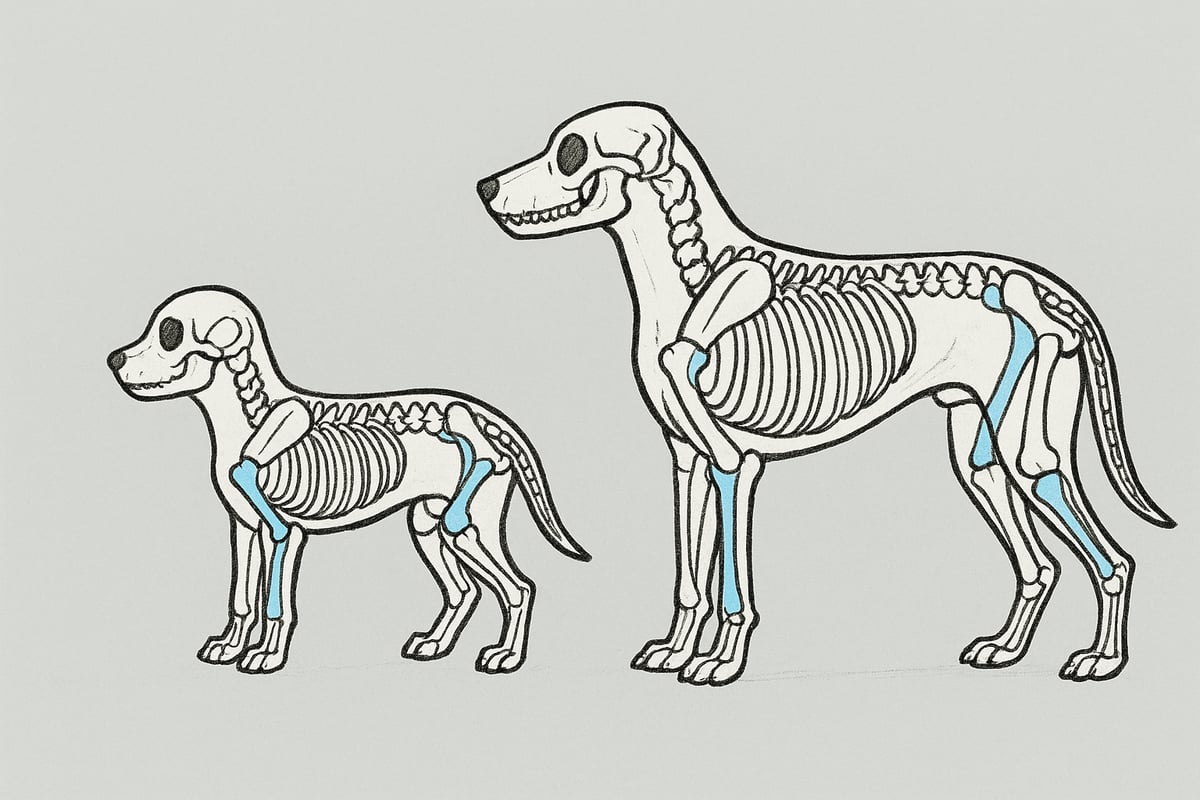
Differences between Races and Skeletal Variations
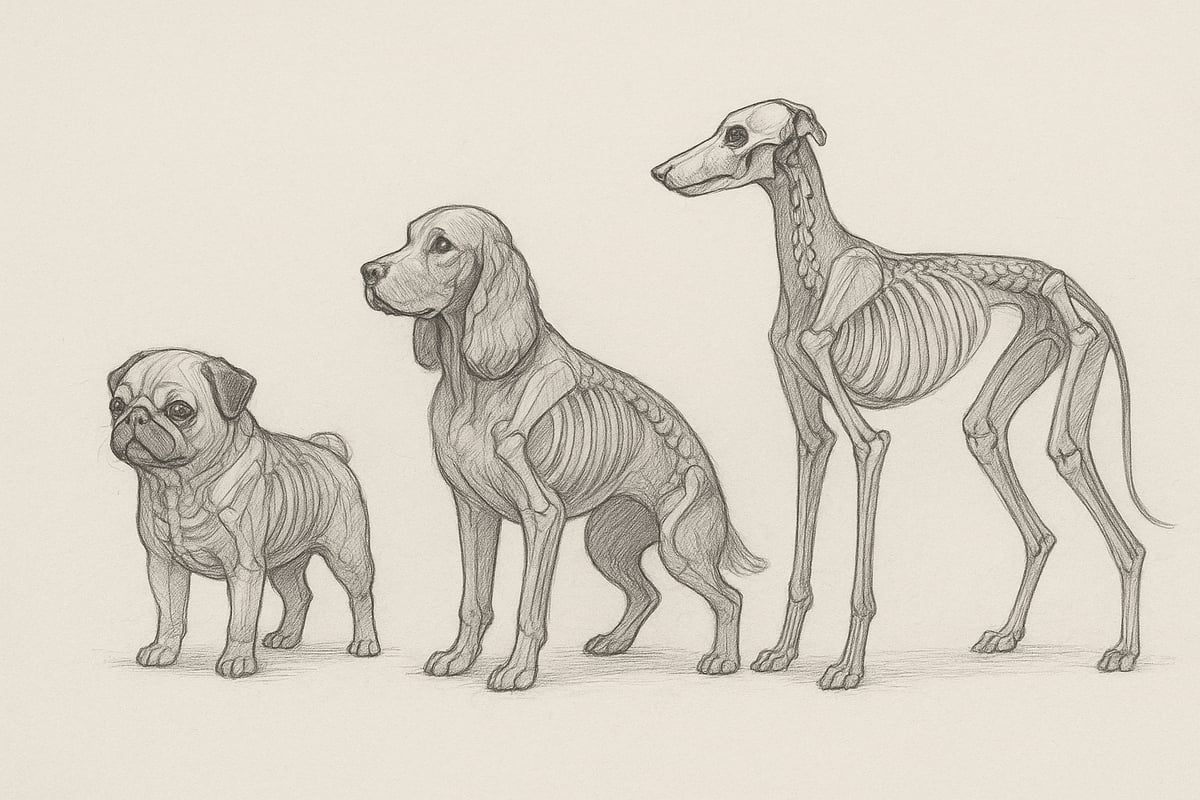
The variations in dog skeletons between different breeds are significant and have a major impact on both function and health. Each breed is shaped by decades or centuries of selective breeding, where the skeletal structure is targeted to the tasks the dog was originally intended to perform. This means that a dog skeleton of a dachshund differs significantly from, for example, a greyhound, both in proportions, strength and flexibility.
Dog skeletons vary not only in size, but also in shape and composition. Small breeds often have compact and robust skeletons, while large breeds have longer and more massive bones. Medium-sized breeds typically fall somewhere in between, both in terms of weight and skeletal structure. The table below provides a quick overview:
| Type | Typical features | Example breeds |
|---|---|---|
| Small breeds | Compact, short legs, light skeleton | Chihuahua, Pug |
| Medium-sized | Balanced, versatile bone structure | Cocker Spaniel |
| Large breeds | Long, massive bones, powerful | German Shepherd, Great Dane |
These differences in dog skeletons have practical implications for mobility, endurance, and risk of injury. Greyhounds have extremely long legs and a light skeleton, making them the world's fastest dogs. Dachshunds have short legs and a long back, allowing them to move in narrow passages underground. Bulldogs have a compact and broad dog skeleton, making them strong but less durable.
Some breeds have very distinctive skeletal features. Brachycephalic breeds like the French Bulldog and Pug have short skulls and flat muzzles, which affects both breathing and bone structure. The Dachshund has a unique canine skeleton with extra long vertebrae, which increases the risk of herniated discs. The Greyhound has extremely slender bones, which makes them light and fast, but also more vulnerable to certain injuries.
Statistics show that the prevalence of skeletal diseases varies considerably between breeds. Large breeds are often at increased risk of hip dysplasia and elbow problems, while small breeds are more likely to experience patellar luxation. One study showed that up to 20% of large dogs develop hip dysplasia, while the number is significantly lower in small dogs. Breeding and selection have a major influence on these figures.
Breeding practices directly affect dog skeletons. Excessive breeding for extreme traits, such as very short legs or a flat nose, can lead to an increased risk of skeletal problems and reduced quality of life. It is therefore important that breeders prioritize health and function, not just appearance, when working with dog skeletons. For dog owners, this means that breed selection should be carefully considered, especially if you want a healthy and active dog with a durable skeleton.
Common Skeletal Problems and Health Challenges
A healthy dog skeleton is the foundation for quality of life, freedom of movement and well-being in all dogs. When the skeleton is affected by disease or injury, it not only affects the dog's gait, but also its mood and daily activities.
Common skeletal disorders in dogs include:
| Suffering | Description | Typical breeds |
|---|---|---|
| Hip dysplasia | Poor fit between hip and thigh bone | Large breeds |
| Elbow dysplasia | Joint defect in the elbow | Retriever, German Shepherd |
| Osteoarthritis | Degradation of articular cartilage | Elderly and overweight |
| Fractures | Bone fracture after accident | All breeds |
These diseases can lead to serious problems in the dog's skeleton if not detected and treated in time. Symptoms range from mild lameness and stiffness to obvious pain or lack of desire to move.
Watch out for the following warning signs:
- Sudden or recurring lameness
- Reluctance to climb stairs or jump
- Visible swelling or warmth over joints
- Changed gait or stiffness after rest
Early diagnosis is essential to protect your dog's skeleton and ensure an active life. Veterinarians often use X-rays, CT scans, and a thorough physical examination to accurately identify problems. According to veterinary statistics, up to 15-20% of large dogs develop hip dysplasia, making it one of the most common skeletal disorders.
The risk of skeletal diseases in dogs increases with factors such as breed, age, weight and activity level. Large breeds such as German Shepherds and Labradors are particularly prone to dysplasia, while older or overweight dogs are typically affected by osteoarthritis. Heredity also plays a significant role, which is why breeding screening and pedigree analysis are recommended.
Treatment options vary depending on the condition and its severity. Common measures include:
- Surgical procedures for severe joint problems
- Physiotherapy and rehabilitation to strengthen the dog's skeleton and muscles
- Painkillers and anti-inflammatories
- Supplements like glucosamine and omega-3 for joint support
Prevention is the key to a healthy dog skeleton. Early intervention, proper nutrition and weight control can significantly reduce the risk. Regular exercise, appropriate for age and breed, keeps bones and joints strong. For more good advice on prevention and practical tips for daily maintenance, you can find inspiration at Practical advice on healthy bones .
Follow-up and regular health checks with your veterinarian are essential, especially for dogs with known predispositions or early symptoms. The earlier a problem in a dog's skeleton is detected, the better the chance for a good and active dog life.
Maintaining a Healthy Dog Skeleton: Practical Advice
Ensuring a healthy dog skeleton requires knowledge, attention and daily routines. Bone health is the foundation for a dog's movement, well-being and quality of life. From the puppy stage, diet, exercise and environment play a crucial role in the development of a strong dog skeleton.
A properly composed diet is essential for a strong dog skeleton throughout life. Especially during the growth period, puppies need a balanced intake of calcium, phosphorus and vitamin D. Too much or too little can lead to growth disorders or weak bones. Large breeds often have a longer growth period and require specially adapted food to avoid overloading the dog's skeleton. Consider reading about the puppy's growth stages to understand how nutrition affects bone development.
Exercise is essential, but it must be adapted to the dog's age, breed and health. Young dogs and puppies should avoid hard or one-sided training so that the growth zones in the dog's skeleton are not overloaded. Choose varied activity, such as short walks and playing on soft surfaces, which are gentle on the joints and bones. For older dogs, exercise should be gentle but regular so that bone density and joint mobility are maintained.
The right environment supports a healthy dog skeleton. Toys should be sturdy without being too hard, and the surface in the home should provide good footing. Slippery floors increase the risk of falls and injuries to a dog's skeleton, especially in large or older dogs. Consider using non-slip mats or rugs that reduce the strain on legs and backs. Check toys regularly for wear and tear so they don't pose a risk.
Regular health checks at the vet are the best protection against hidden problems with the dog's skeleton. The vet can identify the beginnings of osteoarthritis, malpositions or other skeletal-related diseases, often before symptoms appear. Also work with a physiotherapist if rehabilitation or special exercises are needed. An open dialogue about feeding, exercise and any challenges provides the best foundation for a strong and well-functioning dog skeleton - throughout life.
When we look at the fascinating structure of the canine skeleton and its importance for everything from movement to health, it becomes clear how much we as dog owners or professionals can gain by understanding the details. Whether you want to strengthen your knowledge, choose the best tools for teaching or simply ensure your dog has optimal conditions, there is a lot to learn from thorough anatomical models and posters developed in collaboration with experts. If you want to know more about the possibilities for learning and communicating dog anatomy, you can Read more here
0 comments