

In 2025, understanding brain models is more important than ever. Brain models are key to visualizing the complex interplay between anatomy and function, whether you are teaching, studying, or working in the healthcare sector.
This guide will help you understand, select, and use brain models effectively. You will gain insight into how models enhance learning, improve patient communication, and support research.
Do you want to master the use of brain models and make learning more vivid? Follow along and explore definitions, model types, practical applications, selection criteria, trends for 2025, and concrete tips for maximum benefit.
What Is a Brain Model? Definition and Basic Understanding
A brain model is an accurate representation of the brain used to illustrate its anatomy and functions. The model can be physical, digital or virtual, and the purpose is to make it easier to understand the complex structure of the brain. Whether you are a student, teacher or healthcare professional, a brain model can be an invaluable tool. Visualization allows you to see and touch structures that are otherwise only seen in pictures or textbooks.
The purpose of a brain model is to support learning, research and communication. Using a model makes it easier to explain the parts of the brain, how they work together and what their functions are. It is especially useful in teaching contexts, but also in meetings with patients or relatives, where understanding can create security and clarity.
Historically, brain models have evolved significantly. Originally, they were made of wax or clay and had a limited level of detail. Over time, plastic models were introduced that could be separated and show multiple layers. Today, there are advanced 3D-printed models as well as digital and virtual solutions. Developments have made it possible to adapt each brain model to different levels and purposes.
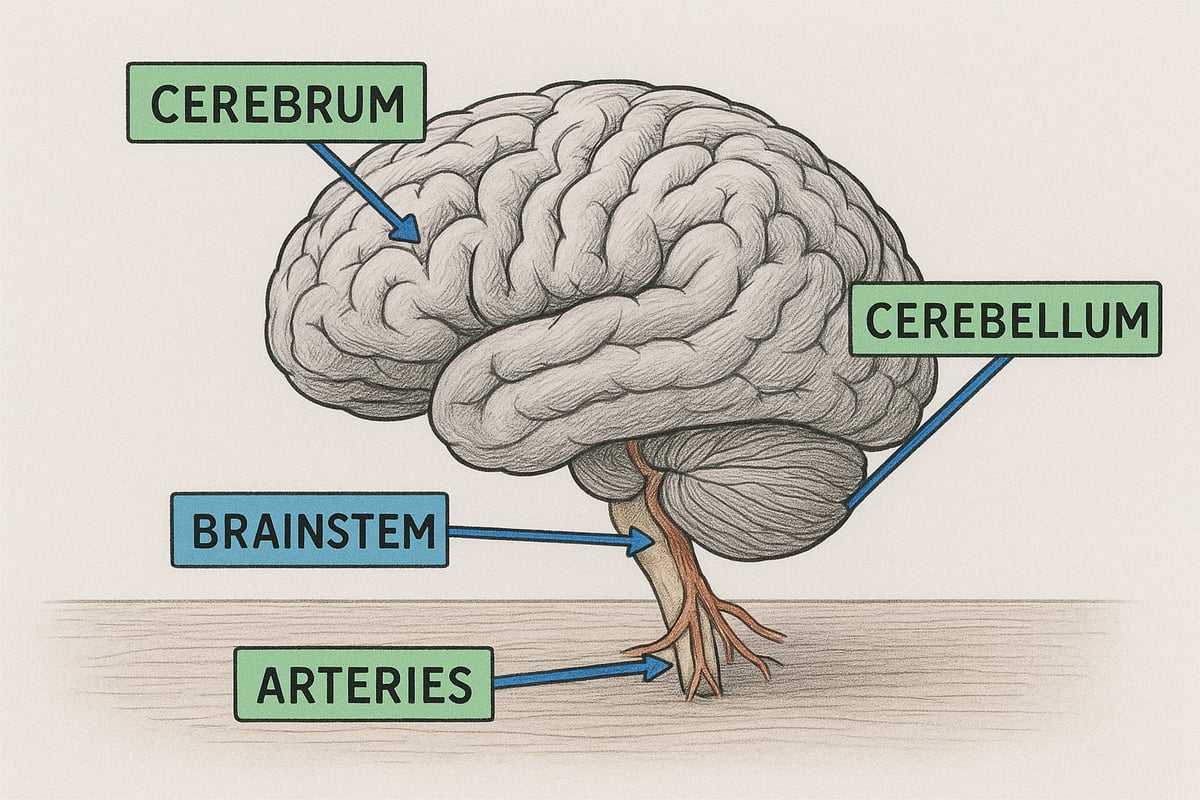
A brain model typically illustrates several key parts: the cerebrum, the cerebellum, the brainstem, and often the major arteries. These structures are essential for understanding brain function. Materials range from plastic and silicone to resin, and many models use color coding to highlight specific areas. Colors and labels make it easier to identify and learn about the individual parts.
Both physical and digital brain models are available. Physical models provide a tactile experience and allow for the assembly and disassembly of brain parts. They are robust and suitable for classroom teaching and patient education. Digital models, often available via apps or software, offer interactive features such as zooming, rotation, and cross-sectional viewing. Each type has its advantages and limitations depending on the use case.
Examples of brain models range from simple 2-part variants to advanced 8- or 9-part models, where each part can be taken apart. According to industry data, the use of brain models has increased significantly in both education and the healthcare sector in recent years. For an overview of specialized models and teaching materials, visit eAnatomy: Specialized Brain Models , where you will find a wide selection for different needs.
Types of Brain Models: Physical, Digital, and Virtual
To choose the right brain model in 2025, it is crucial to understand the different types available on the market. Developments in both physical and digital solutions have meant that brain models can now be experienced in multiple ways, making it possible to tailor the choice for both teaching, research and clinical use.
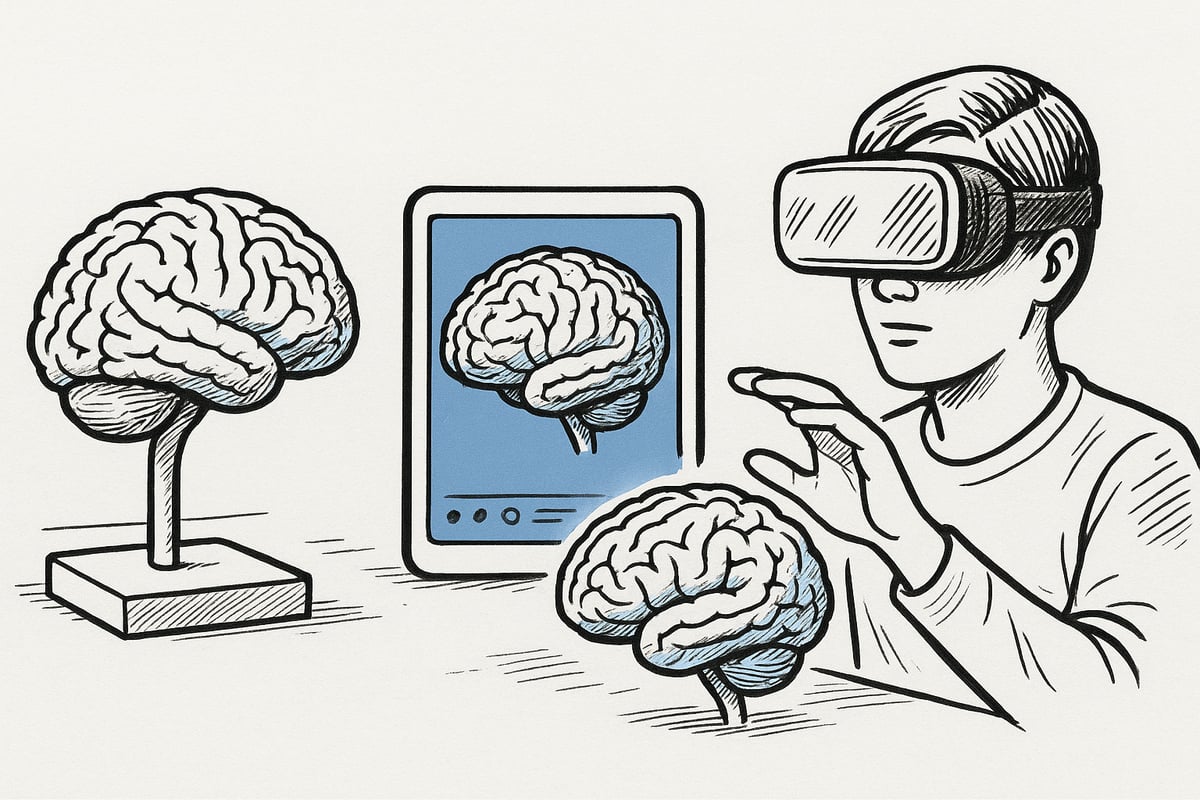
The three main categories are physical brain models, digital brain models, and virtual and augmented reality models. Each type has unique features that support different learning styles and needs.
Physical brain models
The classic brain model is often made of plastic, silicone or resin and comes in various sizes and levels of detail. Many models are color-coded and divided into several parts, allowing you to see structures such as the cerebrum, cerebellum, brainstem and blood vessels.
The advantages of a physical brain model are the tactile and visual possibilities where the user can assemble, disassemble and feel the structure of the brain. This makes them ideal for both classroom teaching, patient education and practical training.
Available in everything from simple 2-piece models to advanced 8- or 9-piece versions that show more detailed anatomy, their durability and versatility make them a popular choice in schools, universities and clinics.
Digital brain models
Digital brain models are experienced through software, apps or interactive platforms, often on a computer or tablet. These models can be rotated, zoomed in and displayed in cross-section, providing a flexible and in-depth experience of brain anatomy.
A major advantage of digital solutions is the ability to integrate them with e-learning, allowing students to work with brain models regardless of time and place. Digital models often offer additional features such as labels, quizzes and animations that support individual learning.
The prevalence of digital brain models has increased significantly, especially due to increased digitalization in the education sector. Although they require access to technical equipment, they allow teachers to individualize teaching.
Virtual and AR brain models
Virtual brain models and augmented reality (AR) give the user a completely new opportunity to experience the brain's structures in a digital 3D space. With VR glasses or AR apps, you can move around the brain, see layer by layer, and simulate diseases or treatments.
The benefits are particularly evident in immersive learning environments, where complex anatomy can be visualized in a way that is difficult to achieve with physical or traditional digital models, making them particularly relevant for advanced education and clinical training.
As technology advances, there has been an increased focus on standards for medical AR applications, which supports the quality of this type of brain model. For more on the latest requirements and opportunities, read Medical AR Applications: Publication Standards 2025 .
Comparison and application scenarios
The different types of brain models are suitable for different purposes and target groups. The table below summarizes the key differences:
| Type | Advantages | Disadvantages | Ideal for |
|---|---|---|---|
| Physical | Tactile, durable, visual | Limited flexibility | Teaching, clinic |
| Digital | Interactive, flexible | Requires equipment | Self-study, e-learning |
| Virtual/AR | Immersive, advanced | Expensive, technically demanding | Simulation, research |
Real-world examples show that physical models are often used in classrooms and patient care, while digital and virtual models are gaining ground in universities and advanced simulation training. According to industry data, the use of AR/VR brain models has increased significantly since 2022, especially in medical education.
Regardless of whether you choose a physical, digital or virtual brain model, it is about matching the model type with your specific needs to achieve the greatest possible learning outcome.
How to Choose the Right Brain Model: Step-By-Step Guide
Choosing the right brain model can be crucial for both learning outcomes and communication quality. Whether you are a student, teacher, or clinician, you should follow a systematic approach to ensure that your brain model fits your purpose and requirements precisely.
1. Identify Your Need
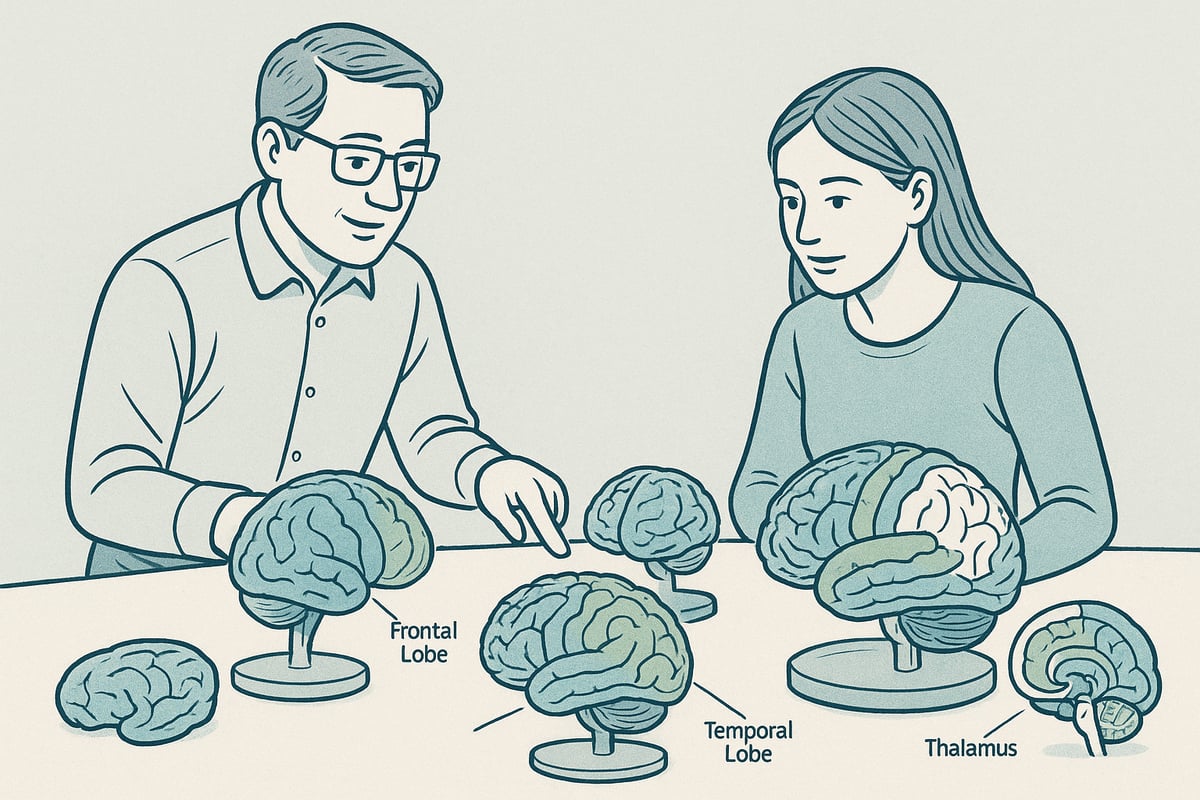
Start by clarifying what you will be using your brain model for. Will it be used in classroom teaching, patient education, research, or for personal learning? Your purpose will determine whether you need a simple, educational brain model or an advanced model with lots of anatomical detail.
If you are new to the field, you can find useful advice in Help for new students , where the choice of brain model is reviewed step by step.
2. Assess the level of detail and number of parts
The next step is to consider how detailed your brain model should be. A 2-piece model provides a quick overview and is suitable for basic teaching. An 8-piece or 9-piece model is better suited for advanced anatomy, where the brain's structures can be separated and examined individually.
Ask yourself whether you need to show arteries, nerves, or pathological conditions, or whether an overall view is sufficient.
3. Consider Materials And Durability
Material choice is important for both durability and ease of use. Plastic is lightweight, durable and easy to clean, while silicone gives a more realistic feel. Resin is often used in highly detailed models. Also consider allergy-friendliness if the model is to be used in patient-facing situations.
4. Size, Scale, and Weight
Brain models come in several sizes: life-size, enlarged versions, or miniatures. A life-size brain model is often ideal for teaching and demonstration, while a large model can be used for larger classes or lectures. Also consider weight, especially if the model will be transported frequently.
5. Educational Functions
Color coding, labels, and removable parts make it easier to identify and explain brain structures. Choose a brain model with clear color division if you are teaching younger students or working with patients. Labels in Danish increase accessibility and understanding.
6. Budget, Price Level And Availability
Set a realistic budget and compare prices across suppliers. Consider whether there are outlet or package deals, and be aware of delivery times and the possibility of special orders. If you need a brain model with specific features, certain manufacturers can accommodate special requests.
7. Compare Models In Practice
The table below provides a quick overview of the differences between a 2-part and an 8-part brain model:
| Function | 2-part brain model | 8-part brain model |
|---|---|---|
| Level of detail | Basic | Very detailed |
| Number of visible parts | 2 | 8 |
| Suitable for | Basic education | Advanced anatomy/research |
| Price level | Low/medium | Medium/high |
| Educational functions | Few labels, simple color code | Many labels, advanced color coding |
By comparing in this way, you can choose the brain model that best matches your needs.
Step-By-Step Selection Process
- Clarify purpose and target group.
- Search for models that match the level of detail and application.
- Compare materials and durability.
- Evaluate educational features and ease of use.
- Check reviews and user experiences.
- Consider future needs and upgrade options.
- Make purchases from a reputable supplier.
By following these steps, you ensure that your brain model becomes a valuable tool, whether it is used in teaching, clinical practice, or research. Make your choice an investment in both learning and dissemination.
Practical Use of Brain Models in Teaching, Research and Clinical Practice
Brain modeling plays a crucial role in modern teaching, research, and clinical practice. Its ability to make complex anatomy tangible and understandable has transformed learning and communication processes across sectors.
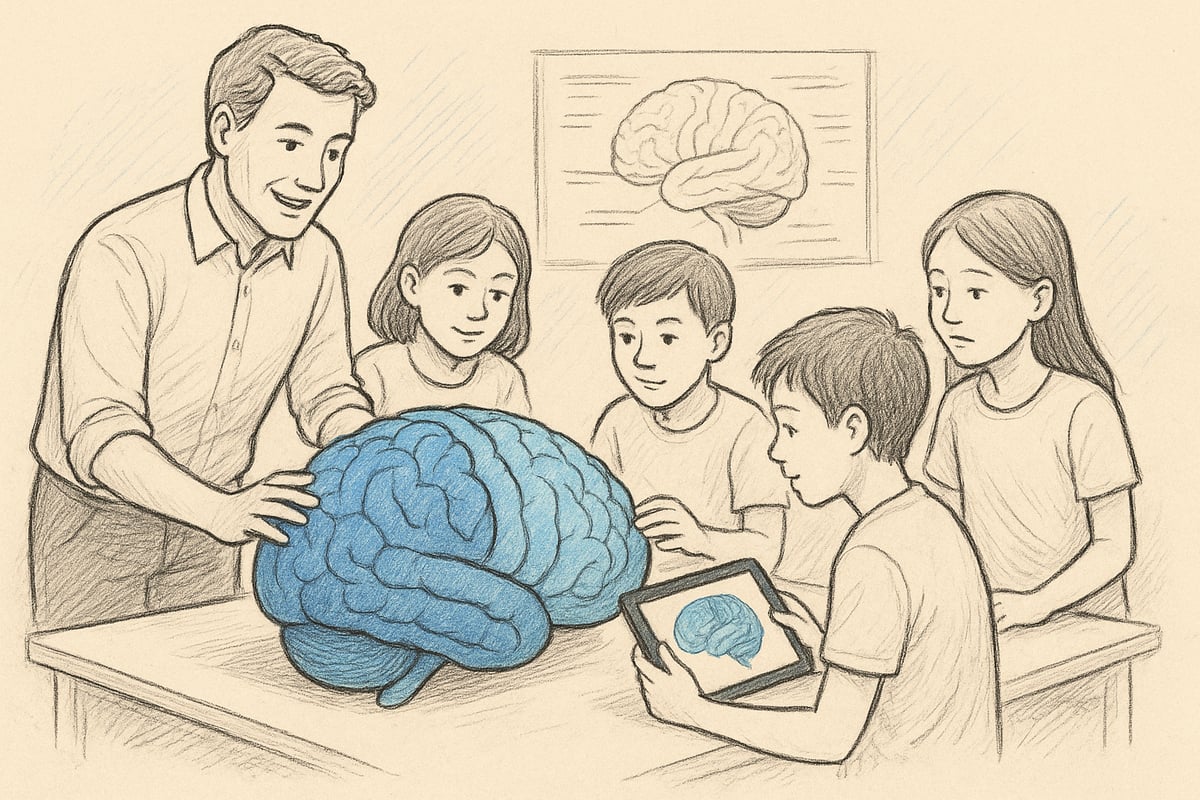
A brain model is used in the classroom to visualize the structure of the brain for students. When the teacher demonstrates how the cerebrum, cerebellum, and brainstem are interconnected, students' understanding is much deeper than through reading alone. Many educators combine physical brain models with digital resources so that students can touch, see, and interact. This provides a strong pedagogical foundation, especially when using color-coded models that clearly illustrate different areas. For more inspiration on pedagogical use, explore the Guide to Teaching Materials .
In research environments, brain models are used as prototypes for simulations and to understand neurological connections. Researchers can analyze structures and test hypotheses before transferring them to digital simulations or clinical trials. A detailed brain model makes it possible to observe connections between specific areas and their functions, which strengthens research results.
Clinical practice also benefits greatly from brain models. Doctors and healthcare professionals use the models to explain diagnoses and treatments to patients. When a patient is facing a neurological disease, a physical brain model can make it easier to understand where a blood clot or tumor is located and how the treatment affects the body. This increases the patient's confidence and engagement in their own treatment.
The integration of physical and digital solutions has become standard in many educational institutions. A combination of a traditional brain model and digital apps or AR allows for rotation, zooming and exploring the inner layers of the brain. The table below compares the areas of application for different types of models:
| Application area | Physical brain model | Digital/AR brain model |
|---|---|---|
| Education | Tactile, visual | Interactive, immersive |
| Research | Prototypes | Simulations |
| Clinic | Patient dialogue | Virtual explanations |
The use of brain models has increased significantly. According to an industry analysis, 70% of Danish health education programs now use both physical and digital models in teaching. This reflects a move towards more interactive and evidence-based learning.
For the patient, a brain model often means the difference between confusion and understanding. When healthcare professionals actively use models, the patient experiences greater clarity about the course of the disease and the choices that need to be made.
A concrete example from practice is a biology teacher using a color-coded brain model to explain how sensory input is processed in different brain regions. Students are allowed to take the model apart and reassemble it, which increases both engagement and learning.
Tips for Getting the Most Out of Brain Models
To get the most out of your brain model, it is recommended to combine physical models with supplementary materials. For example, use posters, digital resources and quizzes to create a holistic learning experience. See the selection of anatomical posters and models for inspiration.
Actively involve students or patients in the process. Let them assemble and disassemble the brain model so they get a tactile understanding of the brain's structure. Use color codes and clear labels to aid memory.
Integrate digital solutions so that the user can experience the anatomy of the brain both physically and virtually. Interactive apps and AR models can make learning even more vivid.
Maintain and store your brain model properly to ensure its longevity. Clean it regularly and keep it dry and dust-free.
Finally, be curious and experiment with different teaching methods. The more senses that are activated, the more benefit the user will get from their brain model.
Trends and Innovations in Brain Models 2025
Technological development is accelerating, and brain models are at the center of a number of groundbreaking trends in 2025. The use of AR and VR has become indispensable in both teaching and clinical training. Several educational institutions have introduced immersive learning environments where students can interact with a virtual brain model in 3D space. This makes it possible to simulate complex disease processes and treatments in a safe way. According to VR in Nursing Education: A Guide to Research Writing 2025, healthcare education programs experience significantly improved learning outcomes when VR is integrated with physical models.
Another significant innovation is the proliferation of 3D-printed brain models. These can now be manufactured patient-specifically, so that both doctors and patients gain a unique understanding of their particular anatomy or disease. This is particularly important in neurological surgery and preoperative planning, where every detail counts. 3D printing also makes it possible to develop pathological brain models that illustrate, for example, tumors or blood clots, which strengthens both research and patient communication.
Sustainability is also gaining ground in brain model production. More manufacturers are now using environmentally friendly materials, such as bioplastics or recycled resin, to reduce environmental impact. This is in line with the global movement towards green technology and responsible consumption, which is also in demand by educational institutions and hospitals.
The integration of artificial intelligence marks a new era for brain modeling. AI-powered models can now simulate neurological processes in real time, allowing the user to understand dynamic changes in the brain under different scenarios. Smart models that couple physical components with digital simulations are expected to revolutionize both teaching and clinical research in the coming years.
The market for digital brain models is growing rapidly. According to an international market report, an annual growth of 15 percent is expected until 2027. Universities are investing in VR laboratories, while hospitals are ordering patient-specific models for both diagnosis and treatment planning. At the same time, there is demand for larger formats and customized solutions, so that brain models become a central piece in interdisciplinary teaching and patient care.
Table: Key trends for brain model 2025
| Trending | Example/Application | Advantage |
|---|---|---|
| AR/VR and immersive learning | Virtual simulations in teaching | Increases understanding and engagement |
| 3D printing and patient customization | Individual models for patients | High precision and realism |
| Sustainable materials | Bioplastic, recycled resin | Less environmental impact |
| AI and smart models | Simulated neurological processes | Dynamic learning and research |
The future of brain modeling is digital, sustainable, and personalized. The latest innovations are setting new standards for how we learn about and work with the brain. Whether you are an educator, researcher, or clinician, the coming years will offer even more opportunities to integrate advanced brain modeling into practice.
Now that you have gained insight into how brain models can enhance both your knowledge and communication, it is obvious to take the next step towards choosing the right model for your needs. Whether you are a teacher, student or working in the healthcare sector, the right materials can make a decisive difference to understanding and engagement. At eAnatomi you will find a wide selection of brain models and teaching materials, developed with a focus on both quality and pedagogy. You can explore the possibilities and find inspiration for your practice by Read more here
0 comments