

The use of anatomy model torsos is rapidly developing, especially in teaching and healthcare education in 2025. More schools and clinics are now demanding precise and modern solutions to enhance learning and practice.
This guide is your key to selecting, using and understanding the latest anatomy model torsos. You will get an overview of the most important models, selection criteria, usage tips, maintenance and future trends.
Are you a teacher, student or healthcare professional? Here you will find knowledge and inspiration to exploit the potential of an anatomy model torso. Read on and get the optimal benefit.
What is an Anatomy Model Torso?
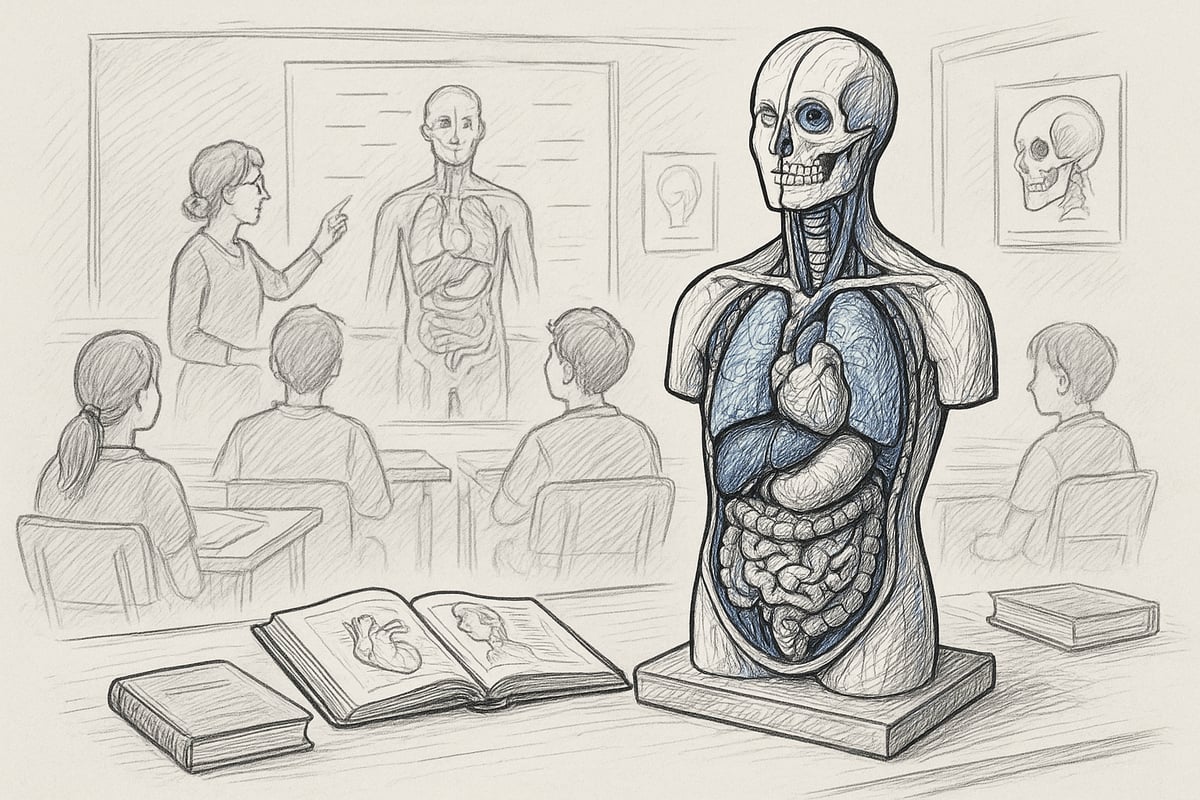
An anatomy model torso is a key teaching tool that visualizes the structure of the human body in a tangible way. With the increased focus on interactive learning and simulation in healthcare education, anatomy model torsos are widely used in both classrooms and clinical settings. These models facilitate the understanding of complex anatomical relationships and strengthen both theoretical and practical knowledge.
Definition and Historical Development
An anatomy torso model is a three-dimensional representation of the human upper body, often with internal organs visible or removable. The model is primarily used to illustrate the anatomy of the body in teaching and medical training.
Historically, the use of anatomical models began as early as the 17th century with wax models that paved the way for more realistic representations. Since then, development has progressed rapidly, and today there are advanced 3D-printed versions that provide even greater detail.
Anatomy model torsos have been used in both classrooms and clinics to make teaching more visual and practical. Milestones in development include the introduction of plastic models in the 1900s and today's digital integrated solutions.
Types of Anatomy Model Torsos
There are several different types of anatomy model torsos, each with their own specific purpose. The most common are classic models that show basic organs, advanced models with multiple removable parts, and specialized models that focus on individual organ systems such as the heart or digestion.
The difference between school and professional models often lies in the level of detail and the number of removable parts. School models typically have fewer details and are more robust, while professional versions have higher accuracy and more features.
A concrete example of a popular model is the Classic Unisex Torso 12 parts , which is used in both teaching and medical training.
Materials and Quality
The choice of material has a great impact on the durability and level of detail of the anatomy model torso. Plastic is the most common material, as it is light, robust and easy to clean. Silicone is often used for organs where flexibility and realism are important. Resin is used for models where high detail and strength are required, while eco-friendly alternatives are gaining ground as sustainability is increasingly emphasized.
The advantage of plastic is low weight and price, while silicone offers more realistic textures. Resin allows for very fine detail, but is often more expensive and more fragile. For optimal usability, both level of detail and durability are important factors to consider when choosing your anatomy model torso.
Areas of application
Anatomy model torsos are widely used in educational settings such as primary schools, secondary schools and universities, but also in hospitals and clinics for training and patient information. In the classroom, the model can be used for group work, demonstrations and exam preparation, while healthcare professionals use it to explain procedures to patients.
Typical learning situations include organ identification, reviewing body systems, and simulating medical procedures. According to industry analyses from 2023, there is a significant increase in demand for anatomical models in Europe, highlighting the growing importance of the model in modern education.
How to Choose the Right Anatomy Model Torso
Choosing the right anatomy model torso requires careful consideration. It is crucial to match the model type with your purpose, your level and your requirements for detail. Here we guide you through the most important considerations so that you can make the optimal choice.
Purpose and Target Group
First of all, you need to define who will use your anatomy model torso, and for what purpose. Is it for primary school, high school, university or clinical training? Will the model be used for patient information, self-study or skills training?
Consider whether the user is an educator, student, or healthcare professional. Each group has different needs. Students often need a model with clear organ labeling, while professionals may require high levels of detail and specialized features.
If you are a student, you can find useful tips and guidance at For students in anatomy . By clarifying the purpose and target audience from the start, it will be easier to find an anatomy model torso that matches your requirements.
Features and Level of Detail
An important factor when choosing an anatomy model torso is the level of detail and features of the model. Some models have removable organs so you can study structures in depth. Others have integrated markings that make it easier to identify important anatomical elements.
Consider whether you need moving parts or whether a static model is sufficient. Models for advanced use, such as surgical training, often require high precision and the ability to remove and replace organs.
Compare models with different features in the table below:
| Function | Simple model | Advanced model |
|---|---|---|
| Removable organs | No | Yes |
| Markings | Yes | Yes |
| Moving parts | No | Often |
Choose an anatomy model torso that best supports your learning goals.
Size and Scale
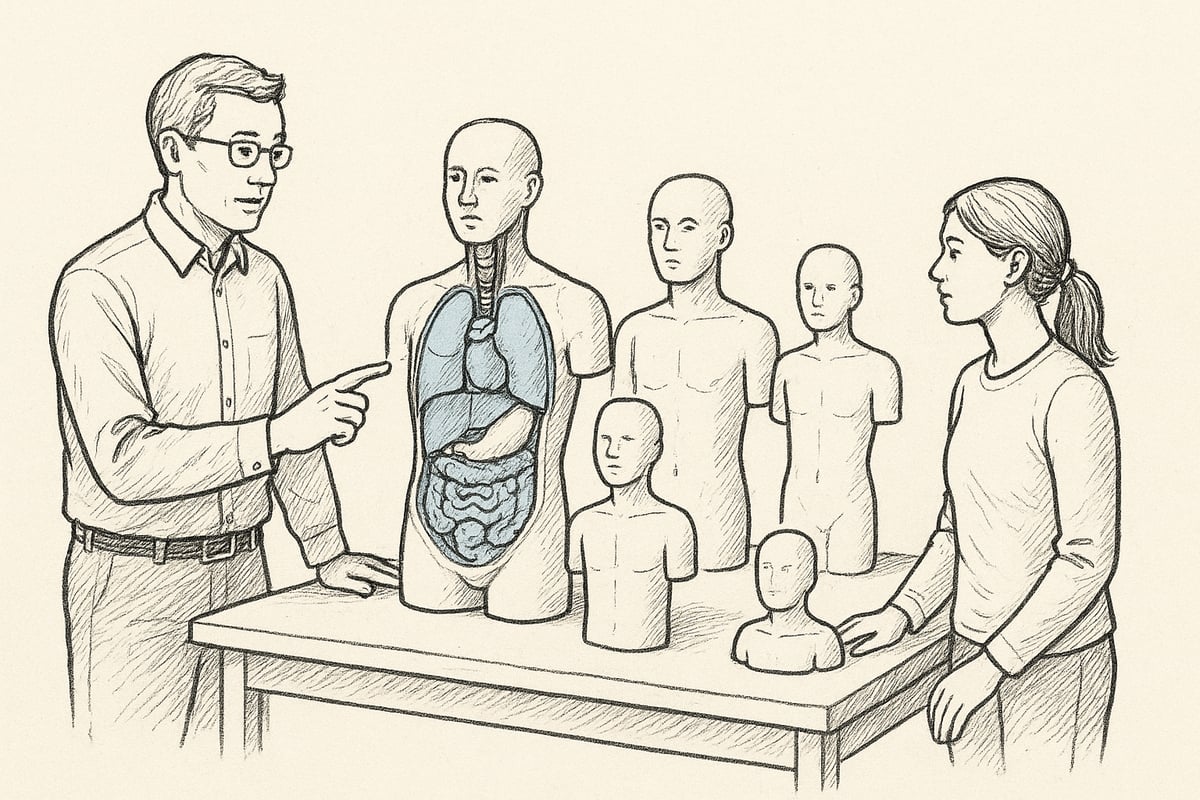
The size of your anatomy model torso is very important for its use. Miniature models are suitable for quick overviews and transportation, while half-scale and full-scale models provide a better understanding of proportions and level of detail.
In schools, smaller models are often used that are easy to handle and store. In universities and clinics, full-scale models are preferred to illustrate the actual size of the human body.
Example: A half-scale model is convenient for classroom demonstrations, while a full-scale anatomy model torso is ideal for advanced skills training. Choose size based on space, purpose, and learning level.
Price and Budget Considerations
The price of an anatomy model torso varies considerably depending on the level of detail, size, and materials. Budget-friendly models often start at a lower price point and cover basic needs, while premium models may cost more but offer higher quality and more features.
Consider what you get for your money. It may be worth investing in a model with replaceable organs and durable materials, especially if it will be used frequently or by many people.
Compare different solutions and take into account any warranties and customer service. A well-thought-out investment in an anatomy model torso ensures long-term value.
Certifications and Safety
Safety and quality are crucial when choosing an anatomy model torso. Always check if the model has the CE marking and meets applicable health standards. This is especially important if the model is to be used by children or in health education.
Be aware of material choices and possible allergens. Some models are made from eco-friendly materials, which can be an extra plus in educational environments.
Follow recommendations from authorities and manufacturer's instructions for proper use and maintenance. A certified anatomy model torso ensures safety for both user and instructor.
How to Use Your Anatomy Model Torso: Step-by-Step Guide
Getting the most out of your anatomy model torso requires both proper setup and ongoing maintenance. Follow this guide to ensure your model is both functioning optimally and contributing maximally to learning and training.
Setup and Assembly
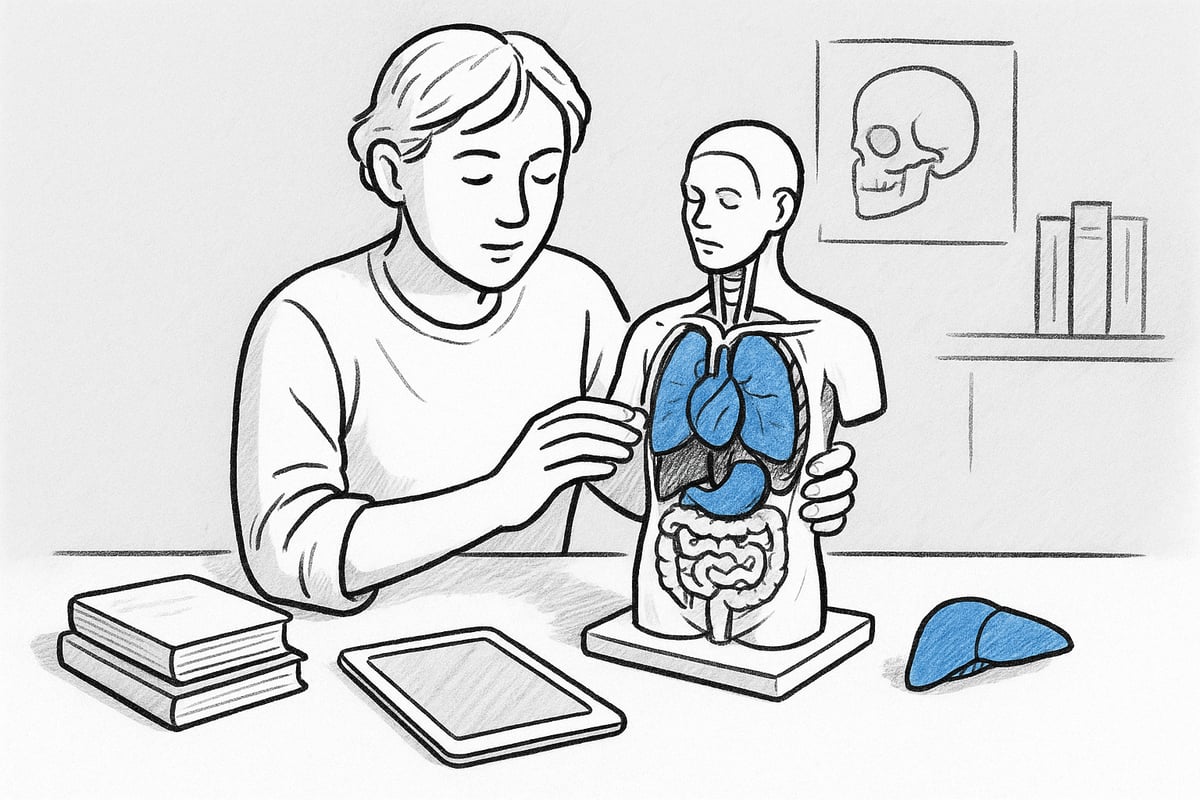
When you receive your anatomy model torso, begin by carefully unpacking all parts. Check that all organs, mounting parts, and instructions are present. Inspect the model for shipping damage before assembling.
Start by mounting the torso base on a stable surface. Follow the manufacturer's instructions carefully, especially when placing the organs in place. It is crucial that all parts snap together correctly to avoid damage and ensure that the anatomy model torso stands securely.
If necessary, wear cotton gloves to avoid greasy fingers on sensitive surfaces. Finally, check that the model is not tilting and that all organs are secured so that it is ready for use.
Use in Teaching and Training
An anatomy model torso is a powerful tool for both classic classroom teaching and more advanced skills training. Plan lessons where students have the opportunity to remove organs and examine them up close. This increases understanding of the structure and function of the body.
Use the model to demonstrate physiological processes, such as breathing or digestion. Interactive exercises, where students or course participants work in small groups, promote collaboration and active learning. For inspiration for exercises and pedagogical resources, visit For Anatomy Teachers .
You may want to end with a quiz or discussion using the model as a reference. This will make the teaching lively and relevant.
Maintenance and Cleaning
Regular maintenance will extend the life of your anatomy model torso. Start by wiping all surfaces with a soft, damp cloth after use. Use only mild cleaning agents, especially if the model is made of plastic or silicone.
Avoid exposing the model to direct sunlight or humid environments as this may damage the material. Always store the anatomy model torso in the supplied box or in a dust-free place.
If you notice loose or worn parts, repair or replace them immediately to avoid further damage. With proper maintenance, a quality model can last for many years.
Integration with Digital Learning
Today, the physical anatomy model torso is often combined with digital learning tools. Use apps or augmented reality technology to deepen learning, for example by showing animations of blood circulation or muscle movements.
Digital platforms can complement the classic model with interactive quizzes or 3D visualizations. This allows for differentiated teaching, where students can work at their own pace.
By integrating physical and digital learning, you get the best of both worlds and strengthen both understanding and engagement.
Mistakes to avoid
One of the most common mistakes is handling the anatomy model torso carelessly. Avoid pulling or twisting the organs as this can lead to breakage or loose parts. Always read the instructions before assembly and use.
It is important not to use harsh cleaning agents as these can discolor or damage the material. Make sure all users understand how to assemble and disassemble the model.
If the model is used in teaching, the teacher should demonstrate correct handling so that everyone can enjoy it for a long time.
Tips for Maximum Utilization
To get the most out of your anatomy model torso, you can vary teaching methods. Use the model to prepare students for exams by doing role plays or case-based assignments.
Share experiences and tips with colleagues to continuously develop teaching. Also consider letting students assemble the model themselves, as this provides a practical understanding of the complexity of anatomy.
Think creatively: Use the model for interdisciplinary projects or incorporate it into health information for patients and relatives.
The Best Anatomy Model Torsos on the Market in 2025
When you invest in an anatomy model torso in 2025, you will encounter a rapidly developing market. The selection ranges from classic teaching models to advanced, interactive solutions. To make the choice easier, we present the most popular models here, compare their advantages and disadvantages, and give you specific recommendations and buying advice.
Overview of Top Models
The anatomy model torso market has never been more diverse. The top models in 2025 are distinguished by high level of detail, robustness and educational value.
Here is a comparison table:
| Model type | Accuracy | Durability | Price level |
|---|---|---|---|
| Classical | High | Very high | Low |
| Advanced | Very high | High | Between |
| Specialized | Specialized | Varies | High |
These models cover most needs, from primary school to higher health education. An anatomy model torso with removable organs is especially popular with educators.
Advantages and Disadvantages of Different Models
The choice of anatomy model torso depends on the use case. Classic models score high on ease of use and price, but often lack advanced details. Advanced models have more features, such as moving parts and realistic textures, which is ideal for medical training.
Advantages:
- Classic: Affordable, easy to use
- Advanced: Realistic, more features
- Specialized: Targeted specific subject areas
Disadvantages:
- Classic: Missing details
- Advanced: Higher price
- Specialized: Limited usability
User feedback shows that an anatomy model torso with clear labeling facilitates learning.
Recommendations for Specific Needs
The choice of anatomy model torso should take into account the target audience. For primary schools, standard models with basic anatomy are recommended. Universities and clinics should choose advanced or organ-specific models for optimal training.
Examples:
- Schools: Standard models with color-coded bodies
- Universities: Advanced torsos with interchangeable parts
- Clinics: Specialized models for pediatrics or surgery
New students can benefit from reading more at For the new student for guidance on choosing and using an anatomy model torso.
Anatomy Models from eAnatomi ApS
eAnatomi ApS offers a wide range of anatomy model torsos for both teaching and professional use. The company collaborates with healthcare experts to ensure high quality and precision.

Advantages of choosing eAnatomi ApS:
- Danish design and production
- Large range, including classic and advanced models
- Global delivery and proven customer satisfaction
You can read more about the selection and the background at About eAnatomi and our selection . Many users highlight the durability and detailed reproduction of the anatomy model torso from eAnatomi ApS.
Buying Guide and Where to Find the Models
When buying an anatomy model torso in Denmark, it is important to shop from a reliable retailer. Online stores often offer a wider selection and better prices. Remember to check for CE marking and warranty.
Checklist for a safe purchase:
- Consider the purpose of the model
- Compare quality and price
- Read user reviews
- Search for warranty and return policy
When purchasing online, you should double-check shipping terms and support options so that your anatomy model torso lives up to expectations.
The Future Anatomy Model Torso: Trends and Innovations
The development of anatomy model torsos is rapidly moving into a new era, where technology, sustainability and individualization characterize both production and use. In this section, you will get an overview of the most important trends shaping the future of teaching and health training with anatomy model torsos.
Technological Advances
Technology is changing the way we work with anatomy model torsos. 3D printing makes it possible to produce extremely detailed and accurate models, often tailored to specific learning objectives. Digital solutions such as VR and AR are increasingly being integrated, allowing users to explore the human body interactively.
An example of this development is An open-source, three-dimensional growth model of the mandible , which demonstrates how advanced 3D modeling can be applied to anatomy. These technologies make training more realistic and engaging.
Innovative teaching methods that combine anatomy model torsos with digital platforms are gaining ground. This makes it easier to visualize complex processes, strengthening understanding among both students and healthcare professionals.
Sustainability and Eco-Friendly Materials
Sustainability is becoming a central theme for anatomy model torsos. More manufacturers are now focusing on eco-friendly materials, such as recyclable plastics and bio-based resins. This reduces the environmental impact without compromising durability or level of detail.
The demand for green teaching aids is increasing, which is also confirmed by industry analyses from 2023. Many institutions are now choosing models that meet both pedagogical and environmental requirements.
Manufacturers are working to make both production and transportation more climate-friendly. This means that the anatomy model torso of the future will be a more sustainable choice for both schools and clinics.
Individualization and Customization
A growing area of focus is the individualization of anatomy model torsos. With new technologies, models can be precisely adapted to teaching needs, e.g. with interchangeable or expanded organs and personalized markings.
This allows for specialized training in everything from pediatrics to surgery. Students and educators can order models that reflect specific patient groups or disease patterns.
The benefits are clear: learning becomes more relevant and practical, and both skills training and exam preparation are strengthened. Individualized solutions are therefore expected to become even more widespread in the coming years.
Expected Developments in 2025 and Beyond
The market for anatomy model torsos is expected to grow significantly in the coming years. New demands from both the education sector and the healthcare sector are pushing for more advanced and flexible solutions.
Experts predict that the integration of digital and physical models will become the norm. More manufacturers will offer hybrid models that support both classical and digital learning.
The pace of innovation will increase, driven by the need for better, more engaging teaching. The anatomy model torso of the future will therefore be a dynamic tool that is continuously adapted to the needs of users and technological possibilities.
Now that you have gained insight into the selection, use and maintenance of modern anatomy model torsos, you are even stronger in your decisions for 2025. Whether you teach, study or work professionally with anatomy, with the right model you can strengthen both learning and teaching quality. At eAnatomi ApS you will find a wide selection developed in collaboration with healthcare experts, so you get exactly the solution that matches your needs. If you want to see more about the options and find the perfect model for you, you can Read more here .
0 comments