

Did you know that your autonomic nervous system controls everything from your heartbeat to your digestion without you even thinking about it? For many, this system is a mystery, which is why we have created this guide for you.
The purpose of this article is to provide you with a complete and updated guide to choosing the right poster about the autonomic nervous system in 2025. Whether you are a student, teacher or working in the healthcare sector, here you will get the most important tools to understand and convey complex knowledge in a simple way.
We cover what the autonomic nervous system is, its functions and structure, how posters can visualize the processes, and how to choose the most relevant solution. Also discover the latest trends so you are best equipped for the future of teaching and practice.
What is the autonomic nervous system?
The autonomic nervous system is one of the body's most fascinating and complex control mechanisms. Without you thinking about it, it regulates everything from your heartbeat to your digestion. To understand why a poster about the autonomic nervous system is so valuable, it requires insight into its function, anatomy, and importance to health.
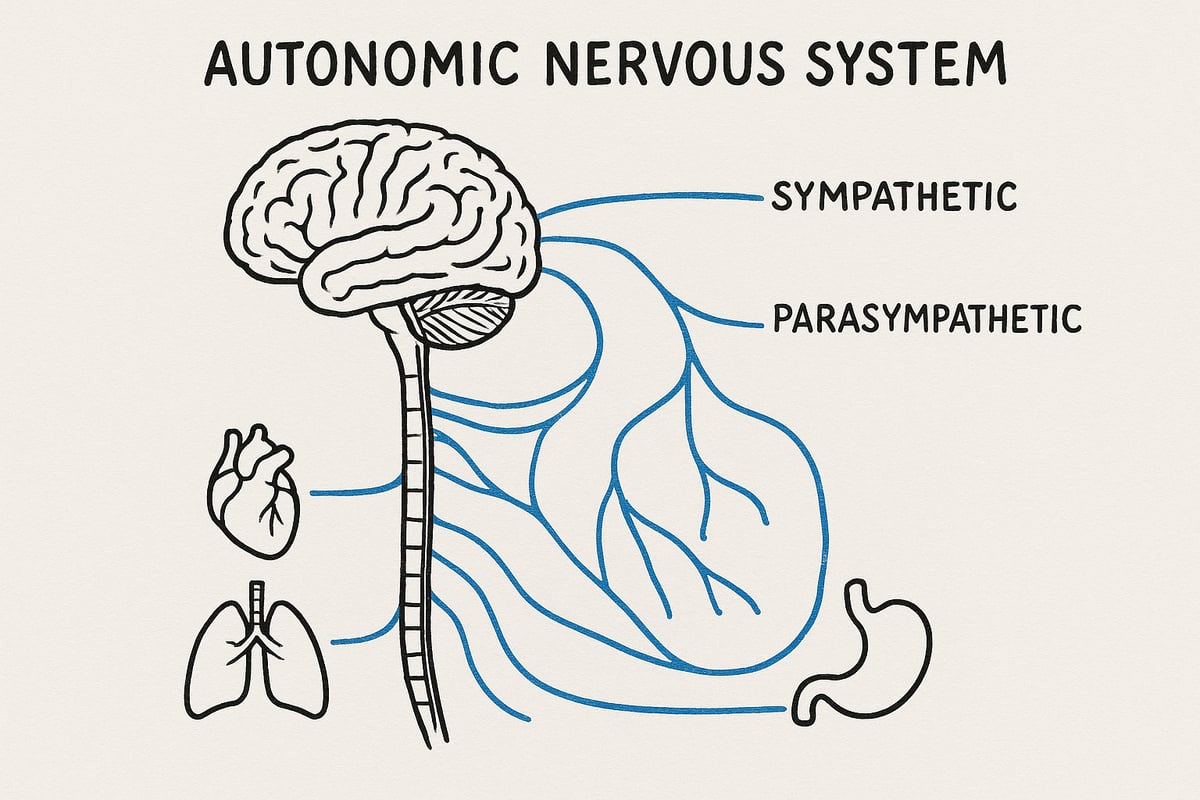
Definition and basic functions
The autonomic nervous system (ANS) is the part of the nervous system that automatically controls the body's internal processes. It is different from the somatic nervous system, which controls voluntary movements, such as when you raise your arm. A poster about the autonomic nervous system can illustrate this difference visually and make it easier to understand for both students and patients.
The ANS consists of two main branches: the sympathetic and parasympathetic nervous systems. The sympathetic system activates the body during stress or danger and prepares you for fight or flight. The parasympathetic system provides calm, relaxation, and restoration when the body is at rest.
Here are some examples of automatic processes that ANS controls:
- Pulse and blood pressure
- Digestion
- Sweat production
- The pupil reaction of the eye
In fact, the ANS controls over 90% of the body's unconscious functions, emphasizing its importance for daily well-being (source: sundhed.dk). A poster about the autonomic nervous system can help make these processes more visible and tangible.
The ANS ensures homeostasis, i.e. the body's ability to maintain balance in internal conditions such as temperature, fluid balance and energy expenditure. During stress, the sympathetic system is activated, while the parasympathetic system is activated during rest. This dynamic is essential for health, and understanding it can improve both well-being and the treatment of diseases.
For example, patients with dysautonomia – a disorder of the ANS – experience symptoms such as dizziness, fatigue or irregular heart rate. For both healthcare professionals and educators, a poster about the autonomic nervous system is an indispensable tool. For a more thorough review, there is an in-depth Autonomic Nervous System guide that describes the functions and division.
Anatomical structure and signaling pathways
The autonomic nervous system originates in the brain and spinal cord, from where nerves run out to the body's organs via the peripheral nervous system. A poster about the autonomic nervous system clearly visualizes how signals are sent from the central nervous system to target organs such as the heart, lungs, and intestines.
The ANS works through a network of nerves that relay messages quickly and accurately. For example, if you perceive danger, the sympathetic system is activated, causing the heart to beat faster and blood to be pumped to the muscles. Conversely, when you relax after stress, the parasympathetic system is activated, returning the body to a normal state.
Here is an overview of the differences between the two main branches:
| Function | Sympathetic system | Parasympathetic system |
|---|---|---|
| Pulse | Increase | Lowered |
| Digestion | Inhibited | Promoted |
| Pupils | Expanding | Pull together |
| Sweat production | Increase | Unchanged |
Anatomical knowledge of these signaling pathways is essential for making correct diagnoses and choosing the right treatment. A poster about the autonomic nervous system makes it easier for both students and professionals to understand how the body responds under different conditions.
Understanding the structure and signaling pathways of the ANS provides a strong foundation for working in both teaching, clinical practice, and research. Therefore, it is important to choose a poster about the autonomic nervous system that visualizes both the anatomical structures and the functional relationships.
How posters visualize the autonomic nervous system
Posters play a crucial role in communicating complex topics such as the autonomic nervous system. A good poster about the autonomic nervous system helps both students and professionals understand and remember key relationships. Visualization makes it easier to understand signaling pathways and functions that may otherwise seem overwhelming.
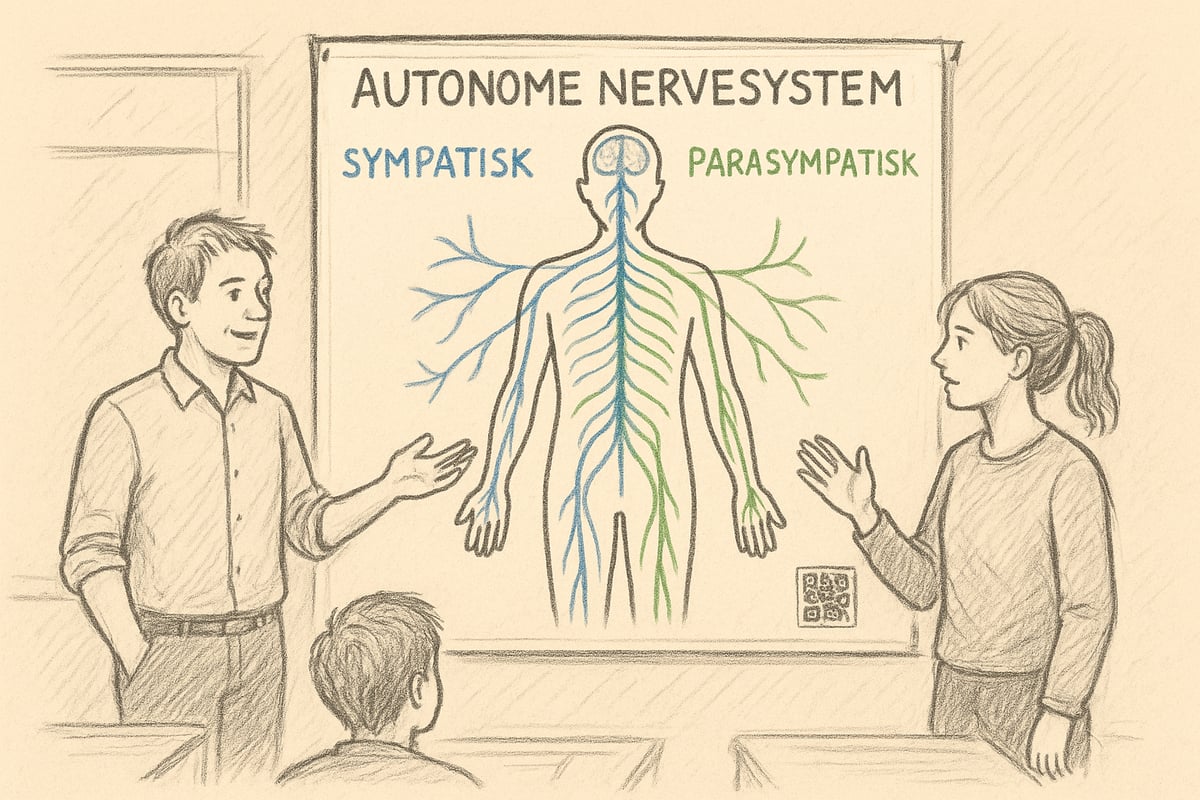
Main types of posters and their content
When choosing a poster about the autonomic nervous system, there are several main types. Classic posters often show the nervous system with color-coded nerves and clear anatomical structures. Modern posters can supplement the illustrations with QR codes that link to additional material or interactive elements.
Comparison of poster types:
| Poster type | Advantages | Disadvantages |
|---|---|---|
| Classical | Easy to understand, clear illustrations | Limited interactivity |
| Detailed | In-depth, lots of information | Can seem overwhelming for beginners |
| Educational | Simplified, suitable for younger students | Less detailed |
| Interactive | QR codes, digital content | Requires technology, can be distracting |
For example, a classic poster about the autonomic nervous system will often use blue and red to separate sympathetic and parasympathetic nerves. A digital version, on the other hand, can make use of apps and additional resources to provide more depth. Statistics show that 78% of medical students prefer visual aids like posters to learn about the nervous system.
Visual solutions make it possible to simplify complex processes, making them accessible to both children, young people and adults. Posters are therefore used in both teaching and clinical practice, where they function as a central tool for explaining relationships. Design plays an important role, and Danish manufacturers often prioritize both aesthetics and professional precision. Read more about anatomical posters designed in Denmark to see how design and quality go hand in hand.
Important elements of an effective ANS poster
An effective poster about the autonomic nervous system should clearly highlight the most important anatomical structures and signaling pathways. It is especially crucial to distinguish between sympathetic and parasympathetic routes so that the difference between the body's stress and resting states can be quickly read.
Color coding is an essential part of poster design. Blue and green are often used for the parasympathetic system, while red and orange mark the sympathetic. Icons and visual cues, such as arrows and symbols, help show the direction of the signals and their effect on the organs.
A concrete example is a poster that illustrates how the heart beats faster during stress, while digestion is activated during relaxation. By using contrasting colors and easy-to-understand symbols, the difference becomes clear to both students and patients.
Feedback from educators and students indicates that readability and simplicity are crucial. Too much detail can be confusing, while too little information makes the poster useless. A well-balanced poster about the autonomic nervous system ensures that both text and illustrations support each other. This creates an effective learning environment and facilitates understanding.
eAnatomy – Quality posters on the autonomic nervous system
eAnatomi has positioned itself as the leading supplier of posters about the autonomic nervous system in Denmark. The company collaborates with healthcare specialists to ensure that each poster combines scientific accuracy with educational design.
An autonomic nervous system poster from eAnatomi is available in several sizes and designs, so that educators, students and clinicians alike can find the right solution. The large formats are suitable for classrooms and clinics, while smaller posters are ideal for desktop or individual use.
eAnatomi also offers customized posters, where institutions can customize content or branding as needed. This makes it possible to cover both general and specific learning objectives. For example, eAnatomi posters are used in medical schools and hospitals, where they support teaching, patient communication and continuing education.
Whether the purpose is teaching, clinical, or self-study, eAnatomi ensures that each poster about the autonomic nervous system meets the highest standards for both content and design.
Guide: How to choose the right poster about the autonomic nervous system
Choosing the right poster about the autonomic nervous system can make a big difference to both understanding and communication. Whether you are a student, teacher or healthcare professional, it is important to consider a number of factors before making your choice. Here is a step-by-step guide to help you find the ideal solution.
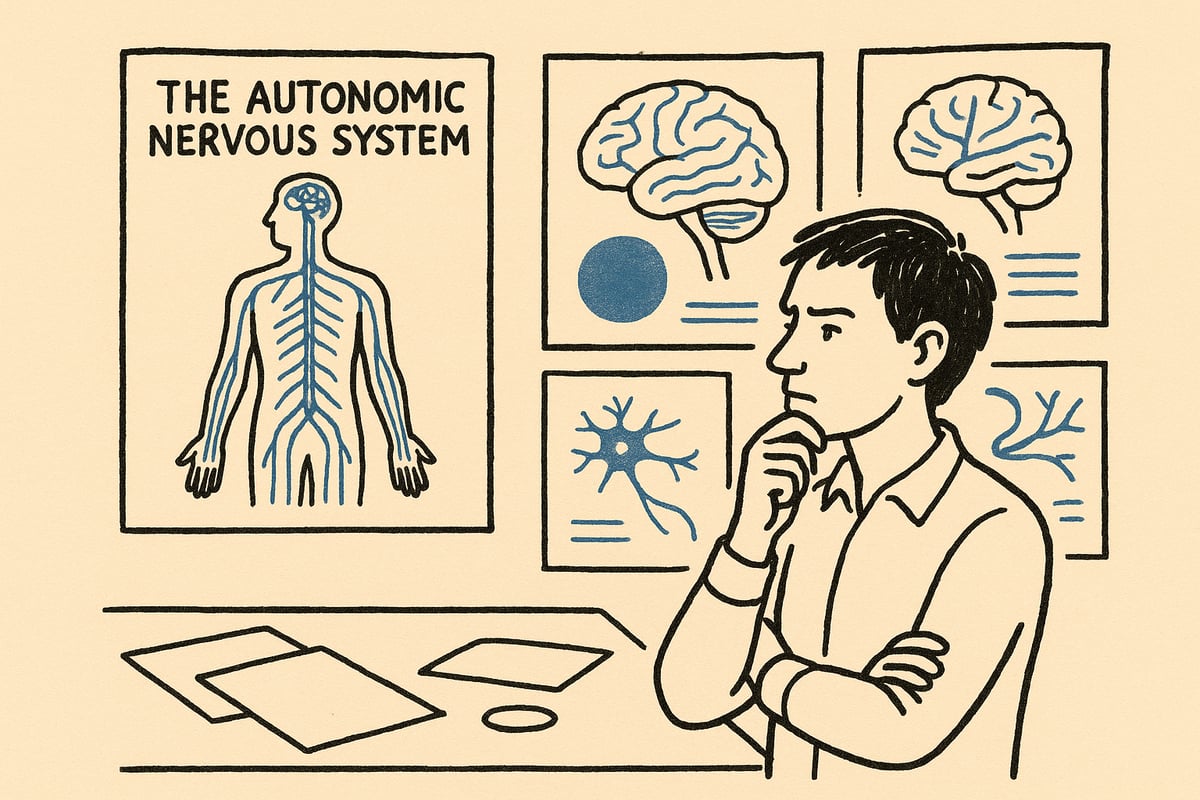
Step 1: Define your purpose and target audience
Start by clarifying what your poster about the autonomic nervous system will be used for. Will it be hung in a classroom, used in patient information, or as a support for self-study? The choice of poster often depends on the target audience.
For example, an educational poster about the autonomic nervous system for elementary school will typically be more concise and colorful, while a detailed version is suitable for university level. Also consider whether the target audience needs basic understanding or advanced knowledge.
If you are a student and need to choose a poster for exams or daily learning, you can find inspiration in thisGuide for Students on Anatomy .
Step 2: Assess content and level of detail
The next step is to assess how comprehensive your poster about the autonomic nervous system should be. Check if the poster includes the most important anatomical structures, signaling pathways, and functions you need.
Some posters focus on the big picture, while others illustrate each branch and connection in detail. Statistics show that 65% of educators prefer posters with both text and illustrations, as it increases understanding.
Feel free to make a list of the elements you want, such as sympathetic and parasympathetic pathways, brainstem, or peripheral nerves. This way you will ensure that your poster about the autonomic nervous system matches your needs.
Step 3: Check visual quality and format
A poster about the autonomic nervous system should be easy to read and pleasing to the eye. Choose a format that suits the space where it will be used – large posters are suitable for classrooms and clinics, while small posters are good at the desk.
Check color choices, graphics, and readability. Color codes and icons help separate the different parts of the nervous system and make it easier to understand complex relationships.
It is also important to choose a poster about the autonomic nervous system where illustrations and text are sharp so that details are not lost when the poster is viewed from a distance.
Step 4: Examine materials and durability
The choice of material has a major impact on both the appearance and lifespan of your poster about the autonomic nervous system. Paper posters are often cheaper, but less durable. Laminated or plastic-based posters can withstand more use and cleaning, which is an advantage in educational environments.
If the poster will be hanging in a high-traffic area, it is recommended to choose a durable solution that can withstand frequent handling. Also consider eco-friendly materials if sustainability is important to you.
With the right type of material, your poster about the autonomic nervous system will stay nice and usable for many years.
Step 5: Compare prices and suppliers
The final step is to compare prices and options from different suppliers. Some offer package deals or volume discounts, while others allow you to customize the poster to your liking.
Check if you can get the poster about the autonomic nervous system in different sizes or with the institution's logo. Also compare delivery times and customer service. By spending a little time on research, you ensure that you get the most out of your budget.
A well-chosen poster about the autonomic nervous system is an investment that benefits both you and those you convey knowledge to.
The autonomic nervous system in practice: Using posters in learning and treatment
Posters play a central role when communicating complex topics such as the autonomic nervous system in practice. Whether you work in education, patient communication or research, a poster about the autonomic nervous system can make abstract concepts more tangible and facilitate dialogue.
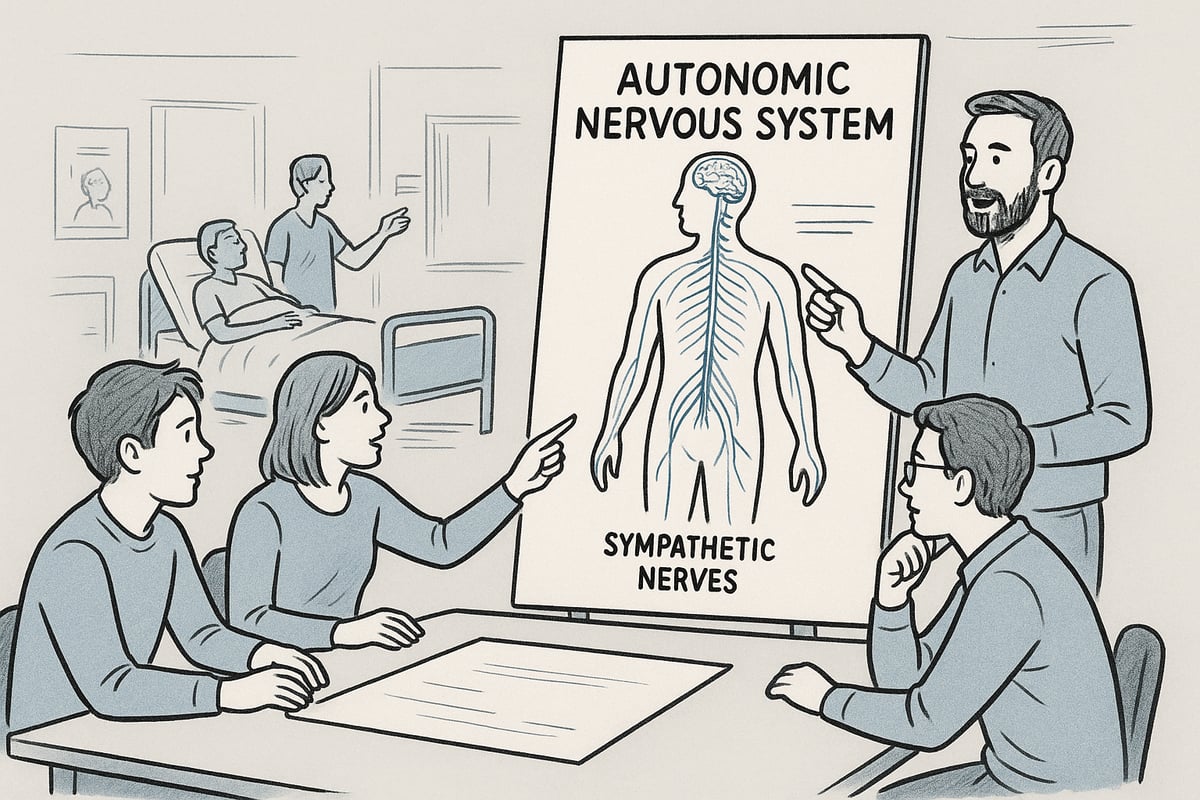
Posters in teaching and self-study
In educational contexts, a poster about the autonomic nervous system is an indispensable tool. The poster visualizes signaling pathways, anatomical structures and functions, making it easier for both students and teachers to get an overview. Many teachers find that graphic elements and color codes help students remember complex relationships.
For example, posters are often used in group work at high schools and universities. Here, students gather around a large poster about the autonomic nervous system to discuss the differences between the sympathetic and parasympathetic systems. According to one study, 82% of students experience that their understanding improves significantly when using visual aids.
For teachers who want inspiration on how to best integrate posters into courses on the autonomic nervous system, there are useful resources at Information for teachers of anatomy . It offers guidance and examples of pedagogical use.
Posters can also be used for self-study at home, where the student can review signal pathways and connections at their leisure.
Posters in clinical practice and patient communication
In the clinic, a poster about the autonomic nervous system is of great value when healthcare professionals need to explain diagnoses or treatments to patients. Many patients have difficulty understanding complex physiological processes, but a graphic poster makes it easier to visualize, for example, stress reactions or the difference between relaxation and fight/flight.
A concrete example is the use of posters for patients with anxiety or stress-related issues. Here, the healthcare professional can point to relevant areas on the poster so that the patient better understands how the body reacts in different situations. This strengthens the dialogue and creates greater security for the patient.
Furthermore, a poster about the autonomic nervous system serves as a common reference point in conversations between doctors, physiotherapists and patients, facilitating communication and contributing to a more effective treatment process.
Posters as support for research and continuing education
In research and continuing education, posters about the autonomic nervous system are used to present complex data and anatomical relationships at conferences, courses or workshops. A clear poster can quickly provide an overview of new knowledge or act as a visual support for lectures.
Advantages of posters in research and continuing education contexts:
- Rapid communication of complex relationships
- Overview of signaling pathways and anatomical structures
- Supports dialogue and discussion among professionals
In hospitals, posters are often used in connection with internal courses or continuing education for healthcare professionals. Here, they function both as a teaching tool and as a reference in daily work.
In summary, a poster about the autonomic nervous system can enhance learning, improve patient communication, and support knowledge sharing across the healthcare sector.
Trends and innovations for posters about the autonomic nervous system in 2025
The development of posters about the autonomic nervous system is progressing rapidly. New technologies, pedagogical methods and sustainability principles will shape the market in 2025. In this section, you will gain insight into the most important trends shaping the learning and communication tools of the future.
Digitalization and interactivity
In 2025, we will see a significant digitalization of posters about the autonomic nervous system. Many educators are now choosing digital posters that can be integrated with apps, augmented reality and QR codes. This allows students to scan the poster and access additional explanations, videos or quizzes directly on their phone.
Interactive posters engage the user in new ways. For example, a poster about the autonomic nervous system today can contain layers where you click from a high-level overview to detailed signaling pathways. This development makes learning more dynamic and accessible to more age groups.
Another advantage is the possibility of continuous updates. Digital posters can be quickly adapted to new research, so the content is always current. If you want to know more about the development behind quality posters, you can read about About eAnatomy and our mission .
Scientific update and design improvements
Updated posters based on the latest research are essential for accurate communication. By 2025, 40 percent of educators expect to upgrade to new versions that reflect the latest anatomical discoveries and pedagogical principles.
Design improvements are not just about aesthetics, but also about making the autonomic nervous system poster easy to decode for both beginners and specialists. Color codes, icons, and intuitive layouts help the user quickly understand complex signaling pathways.
If you want to delve deeper into the anatomy of the nervous system, Anatomy and Physiology of the Nervous System can give you a solid academic foundation.
Sustainability and material selection
Sustainability is increasingly important when choosing a poster about the autonomic nervous system. Several manufacturers now offer posters printed on recycled paper or with vegetable ink. This reduces the environmental impact and helps promote green purchasing in both the education and healthcare sectors.
Additionally, durable materials are being developed that can withstand frequent use in classrooms and clinics, meaning that an investment in a quality poster can be both environmentally friendly and financially beneficial in the long term.
Customization and personalization
One of the most significant trends for posters about the autonomic nervous system is the possibility of customization. Institutions can now order posters with their own logo, special focus areas or linguistic adaptations. This makes it easier to target the educational material to specific needs.
Personalization enhances learning outcomes by making content more relevant. Many manufacturers also offer the option to combine digital and print solutions, giving you the best of both worlds.
Frequently Asked Questions About Posters and the Autonomic Nervous System
When choosing a poster about the autonomic nervous system, many questions may arise. Here are answers to the most common ones so you can make the best choice for your needs.
Which posters are best for beginners vs. advanced users?
For beginners, a poster about the autonomic nervous system with clear graphics, simple explanations, and clear colors is recommended. Advanced users, such as medical students or healthcare professionals, should choose posters with detailed anatomical illustrations and extended explanations of signaling pathways and functions.
How do I best maintain my poster?
Avoid direct sunlight and moisture and your autonomic nervous system poster will last longer. Laminated or plastic posters are extra sturdy and can be easily wiped clean, making them ideal for educational environments and clinics where they are used frequently.
Can posters be used in patient communication?
Yes, posters are an effective tool for explaining complex processes to patients, especially when it comes to the autonomic nervous system. Many healthcare professionals use visual aids to make diagnoses and treatments more understandable. Read more about this in The Autonomic Nervous System in Practice .
What is the difference between digital and printed posters?
Digital posters can be updated, shared, and supplemented with interactive elements such as videos or quizzes. Printed posters are physical, easy to hang, and do not require technology. For a visual introduction to the topic, watch this The Autonomic Nervous System - YouTube video .
Where can I find updated posters in 2025?
The latest posters on the autonomic nervous system are available from specialist suppliers, such as eAnatomi, as well as from major educational institutions. Keep an eye out for updates so that your poster is always based on the latest knowledge.
Are there posters in languages other than Danish?
Yes, many suppliers offer posters in English, German and other languages. This is especially useful in international environments or for teaching foreign students.
How do I ensure that the poster is scientifically correct?
Always choose a poster about the autonomic nervous system from reputable providers who collaborate with healthcare experts. Also check if the poster refers to current research results and official sources.
Now that you have a clear understanding of the autonomic nervous system and have seen how the right poster can make even the most complex processes understandable, you may be inspired to take your own teaching or clinical practice further. Whether you are a student, teacher or healthcare professional, you can enhance your knowledge and communication with quality posters that combine scientific precision and educational design. To explore the latest options and find the poster that fits your needs exactly, you can Read more here .
0 comments