

Imagine an invisible defense system that watches over you every day, protecting your body from countless dangers. You may not notice it, but without this system, even the smallest threats could make you seriously ill.
In this guide, you will gain insight into how the immune system works in 2026 and why it is so central to your health. We explore the structure of the immune system, the most important cells, how the body recognizes and fights threats, and what happens when the defense system does not work as it should.
Are you curious about the body's "invisible army"? Read on and gain knowledge that can strengthen your health and understanding of immunity.
The basic structure and function of the immune system
Imagine an inner shield that constantly protects you from invisible enemies. The immune system is the body's natural defense system, and it plays a central role in our health every single day.
What is the immune system?
The immune system is the body's own defense system against infections and diseases. Its most important task is to identify and fight bacteria, viruses, fungi and parasites that we are exposed to every day. According to Videnskab.dk, the body encounters millions of microorganisms daily, but often we don't even notice it.
This is how the immune system works by constantly monitoring the body and responding quickly to threats. When you get a small wound, the system immediately kicks in to prevent infection. The importance of the immune system to everyday health cannot be underestimated, as it protects us from everything from common colds to serious diseases. If you want to delve deeper into the structure, you can read more about the anatomy and function of the immune system .
The three lines of defense
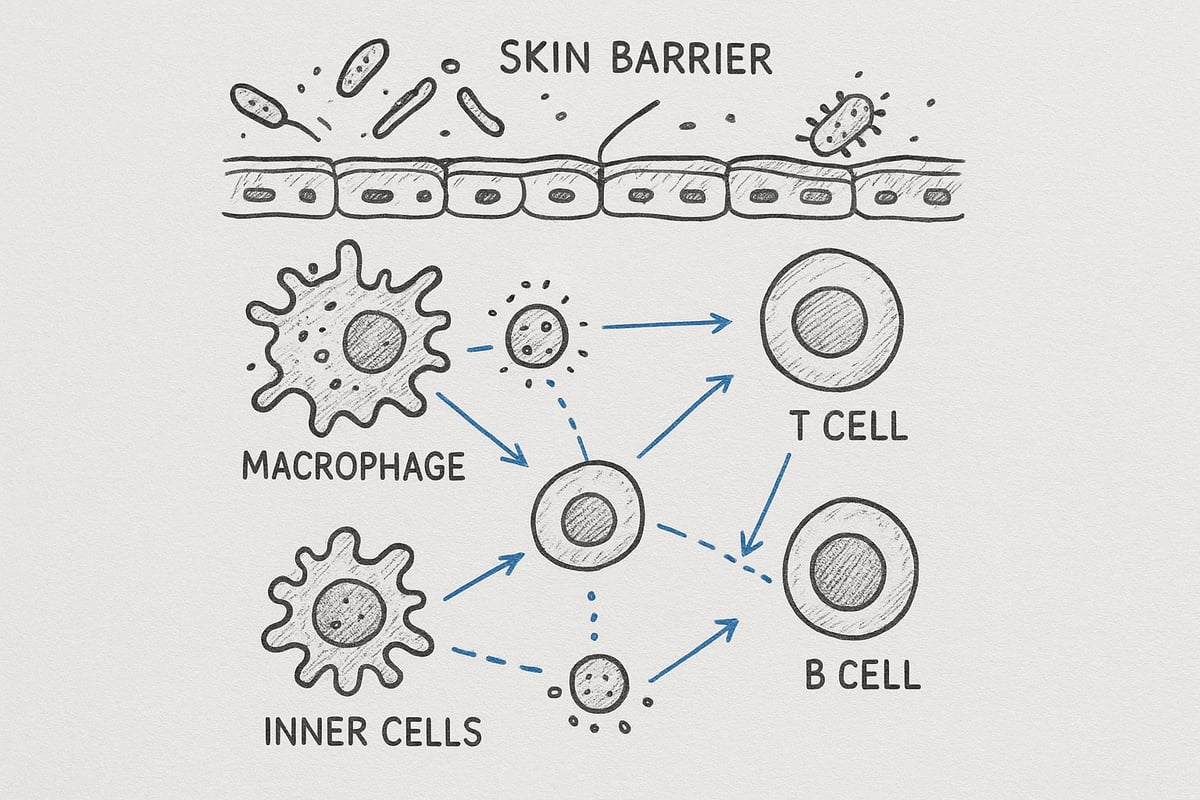
The immune system has three central lines of defense. First, the skin and mucous membranes protect us from external microbes. Next, the innate immune system reacts quickly and nonspecifically if something gets past the outside. Finally, the adaptive immune system steps in, which works slower, but more purposefully and with memory.
An example of how the immune system works is seen when you get a cut: The skin barrier is broken, the innate defenses respond immediately, and if microbes penetrate further, the adaptive defenses are activated to eliminate the threat and prevent recurrence.
The most important cells of the immune system
The immune system consists of several types of white blood cells that work together to protect the body. B cells produce antibodies, T cells attack infected cells, while macrophages and neutrophils engulf and destroy microorganisms.
Here is an overview:
| Cell type | Main function |
|---|---|
| B cells | Forms antibodies |
| T cells | Kills infected cells |
| Macrophages | Eats microbes and waste |
| Neutrophils | Rapid response to infection |
This is how the immune system works, as these cells communicate and cooperate throughout the immune response. For example, a T-cell can identify and attack a disease cell effectively.
Communication and signaling substances
Immune cells communicate with each other via signaling substances such as cytokines and chemokines. These substances control and regulate the immune response so that the body reacts precisely and effectively to threats.
When you get a fever or experience inflammation, it is often due to signals from the immune system that activate more cells to fight the infection. However, this is also how the immune system works, with the risk of overreaction, where your own tissues can be attacked, as seen in autoimmune diseases.
How the immune system recognizes invaders
The immune system stands guard over the body 24/7. But how does it distinguish between its own cells and dangerous microorganisms? To understand how the immune system works, we need to delve into its ability to identify, respond to, and adapt to new threats. Here, we review the key steps in this complex process.
Identification of foreign substances
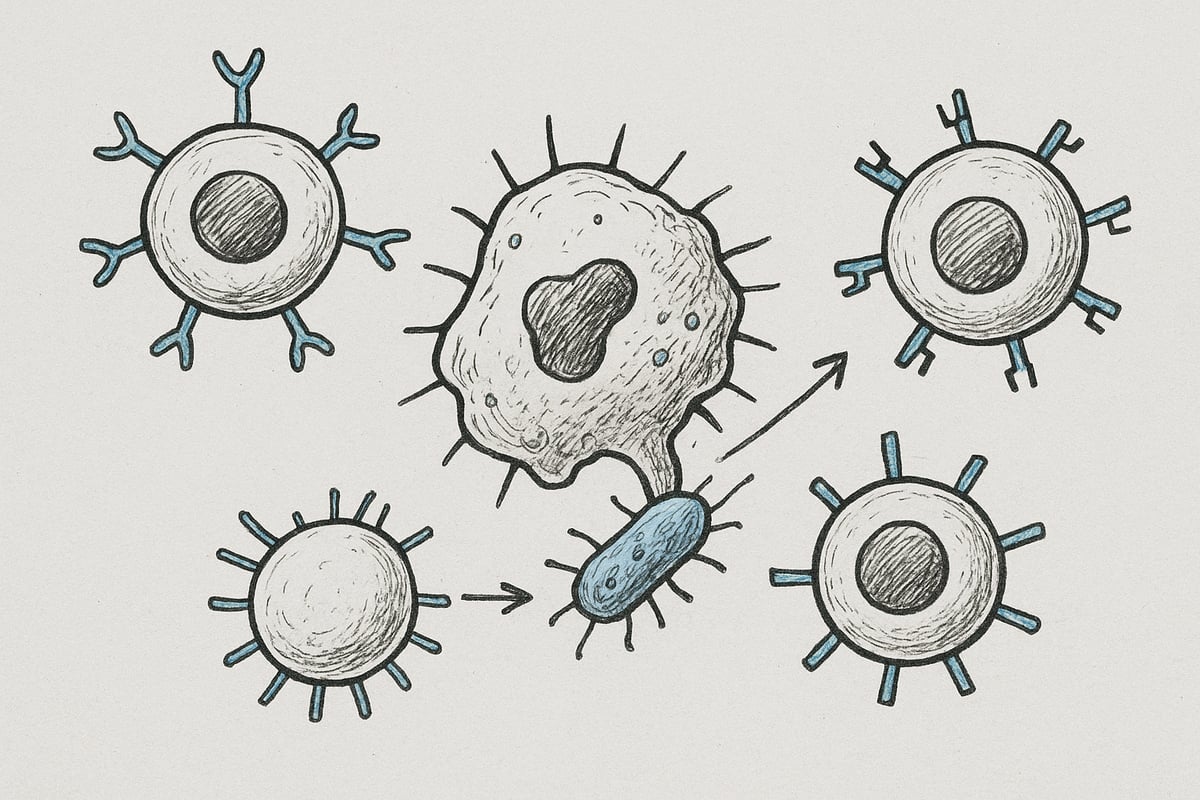
The first step in how the immune system works is to detect the difference between the body's own cells and foreign microorganisms. Immune cells are equipped with specialized receptors on their surface that act as a kind of "ID check".
When a bacterium or virus invades, B cells and T cells recognize specific structures, called antigens, on the surface of the invader. It is this ability to identify “non-self” that allows the immune system to respond quickly and accurately to threats without attacking the body’s own cells.
This happens constantly and unnoticed, every time we breathe, eat or get a small break in the skin.
Activation of the immune response
When an unknown microbe is detected, the next phase in how the immune system works begins: Activation of the immune response. Only a few immune cells will initially be able to recognize the microbe, but these cells are quickly activated.
Once activated, they begin to divide rapidly, creating an army of cells aimed at this very threat. This explains why the first time you encounter a new disease, you may be sick for several days while the body “trains” its defenses.
Upon repeated contact, the body responds much more quickly because more specialized cells are already ready. This mechanism is crucial for how the immune system functions effectively in practice.
Interaction between the innate and adaptive immune system
The interaction between the innate and adaptive immune systems illustrates how the immune system functions as a coordinated network. The innate defenses respond immediately with nonspecific means, but at the same time alert the adaptive defenses.
Macrophages engulf invaders and present their antigens to T cells, which then initiate a targeted response. T cells play a central role in this process, and you can read more about the role of T cells in the immune system in this article.
For example, a wound infection will activate both defense systems, with the innate defense buying time while the adaptive defense develops precise weapons against the attacker.
Antibodies and their role
A key element of how the immune system works is the production of antibodies. When B cells are activated, they begin to produce antibodies that are tailored to bind to specific microbes.
Antibodies act as signaling flags that make it easier for other immune cells to find and destroy the invader. At the same time, they can neutralize toxins that some bacteria secrete.
For example, when the body is infected with a bacteria, it quickly produces antibodies that bind to the bacteria and mark them for destruction. This is one of the most precise ways in which the immune system works.
Adjustment and adaptation of immune response
The immune system learns and improves continuously. Each time immune cells divide, their ability to recognize the microbe is fine-tuned. In this way, the body adapts its defenses and increases precision.
This is how the immune system works, with enormous variation, where millions of immune cells each have unique receptors. This diversity ensures that the body can fight many different types of threats.
The result is a dynamic defense that not only protects but also evolves with experience. That's why we often get sick less often the more times we encounter the same microorganism.
Immunity and immune memory
Understanding how the immune system works requires insight into immunity and the body's ability to remember past threats. Once we have been exposed to a microbe, the body builds up an effective defense that makes us better equipped for the next time. Immunity means that the body can recognize and fight a specific microbe quickly, which reduces the risk of disease. For example, many people find that they rarely get chickenpox or measles more than once because the immune system has learned to defend itself.

Building immunity
Immunity means that the body has built up a lasting defense against a specific microbe. When the immune system functions optimally, memory cells are formed after an infection or vaccination. These cells store information about the microbe so that the body can respond much more quickly the next time. A typical example is seen in childhood diseases, where a child who has had chickenpox rarely gets the disease again. The body therefore remembers the enemy and can fight back quickly if it returns.
How do memory cells work?
When the immune system works this way, B and T memory cells circulate in the blood for many years. They keep watch and can immediately recognize microbes that the body has encountered before. When a new attack occurs, they start the immune response almost immediately. Statistics from Videnskab.dk show that the immune system can often eliminate an infection in just 1-2 days if the body has already formed memory cells. This rapid response is crucial for you to avoid serious illness.
Immunity after illness vs. vaccination
There is a difference between how the immune system works after natural infection and after vaccination. Natural immunity occurs when the body itself has fought off a disease, while vaccines mimic infection to achieve the same effect without making you sick. For example, the measles vaccine has a great importance for the immune system's memory, as it protects against the disease by forming memory cells. If you want to know more about the connection between vaccines and immunity, you can read more at Vaccination and immunity .
How long does immunity last?
The duration of immunity varies, and the immune system does not always work the same way for all diseases. In many cases, immunity lasts for years, but sometimes the memory cells disappear over time, especially if the microbe appears rarely. This is why we need booster vaccines against, for example, tetanus. A classic example is the need for repeated vaccinations against diphtheria, where the immune system's memory gradually decreases.
Limitations of the immune system
Although this immune system works impressively effectively, it has limitations. Some microbes, such as influenza, mutate rapidly and therefore evade the body's defenses. Statistics show that measles can “erase” parts of the immune system's memory, making it harder to fight off other diseases (Science, 2015). Therefore, it is important to continuously strengthen the immune system through vaccinations and awareness of new threats.
When the immune system fails: Errors and diseases
When we look at how the immune system works, it is important to understand that the system is not always flawless. The immune system can make mistakes that lead to diseases that can affect the body at multiple levels. These mistakes range from overreactions to impairments, and they can have major consequences for health.

Autoimmune diseases
Autoimmune diseases occur when the immune system malfunctions and attacks the body's own cells. Instead of protecting against foreign microorganisms, the immune system misinterprets the body's own tissues as threatening.
Examples of autoimmune diseases include type 1 diabetes, where immune cells destroy insulin-producing cells, rheumatoid arthritis, where joints are attacked, and multiple sclerosis, where the protection of nerves is broken down. These diseases can lead to chronic symptoms and often require lifelong treatment.
The causes of autoimmune disorders are complex. Genetics play a role, but environmental factors and infections can also trigger the disease. Understanding how the immune system works helps us develop better treatments and prevention.
Allergies and overreactions
Allergies occur when the immune system overreacts to substances that are normally harmless, such as pollen, food, or animal dander. The immune system views these substances as dangerous and triggers an immune response.
Allergy symptoms range from sneezing and itchy eyes to severe reactions such as anaphylactic shock. Statistics show that allergies are on the rise in the West, which may be due to changes in lifestyle and environment.
When the immune system overreacts, it can significantly affect quality of life. Understanding how the immune system works is crucial to managing and preventing allergic reactions.
Immune defects and weakened defenses
Immune deficiencies occur when the immune system does not function optimally, either due to inborn genetic defects or diseases that weaken the immune system. Some people are born with immune deficiencies, while others acquire them later in life, for example as a result of HIV/AIDS.
When the immune system is weakened, the risk of infections increases because the body cannot fight microbes effectively. Hereditary immune deficiencies can lead to frequent and severe outbreaks of disease, while acquired defects are often seen in the elderly or people with chronic diseases.
It is important to identify immune deficiencies early in order to protect against infections and improve quality of life. The immune system functions best when all its parts are intact.
The role of the immune system in cancer
The immune system has the ability to recognize and destroy cancer cells, but some cancers evade the immune system's surveillance. For example, blood cancer cells can develop mechanisms that hide them from immune cells. Read more about the role of the immune system in blood cancer and how it can affect treatment strategies.
Immunotherapy is a modern treatment that activates the immune system to attack cancer cells. This approach has provided new options for patients, especially where traditional treatment has failed.
Understanding how the immune system works in relation to cancer is crucial for developing new, targeted treatments.
External factors that affect the immune system
Several external factors can affect how the immune system works. Stress, poor sleep, unhealthy diet, lack of exercise and increasing age can all weaken the immune response.
Chronic stress is particularly harmful as it can lead to persistently elevated levels of stress hormones, which inhibit immune function. Studies show that people under prolonged stress are at increased risk of infections.
A healthy lifestyle with a focus on diet, exercise and mental balance is therefore central to ensuring that the immune system functions optimally in everyday life.
Vaccines and the future of immune defense
Vaccines have become an indispensable part of how the immune system works in modern times. They not only protect the individual, but also contribute to the overall resilience of society. With technological advances and new disease threats, it is more important than ever to understand how vaccines are developed and adapted to future needs.
How do vaccines work?
Vaccines work by mimicking infections, so that the body can learn to fight diseases without getting sick. When you get a vaccine, your immune system is presented with a harmless part of the microbe. This triggers a process in which the body creates memory cells. This gives you a head start if you encounter the same disease later.
This is a central principle of how the immune system works: the body is trained to respond quickly and effectively. Examples such as the flu and COVID-19 vaccines show how crucial this mechanism is for both the individual and society.
Development of new vaccines and technologies
Vaccine technology has advanced significantly in recent years. mRNA vaccines have made it possible to develop new vaccines much faster, as seen during the COVID-19 pandemic. These vaccines can be adapted to new virus variants, which is crucial for how the immune system functions in a world of constant threats.
New technologies are enabling the creation of more targeted and effective vaccines. Statistics show that mRNA technology shortened the development time for COVID-19 vaccines from years to months. This marks a major step forward for the future of health.
The role of the immune system in global health crises
When new diseases spread globally, the way the immune system works is put to the test. Pandemics like COVID-19 have shown how important it is to quickly achieve immunity in the population. Vaccines help build herd immunity, which can slow or stop the spread of the disease.
The immune system's ability to adapt to new threats is not unlimited. Some viruses change rapidly, requiring continuous updates of vaccines. This is why international cooperation and research are crucial during health crises.
Booster vaccines and immunity over time
Immunity after vaccination does not always last a lifetime. For some diseases, such as tetanus and diphtheria, booster shots are required at regular intervals. This is because of how the immune system works: memory cells can wane over time, especially if the body is not exposed to the microbe again.
Different diseases require different strategies to maintain protection. Vaccination and booster shots ensure that the immune system remains ready to respond quickly and effectively.
Research and future perspectives
Research into the immune system is accelerating, and new treatment options such as immunotherapy and personalized vaccines are on the way. A recently discovered new function in the immune system may have implications for how we tailor future vaccines and treatments.
This is how the immune system works best when it is supported by new knowledge and innovation. Challenges such as mutations and antibiotic resistance require researchers to constantly develop more precise and long-lasting solutions. The future offers great opportunities to strengthen our collective health.
The immune system and daily health: What can you do yourself?
Our daily choices have a big impact on how our immune system functions. Small changes in routines can make a big difference to our body's resilience and well-being.
Lifestyle and immune system
A healthy everyday life is the foundation for how the immune system functions optimally. Variety in the diet, especially fruits, vegetables and whole grains, provides important vitamins and minerals. Physical activity strengthens blood circulation, which helps immune cells throughout the body.
Sleep and rest are equally important. People with a balanced lifestyle get sick less often. If you want to delve deeper into the connection between lifestyle and the immune system, you can read more in this guide: Healthy lifestyle and the immune system .
Stress and mental health
Chronic stress can weaken how the immune system works. When the body is under constant pressure, stress hormones are produced, which inhibit the immune system's ability to fight infections.
Therefore, mental balance and relaxation are essential. Research shows that prolonged stress increases the risk of infections. Small breaks, mindfulness and social activities can help keep stress levels down.
Hygiene and prevention
Good hygiene is a simple but effective tool in terms of how the immune system works. Regular hand washing, vaccination and avoiding infection are important habits.
During the COVID-19 pandemic, it became clear that improved hygiene led to fewer cases of illness. Simple daily routines can therefore protect both yourself and others from infections.
Future tools for teaching and understanding
To understand how the immune system works, modern teaching materials such as models and posters are used. These make it easier to visualize the complex structure of the immune system.
Collaboration between health professionals and educators helps to strengthen communication, especially to young people. See examples of materials that make the topic more tangible: Anatomical models for teaching .
Now that you have gained insight into how the immune system works to protect you from everyday challenges, you can take your knowledge a step further. With the right visual aids, it becomes even easier to understand the body's complex defense mechanisms - whether you are teaching, studying or simply curious about your own health. At eAnatomi, we have collected models and posters that make the immune system tangible and inspiring for both private and professional use.
Read more here
Discover how to best strengthen and communicate your knowledge about the body's invisible army.
0 comments