

Do you dream of becoming a veterinarian and mastering anatomy? For veterinary students and anatomy teachers, it's not enough to just love animals. A solid understanding of the structure of the body is essential for success and success in your studies.
In this guide, you will get a comprehensive overview of how to best acquire anatomy in 2026. You will be introduced to the latest teaching methods, effective study techniques and the most important resources.
We also go over how to prepare for the exam and what the future holds for you as a future veterinarian. Read on and find out how you can strengthen your learning and achieve your goals.
Anatomy Teaching for Veterinary Students in 2026: Development and Trends
In 2026, veterinary students and anatomy education have undergone a significant transformation. The education embraces both historical traditions and modern, digital methods. This development ensures that future veterinarians gain a broad and deep understanding of anatomy that matches today's demands.
Historical development of anatomy teaching
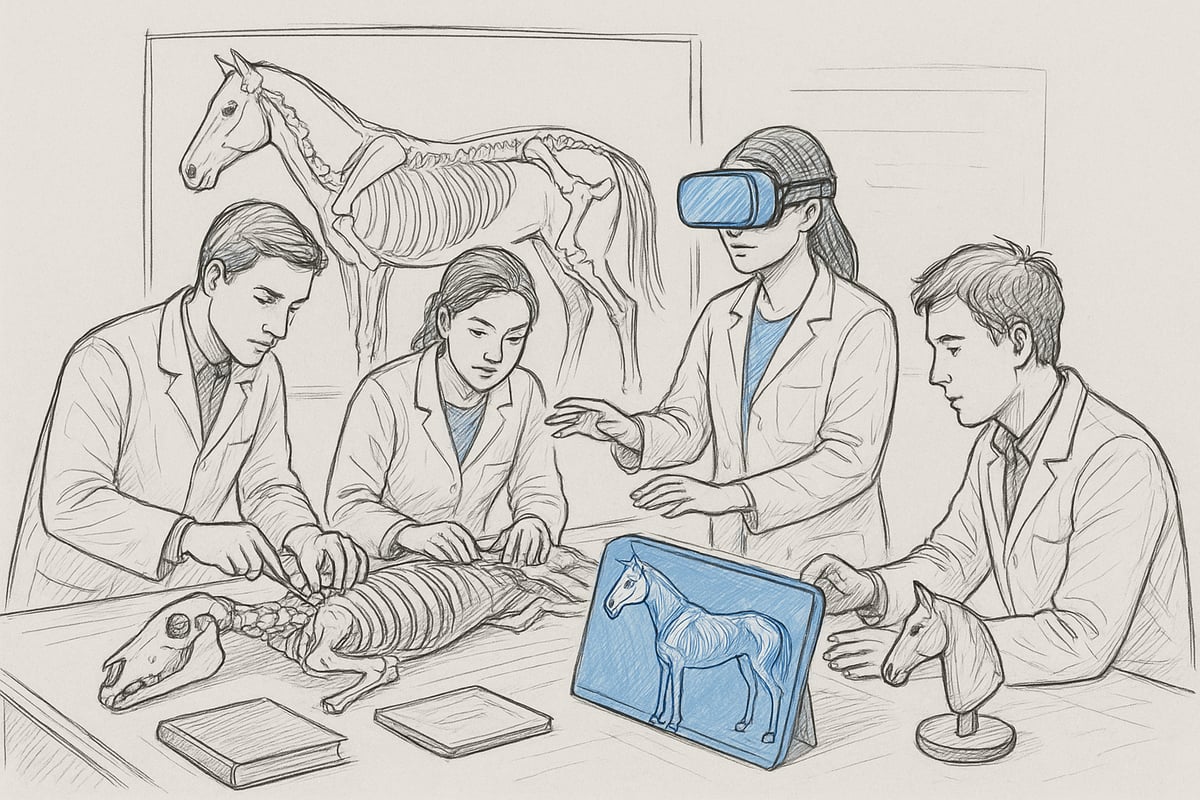
Veterinary students and anatomy education have historically been closely associated with classical animal dissection. Traditionally, cadaver-based teaching was the cornerstone, where students learned through direct observation and handling of tissue.
In recent years, there has been a significant shift towards digital and hybrid solutions. According to the European Association of Establishments for Veterinary Education, 70 percent of European veterinary education institutions have now implemented digital models.
A concrete example is seen at Aarhus University, where VR anatomy was introduced in 2025. Students here experience that the technology complements the classical approach, making learning more flexible and accessible. For an insight into both historical and modern methods, the Anatomical Collection at the University of Copenhagen is recommended.
New technologies and digital tools
Technological advances are now influencing veterinary students and anatomy education. Virtual Reality (VR) and Augmented Reality (AR) allow for detailed exploration of the animal body without physical material. Interactive 3D models and digital platforms create a learning environment where repetition and experimentation are possible without risk.
The benefits are clear: increased engagement, the ability to repeat exercises, and increased safety. For example, students can simulate complex procedures or investigate rare anatomical variations.
However, there are also challenges. Not everyone has equal access to the latest technology, and there may be a learning curve before you master the digital tools. Nevertheless, it is estimated that digital developments will continue to shape veterinary students and anatomy education in the coming years.
Practical versus theoretical anatomy
An important discussion for veterinary students and anatomy teaching is the balance between practical and theoretical approaches. Hands-on dissection, the use of plastinates and synthetic models provide concrete experience and understanding of the structure of the body.
Digital materials, such as 3D models and virtual simulations, offer flexibility and can be used for revision. Statistics show that 85 percent of students prefer a combination of physical and digital teaching.
The advantage of physical materials is the tactile experience, while digital solutions allow for repeated training without straining resources. A balanced approach makes it easier for veterinary students and anatomy teaching to accommodate different learning styles.
Future requirements for anatomy teaching
The development in veterinary students and anatomy education is moving towards an increased focus on clinical competencies and application-oriented learning. The veterinarians of the future must not only know anatomy, but also be able to translate knowledge into practice in clinical situations.
There is an emphasis on interprofessional collaboration and interdisciplinary work, so that students learn to work together with other health professions. The new EU standards, which come into force from 2026, place stricter requirements on both theoretical knowledge and practical skills.
Veterinary students and anatomy education will therefore continue to evolve so that the teaching matches the expectations of the labor market and society. This means that both teachers and students must be open to innovation and continuously adapt to new methods.
Effective Study Techniques and Learning Strategies for Veterinary Students
Mastering anatomy requires more than just interest. Veterinary students and anatomy education are closely linked when it comes to achieving deep understanding and passing exams. The right mix of study techniques, collaboration, and hands-on training can make all the difference.
Reading and note-taking techniques for anatomy
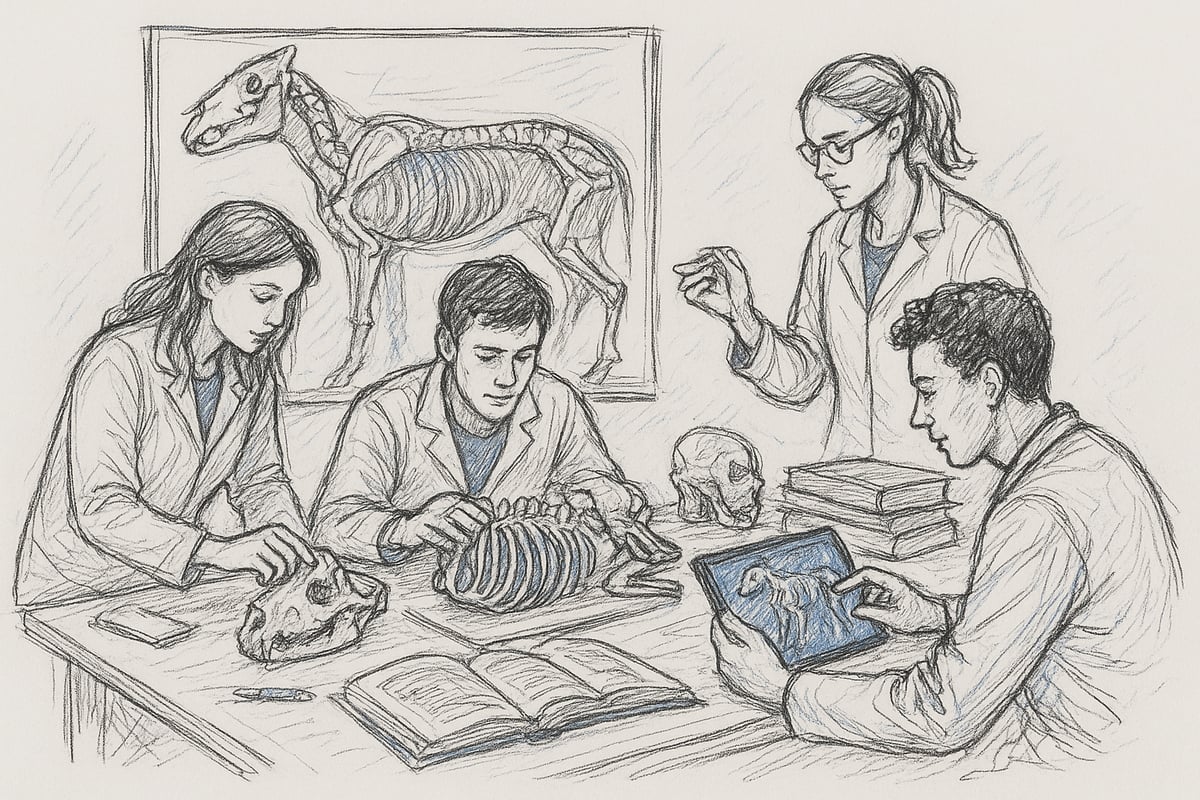
Success for veterinary students and anatomy teaching often starts with effective reading and note-taking techniques. Active reading, where you highlight key concepts and ask questions about the text, creates deeper understanding. Mind maps help you visualize connections between organs and systems, which strengthens both overview and memory.
The Cornell note-taking system is a popular tool that allows you to organize your notes into columns to make it easier to review and test your knowledge. Many students use flashcards to practice Latin terms and the details of anatomy. Spaced repetition, where you repeat material at increasing intervals, has been shown to significantly increase long-term memory. According to the Journal of Veterinary Education (2025), students who use this method perform up to 30% better on anatomy exams.
If you want more specific advice and guidance on study techniques, you can visit Study Techniques for Health Students at Aarhus University . Here you will find inspiration that can be tailored to veterinary students and anatomy teaching in practice.
Group-based learning and peer-to-peer teaching
Collaboration is a cornerstone when veterinary students and anatomy teaching are to lead to deeper understanding. Study groups promote reflection and provide opportunities to discuss complex topics, so everyone gets multiple perspectives. Peer teaching, where you explain concepts to others, strengthens both your own and your fellow students' knowledge.
At the University of Copenhagen, peer-led workshops have become part of the curriculum. Here, students work with case-based assignments and practical exercises. This format makes it easy to ask questions and get feedback in a safe learning environment. Unity and common goals motivate to maintain focus on veterinary students and anatomy teaching.
Practical training and simulation
Theory and practice should go hand in hand for veterinary students and anatomy teaching. Practical exercises with synthetic models, VR scenarios and skills labs allow you to practice realistic situations. Hands-on training such as dissection and palpation gives you experience that cannot be learned through books alone.
According to the Veterinary Skills Lab Report (2026), 90% of students experience increased confidence after working with simulation training. Interactive 3D models and digital platforms support repeated training without the risk of errors on live animals. This approach makes veterinary student and anatomy education more practical and prepares you for clinical challenges.
Time management and planning
Effective time management is essential for veterinary students and anatomy teachers. Develop a realistic study plan, spreading out your syllabus and revision over several weeks. The Pomodoro technique, where you work in focused 25-minute intervals with short breaks, increases concentration.
Timeboxing, where you set aside fixed blocks of time for specific tasks, helps you avoid skipping tasks. Apps and digital tools can keep track of deadlines and progress. By structuring your time, you gain a greater overview and get more out of veterinary students and anatomy classes.
Stress management and mental health
An intensive course of study as a veterinary student and anatomy teaching can be demanding. It is important to prioritize breaks, exercise and sleep to maintain both physical and mental balance. Mindfulness techniques can help reduce stress and improve concentration.
Many educational institutions offer advice and support if the pressure gets too much. Sharing experiences with fellow students and seeking help in time can make a big difference. By taking care of your well-being, you will get the most out of your time as a veterinary student and anatomy teaching.
The Most Important Resources and Materials for Veterinary Anatomy
Finding the right resources makes a big difference for veterinary students and anatomy teaching. A good selection of materials helps you understand complex structures, reinforces your learning, and makes preparation more effective.
Textbooks and online platforms
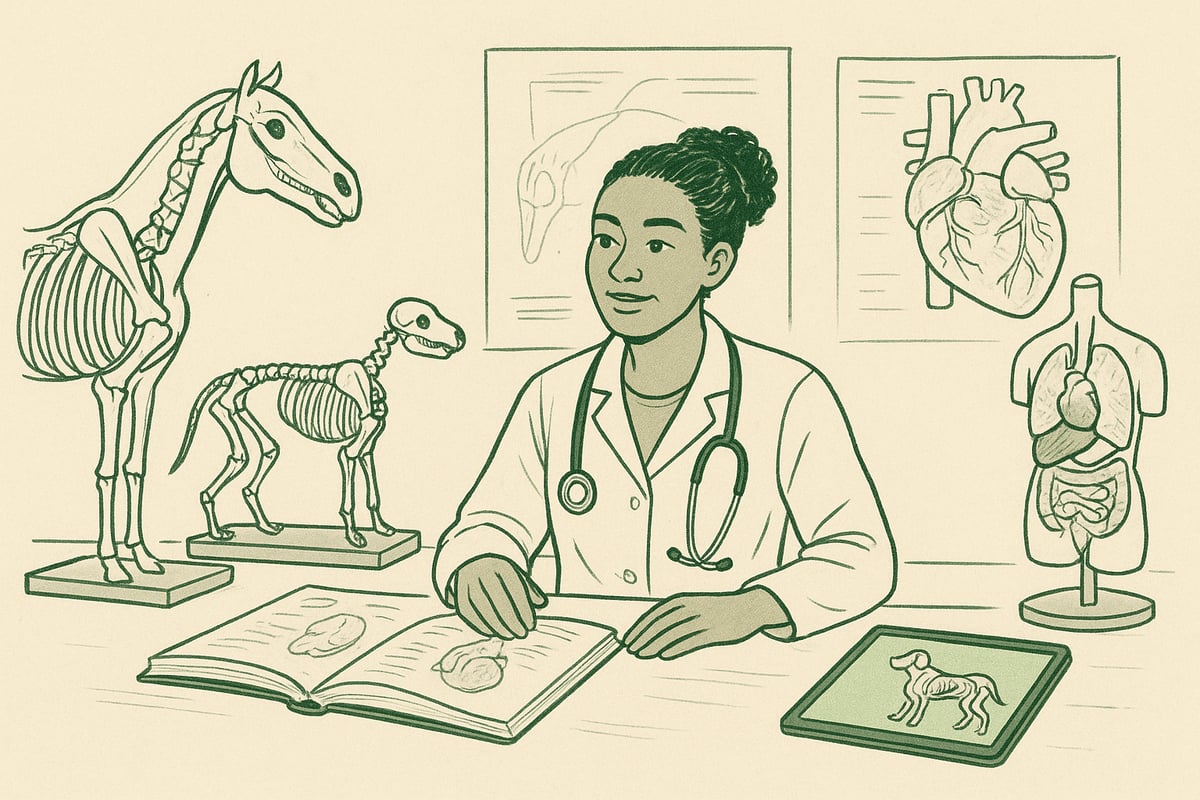
Textbooks are the foundation for veterinary students and anatomy education. Danish titles such as "Animal Anatomy" and international classics provide solid explanations and detailed illustrations. Many students supplement with videos and podcasts to vary their learning.
Digital platforms make it easy to find up-to-date knowledge and interactive exercises. In fact, 60 percent of students use online resources in addition to their curriculum. If you want a comprehensive overview of materials, Resources for New Veterinary Students can help you choose the right one.
Combining physical and digital materials makes it easier to understand and remember the material.
Anatomical models and posters
Physical models are indispensable in veterinary students and anatomy teaching. Skeletons, organs and plastinates allow you to examine structures close to reality. This strengthens both practical understanding and exam preparation.
Posters help with repetition and overview. Large illustrations on the wall can make it easier to visualize connections. Studies show that teaching with posters increases visual understanding by 25 percent.
Using multiple types of materials gives you a broader approach to anatomy.
eAnatomy: Modern Anatomical Models and Posters
eAnatomi has developed innovative and formalin-free models that are ideal for veterinary students and anatomy teaching. The models cover both human and veterinary subjects, such as horse skeletons and animal organs. They have been developed in collaboration with healthcare specialists.
The advantages are many: safety, durability, possibility of repeated use and ethically sound teaching without cadavers. Several Danish veterinary education programs already use eAnatomi models as a supplement to traditional teaching.
It is a future-proof solution that combines quality and learning.
Digital resources and apps
Digital tools are playing an increasingly important role in veterinary students and anatomy education. Interactive 3D apps and VR platforms allow for detailed exploration of body structures. Many apps offer quizzes and self-tests so you can continually evaluate your knowledge.
The three most popular veterinary anatomy apps of 2026 provide access to realistic models and cases. The combination of technology and classic materials makes your preparation more varied and exciting.
Digital resources can be adapted to your level and needs.
Practical skills trainers and labs
Simulation models and skill centers are essential for veterinary students and anatomy teachers. Here you can practice clinical procedures and practice realistic situations. Modern laboratories offer everything from synthetic organs to VR scenarios.
It gives you the opportunity to practice techniques without risk, building confidence and routine. Universities are continually investing in new facilities to strengthen your practical skills.
Practical training prepares you for both exams and clinical work.
Exam Preparation: How to Pass the Anatomy Exam as a Veterinary Student
Passing the anatomy exam as a veterinary student and teaching anatomy requires both strategic preparation and focused effort. Many find this to be one of the most challenging parts of their studies. Therefore, it is important to know the exam formats, plan your time, use effective learning methods, and deal with both nerves and typical mistakes.
Overview of exam types and requirements
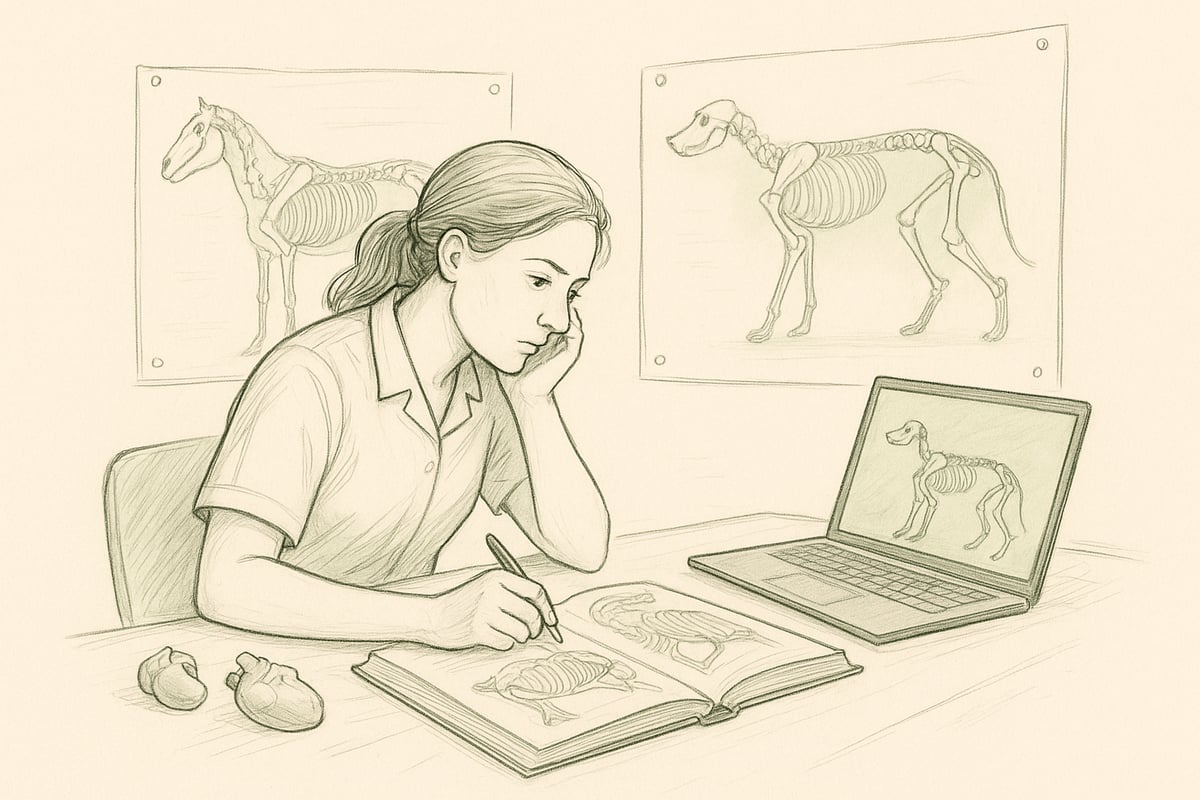
As a veterinary student and anatomy teacher, you will encounter several different types of exams. Typically, anatomy exams include written, oral and practical tests. The written part tests your theoretical knowledge of anatomy concepts, while oral tests often focus on your ability to explain complex relationships.
Practical exams are particularly challenging for many. They require you to identify structures on models or cadavers and demonstrate clinical skills. According to Veterinary Exam Insights, 2025, 40% of students find practical exams the most challenging. To be successful, it is essential that you practice both theory and practice.
It is important to understand how each exam section is weighted. Some universities emphasize practical skills, while others focus more on theoretical understanding. Always review exam descriptions carefully so you know what is expected.
Preparation of personal study plans
A structured study plan is key to getting the most out of your veterinary education and anatomy classes. Start by mapping out the syllabus and identifying your strengths and weaknesses. Use past exam papers to assess which topics are frequently repeated.
Make a weekly plan, prioritizing difficult topics first. Divide your study time into smaller blocks and set realistic goals for each day. This will help you stay on track and avoid getting overwhelmed. Remember to include time for revision and self-testing.
Include both theory, practical exercises and visual learning in your plan. Many people find that repeated review of difficult topics significantly increases understanding. Use apps and digital tools to track your progress and adjust your plan continuously.
Effective preparation methods
To achieve the best results as a veterinary student and anatomy teacher, you should combine several learning methods. Active recall and mock exams are effective for training your memory and preparing for the exam situation. Create quizzes, make flashcards and participate in study groups where you can test each other.
Peer review and case-based assignments strengthen your ability to apply knowledge in practice. Visualization and use of anatomical models make it easier to understand complex structures. Consider supplementing your training with Veterinary Anatomical Models , which allow you to practice practical skills in a safe environment.
Many people also find it helpful to use digital 3D models or VR scenarios. This makes learning more interactive and repeatable, and you can easily return to difficult topics. Remember that variety in methods increases your overall understanding and makes you more confident for the exam.
Tips for exam day
On the day of the exam, it is important to stay calm and focused, especially for veterinary students and anatomy classes. Start the day with a light meal and make sure you have slept well the night before. Review your checklist: What equipment do you need to bring? Do you have notes, ID, and any aids ready?
During the exam, read all the questions carefully before you start. Prioritize the questions you feel most comfortable with, and keep an eye on the time. If you feel nervous, take a deep breath and take short breaks if possible.
After the exam, it can be beneficial to reflect on what went well and what you can improve for next time. Remember that the exam is a learning opportunity, not just a test.
Frequently asked questions and typical errors
Many veterinary students and anatomy teachers wonder which topics are often repeated on the exam. Typically, the focus is on the basic concepts of anatomy, the location and function of organs, and clinical application. It is therefore important to master both the details and the overview.
Common mistakes include not reviewing, not practicing enough, and ignoring the requirements of the exam descriptions. Avoid spending too much time on a single question and be careful not to forget the simple topics that often count for a lot of points.
FAQs:
- What structures should I be able to identify?
- How do I balance theory and practice?
- What resources are recommended for self-study?
To avoid pitfalls, make sure to use varied resources, get feedback from fellow students, and participate in exam preparation workshops. With the right approach, you will be in a strong position for the anatomy exam.
Future Perspectives: Anatomy Teaching for Veterinarians after 2026
New demands from the labor market and society
After 2026, veterinary students and anatomy education will be influenced by a market that expects increased specialization and continuous professional development. Employers emphasize digital skills and the ability to apply new technology in practice. At the same time, society demands that veterinarians can handle both ethical and sustainable solutions in their daily work.
Lifelong learning is becoming a necessity, with veterinary students and anatomy education supporting the updating of knowledge throughout their careers. This requires flexible and accessible learning methods.
Innovation in teaching methods
The development of veterinary students and anatomy education is driven by technological advances. AI and adaptive learning systems make it possible to tailor teaching courses to suit the needs of individual students. Digital models and simulations are gaining ground, as seen in the use of Veterinary Model Guide: Your Path to Success 2026 , which presents the veterinary models and digital tools of the future.
Additionally, research shows that self-supervised learning can enhance anatomical understanding, paving the way for even more interactive and personalized teaching. This strengthens the quality of veterinary students and anatomy education across institutions.
Internationalization and global cooperation
Veterinary students and anatomy education are increasingly becoming internationalized. Exchange programs, such as Erasmus+, and common European standards make it easier for students to gain experience across borders.
Collaboration between universities ensures access to the latest teaching methods and resources. This raises both the academic level and the practical skills of veterinary students and anatomy education to match global requirements.
Competence development and further training
Continuing education in anatomy is becoming increasingly important as veterinary students and anatomy education are expected to meet the demands of the future. Opportunities for certification and specialized courses are continually expanding, allowing both newly qualified and experienced veterinarians to stay up to date.
Universities and trade associations are increasingly offering flexible learning pathways that can be adapted to individual needs, strengthening both professional development and clinical practice.
Perspectives for veterinary students
The future for veterinary students is marked by multiple career paths and opportunities for specialization. Anatomy remains the foundation of clinical practice and is essential for managing complex patient cases.
New technologies and teaching methods offer more opportunities for personal development, making it important to prioritize anatomy education as a central part of veterinary education.
As a veterinary student facing anatomy teaching in 2026, it is important to have access to resources that both inspire and reinforce your understanding. We have seen how the combination of digital tools, realistic models and interactive posters can make a difference in your learning and exam preparation. If you want to explore the latest and most innovative options, developed in collaboration with healthcare experts, you can find solutions that match both your needs and the needs of your teaching.
Read more here
0 comments