

Skeletal models are no longer the preserve of doctors and researchers. By 2025, we'll see them in everything from classrooms and clinics to creative studios and technology labs.
The purpose of this article is to present you with seven smart and innovative ways in which a skeleton model can create value in both your everyday life and professional contexts.
We take you through topics such as education, medical training, art, technology, patient communication, interior design and hobbies. Are you curious to learn how you can take advantage of the opportunities? Read along and be inspired.
What is a skeletal model and why is the model relevant in 2025?
A skeletal model is a physical representation of the human skeletal structure, often in life-size and with details that make it possible to study anatomy in practice. Unlike other anatomical models, which only show individual organs or systems, a skeletal model provides an overall overview of the body's structure and movement possibilities. This makes it an indispensable tool in both education and the healthcare sector.
Historically, the skeletal model has been used as a central pedagogical tool in medical studies and biology teaching. Today, there is a significant development where skeletal models are used not only by doctors and educators, but also in creative environments and technological contexts. This transformation is due to both an increased focus on visual learning and a need for a practical understanding of anatomy in many disciplines.
Technological advances have expanded the possibilities of how a skeletal model can be used. Integration with digital platforms, such as augmented reality (AR) and virtual reality (VR), now makes it possible to combine physical models and virtual layers of information for more interactive learning. You can read more about integrating AR into education to understand how this technology enhances engagement and understanding in education.
The demand for anatomical models, including skeletal models, has increased significantly in recent years. Statistics from the education sector show that more institutions are choosing to invest in physical models to increase student understanding. In the healthcare sector, 70 percent of institutions report using skeletal models for practical training and communication. This trend is expected to continue through 2030.
The skeletal model has gained relevance for a wide range of users. Teachers and students use the model to visualize and understand complex anatomical relationships. Healthcare professionals use it to explain diagnoses and treatments to patients. Artists and designers use skeletal models as a reference in creative projects, while technologists use them in the development of new digital learning tools.
The future holds even more applications for the skeletal model. With the development of sustainable materials and intelligent technologies, the models are expected to become even more accessible and interactive. The skeletal model will continue to serve as a bridge between theory and practice, and its role in education, health and creativity will only grow in the coming years.
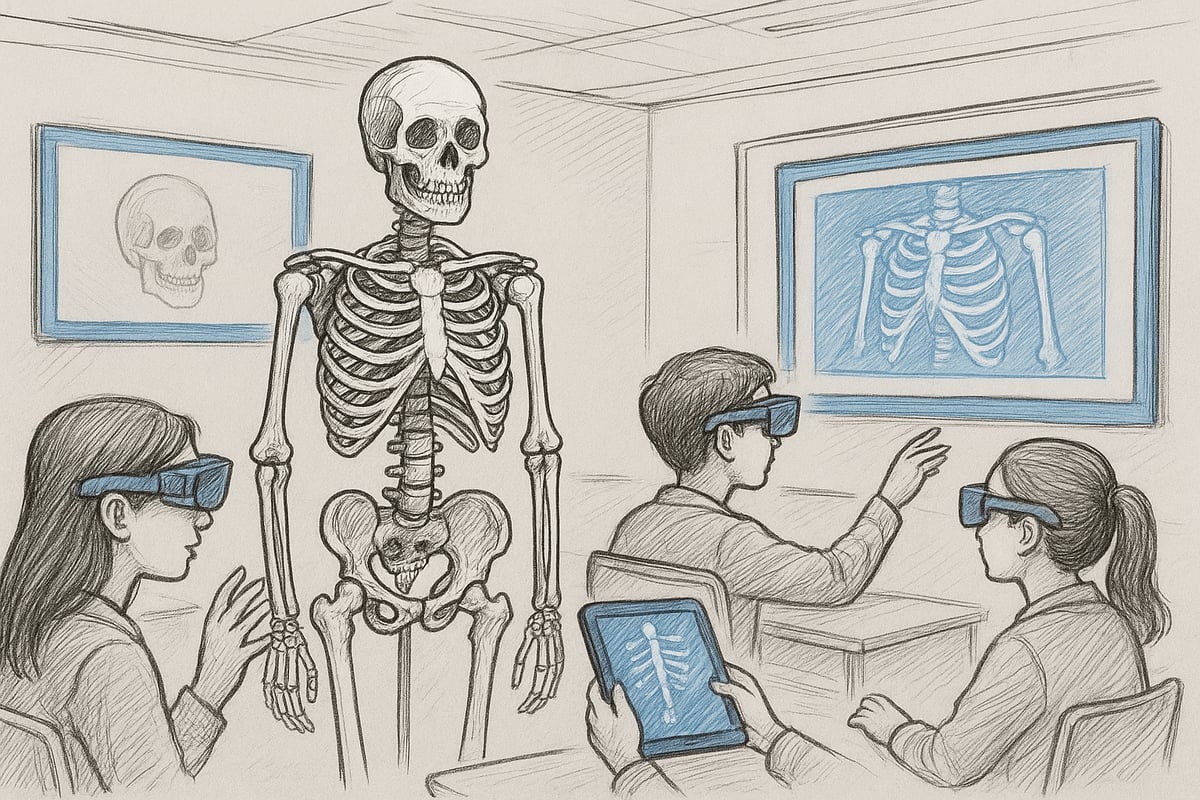
7 Smart Ways to Use a Skeleton Model in 2025
In 2025, skeletal models have evolved to be much more than just teaching tools. With modern technology and new creative applications, they open up countless possibilities in both professional and private spaces. Here, we review seven innovative ways in which a skeletal model can create value and engagement in everyday life.
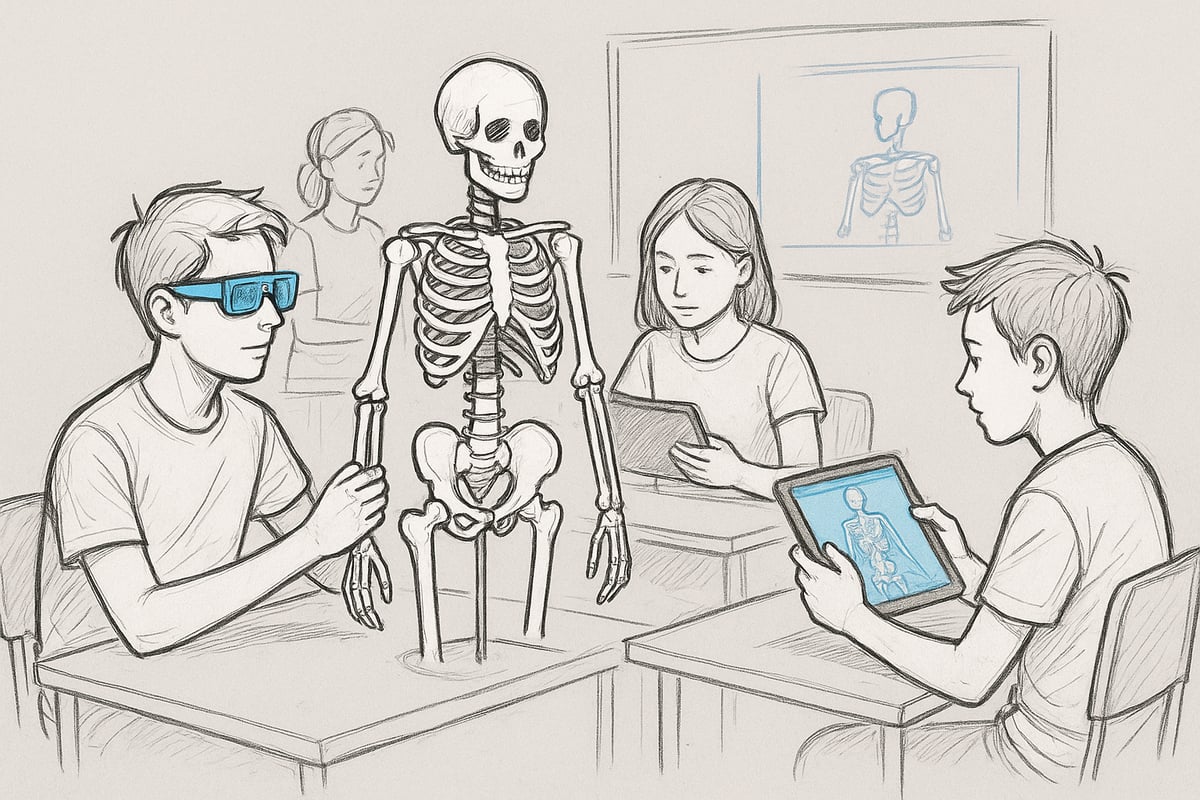
1. Interactive teaching in schools and universities
In today's educational environments, it is crucial to engage students with hands-on, visual learning tools. Here, the skeletal model plays a key role in subjects such as biology, medicine, and physiology. Many teachers integrate skeletal models into the classroom to make anatomy more tangible and relevant to students.
With the development of digital tools, AR apps, and virtual classrooms, students can now explore the structure of the human body in new ways. The combination of a physical skeletal model and digital solutions creates deeper understanding and increases motivation. For example, a student can use an AR app to visualize muscles and joints directly on the skeletal model, providing a more nuanced picture of the body's structure.
A study shows that 85% of teachers believe that students gain a better understanding of anatomy when working with a physical skeletal model. Compared to traditional books and 2D images, the three-dimensional experience allows for the exploration of details and relationships that may otherwise be difficult to understand.
It is recommended to choose skeletal models with movable joints and color codes so that students can identify different bones and structures. A good skeletal model opens up dialogue and collaboration in the classroom and makes teaching more lively.
To read more about how a skeletal model improves teaching, visit Benefits of Anatomical Models .
2. Health skills training
The skeletal model is an indispensable tool for both students and healthcare professionals. It is particularly used to simulate medical procedures and practical training where precision and understanding of anatomy are essential.
In first aid courses, physiotherapy and surgical training, the skeletal model allows for practice without risk to the patient. For example, nursing students can practice injection techniques and equipment placement on a realistic skeletal model, which strengthens their confidence and skills before meeting real patients.
Statistics show that 70% of healthcare institutions use anatomical models for skills training. The development of specialized skeletal models makes it possible to adapt training to different medical disciplines, from orthopedics to neurology.
With the growth of distance learning and hybrid learning, the skeletal model is becoming a central tool for digital simulation and interactive exercises. A skeletal model allows for the repetition of procedures and experimentation until the technique is in place, contributing to higher quality and safety in healthcare.
A professional skeleton model ensures that both students and experienced professionals can develop and maintain their skills in line with new requirements and technologies.
3. Patient outreach and communication
A skeletal model is also an effective tool for improving communication between healthcare professionals and patients. When a doctor needs to explain a diagnosis, a course of treatment or a surgical procedure, a skeletal model can make it easier for the patient to understand complex anatomical relationships.
A concrete example is when an orthopedic surgeon uses a skeletal model to show how a hip operation is performed. By pointing out relevant bones and joints, the patient gets a visual image of the procedure, which creates confidence and clarity about the treatment.
Studies show that 60% of patients feel better informed when they receive a visual explanation using a skeletal model. This builds trust in healthcare professionals and increases the likelihood that the patient will follow treatment instructions.
It is recommended to use skeletal models with removable parts so that specific areas can be examined in detail. These models are useful both in clinics and for online consultations where the patient can follow along via camera.
Future patient communication is expected to include even more interactive models, where the skeletal model is included in digital presentations and virtual consultations.
4. Creative work: Art, design and animation
The skeletal model has found its way into artistic and creative environments, where it is used as a reference and inspiration. Artists, designers, and animators use the skeletal model to understand proportions, movements, and details of the human body.
When an animation student is designing a character, the skeletal model is an indispensable tool. It helps ensure correct structure and realistic movements, which are essential for believability in both drawing, painting and 3D modeling.
A survey of art schools shows that 50% recommend the use of skeletal models in teaching. The combination of a physical model and digital drawing programs allows artists to experiment with shapes and perspectives.
The skeletal model is also integrated into 3D scanning and animation, where it forms the basis for digital figures. Creative projects range from classical sculptures to modern fashion collections inspired by the architecture of the body.
Whether it's about mastering anatomy or creating new expressions, the skeletal model is a source of both learning and innovation in the creative field.
5. Design and visual communication in clinics and institutions
The skeleton model is not only a teaching tool, but also a strong visual element in the interior design of clinics, hospitals and educational institutions. A well-placed skeleton model in the waiting room or classroom creates a professional and educational atmosphere.
In a physiotherapy clinic, the skeletal model can serve as both an eye-catcher and an information tool. Patients and visitors get an impression of the clinic's professionalism, while the model can be used to illustrate treatments and exercises.
40% of clinics today choose to invest in visual learning aids such as the skeletal model to enhance the patient experience. The choice of model depends on the purpose – some prefer life-size, while others choose compact models with color codes to highlight specific areas.
The combination of physical skeletal models and digital displays is becoming increasingly common, making it possible to link anatomy with digital presentations and create a holistic experience for both patients and staff.
A skeleton model in the interior not only supports teaching and communication, but also functions as a topic of conversation and a visual identity for the institution.
6. Technological integration: AR, VR and digital platforms
Technological advances have made the skeletal model a central part of digital learning environments. Apps and software that collaborate with physical skeletal models create new opportunities for interactive and engaging learning.
For example, a school project could combine AR glasses with a physical skeletal model, allowing students to see layers of muscles and organs in real time. This makes anatomy come alive and understandable, especially for young and visual learners.
Significant growth rates in the use of AR and VR in the education sector indicate that the skeletal model will play an even greater role in the digital learning spaces of the future. Hybrid models with sensors and feedback allow for the measurement and analysis of movements, which is relevant for both health education and sports studies.
Virtual laboratories and simulations make it possible to collaborate globally and conduct advanced exercises, even remotely. The development of the skeletal model therefore follows technological developments and opens up learning without borders.
A skeletal model that supports AR and VR is an investment in the future of education and professional development.
7. Hobbies and personal development
The skeleton model has also found its way into the home as a tool for hobby, collection and personal development. More and more people choose to work with skeleton models in their spare time to explore anatomy, build models or paint details.
Private collectors and hobbyists enjoy assembling and customizing their own skeleton model. This not only provides insight into the structure of the body, but also develops fine motor skills and patience.
Sales of skeleton models for private use are increasing, and DIY kits and mini-skeletons are now available to suit all ages and interests. Online communities and forums make it possible to share experiences, tips and results with other enthusiasts.
For many, the interest starts with curiosity, but quickly develops into a passion for anatomy and collectibles. A skeleton model in the home can be both educational and decorative, contributing to personal growth and new knowledge.
How to choose the right skeleton model for your needs
Finding the right skeletal model requires careful consideration. The purpose of the model, the needs of the users, and the desired level of detail play a major role. A skeletal model can be an essential tool for educators, students, and professionals alike, and the choice should be tailored to the specific application.
When choosing a skeleton model, you should first consider size and materials. Models range from mini-skeletons to life-size, and materials range from plastic to more robust composites. If you want detailed anatomy, choose models with clear structures, color codes, and movable joints. For educational use, models with removable parts are often recommended so that you can study individual parts up close.
Below is a comparison of popular models:
| Model type | Price (DKK) | Features |
|---|---|---|
| Mini skeleton 85 cm | 850 | Compact, basic anatomy |
| Standard skeleton 170 cm | 2350 | Natural size, joint |
| Premium skeleton 180 cm | 11800 | High detail, color codes |
Also consider who will be using the skeletal model. Students often need a robust and portable model, while clinics may require more advanced versions. Also consider whether the model will be used for specific disciplines such as physiotherapy or surgery.
Maintenance is important to ensure longevity. Clean your skeleton model regularly with a damp cloth and store it dry to avoid damage. Avoid direct sunlight and rough handling to keep the model looking nice and functional.
When you are ready to buy, you can find a wide selection at both Danish and international retailers. It is recommended to read How to choose a model for further advice, especially if you are a student or first-time buyer. Remember to assess the need for movable joints, color markings and the possibility of adding extra parts to your skeleton model.

Future trends for skeletal models and anatomical learning
Towards 2030, skeletal models will have an even more central role in both education and the healthcare sector. Technological developments create new opportunities to combine physical models with digital solutions, making learning and training more accessible and effective. New materials, such as bioplastics and recyclable components, are gaining ground and are putting the focus on sustainability in the production of skeletal models.
Integration with artificial intelligence and adaptive learning systems makes it possible to tailor teaching to the individual user. With innovative solutions with XR and Smart Glasses, the skeletal model becomes not just a static tool, but part of interactive and immersive learning environments.
There is also a greater focus on accessibility and inclusion, so that more people can benefit from anatomical learning regardless of their background. Collaboration between manufacturers, educational institutions and the healthcare sector is strengthened, which leads, among other things, to the development of specialized skeletal models for rare diseases and special patient groups. In this way, skeletal models act as a bridge between theory, practice and modern technology.
For those who want to keep up with the latest developments and practical applications, skeletal models in medical education can provide insight into how these trends are already impacting daily teaching and training.
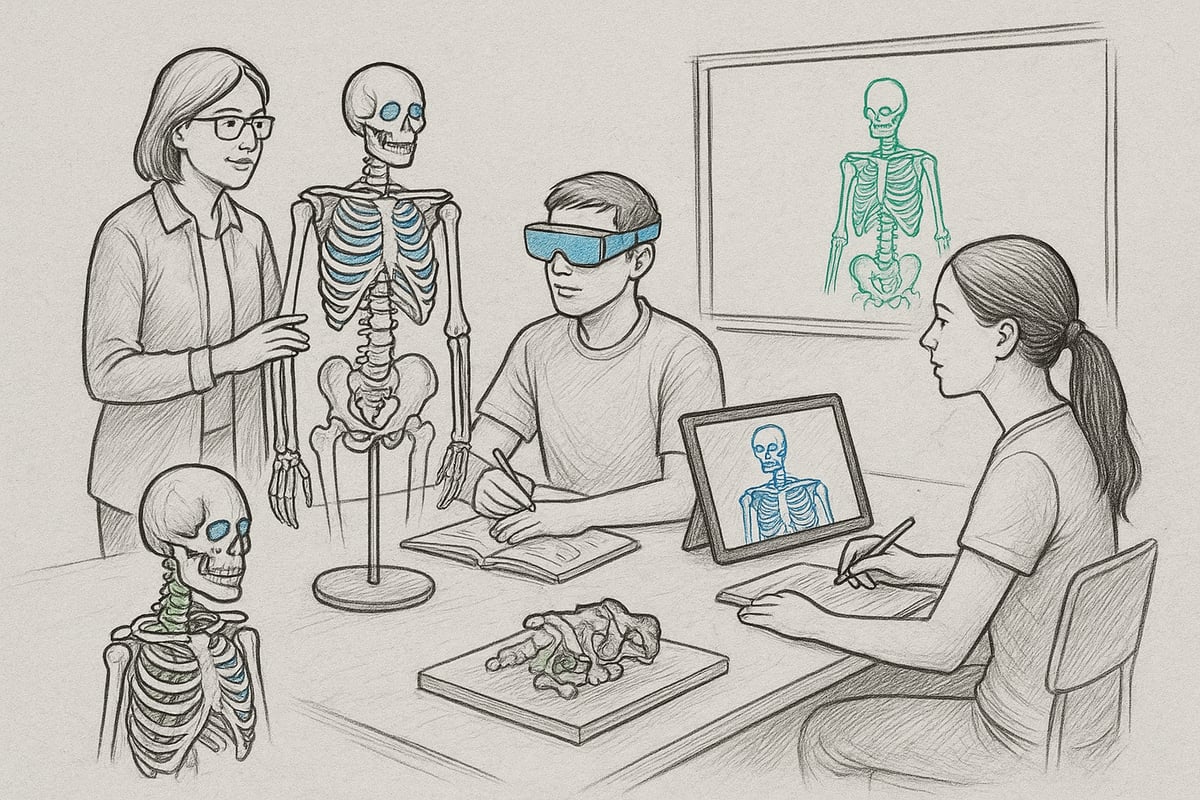
Now that you have discovered how versatile a skeletal model can be used in both education, healthcare and creative projects, it is obvious to explore the possibilities even further. Whether you want to strengthen teaching, improve patient communication or create inspiring visual settings, there is a model that matches your needs. At eAnatomi ApS, we work closely with specialists to develop innovative and educational products that can make a difference in both professional and private contexts.
Would you like to know more about how to choose the right skeleton model, or see our selection? Read more here
0 comments