

Did you know that an adult breathes up to 10,000 liters of air every day? The lungs work constantly to keep the body in balance, but many people don't know exactly how the lungs work in detail - especially with the changes we see in 2026.
Understanding the lungs is essential for both health and quality of life. In this guide, you will get an updated insight into the anatomy of the lungs, how breathing occurs, oxygen uptake, future challenges and technological advances.
With increasing air pollution and increasing cases of lung disease, it's more important than ever to know about your lungs. Read on for concrete tips to strengthen your lungs and ensure your well-being.
Anatomy of the Lungs: Structure and Function
The lungs are an impressive organ, and to understand how the lungs work, we must begin with their location and structure. Every breath depends on a complex interplay of tissues, airways, and blood vessels. In this section, you will gain an in-depth look at the anatomy of the lungs and the key mechanisms behind their function.
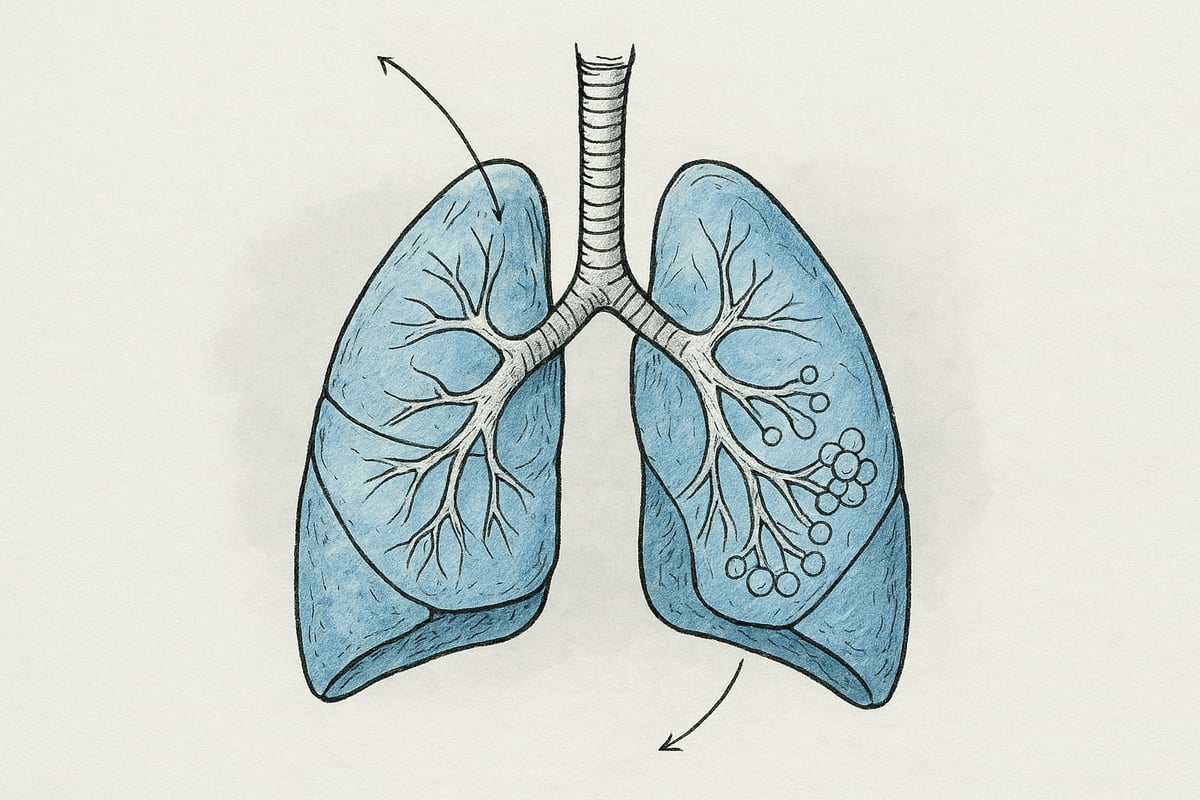
Location and structure of the lungs
The lungs are located in the chest cavity, protected by the ribs and separated from the heart. The right lung consists of three lobes, while the left has two lobes to make room for the heart. This creates a difference in both shape and volume between the two sides.
| Property | Right lung | Left lung |
|---|---|---|
| Number of patches | 3 | 2 |
| Size | Larger | Less |
| Form | Shorter | Narrower |
Lung tissue is elastic, which is crucial to how the lungs function, as it allows the lungs to expand and contract with each breath. Inside the lungs, the trachea branches into bronchi, which divide into smaller bronchioles and end in millions of alveoli.
The alveoli are small air sacs where the exchange of oxygen and carbon dioxide takes place. The total surface area of the alveoli covers about 70-100 m2, which is the size of a tennis court. This enormous surface area is necessary to ensure optimal gas exchange.
If you want to know more about the structure of the lungs, you can read more at Anatomy and structure of the lungs .
The airways: From nose to alveoli
When we breathe, air begins its journey through the nose or mouth, where it is warmed and moistened. It then passes through the larynx and down the trachea, which divides into two main bronchi, one for each lung.
These bronchi branch into smaller bronchioles, which carry the air all the way to the alveoli. Along the way, mucous membranes and cilia protect the airways from dust, bacteria and particles. The cilia move rhythmically and transport unwanted particles up towards the pharynx, where they are removed.
In Denmark, around 1.1 million people experience symptoms of respiratory diseases each year. The frequency of asthma, bronchitis and other related conditions shows how important it is to understand how the lungs work and how we protect our airways.
A strong respiratory defense system is essential for our overall health. The better we understand this protection, the easier it is to prevent illness and irritation.
Blood vessels and gas exchange
The lungs are closely connected to the circulatory system through a fine-meshed network of capillaries. These small blood vessels surround the alveoli and enable the exchange of oxygen and carbon dioxide between the blood and the inhaled air.
When we breathe in, oxygen passes through the walls of the alveoli and into the blood, where it binds to hemoglobin. At the same time, carbon dioxide is transported from the blood into the alveoli to be exhaled. This process is the basis for how the lungs function and is essential for the body's energy production.
According to the Danish Health Authority, an adult at rest can absorb up to 250 ml of oxygen per minute. The capacity depends on age, health and physical activity. Efficient gas exchange ensures that the body receives the necessary oxygen and that waste products are removed quickly.
When the balance between oxygen and carbon dioxide is maintained, the body functions optimally and we feel energetic and healthy.
The Physiology of Breathing: How the Process Works
Understanding how the lungs work requires insight into the fascinating physiology of breathing. Every breath is a precise interplay of muscles, nerves, and pressure differences. This section guides you through the key processes that ensure the body receives oxygen and removes waste products.
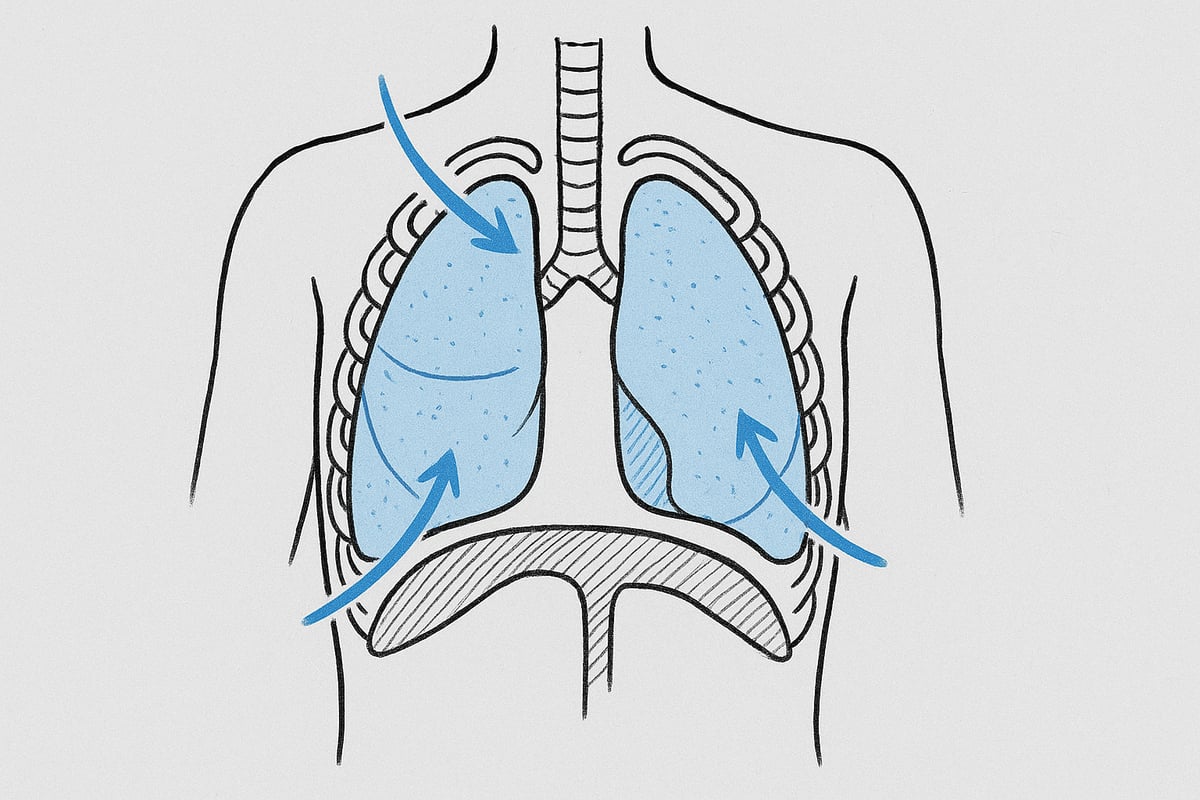
Inhalation and exhalation – step by step
When you take a breath, several parts of your body work together. The diaphragm, the large flat muscle under your lungs, contracts and moves downward. At the same time, the external intercostal muscles between your ribs expand the chest cavity. This creates a negative pressure, so air is sucked in through your nose or mouth and into your lungs.
Exhalation occurs when the diaphragm relaxes and moves upwards. The chest cavity becomes smaller, creating an excess pressure that forces air out of the lungs. During calm breathing, the body uses almost only the diaphragm. If you breathe deeply or exert yourself, more muscles help.
Try to feel the difference between normal and deep breathing. When you breathe deeply, your stomach expands more and you use more of your lungs. If you want to delve into the details of how your lungs work during breathing, you can read more atThe Physiology of Breathing .
Here is a brief summary of the steps of breathing:
| Step | Head muscle | Pressure change | Result |
|---|---|---|---|
| Inhalation | Diaphragm | Negative pressure | Air into the lungs |
| Exhalation | Diaphragm (relaxed) | Overpressure | Air out of the lungs |
Understanding these mechanisms is crucial to knowing how the lungs function effectively in daily life.
Regulation of breathing
Our breathing is automatically controlled by the brain. The so-called respiratory center is located in the medulla oblongata. From here, signals are sent to the diaphragm and respiratory muscles, so that we breathe constantly without thinking about it. This center continuously measures the level of carbon dioxide and oxygen in the blood.
When you become physically active, your body senses the increased need for oxygen. The respiratory center then increases your breathing rate and depth. This is why you may feel like you are quickly breathing faster when you are running or cycling. This is an example of how the lungs work dynamically, depending on the body's needs.
Children breathe faster than adults. Typically, infants have a respiratory rate of 30-50 times per minute, while adults have a rate of 12-18 times per minute. This difference is due to both size and metabolism. It is important to know about these variations if you want to understand how the lungs function in different age groups.
Lung volume and capacity
Lung volume is an expression of how much air your lungs can hold. There are several important concepts:
- Tidal volume : The amount of air you inhale during a normal breath (about 0.5 liters in adults).
- Vital capacity : The maximum amount of air you can exhale after a deep breath (typically 3-5 liters).
- Residual volume : The air that always remains in the lungs after maximal exhalation (approximately 1-1.5 liters).
Age affects lung capacity. Young adults often have a higher vital capacity than older adults, as lung tissue becomes less elastic. Elite athletes can have a vital capacity of up to 7 liters, while the average adult is lower. This shows how individual the lungs are and how important it is to maintain lung function throughout life.
The comparison between different groups illustrates how important both age and physical fitness are for how the lungs function optimally.
Oxygen Absorption and Transport: From Lungs to Body
Understanding how the lungs work requires insight into how oxygen and carbon dioxide are efficiently transported through the body. Each breath initiates a complex process of oxygen intake and carbon dioxide excretion. This section gives you an insight into the central mechanisms that keep the body in balance.
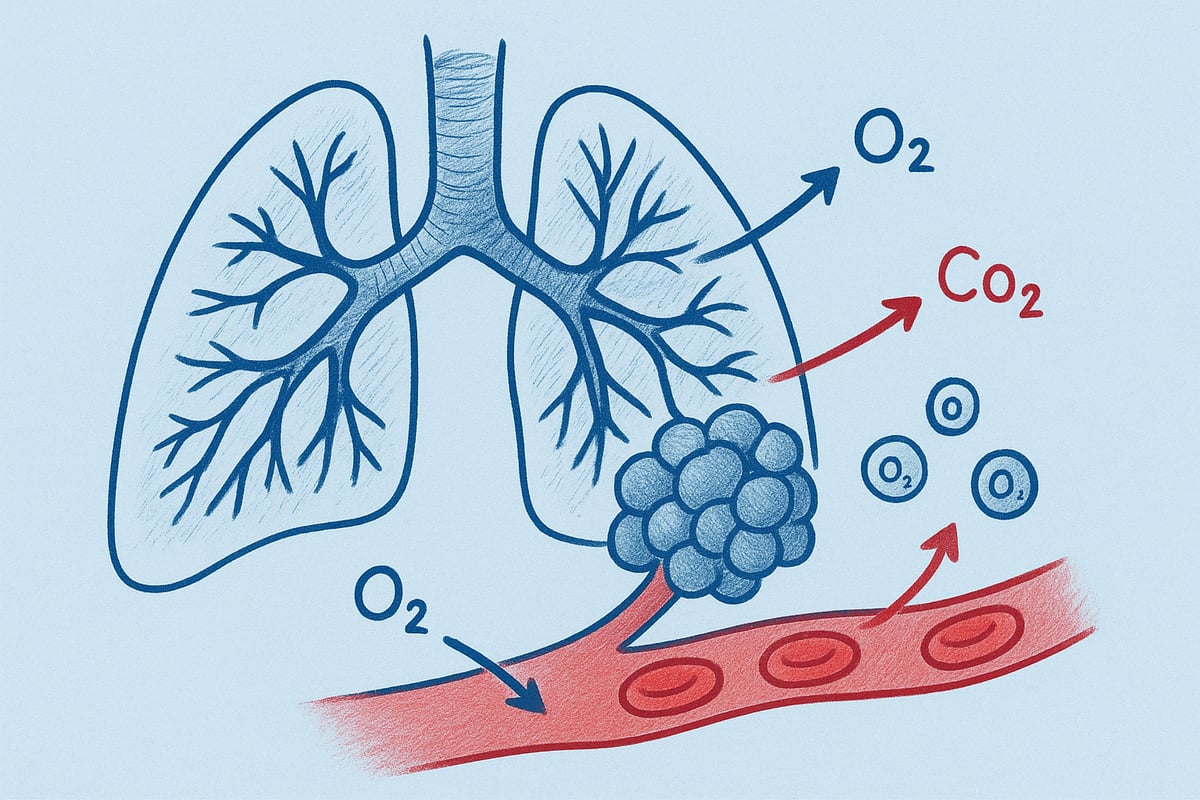
Oxygen's journey through the body
When you breathe in, a fascinating journey begins for oxygen. Inside the lungs, oxygen passes through the delicate walls of the alveoli and into the blood. Here, the oxygen quickly binds to hemoglobin, a protein in the red blood cells that acts as a transport medium. In this way, the blood can efficiently transport large amounts of oxygen to the body's cells.
To put this into perspective, it only takes a few seconds for oxygen to travel from the lungs to the tips of the toes when the lungs are functioning optimally. This is due to the dense network of blood vessels that surround the alveoli and ensure rapid exchange. The ability of hemoglobin to bind and release oxygen depends on the body's needs, making the system extremely flexible.
Oxygen is vital for the cells' energy production. Without efficient transport, muscles, brain and organs would quickly run out of energy. Therefore, it is crucial to understand how the lungs function when it comes to oxygen uptake and distribution.
Carbon dioxide and excretion
As oxygen is transported to the body's cells, carbon dioxide is formed as a waste product. Carbon dioxide is mainly transported in dissolved form in the blood, but a smaller portion is also bound to hemoglobin. The carbon dioxide is then carried back to the lungs, where it is excreted with the exhaled air.
The regulation of carbon dioxide in the blood is essential for the body's pH balance. If carbon dioxide builds up, the blood becomes more acidic, which can negatively affect the body's functions. Therefore, it is important that the lungs function efficiently so that carbon dioxide is removed quickly and the balance is maintained.
A table can illustrate the difference between the transport of oxygen and carbon dioxide:
| Gas | Transportation method | Share (%) |
|---|---|---|
| Oxygen | Bound to hemoglobin | about 98 |
| Carbon dioxide | Dissolved in plasma/bound | approximately 70/23/7 |
When the body works hard, carbon dioxide production increases and the lungs adapt by increasing their breathing rate. This is another example of how the lungs work in such an impressive way.
Factors affecting oxygen uptake
Several factors can impair or enhance the body's ability to take in oxygen. Smoking damages lung tissue, which reduces the surface area for gas exchange. Air pollution and chronic diseases such as COPD and asthma can also significantly reduce oxygen uptake.
According to the Danish Lung Association, up to 600,000 Danes have reduced lung function, especially among the elderly and people with chronic diseases. This means that the lungs do not always function optimally for everyone.
To strengthen your oxygen uptake, you can find specific advice and exercises at Tips for better lung health , where you will get inspiration to improve your lung health in everyday life.
By being aware of these factors and taking active steps, you can ensure that your lungs function optimally throughout your life.
Lung Health in 2026: Challenges and Prevention
Lung health is more relevant than ever, as multiple factors influence how the lungs function in our modern society. Pollution, lifestyle and technological advances have changed both the challenges and opportunities for maintaining strong lungs. To understand how to best protect your lungs, we take a closer look at current challenges, prevention, exercise and digital developments.
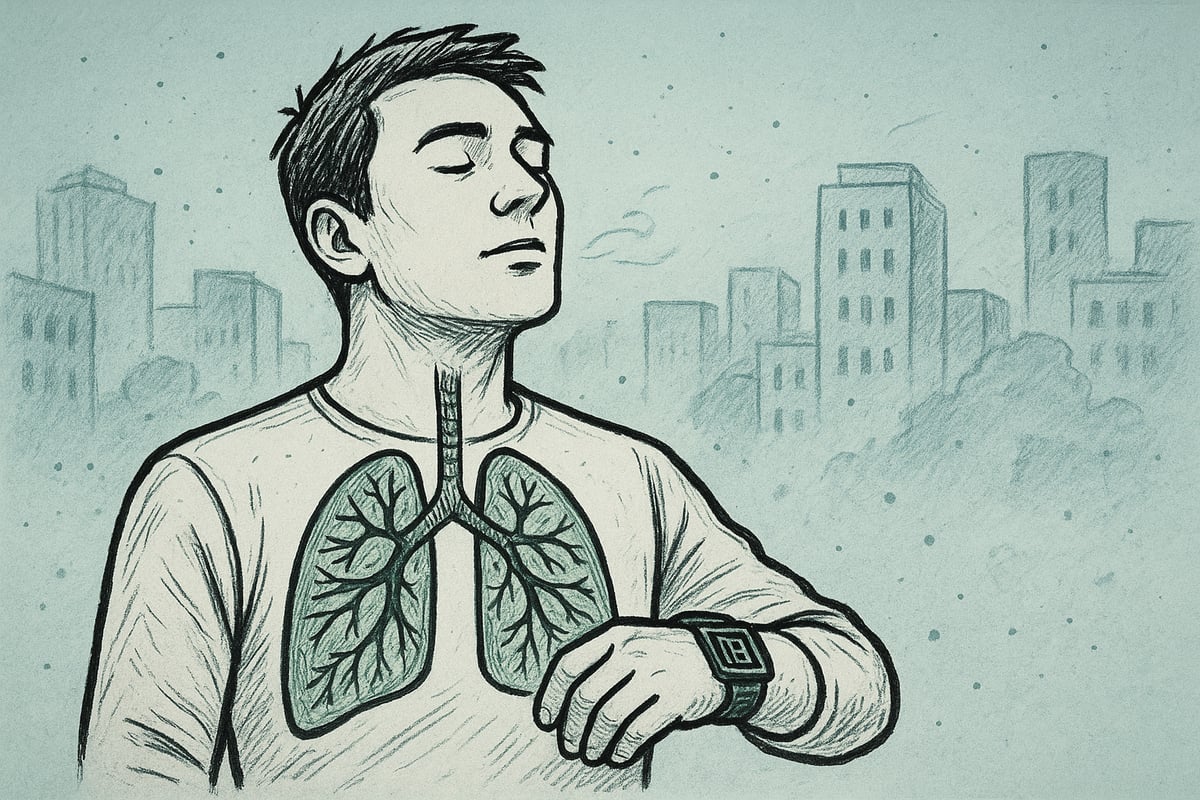
Current challenges for the lungs
In 2026, Danes' lungs will face new challenges. Air pollution in urban areas is increasing, affecting both children and adults. In rural areas, the problem is less, but allergens and agricultural-related particles can still strain the lungs. Statistics from the Danish Health Authority show that more people are experiencing reduced lung function, especially in cities.
Asthma and COPD remain among the most common lung diseases. According to the WHO, the number of COPD cases is expected to increase, especially among the elderly. It is therefore important to know how the lungs work in order to identify symptoms early.
Table: Incidence of lung diseases in Denmark (2024)
| Disease | Number of people affected | Increase (last 5 years) |
|---|---|---|
| Asthma | 400,000 | +8% |
| COPD | 320,000 | +10% |
Respiratory diseases have a major impact on quality of life and work ability. Therefore, knowledge about the lungs is essential for making healthy choices.
Preventive measures for better lung function
Prevention is the key to ensuring that the lungs function optimally throughout life. Smoking is still the biggest risk factor for reduced lung function, but fortunately the number of smokers in Denmark is decreasing. This has a positive effect on public health, which the Danish Health Authority explains in more detail on their page about smoking and public health .
Exercise and a varied diet rich in antioxidants strengthen lung tissue and help the body fight harmful particles. Vaccination against influenza and pneumonia is recommended, especially for the elderly and vulnerable groups.
It is important to keep your home free of smoke, dust and chemicals. Regular ventilation and the use of an air purifier can reduce the strain on your lungs and ensure that they function at their best.
Lung exercises and training
Specific lung exercises can strengthen both muscles and elasticity, which is important for how well the lungs function under pressure. Physiotherapists recommend exercises such as pursed lip breathing and diaphragmatic breathing. These techniques increase oxygen uptake and reduce shortness of breath.
Exercises like swimming and cycling improve lung capacity and increase endurance. Studies show that regular exercise can significantly improve lung function, especially in people with impaired function.
Consider incorporating short, daily exercises. Even 10 minutes a day can make a difference in how your lungs function in everyday life.
Technological aids and lung function measurement
Digital health has changed the way we monitor our lungs. More Danes now use apps and wearables to measure breathing rate and oxygen levels. Home spirometers make it possible to follow the development of lung capacity over time.
Statistics show that over 100,000 Danes have adopted digital solutions to understand how their lungs are functioning in real time. These tools help with early detection of changes and motivate healthy habits.
Technological advances make it easier to monitor lung function, so you can always act quickly if problems arise.
The Lungs of the Future: Innovation, Research and Technology
Research into how the lungs work is rapidly evolving. New technologies, climate change, and digital learning methods will shape our understanding and treatment of the lungs in 2026. Let's take a closer look at the most groundbreaking advances and future prospects.
New treatments and research
In 2026, research has revolutionized how the lungs work in relation to the treatment of serious lung diseases. Gene therapy and stem cell therapy are no longer just theory, but are being used in pilot projects to repair damaged lung tissue. This gives hope to patients with diseases such as COPD and cystic fibrosis.
At the same time, artificial lungs and more advanced transplant technology are being developed. New materials and 3D-printed organs are being tested in clinical trials, which could significantly reduce waiting times for patients.
Researchers in Denmark and the rest of the EU are collaborating on large projects where data is analyzed with the help of artificial intelligence. This provides a deeper understanding of how the lungs function at the cellular level, and opens the door to even more targeted treatments. You can read more about the latest technologies and research at Future Lung Research and Innovation .
Environment and climate: Impact on lung health
Climate change has a direct impact on how lungs function in the future. Air quality is being challenged by increasing pollution, especially in cities. This increases the risk of asthma, allergies and chronic lung diseases.
Forecasts from international health organizations indicate that the number of respiratory diseases will increase towards 2030. Changes in temperature and humidity lead to more allergens and airborne particles that can damage the lungs.
It is therefore crucial to understand how the lungs function under changing environmental conditions. Future research will also focus on developing better methods for measuring air quality and early warning of risk factors. This will give both the healthcare sector and citizens better opportunities to protect the lungs from environmental impacts.
Education and dissemination of knowledge about the lungs
Updated knowledge about how the lungs work is necessary for both healthcare professionals and the general public. New digital learning platforms make it possible to visualize the complex functions of the lungs through VR models and interactive simulations.
Collaboration between researchers, educators and society ensures that new knowledge is quickly translated into practice. Modern educational materials for schools and health education programs help increase understanding of lung health from an early age.
This approach means that more people will have access to knowledge about how to best protect and strengthen their lungs. Future communication will therefore play a central role in lung health in Denmark.
Practical Guide: How to Strengthen Your Lungs in Everyday Life
Understanding how your lungs work is the foundation for taking good care of them. Small adjustments to your daily routine can make a big difference to your lung function and overall health. Here's a step-by-step guide with concrete advice to improve your lung capacity and strengthen your breathing.
Step 1: Pay attention to your breathing
It's important to pay attention to how you breathe in your daily life. Many people breathe shallowly, which can limit oxygen intake. Try focusing on breathing deeply into your belly several times a day.
- Place a hand on your stomach and feel how it rises when you inhale.
- Set aside time for a short breathing break, e.g. before a meeting.
- Use conscious breathing to relieve stress.
When you understand how the lungs work, it becomes easier to improve your breathing in practice.
Step 2: Create a healthy environment
Your indoor climate has a great impact on your lungs. Make sure to minimize smoke, dust and chemicals in your home. Clean regularly and avoid candles or tobacco smoke.
- Air out two to three times daily.
- Consider an air purifier if you live in a city.
- Avoid perfumed cleaning products.
When you actively work to improve your environment, you will notice how your lungs function best in a clean environment.
Step 3: Prioritize physical activity
Exercise strengthens both your muscles and your lungs. Find activities you enjoy and do them regularly. Swimming and running are especially good for your breathing.
- Follow the Danish Health Authority's recommendations for 30 minutes of daily activity.
- Try interval training or walks in the fresh air.
- Choose cycling if you want to protect your joints.
When you keep your body moving, you will quickly notice how your lungs work more efficiently during exercise.
Step 4: Perform targeted lung exercises
Specific exercises can improve lung capacity. "Pursed lip breathing" or whistling exhalation is simple and effective.
- Inhale calmly through your nose.
- Exhale slowly through slightly pursed lips.
- Repeat the exercise for 5-10 minutes daily.
These exercises give you a concrete sense of how the lungs function during conscious training.
Step 5: Monitor your lung function
It is important to monitor your lung function, especially if you have symptoms or are at risk. Using home spirometers and apps can provide an overview of changes.
- Note any changes in shortness of breath or cough.
- Use digital health solutions to follow developments.
- Seek medical attention if you experience sudden worsening.
Knowing the status of your lungs helps you understand how your lungs function both at rest and during activity.
Step 6: Prevent infections
Infections such as pneumonia can have serious consequences for the lungs. Good hand hygiene, vaccination and healthy habits reduce the risk.
- Wash your hands frequently and thoroughly.
- Consider vaccination against influenza and pneumococci.
- Read more about pneumonia prevention for extra protection.
When you take these precautions, you protect your lungs, so they function optimally all year round.
Step 7: Know the danger signs
Be aware of symptoms such as persistent cough, shortness of breath, or chest pain. Early response can prevent worsening of lung problems.
- Seek medical attention if you experience blood in your sputum.
- Be extra careful if you have a chronic illness.
- Note changes in breathing pattern.
Knowing the danger signs is crucial to understanding how the lungs work and when help is needed.
Step 8: Resources and further reading
For up-to-date knowledge about lung health, patient associations and research, you can find a lot of information online. The Danish Lung Association publishes an annual report, the Danish Lung Association's Annual Report 2024, with insights into the latest developments and prevention.
- Visit official health sites for good advice.
- Participate in online courses on breathing.
- Find support in patient networks.
By seeking out knowledge, you will gain greater insight into how the lungs work and how to best take care of them.
Now that you have gained insight into the fascinating anatomy of the lungs, the breathing process and the latest technologies, you can take the next step towards stronger lung health. Whether you work in healthcare, teach or simply want to understand your own body better, the right knowledge and the right tools can make a noticeable difference. At eAnatomi you will find models and posters that visualize and deepen your understanding – perfect for both learning and communication.
Would you like to know more about how you can strengthen your knowledge and your teaching? Read more here
0 comments