

Imagine stepping into the operating room for the very first time, where every move can make a difference for the patient. This is exactly where the question arises: how do medical students learn surgery so they are ready for that responsibility?
This ultimate guide shows you how medical students in 2026 will learn surgery from theory to practice. You'll gain insight into the educational process, the latest teaching methods, simulation training, technological advances, and key competencies for the surgeons of the future.
Surgery has unique demands, but new learning methods are opening doors for both skill and safety. Do you want to become a competent surgeon? Follow this guide and learn how medical students can best learn surgery.
The educational path to Surgery
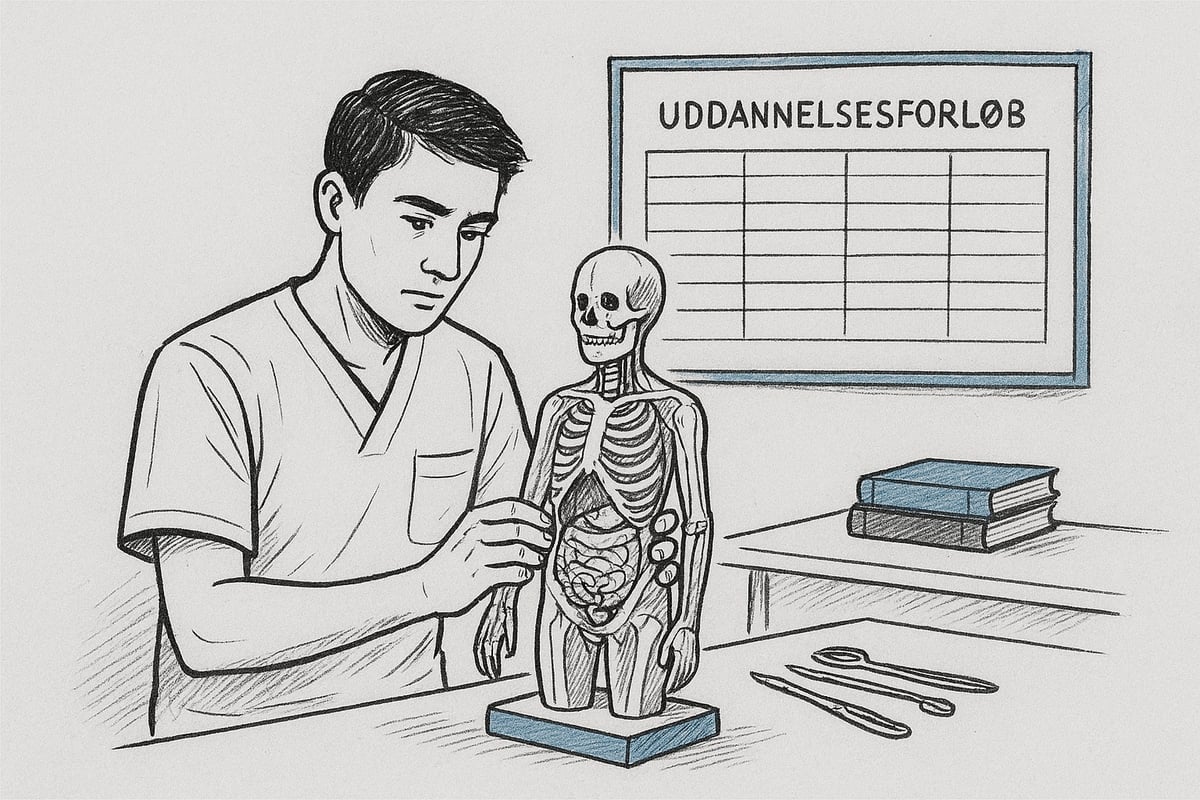
Understanding how medical students learn surgery starts with a solid overview of the structure of medical school. In Denmark, the education consists of preclinical years, where basic knowledge of anatomy and physiology is built, followed by clinical years, where students have direct contact with patients. Early exposure to surgery is important, as approximately 20% choose a surgical direction. Many universities offer clinical residencies from the 4th to 6th year of study in hospitals, where theory and practice meet. For more insight into enrollment figures and student data, see Statistics on higher education in Denmark .
Overview of medical studies and specialization
Medical school in Denmark is structured into two main parts: preclinical and clinical years. In the first three years, students learn basic anatomy, biochemistry, and physiology. The transition to the clinical years marks a shift towards practical experience, where students have the opportunity to work closely with patients and healthcare professionals. Early introduction to surgery, often through clinical residencies, has a major impact on the choice of specialty. Statistics show that around 20% choose a surgical direction, which underlines the importance of early exposure when looking at how medical students learn surgery.
Choice of surgical specialty and admission requirements
Once the clinical years begin, students are faced with choosing a surgical specialty. The specialties range from orthopedic surgery and general surgery to more niche areas such as neurosurgery. The entrance requirements for the main programs are high, and grade point average and motivation play a central role. Internships and relevant research projects can strengthen the application. Acceptance rates vary, but it often takes dedication and determination to get in. To understand how medical students learn surgery, it is crucial to know these admission requirements and the specialty requirements.
Internship and early clinical experience
Internships in surgical departments are a cornerstone of the education. Here, students have the opportunity to observe, assist and learn from experienced surgeons. The division of roles between students and graduate doctors is clear, but the learning goals are ambitious. During the internships, students work on concrete tasks such as assisting with operations or performing minor procedures under supervision. A study shows that 85% consider internships to be crucial for their development, which is central to how medical students learn surgery in practice.
Mentoring schemes and professional networks
Mentoring plays a significant role in student learning and career development. Many surgical societies and student organizations offer networks and mentoring programs, where experienced doctors guide students through both professional and personal challenges. Examples such as the Young Doctors Network provide access to sparring and inspiration in everyday life. Building a strong network is an important factor when looking at how medical students learn surgery and prepare for a successful career.
Challenges and access barriers
The path to a career as a surgeon is characterized by competition and pressure. There is competition for places in the main programs, and many experience high demands and stress during their studies. Gender differences and work pressure can create additional barriers. Statistics show that 30% of surgical students experience burnout. Despite these challenges, it is possible to succeed if you understand how medical students learn surgery and take active responsibility for your own development.
Modern Teaching Methods in Surgery
Modern teaching methods have transformed how medical students learn surgery in Denmark. New technologies and pedagogical approaches mean that theory and practice merge in innovative ways. To understand this development, we delve into the most important pedagogical tools that shape the surgeons of the future.
Theoretical teaching and flipped classroom
Theoretical teaching still forms the foundation of how medical students learn surgery. Traditional lectures are increasingly complemented by the flipped classroom method, where students prepare at home and actively work with the material at university. This approach promotes independent thinking and increases engagement.
Flipped classroom has gained traction among Danish universities, especially at Aarhus University, where students work with cases and discussions instead of passive listening. Statistics show that 70% of students prefer blended learning because it makes the theory more applicable. This illustrates how medical students learn surgery through a combination of flexible preparation and active participation.
Simulation training and skills labs
Simulation training is a cornerstone of modern surgical education. It allows students to practice surgical procedures in a safe environment without risk to the patient. Skills laboratories, such as the one at Odense University Hospital, offer advanced manikins and technological solutions.
The use of 3D dissection models and simulators allows for repetition of procedures until techniques are mastered. Skills labs and simulation provide students with access to materials that enhance their practical skills. Statistics show that 92% feel more confident after simulation training, demonstrating how medical students learn surgery best through repeated practice.
Virtual and augmented reality in surgical education
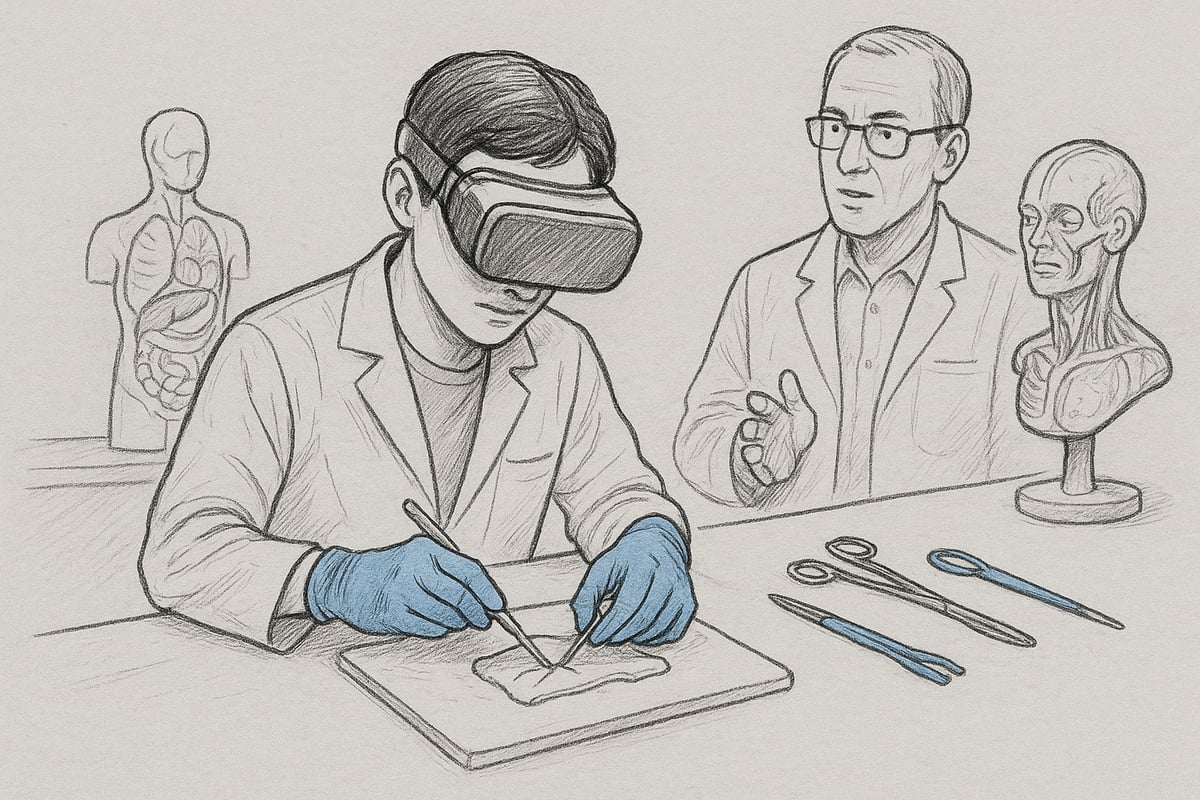
Virtual reality (VR) and augmented reality (AR) are revolutionizing how medical students learn surgery. Using realistic 3D models and interactive environments, students can practice operations many times before encountering real patients. VR training is used, among others, at Rigshospitalet, where complex procedures can be simulated in detail.
Studies show that practical skills improve by up to 60% through VR. These technologies make the learning process more engaging and safe, and they support how medical students learn surgery as technology advances.
Peer-to-peer learning and team training
Peer-to-peer learning and team training are essential for developing communication and collaboration in the operating room. Group-based learning enables the sharing of knowledge and experiences, which strengthens the understanding of complex cases. Team-based exercises in the operating room prepare students for real-world demands.
It is well documented that 80% of surgical errors are due to a lack of communication. Therefore, it is important that medical students learn surgery through collaborative problem-solving and feedback in a safe environment. Training in teams makes it easier to identify and correct errors before they have consequences for patients.
Feedback, reflection and ongoing evaluation
Constructive feedback from instructors is central to how medical students learn surgery effectively. After each exercise or operation, both verbal and written feedback is provided, which helps identify strengths and areas for improvement. Self-reflection and journaling are also essential elements of the learning process.
Students who receive frequent feedback perform on average 20% better in practical exams. Ongoing evaluation ensures that progress is closely monitored and that learning is continuous. In this way, how medical students learn surgery is optimized through a cyclical process of practice, reflection, and adjustment.
Integration of ethical and psychological aspects
Ethics and psychology are playing a growing role in surgical education. It is not only about technique, but also about being able to handle patient contact, make ethical decisions and remain calm under pressure. Courses in medical ethics, including at the University of Copenhagen, equip students to meet these challenges.
Empathy, resilience and good communication are essential skills. By integrating ethical and psychological aspects into teaching, you strengthen how medical students learn surgery holistically, so that they can handle both instruments and people with safety and consideration.
Step-by-Step: From Theory to the Operating Room
Understanding how medical students learn surgery requires insight into the entire learning journey from theory to practice. Here you will get a step-by-step overview of how medical students develop into competent surgeons. The process is carefully structured so that each phase builds on the previous one, ensuring safety, knowledge and confidence.
1. Basic anatomy and physiology
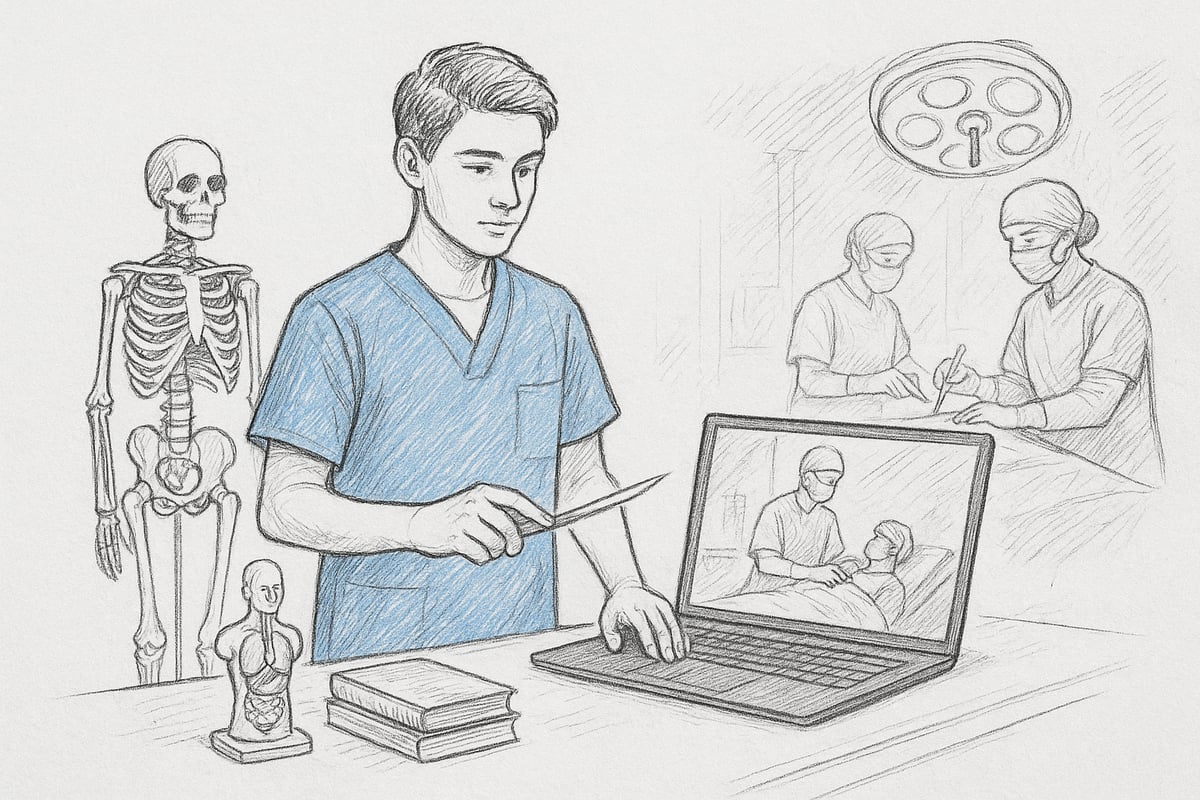
Every surgical course starts with a solid understanding of anatomy and physiology. Here, students learn about the organs, tissues, and systems of the body through both classical teaching and modern digital tools. Cadaver dissection, 3D models, and interactive platforms help visualize complex structures.
Mastering anatomy is fundamental to understanding how medical students learn surgery in practice. Many use Resources for Medical Students to strengthen their theoretical and practical skills. Statistics show that 95 percent of surgical students rate anatomy as the most important basic subject.
This phase forms the basis for all later surgical training.
2. Observation and assistance during surgical procedures
Once the basic knowledge is in place, medical students begin to observe and assist experienced surgeons. Here they experience the operating room for the first time and learn about the different roles, such as observer, assistant and instrument manager.
An important part of how medical students learn surgery is seeing theory put into practice. Shadowing programs at Danish hospitals make it possible to follow operations closely and ask questions along the way.
Most people feel insecure the first time in the operating room, but the experience is invaluable for understanding workflows and collaboration.
3. Practical skills training in a safe environment
After observation, students are given the opportunity to practice specific skills in safe environments, such as in skills laboratories. Here, sutures, knot tying, and instrument technique are practiced on mannequins or simulated tissues.
This phase is central to how medical students learn surgery, as repetition without risk to the patient builds technical confidence. The progression is clear: from simple to more advanced procedures.
Statistics show that 85 percent feel increased self-confidence after targeted skills training, which emphasizes the importance of simulation.
4. Participation in minor surgical procedures under supervision
Once the skills are in place, medical students participate in minor surgical procedures under close supervision. Here, they are allowed to perform simple procedures, such as removing small skin lesions or placing sutures, while an experienced surgeon guides them.
This hands-on experience is essential to how medical students learn surgery at a higher level. Feedback and evaluation are constantly integrated so that errors can be corrected and learning optimized.
78 percent of students demand even more practical experience, which shows how motivating this phase is.
5. Independent performance of surgical tasks under observation
As their competence increases, students are given the opportunity to perform minor surgeries independently, but still under observation. This could be, for example, suturing or minor laparoscopic procedures.
This gradual transfer of responsibility is part of how medical students learn surgery safely and effectively. The focus is on patient safety and quality, and supervision ensures that procedures are performed correctly.
90 percent complete these tasks correctly after supervision, which testifies to the value of this form of learning.
6. Reflection, feedback and continuous improvement
After each intervention, reflection and feedback are central elements. Students evaluate their own performance, receive constructive feedback, and document experiences in a logbook.
This structure is essential for how medical students learn surgery and continue to develop. Structured reflection and ongoing feedback significantly improve skills.
Statistics show that 70 percent experience improvement by working systematically with reflection and feedback.
7. Examination and certification in surgical skills
To ensure consistent quality, the course concludes with practical exams and certifications, where students are tested in specific procedures through OSCE tests and skill assessments.
This phase summarizes how medical students learn surgery from start to finish, and ensures that they are ready to perform surgical tasks on their own. At SDU, 95 percent pass the first time, especially when simulation training has been an integral part of the course.
Certification marks the transition from student to competent graduate.
Important Skills for Future Surgeons
Mastering surgery requires more than technical prowess. Future surgeons must develop a broad range of competencies, ranging from precision to lifelong learning. To understand how medical students learn surgery effectively, it is necessary to take a closer look at the five key areas that shape modern surgical education.
Technical skills and precision
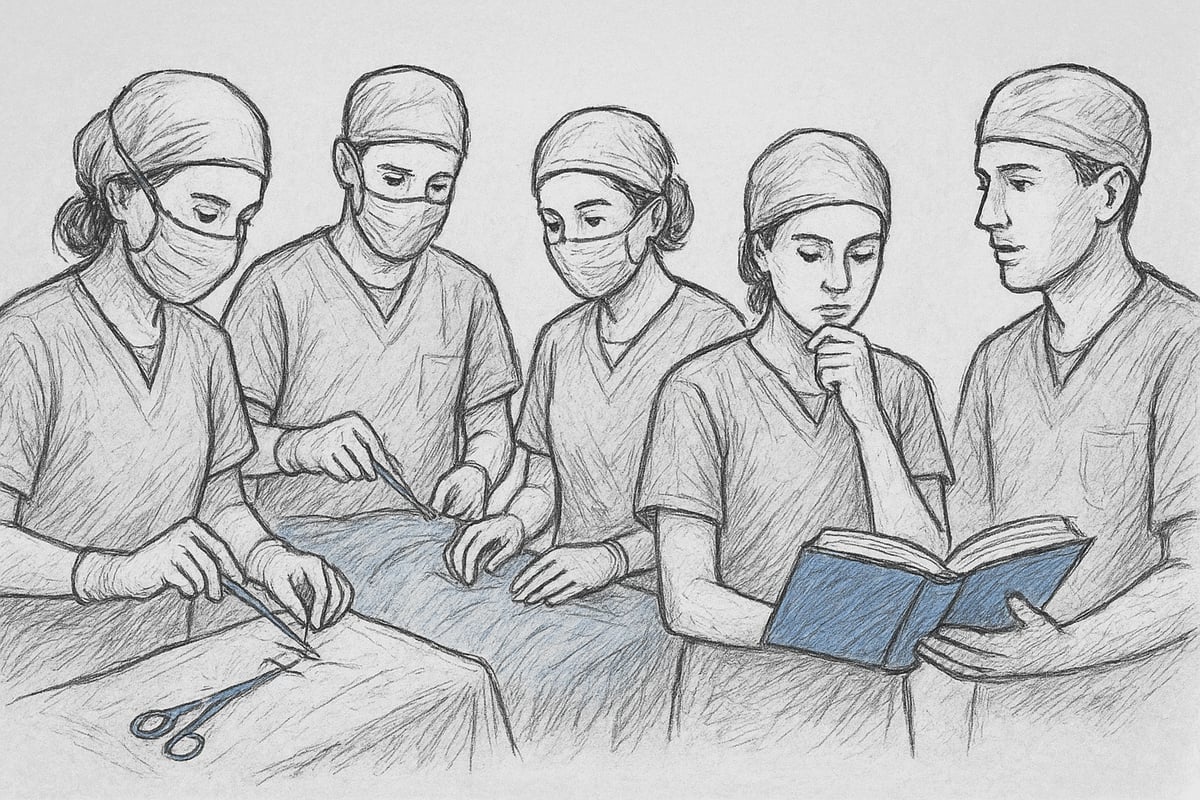
Surgical precision is the foundation for safe patient care. Medical students repeatedly practice fine motor skills, hand-eye coordination, and proper instrument technique. To understand how medical students learn surgery, exercises with anatomical models for teaching play a central role. Here, students can simulate procedures, practice suturing, and develop their precision without risk to patients.
Microsurgery training and repetition of procedures gradually increase skills. Statistics show that 60% of surgical errors are due to insufficient technical skill. Therefore, technical training is a high priority in all phases of education.
Communication and teamwork
A well-functioning surgical team is built on clear communication and collaboration. When asked how medical students learn surgery, it is clear that the ability to convey information, listen and give feedback is essential. The team must be able to coordinate tasks, share responsibilities and handle unforeseen situations professionally.
Briefing and debriefing before and after surgery ensures that everyone is informed and can learn from the process. The WHO recommends standardized communication protocols because many errors in surgery are due to misunderstandings within the team. Learning to work together is therefore a core competency.
Critical thinking and decision-making
Surgeons often find themselves in pressured situations where quick decisions are required. An important part of how medical students learn surgery is training in critical thinking and the ability to analyze complex problems. The teaching involves case-based exercises where students learn to assess risks and choose the best solution under time pressure.
According to studies, 80% of surgeons consider the ability to make informed decisions to be the most important competency. This training starts early and is developed throughout the entire training.
Psychological resilience and stress management
Surgery is demanding both physically and mentally. To answer the question of how medical students learn surgery, we must focus on psychological resilience. Students learn to handle mistakes, work under pressure, and develop resilience through mental training programs. Mindfulness and stress management are integral elements of many medical programs.
Statistics show that 35% of students experience stress-related symptoms. Therefore, it is important to build strategies to stay calm and focus on patient safety, even in difficult circumstances.
Lifelong learning and professional development
Medical knowledge is constantly evolving. How do medical students learn surgery if not through continuous updating of skills? Lifelong learning is a necessity. Students and graduate surgeons participate in courses, conferences and e-learning to stay up to date with new techniques and knowledge.
90% of surgeons report that they participate in continuing education annually. This ongoing development ensures that surgeons can deliver the best treatment and adapt to new demands and technologies.
The Role of Technology in Surgical Education
Technology plays a crucial role in how medical students learn surgery today. Digital solutions and advanced tools have transformed the educational environment, allowing students to acquire both theoretical knowledge and practical skills more effectively. Modern technologies ensure that future surgeons are better equipped for the demands of the future, where learning takes place flexibly and in a safe environment.
Digital learning platforms and e-learning
Digital learning platforms have changed how medical students learn surgery. With access to online courses, videos and interactive cases, students can learn at their own pace. E-learning modules on e.g. Sundhed.dk ensure flexibility and up-to-date knowledge, while digital quizzes and discussion forums strengthen understanding.
A significant part of surgical training is based on a strong foundation in anatomy. To achieve this, it can be valuable to use resources such as Anatomy Exam Guide , which guide students through complex topics.
- E-learning makes it possible to repeat difficult topics
- Online cases prepare for real-life scenarios
- Statistics: 75% use e-learning weekly
Digital solutions have become indispensable in how medical students learn surgery effectively.
Simulation, VR and AR in practice
Simulation is key to how medical students learn surgery safely. Advanced simulators, VR, and AR provide realistic training without risk to patients. Students can practice everything from basic suturing to advanced procedures repeatedly until the techniques are solidified.
- VR surgery training at Aarhus University Hospital increases skills by 60%
- AR allows for interactive 3D models of organs and procedures
- Simulation training reduces errors and increases confidence
By integrating VR and AR into teaching, students have a safe transition from theory to practice. This clearly illustrates how medical students learn surgery in a digital learning environment.
Artificial intelligence and adaptive learning
Artificial intelligence is revolutionizing how medical students learn surgery. AI-based platforms can provide personalized feedback on training exercises, identify strengths and weaknesses, and suggest targeted training. This makes learning more effective and tailored to the needs of each student.
- Adaptive learning platforms adjust difficulty automatically
- Automated assessment ensures consistent standards
- Statistics: 40% faster learning using AI-assisted feedback
This technology means students can progress faster and more purposefully, which is crucial for how medical students learn surgery in 2026.
Future technological developments and challenges
Developments are not standing still, and the future will offer even more technological opportunities for how medical students learn surgery. Robotic surgery, telemedicine and 3D printing are being integrated into both teaching and clinical practice. However, new challenges also arise, such as ethics, data security and access to advanced equipment.
- Robot-assisted surgery is becoming widespread in Danish hospitals
- 50% of all operations in 2030 are expected to involve advanced technology
- Focus on ethics and data security is necessary
The role of technology will only grow, and this places demands on both teachers and students to adapt. It is precisely this development that will shape how medical students learn surgery in the coming years.
Future Challenges and Opportunities for Surgery Students
Understanding how medical students will learn surgery in the future requires a look at both the challenges and opportunities that characterise the field. Developments are influenced by increased competition, changing working environments, internationalisation and new technological and ethical requirements. Here you will get an overview of the most important trends.
Increased competition and specialization
The number of applicants to surgical education programs is increasing, which is intensifying competition for places. Many students choose to specialize early and delve into niche areas. According to the Medical Forecast 2021-2045 from the Danish National Board of Health, there is still a high demand for skilled specialists, which places new demands on how medical students learn surgery and adapt to the labor market.
Working environment and work-life balance
How do medical students learn surgery to handle a demanding work environment? Long shifts, high work pressure and the risk of burnout are key challenges. Focus on well-being, mental health and work-life balance is gaining ground, and more hospitals are introducing initiatives to support students and newly graduated surgeons in achieving a healthy balance.
Globalization and international opportunities
Globalization opens doors for medical students who want to broaden their horizons. Exchange programs and international collaborations provide opportunities to learn different approaches to surgery. How do medical students learn surgery abroad? Recognition of Danish education makes it easier to work globally, and programs like Erasmus+ promote international experiences.
Ethics, diversity and patient-centered care
Ethics in surgery are in focus, along with the desire for greater diversity and inclusion. Patient-centered care is becoming increasingly important, and many students are demanding more education in ethics. This reflects a shift towards a more empathetic and inclusive approach, where the needs of both the patient and society are highly valued.
Future learning: Technology and innovation
Technological developments are changing how medical students acquire surgical skills. Virtual teaching platforms, simulation and adaptive learning are becoming key tools. Forecasts show that up to 70% of all surgical teaching could become digital by 2030, which places demands on both educators and students to embrace innovation.
Career development and mentoring support
Career guidance and mentoring are essential for success in the surgical profession. Workshops and coaching help students navigate their careers, and data shows that 80% of successful surgeons have had a mentor. Networking and professional sparring provide both support and inspiration for the challenges of the future.
As you delve into how aspiring surgeons build their skills from theory to advanced practice, you’ll quickly discover the importance of both solid anatomical models and innovative teaching methods. You’ll gain unique insight into how technology, simulation training, and guidance from experienced mentors pave the way for confidence in the operating room. If you’re curious about how you can enhance your own learning through realistic models, posters, or skill trainers—or simply want to immerse yourself in the latest in surgical education—you can find more inspiration here:
Read more here
0 comments