

Imagine being able to visualize complex animal anatomical structures in seconds. For many veterinary students, this is exactly what the use of anatomy posters in veterinary school makes possible.
This guide shows you step by step how to utilize anatomy posters as an indispensable tool in veterinary studies in 2026. We review the benefits, help you choose the right posters, and provide concrete advice for integration into daily learning.
You will also gain insight into digital trends, study techniques and maintenance so you can optimize your learning and achieve better exam results.
The Benefits of Anatomy Posters in the Veterinary School
Understanding complex anatomical relationships is one of the biggest challenges for any veterinary student. Here, the use of anatomy posters in veterinary studies becomes a central tool that not only facilitates learning, but also creates a stronger foundation for clinical understanding. Let's take a closer look at how these posters can strengthen both your memory, your overview and your motivation in studying.
Visual Learning and Memory
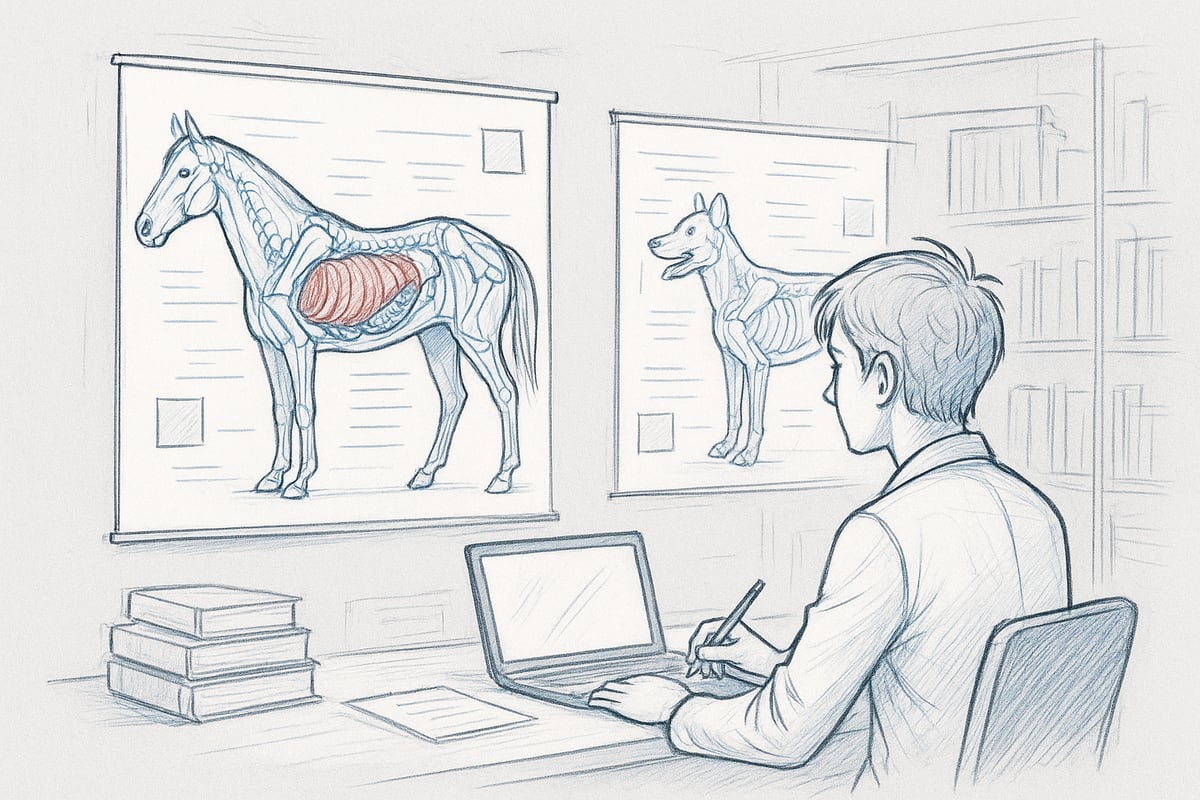
Using anatomy posters in veterinary school strengthens your ability to understand complex structures through visual learning. Pictures and illustrations help the brain quickly decode and retain information, which is especially important when learning about small details of animal anatomy.
Studies show that visual aids can improve memory by up to 65 percent compared to text alone. Imagine how much easier it is to understand the horse's circulatory system by seeing a colorful poster, rather than just reading about it. The visual approach makes it easier to connect name and function, so knowledge sticks on exams and in the clinic.
Overview of Connections
Using anatomy posters in veterinary school provides a quick and intuitive overview of how organs, systems, and functions are interconnected. This is especially valuable during pathology, where understanding the relationships between different parts of the body is crucial.
Posters clearly illustrate how, for example, the digestive system and the circulatory system interact. In group work and case-based teaching, it becomes easier to discuss and analyze clinical problems when everyone can point to the relevant structures directly on the poster.
Effective Exam Preparation
One of the biggest advantages of using anatomy posters in veterinary school comes in the run-up to exams. Posters serve as perfect revision tools, allowing you to quickly refresh essential details and connections without having to leaf through heavy textbooks.
Peer-to-peer teaching becomes easier when you can review a poster together and test each other's knowledge. Statistics show that 82 percent of veterinary students use visual aids during the exam period. You can find a wide selection of relevant posters that support both daily learning and exam preparation at Anatomical posters for students .
Motivation and Commitment
Using anatomy posters in veterinary studies contributes to a more inspiring and engaging learning environment. Colorful and detailed posters make your study space inviting and motivating, increasing the desire to learn and immerse yourself.
Interactive use, such as quizzing yourself or discussing posters in the study group, provides variety in teaching. Many students find that learning becomes more enjoyable when they actively use the posters in everyday life, both alone and with others.
Accessibility and Flexibility
A major strength of using anatomy posters in veterinary school is their flexibility and accessibility. You can hang them at home, take them to school, or use them in the clinic. This makes it easy to tailor learning to your specific needs.
Unlike heavy textbooks, posters are easy to move around and can quickly give you an overview when you need it. Whether you prefer individual immersion or group work, anatomy posters can be adapted to your preferred learning style.
Choosing the Right Anatomy Posters for Veterinary Study
When choosing the optimal posters, it is important to consider both the curriculum and your own study needs. Using anatomy posters in veterinary school allows you to target your learning towards the animal species you most often work with. Many students start with posters on dogs, cats or horses, while cattle become more relevant in the clinical years. Consider choosing posters that cover these areas. You will find a wide selection of veterinary posters about the horse and dog , making it easy to match the posters with your current course or upcoming exams.

Academic Relevance and Study Requirements
Using anatomy posters in veterinary school starts with assessing your curriculum and required subjects. It is crucial to choose posters that reflect the animal species that are most prominent in your teaching. Typically, dogs, cats, horses, and cattle will be the focus, especially in the first and second years of study. For new students, a general overview of the organ systems may be sufficient, while the clinical years require more detailed posters. Also consider whether you need posters for specific topics such as the musculoskeletal system, circulatory system, or nervous system. In this way, using anatomy posters in veterinary school ensures that you get the most out of your visual learning. When in doubt, it is recommended to consult with teachers or experienced students.
Quality and Detail
When investing in posters, you should prioritize quality and detail. Using anatomy posters in the veterinary office requires that the illustrations are accurate, anatomically correct, and up-to-date with the latest terminology. Compare different providers to assess print quality, color reproduction, and durability. Posters with 3D effects and color codes can make it easier to distinguish between different tissues or organs. A table can help you compare selected posters:
| Provider | Level of detail | 3D effects | Color codes | Updated terminology |
|---|---|---|---|---|
| Provider A | High | Yes | Yes | Yes |
| Provider B | Medium | No | Yes | No |
Always choose posters that support accurate use of anatomy posters in the veterinary studio, especially when working with complex subjects.
Language and Terminology
The correct language on the posters is crucial for understanding and academic progression. The use of anatomy posters in veterinary studies should be adapted to the requirements set by your university. Many choose posters in Danish to facilitate daily learning, while others prefer Latin or English to match international standards such as Nomina Anatomica Veterinaria. Some posters combine Danish and Latin nomenclature, which can be an advantage if you are preparing for both national and international exams. For example, you can choose posters where all important structures are named in two languages. Consider what makes the most sense for your use of anatomy posters in veterinary studies, and possibly ask your lecturers for advice.
Convenient Sizes and Formats
The size and format of the poster have a great impact on how you work with the material in everyday life. The use of anatomy posters in the veterinary study can be adapted to both individual immersion and group work. Large wall posters (e.g. A1 or XXL) provide a good overview in study groups or in common areas, while smaller formats such as A2 or portable versions are ideal for the desk or transport between home and study. Consider whether you need more posters for different situations. An overview:
- A1/XXL: Ideal for the wall, group work
- A2: Convenient for the desktop
- Portable: Easy to take on the go
The choice of format supports flexible use of anatomy posters in the veterinary studio and ensures that you always have the right learning tool at hand.
Price and Availability
The price varies greatly depending on size, quality and provider. However, using anatomy posters in veterinary studies does not have to break the budget. Many students choose to buy used posters or share the cost with fellow students. Prices range from affordable student editions to more advanced institutional posters. Statistics show that 60 percent of students invest in their own posters during their studies. Also remember to investigate the possibilities of exchanging or selling your posters when you have finished a subject. This makes using anatomy posters in veterinary studies both economical and sustainable.
How to Integrate Anatomy Posters into Your Daily Learning
Location and Setup
Effective use of anatomy posters in veterinary school starts with where you choose to place them. Hang the posters in places you are most likely to be, such as by your study table, on the wall in your bedroom, or in a common study room. This makes it easier to see and review the information several times a day.
Use easy hanging solutions like glue, tape, or string to avoid damaging the walls. Many students rotate their posters each week to vary the focus and reinforce learning. Also consider having multiple posters visible at once to give you a broad overview.
If you are new to the study and are looking for inspiration for setting up or choosing materials, you can find good advice and selected posters at For the new veterinary medicine student . This will help you make the most of the use of anatomy posters in the veterinary study.
Daily Use And Routines
To get the most out of using anatomy posters in your veterinary practice, make them a regular part of your daily routine. Start your day with a brief review of selected anatomical areas on the poster. Spend five minutes morning and evening reviewing the structures and names.
Make small quizzes for yourself or with study buddies. Point to a structure and test whether you know the name and function. Note down difficult areas so you can focus extra on them. Daily repetition strengthens memory and ensures that you gradually build a solid foundation.
Use the posters actively, not just as decoration. Set goals for what you want to be able to do each week, and follow up on your learning by checking off on the poster or in your notes. This makes using anatomy posters in veterinary school a natural part of your everyday life.
Active Learning With Posters
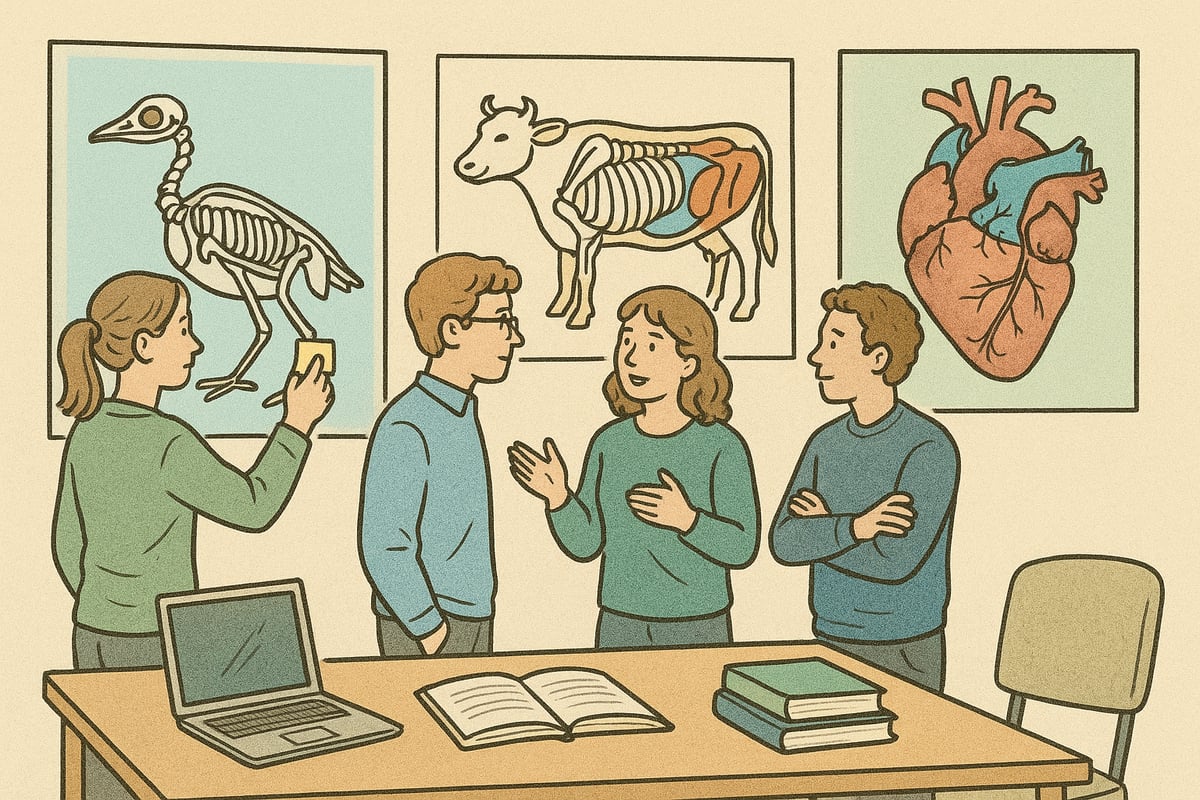
Active learning is central to using anatomy posters in veterinary school. For example, you can cover the names of organs or bones with post-its and then test yourself. This method makes it easy to identify which areas you have mastered and which ones you need to work on more.
Peer teaching is also effective. Explain anatomical structures to your fellow students based on the poster. This strengthens both your own and others' understanding. You can also place a plastic pocket over the poster and draw with whiteboard markers to practice placing structures.
Switch between different learning techniques to stay motivated. Combining multiple methods will help you get the most out of using anatomy posters in veterinary school.
Case and Problem-Based Learning
Using anatomy posters in veterinary school is especially valuable when working with cases and clinical problems. Take a specific case, for example a lame horse, and use the poster to map out the relevant anatomical areas.
Visualize the course of the disease by marking on the poster how an injury or disease can affect different systems. This helps you understand the connections between anatomy and clinical practice. Discuss in groups so that together you can find the most important structures and possible diagnoses.
Work with cases where you follow a disease process from symptoms to treatment, and use the poster as a visual reference. This approach makes the use of anatomy posters in veterinary studies more practical and relevant.
Combine With Other Teaching Materials
To enhance your learning, combine the use of anatomy posters in veterinary school with other resources. Compare the posters with textbooks to get both the visual and theoretical aspects. Use digital models or apps if you want to delve deeper into the details.
Many students find that combining multiple media significantly increases their understanding. Statistics show that those who use both posters, books, and digital tools perform up to 15 percent better on tests. Make small tables of differences and similarities between the methods to get a quick overview.
By integrating multiple teaching aids, you get the most out of using anatomy posters in veterinary school and achieve a more nuanced understanding.
Group Studies and Collaboration
In group work, using anatomy posters in veterinary studies can serve as a focal point for discussion and learning. Hang the poster in the middle of the room so everyone can see it, and use it actively when explaining or discussing.
Create quizzes or flashcards based on the poster content, and have small group competitions to see who can remember the most details. Try building an “exam table” where all the structures on the poster have to be explained or placed correctly.
This type of collaboration strengthens both social and professional skills. The unity in the group can motivate you to use anatomy posters even more effectively in veterinary school.
Follow-up and Reflection
It is important to continually evaluate your use of anatomy posters in veterinary school. Take time to reflect on what you have learned and what areas you are still struggling with. Use the poster as a reference when reviewing your notes.
Adjust the placement of the posters or replace them if you need new focal points. Compare your own notes and drawings with the poster content to ensure that you have understood the key concepts correctly.
By following up and adapting your approach, you will get the most out of using anatomy posters in veterinary school and ensure that you are constantly developing your knowledge.
Digital Anatomy Posters and Learning Tools of the Future
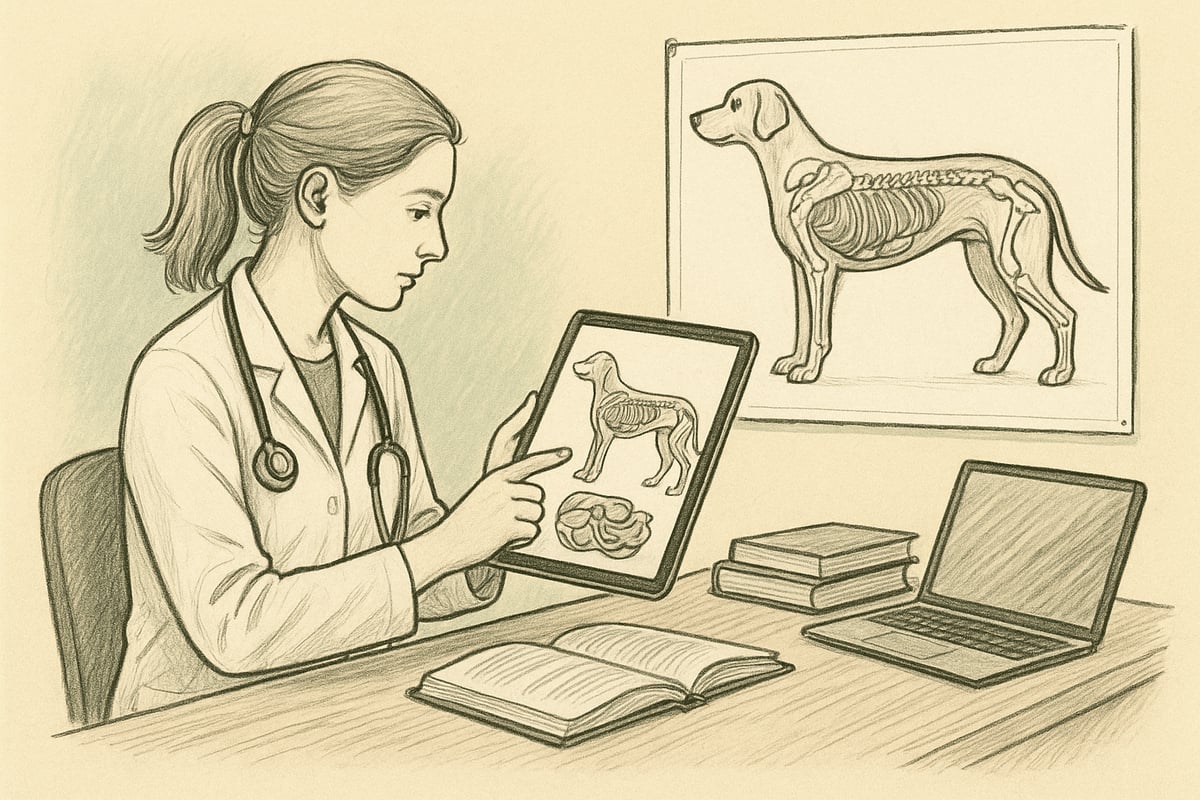
Digitization has revolutionized the use of anatomy posters in veterinary schools. Students can now choose between classic physical posters and interactive, digital versions, opening up new learning opportunities. Developments in digital posters have made it possible to zoom in on details, layer structures, and animate complex processes. Many platforms now offer access to digital illustrations and posters , so you can quickly visualize anatomy, no matter where you are. Statistics show that 45% of veterinary schools now offer digital anatomy resources to supplement traditional materials.
The Development of Digital Posters
Digital anatomy posters have introduced a new dimension in the use of anatomy posters in veterinary practice. With features such as zoom, layering and animations, you have the opportunity to examine even the smallest anatomical details. This makes it easier to understand complex relationships between organs and systems. Several providers now offer digital posters, which provides flexibility in teaching. For example, you can access updated and interactive materials via digital illustrations and posters that can be used both at home and in the clinic. This development particularly supports visual learning and strengthens your understanding of the material.
Apps and E-learning Platforms
Apps and e-learning platforms are playing an increasingly important role in the use of anatomy posters in veterinary education. Popular apps offer self-tests, quizzes and virtual dissection, which make it easy to review anatomy before clinical placements and exams. Many platforms also allow for personalization, where you can mark your own focus areas or track your learning progression. In addition, digital case assignments provide an opportunity to apply knowledge in practice. Projects such as student-active learning in veterinary education show that digital learning tools increase engagement and support collaboration among students.
Virtual Reality and Augmented Reality
Virtual Reality (VR) and Augmented Reality (AR) are gaining traction in veterinary education and are transforming the use of anatomy posters in veterinary education into an even more interactive experience. With VR/AR, you can examine 3D models of animals, rotate organs and understand spatial relationships on a whole new level. Several universities, including KU SUND, have already implemented AR in teaching. This technology makes it easier to prepare for clinical situations and provides a deeper understanding than traditional posters alone. VR/AR thus complements both physical and digital posters in teaching.
Benefits and Challenges of Digitalization
The digitization of anatomy posters has increased accessibility and flexibility. You can now access the material from both computer, tablet and mobile and study where and when it suits you. At the same time, there are challenges such as licenses, screen time and the need for technical support. Studies indicate that the learning outcome can be high, but that physical interaction still has its justification. When you choose to use anatomy posters in the veterinary study, it may therefore be an advantage to combine digital and analog solutions to achieve the best result.
Combination of Physical and Digital Posters
The optimal approach to using anatomy posters in veterinary school is often a hybrid solution. By combining physical posters with digital resources, you get both the tactile feel and the interactive possibilities. For example, a typical study plan might include reviewing wall posters at home while using digital apps for quizzes and 3D analysis during group work. This combination increases the variety of learning and helps you retain the material better. The hybrid model is therefore recommended for anyone who wants a solid and flexible learning foundation.
Maintenance and Storage of Anatomy Posters
With proper maintenance, you can significantly extend the life and benefit of using anatomy posters in your veterinary practice. Small everyday actions will ensure that your posters remain sharp and easy to read, whether you use them at home or in the practice.
Cleaning and Protection
Regular cleaning is essential to maintain the quality of your posters. Use a soft, dry cloth to gently wipe the surface. Avoid cleaning agents as they can damage the print. Consider framing or laminating your posters to protect them from dust and dirt.
For extra security, you can store the posters in storage tubes when not in use. Avoid direct sunlight and moisture, as this can cause the colors to fade. Many students find inspiration in anatomical drawings from the Danish Agricultural University , where preservation of original material is essential, as is the case for the use of anatomy posters in veterinary studies.
Long-term storage and transportation
Long-term storage requires care. Always roll the posters with the print facing out and store them in sturdy tubes. This protects against kinks and creases during transport between home and study.
If you live in a dormitory or share a room, it can be an advantage to have a special storage place for your posters. Poster folders or laminated versions are practical for both transport and long-term storage. When using anatomy posters in the veterinary studio, you should always ensure that they are not exposed to moisture or pressure from heavy objects.
Recycling and Dissemination
When you finish a semester or a course, it's a good idea to think about recycling and sharing. Many people choose to sell or swap their posters with younger students, which both saves money and promotes sustainability.
Donating to clinics or classrooms is also popular. Statistics show that 30% of students resell their posters after use. By using anatomy posters in veterinary school, your materials will gain new life and help others on their educational journey.
Once you discover how much of a difference anatomy posters can make to your understanding, memory and exam preparation, they will quickly become a natural part of your daily routine in veterinary school. You can choose from everything from detailed wall posters to digital solutions and integrate them to suit your specific needs and learning style. If you want to delve deeper into how to find the right posters, or see the wide range that matches both study requirements and budget, you can Read more here .
0 comments