

Imagine being able to explore the body's complex anatomy in minutes, without having to leaf through thick textbooks. With the right anatomy model, you get a visual and tangible way to understand how organs, bones, and muscles are connected.
This guide makes it easy to select, use and master anatomy models in 2025. You will gain insight into the most important model types, selection criteria and the latest trends so you can strengthen your learning, teaching or patient guidance.
We show you how you can use models to gain understanding quickly and effectively. Read on and experience how much of a difference an anatomy model can make to your knowledge and your results.
What is an anatomy model?
An anatomy model is a physical or digital teaching aid used to illustrate the structures and systems of the body in an easy-to-understand way. The model makes it possible to observe and explore the structure of the body without the use of textbooks or complex illustrations. It is a central tool in everything from elementary school biology classes to advanced medical studies.
Historically, anatomy models have evolved significantly. In the past, wax models and natural materials were used to represent organs and bones. Over time, plastic, resin, and later 3D-printed models were added, making them more accessible and durable. Today, we also see digital and interactive models that can be integrated with apps and virtual platforms.
The purpose of an anatomy model is to make the inside of the body visible and understandable. The model helps to visualize how organs are located and how the different systems work together. This is especially important in education, where pupils and students are given the opportunity to investigate and learn through practical experience.
Anatomy models are widely used in the educational sector, in hospitals, in patient guidance and during clinical demonstrations. Teachers and healthcare professionals use models to explain complex processes and disease processes, while researchers use them to illustrate research results. Many life-size anatomical models have been developed to cover different levels of education, from primary school to university.
The choice of materials ranges from plastic and resin to innovative natural materials and digital versions. Each type has its advantages, depending on the purpose and environment of use. Plastic models are popular due to their durability, while digital models are often chosen when interactivity and updating are desired.
The benefits of using an anatomy model are many. They promote both tactile and visual learning, which increases understanding and strengthens memory. The models allow for safe training, where mistakes do not have consequences for patients. At the same time, they can be used to practice procedures and explain treatments.
According to figures from Optisafe and Scandidact, anatomy models are used in more than 90 percent of Danish biology and health education programs. This shows how indispensable the model has become as a learning tool.
However, there are also challenges. The price of advanced models can be high, and they require space to be stored properly. In addition, the models must be continuously updated to reflect the latest medical knowledge and technology.
An anatomy model is much more than just a piece of plastic or a digital file. It is an indispensable tool that bridges theory and practice, and plays a central role in teaching, research and healthcare communication.
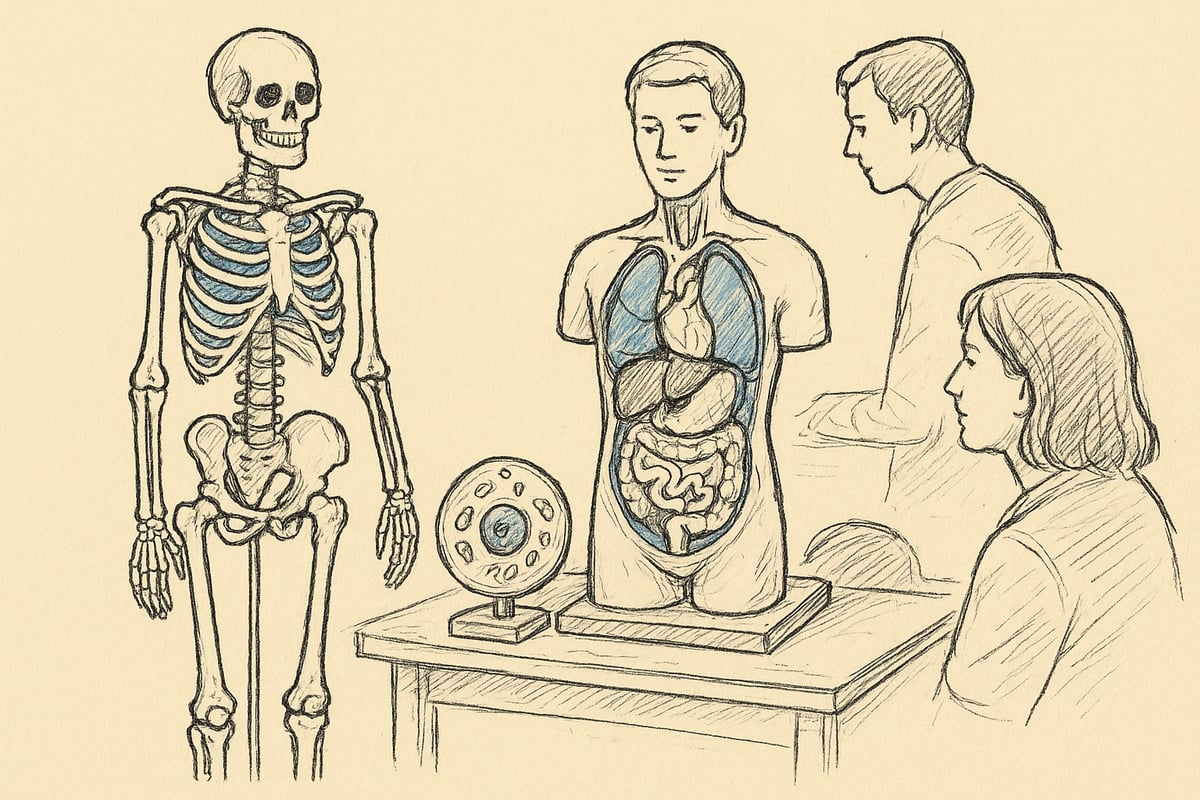
Types of anatomy models and their uses
When you choose an anatomy model, you open the door to a world of educational possibilities. The different models are designed to illustrate the structure, function and variation of the body, making them central to both teaching, research and patient guidance. Below you will get an overview of the most commonly used types and their specific strengths.
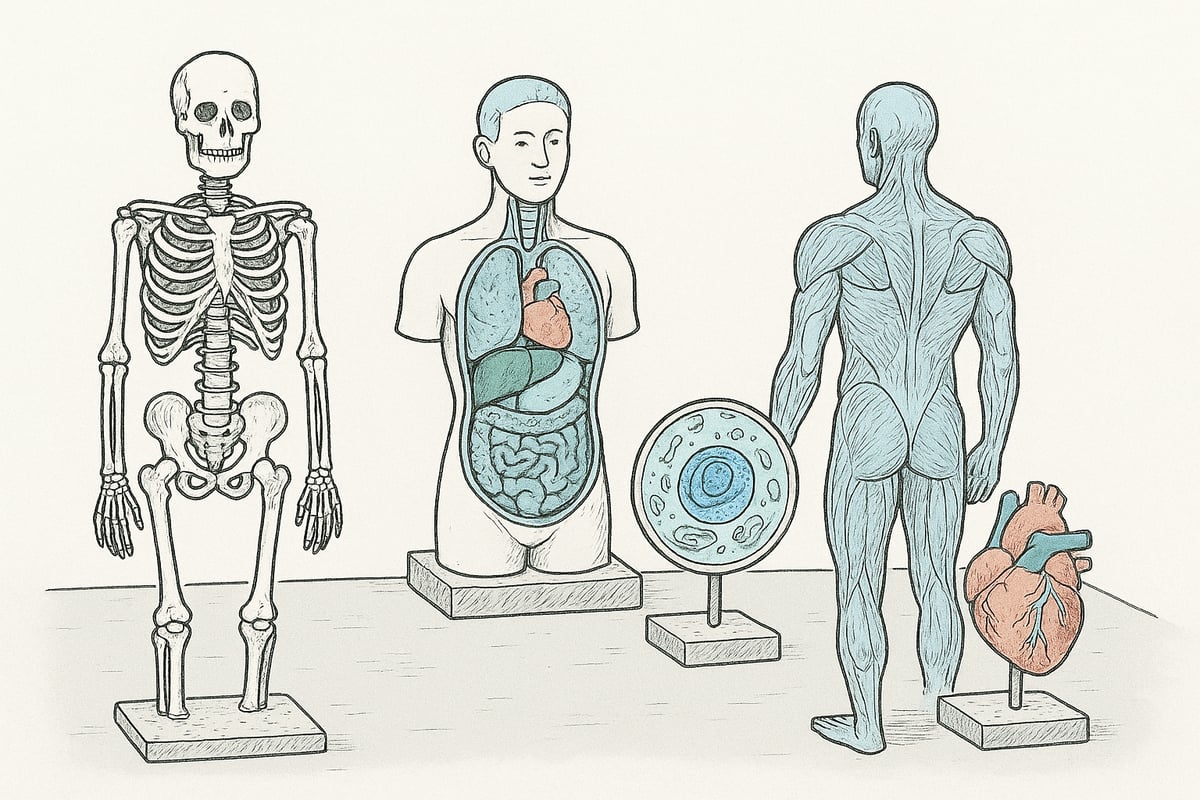
Skeleton and bone models
Skeleton and bone models are classic tools in anatomy teaching. They are available as full-scale skeletons, individual bones, or specific regions such as skulls and spines.
These models make it easy to demonstrate joint movements, bone structures and biomechanics, which strengthens the understanding of the human structure. For example, the Stan skeleton model is popular in both elementary schools and universities. According to Optisafe, skeletal models are some of the best-selling because an anatomy model of this type makes it easy to visualize the body's musculoskeletal system.
They are indispensable for physiotherapists and chiropractors who have to explain relationships to patients.
Organ and torso models
Organ and torso models show the body's internal organs such as the heart, brain, lungs and digestive system. These models are used to explain organ functions, diseases and treatment processes in a tangible way. Often the organs can be removed and examined separately, which adds an extra dimension to learning.
One example is the use of digestive system models in patient guidance, where complex processes become easy to understand. The models are central to both biology teaching and medical studies. If you want to delve deeper into the possibilities, you can find more examples of anatomical models of organs and structures , which contribute to increasing understanding in health education.
An anatomy model of organs allows for the combination of visual and tactile learning, which strengthens both memory and understanding.
Muscle models and musculoskeletal system
Muscle models illustrate the location, structure and interaction of muscles with bones and joints. They are widely used in physical education and physiology education as well as sports medicine, where it is important to be able to explain how muscles work together during movement.
Muscle models are often combined with posters and 3D models to provide a complete picture of the musculoskeletal system. An anatomical model of muscles makes it possible to demonstrate dynamic processes that may otherwise be difficult to explain in the abstract.
These models support both teachers and students in understanding complex biomechanical relationships.
Cell and microscopy models
Cell and microscopy models allow structures that are normally invisible to the naked eye to be visualized. Models of cells, viruses, and tissues are used in high schools, universities, and laboratories to teach microbiology and genetics.
Using an anatomy model at this level, one can explain processes such as mitosis, meiosis, and osmosis in a way that engages both beginners and advanced students.
These models strengthen the understanding of the basic building blocks of life and make complex biological processes more accessible.
Special models: Pathological conditions and animal models
Special models cover everything from diseased organs to animal anatomy. Pathological models show, for example, cancer, atherosclerosis or other diseases, making them indispensable in clinical teaching and patient information.
Veterinary anatomy models include horse skeletons, animal organs, and models for use in veterinary education. An anatomy model of this type helps to convey important differences and similarities between species.
These special models contribute to a more nuanced understanding of both human and animal anatomy, which strengthens both research and practice.
How to choose the right anatomy model in 2025
Choosing the right anatomy model can seem overwhelming with the many options available in 2025. To ensure the best learning outcome, you should first clarify the purpose of your anatomy model. Will it be used for teaching, patient guidance, research or perhaps for self-study? Each application has different requirements for both level of detail and functionality.
Consider carefully who will be using the model. Elementary school students often need a simpler anatomy model, while medical students or healthcare professionals benefit most from advanced models with removable parts and clear color coding. For patient guidance, a model with clear visual markings can make complex diagnoses easier to understand.
The level of detail plays a key role. A simple anatomy model can cover basic needs, but for specialized teaching or research, you should choose a model with multiple layers, separate organs, and realistic coloring. Material choice also matters. Plastic and resin are popular for their durability and ease of cleaning, while more advanced models can be made from natural materials for increased realism. Digital models are also gaining ground as technology advances.
The size of your anatomy model should match both the space available and the intended use. Tabletop models are practical for small groups or self-study, while full-scale models are suitable for demonstrations in larger educational settings. Also remember to think about storage and cleaning, especially if the model will be used frequently or by many people.
Price and budget are of course important. Quality and functionality should always be compared before making a decision. It can be valuable to get quotes from multiple suppliers and investigate warranties and support options. Many schools and clinics prioritize models with long durability, which often justifies a higher investment.
Digital integration is one of the biggest trends in 2025. More and more models are now compatible with AR and VR, opening up new opportunities in teaching and distance learning. According to Optisafe, 72% of healthcare education programs today prioritize models that can be combined with digital solutions. Interactive models from manufacturers such as 3B Scientific make it possible to visualize the body's structures in completely new ways.
Below is an overview comparing classic and digital models:
| Criterion | Classic model | Interactive/digital model |
|---|---|---|
| Level of detail | High/variable | Very high, often 3D |
| Price | Often lower | Often higher |
| Maintenance | Easy | Minimal |
| Learning opportunities | Tactile, visual | Visual, virtual, AR/VR |
| Update | Rarely | Continuously via software |
For further guidance on how to select and use an anatomy model as a student, you can find practical tips and recommendations in the Guide for Students in Anatomy .
When choosing your next anatomy model, you should consider purpose, target audience, level of detail, materials, size, price and digital options. This way, you ensure that your investment is both future-proof and provides maximum learning and value.
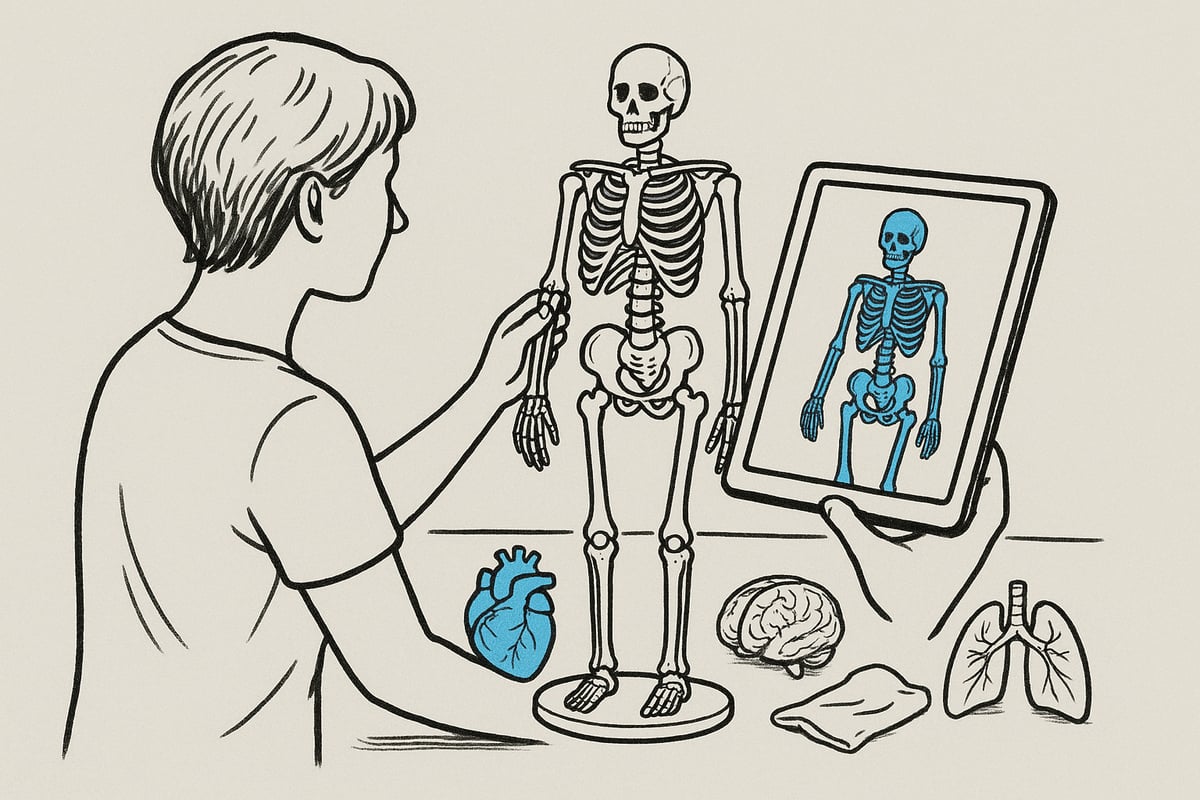
Future trends in anatomy models
The future of anatomy model development brings significant changes. New technologies, sustainable materials and increased customization set the agenda in 2025. This section provides you with insight into the most important trends, so you can understand how anatomy model solutions are evolving and what opportunities await for education, research and clinical practice.
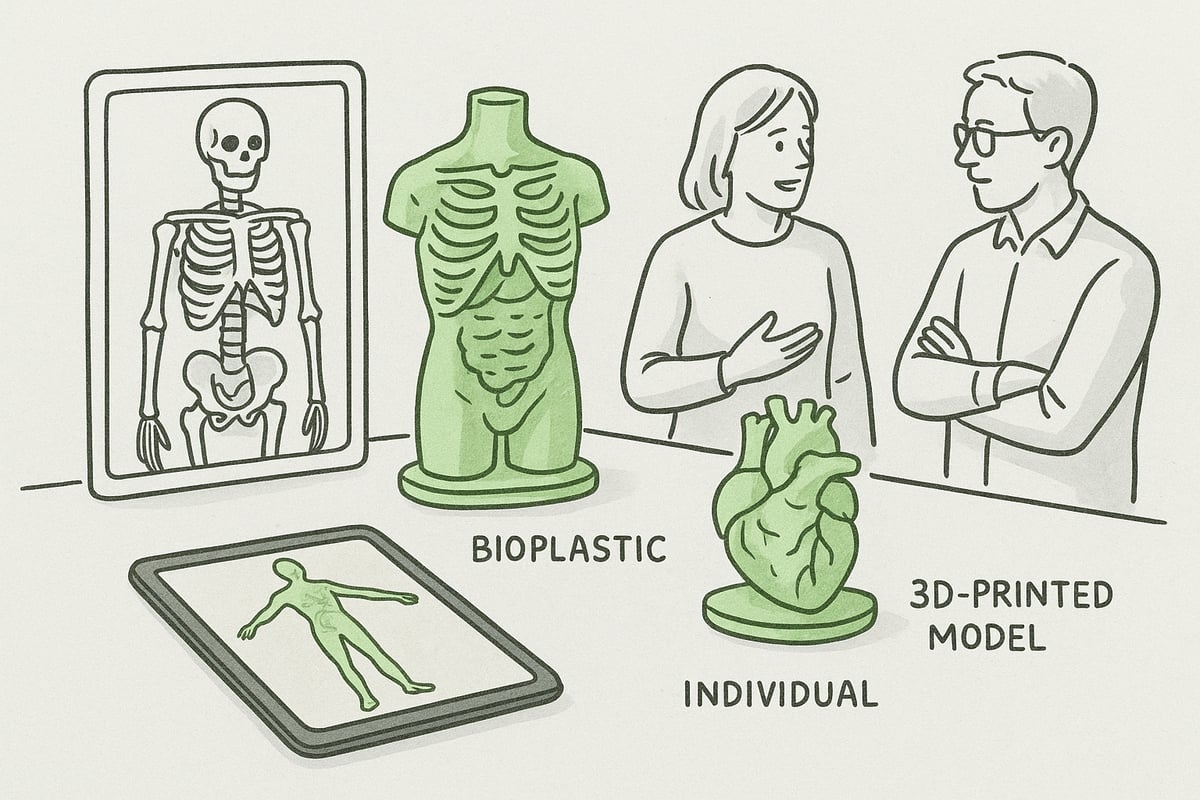
Digitalization and interactive models
Digitalization has transformed the anatomy model market. Virtual solutions such as AR and VR make it possible to explore the human body in detail without physical limitations. Many educators are choosing digital platforms where students can dissect and assemble organs on the screen. This improves understanding, especially when combined with physical models.
For example, 3D models controlled via tablet or mobile have become popular in distance learning. Statistics show that the use of digital anatomy model solutions has increased by 40 percent since 2022. The development points to even more advanced technologies for simulating body structures.
Research into advanced model generation, as described in Steerable Anatomical Shape Synthesis , shows how neural networks and AI can create even more realistic and dynamic anatomy model experiences, opening up new learning methods and personalized simulations.
Sustainability and material selection
Sustainability has become a key issue when choosing anatomy models. Many manufacturers are now prioritizing environmentally friendly materials such as bioplastics or recycled plastics to reduce their carbon footprint. This shift is clearly visible in both schools and healthcare education, where responsible purchasing is required.
An anatomy model made from recyclable materials has a long lifespan and can be used over and over again without compromising quality. In addition, production is often more energy efficient, contributing to a green transition in the education sector.
For institutions that want to combine innovation and environmental concerns, it is possible to choose models that are both durable and easy to clean. This makes them suitable for daily use and ensures that anatomy model solutions meet the demands of today's sustainability.
Individualization and customization
The demand for customized anatomy model solutions is growing rapidly. With 3D printing, models can now be produced based on specific patient data or special educational goals. This makes it possible to illustrate rare diseases or special anatomical variations that are not found in standard models.
Individualized models are particularly valuable in research environments and specialized education. An anatomy model can be customized in size, color coding, and level of detail to match the exact needs of the user. This provides greater flexibility and makes teaching more relevant.
Adaptation also means that models can be continuously updated as new knowledge emerges. This ensures that the teaching material is always up-to-date and that students and professionals receive the most accurate information in their anatomy model work.
Globalization and accessibility
Globalization has made it easier than ever to access the right anatomy model. Several suppliers now offer international solutions with support in many languages. This makes it easy for both Danish and foreign institutions to order and customize models online.
Online platforms have increased accessibility, allowing you to quickly compare prices, materials and functionality. Statistics show that 60 percent of Danish institutions now purchase their anatomy models online, saving time and providing greater selection.
This development supports the continued professionalization of teaching and patient communication. Whether you are a teacher, student or professional, you have access to the best and most up-to-date anatomy model solutions from around the world.
Practical Use: Maximize the Learning Outcome of Anatomy Models
Working with an anatomy model in practice opens up a deeper understanding of the structure of the body. Whether you are teaching, training, or studying yourself, the right approach can make the difference between superficial knowledge and real insight. Here you will get concrete strategies to maximize the benefit of your anatomy model in everyday life.
Didactic strategies in teaching
When you integrate an anatomy model into your teaching, you strengthen both the tactile and visual elements. Hands-on activities, where students assemble or examine models themselves, motivate active participation and improve understanding.
It is effective to combine models with posters and digital resources. For example, a skeletal model can be supplemented with anatomical posters designed in Denmark for a more nuanced approach. Case-based learning, where students solve tasks based on models, also trains both analysis and collaboration.
An anatomy model makes theory concrete. Students get the opportunity to examine joints, muscles, and organs up close, giving them insight that often exceeds traditional blackboard teaching.
Patient communication and dissemination
An anatomy model is a powerful tool in patient communication. Doctors and healthcare professionals often use models to explain diagnoses, treatments, or surgical procedures. This helps to increase patient understanding and confidence, especially when complex relationships need to be conveyed.
By pointing to a specific area on a model, you can illustrate where and how an injury, surgery, or illness affects the body. Many patients find that a visual explanation makes it easier to ask questions and engage in their own treatment.
Models of the heart, joints or organs are particularly popular because they can be disassembled to show internal structures. For healthcare professionals looking to enhance their teaching, it is recommended to explore resources for anatomy educators for inspiration and guidance. An anatomy model in the consultation can make the difference between confusion and clarity for the patient.
Self-study and exam preparation
For students who work with an anatomy model themselves, the benefits are significant. Physical models make it possible to repeat and visualize complex anatomical relationships, which strengthens both understanding and memory.
A study from Scandidact shows that 85% of medical students prefer physical models over purely digital solutions. This is partly because an anatomy model engages more senses and makes it easier to remember details.
Self-study with models can be combined with quizzes, flashcards or digital platforms to make learning varied and effective. By actively using the model, rather than just reading, you will gain more robust and lasting knowledge.
Maintenance and storage of models
To ensure long life and optimal function, proper maintenance of your anatomy model is essential. Clean the model regularly with suitable products, and avoid exposure to direct sunlight and moisture, as this can damage the material.
Store the models in sturdy storage boxes, preferably labeled for easy access and organization. In schools and clinics, it is an advantage to have regular routines for cleaning and checking so that the models always appear neat and ready for use.
A good anatomy model also requires ongoing updating. Consider supplementing with new models or spare parts as medical knowledge develops or as wear and tear and use require it. This way, you ensure that both teachers and students get the best return on their investment.
Guide: Step-by-step guide to choosing and using an anatomy model
Choosing the right anatomy model requires overview and systematicity. Follow this guide step by step to get the most out of your investment and ensure optimal learning, whether you are a teacher, student or professional.
Step 1: Identify your need
Start by defining exactly what your anatomy model will be used for. Will it support teaching, patient guidance, research or perhaps a personal project? Also consider the target group. Is it beginners, advanced users or specialists? A clear clarification of needs ensures that you choose a model that matches your learning goals and professional level. Also think about whether the model will be used frequently or only occasionally. This saves both time and resources in the long run.
Step 2: Select model type and level of detail
Next, you choose the type of anatomy model that best matches your purpose. Should it be a skeleton, organ, muscle model or perhaps a cell model? Consider whether it is important that the model can be disassembled, has color codes or is interactive. Some models are best suited to demonstrating movements, while others provide a detailed insight into internal structures. The more precise you are in your choice, the more benefit you will get from the model in teaching contexts.
Step 3: Examine materials and quality
Material choice is of great importance for both durability and realism. A plastic anatomy model is often light and robust, while resin provides greater detail. Also consider whether sustainability is important to you – several manufacturers offer environmentally friendly alternatives. Check how the model should be cleaned and maintained so that it remains hygienic with frequent use. The quality should match your requirements for both appearance and functionality.
Step 4: Compare prices and suppliers
Get quotes from several suppliers and compare prices in terms of quality, warranty and support. It is an advantage to choose a supplier with documented expertise and a wide range. For example, you can read more about quality and service at About eAnatomi and our expertise , which is known for Danish design and professionalism. Remember to investigate delivery terms and any options for customization.
Step 5: Integrate the model into teaching or practice
Plan how the anatomy model will be used in practice. Will it be included in demonstrations, group work, or patient guidance? Combine physical models with digital resources to create deeper understanding. Take advantage of the model's possibilities to actively engage users - this strengthens both learning and motivation. Also use the models to illustrate complex relationships that may be difficult to explain with words alone.
Step 6: Maintain and update continuously
To ensure long life, clean and store anatomy models correctly. Use mild cleaning agents and follow the manufacturer's instructions. Consider storing the models in boxes or cabinets with clear labeling so they are easy to find and protected from damage. Stay up to date with new models and updates so that teaching is always professionally up-to-date. This provides both safety and quality in daily work.
Now that you have an overview of the many possibilities and benefits of anatomy models, you are already well on your way to strengthening your understanding of the complexity of the body – regardless of whether you teach, study or work professionally in healthcare. We have reviewed both classic and digital solutions, materials, and how models can make learning more vivid and effective. If you want to delve deeper into the selection or find the model that matches your needs in 2025, you can read more and get inspiration here: Read more here
0 comments