

Have you ever wondered how to best use a nerve poster for learning or patient communication? In this guide, you will get an updated and practical step-by-step guide to choosing, understanding and using nerve posters in 2025.
The importance of the nerve poster is growing in both education, the healthcare sector and in the home. You will gain insight into what a nerve poster is, why it is relevant, how to choose the right one, and concrete tips for effective use and maintenance.
Be inspired to utilize the full potential of the nerve poster, whether you are teaching, communicating knowledge to patients or seeking better understanding at home. Read on for concrete advice that will make a difference.
What is a nerve plaque?
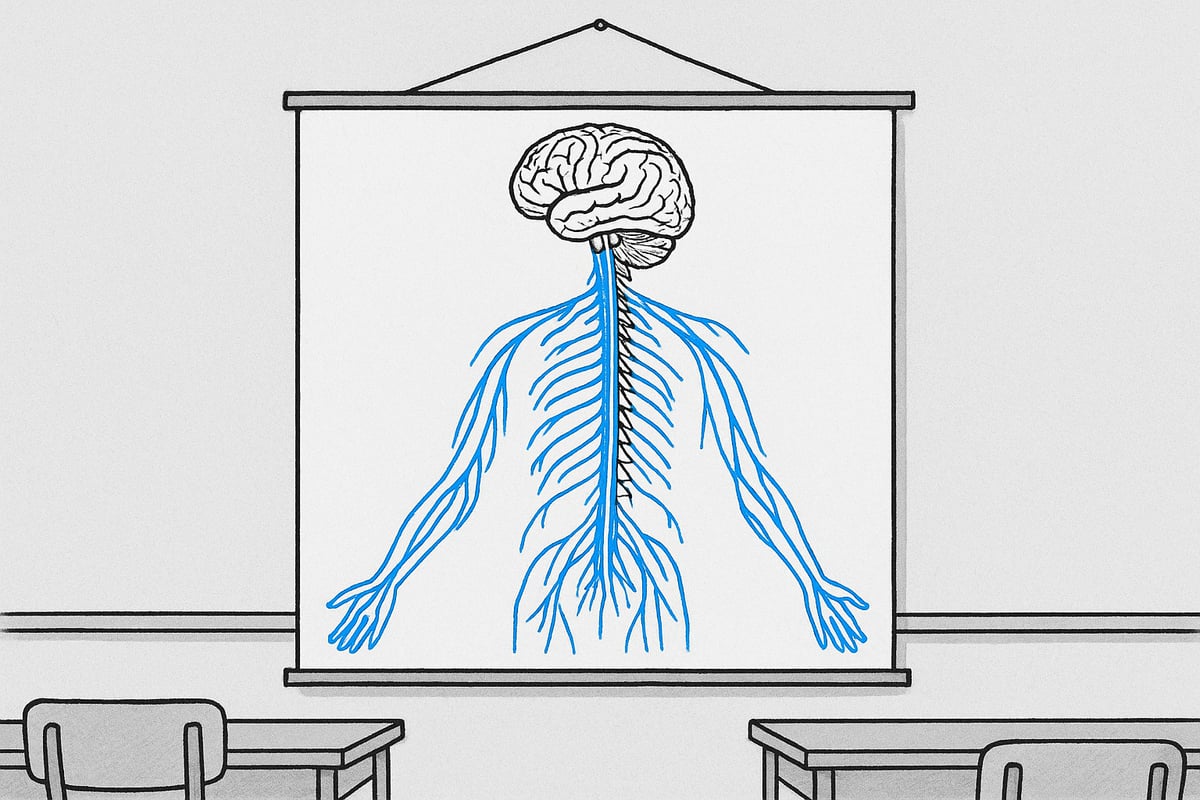
A nerve poster is a specialized visual learning tool that illustrates the structure and function of the nervous system. Unlike general anatomical posters, a nerve poster focuses on the course, division and connections of nerves, making it ideal for both teaching and patient communication. The purpose is to create a quick overview and support the understanding of complex relationships, whether in the classroom, clinic or home. Many nerve posters are developed with a focus on both aesthetics and scientific accuracy, which is seen in anatomical posters designed in Denmark , among other things.
Definition and purpose
A nerve poster is a visual representation of the nervous system, designed to make it easier to understand complex anatomical structures. It differs from other posters in that it focuses on the course, connections and functions of the nerves. The purpose of a nerve poster is to support learning by making the abstract concrete and easily accessible. It is frequently used in teaching, clinics and for self-study at home. The nerve poster serves as an effective tool for explaining everything from the brain and spinal cord to the peripheral nerves to both children and adults.
Types of nerve plaques
There are several types of nerve posters, each covering different parts of the nervous system. The most common are central nervous system posters, which show the brain and spinal cord, and peripheral nervous system posters. Specialized nerve posters can focus on specific areas such as cranial nerves or specific diseases. Some posters are detailed and suitable for medical students or professionals, while others are simpler and aimed at children or patients. When choosing a nerve poster, it is important to consider the target audience and the desired level of learning.
Benefits of using nerve posters
Nerve posters have many advantages as educational tools. Visual aids such as nerve posters can significantly increase understanding and memory. Research shows that visual teaching aids can improve retention by up to 65 percent. In the clinic, nerve posters help patients understand diagnoses and treatments, which increases confidence and compliance. For educators and healthcare professionals, the nerve poster strengthens professional communication and makes it easier to explain complex topics in practice.
Disadvantages and limitations
Although the nerve poster is a powerful tool, it has certain limitations. The illustration can sometimes oversimplify complex anatomical relationships, which can lead to misunderstandings. It is therefore important that the nerve poster is always based on up-to-date and correct information, so that the user is not presented with outdated knowledge. The space on the poster may also be limited, meaning that not all details can be included. Therefore, the nerve poster should be supplemented with other materials where necessary.
How to choose the right nerve poster
Choosing the right nerve poster requires careful consideration, whether you are a teacher, healthcare professional or student. Different needs and contexts place demands on both content and design. Follow this step-by-step guide to ensure that your nerve poster meets both professional and practical expectations.
Target group and use
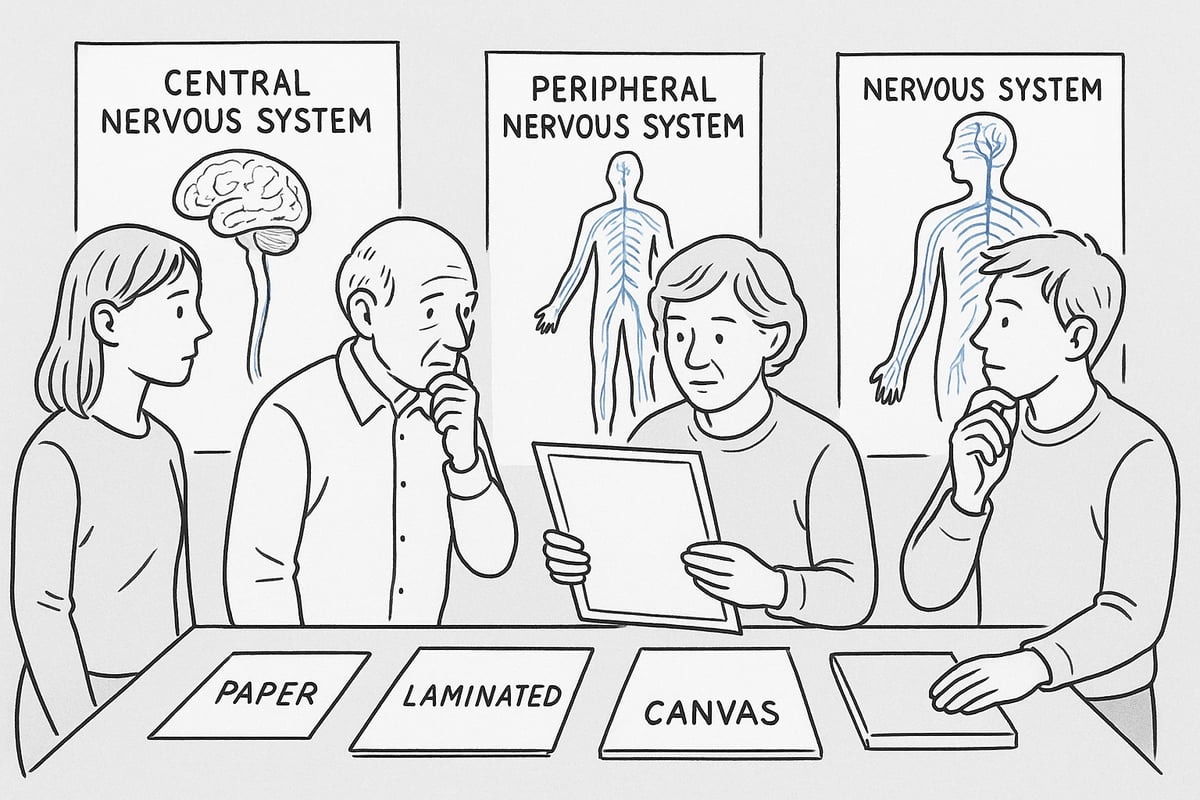
The first step is to clarify who the nerve poster is intended for and how it will be used. Should it support teaching, patient guidance, or perhaps serve as an inspiring decoration in the home? For example, students and professionals often need detailed overviews, while children or patients may benefit from more simplified illustrations.
A nerve poster for teaching should be pedagogically structured so that it supports learning on multiple levels. If you as a student are looking for inspiration on how to best utilize nerve posters in your studies, you can find good advice and resources at For students: learning resources .
Also consider whether the poster will be used alone or in combination with other materials. It may be more beneficial if the nerve poster is integrated into a broader learning environment.
Quality criteria
When choosing a nerve poster, you should always prioritize scientific accuracy. Check whether the poster is based on up-to-date knowledge and has clear source citations. A good nerve poster is developed in collaboration with professionals, so both illustrations and terminology are correct.
Use posters where all anatomical structures are accurately reproduced and where there is no doubt about color codes or designations. Especially in the healthcare sector, it is crucial that a nerve poster does not create misunderstandings among patients or colleagues.
Also, check whether the manufacturer is continuously updating their nerve posters in line with new research results. This ensures that your communication is always at a high professional level.
Materials and format
The choice of material has a major impact on the lifespan and use of the nerve poster. Paper posters are often affordable but less durable in high-traffic environments. Laminated posters can be wiped clean and withstand frequent use, making them ideal for classrooms and clinics.
Canvas posters combine an exclusive look with robustness, while XXL formats can make complex contexts easier to understand for larger groups. Consider where and how the nerve poster will hang before deciding on material and size.
If you have special needs, it may be worth investigating the possibilities for customized solutions with the supplier. This way, you will get a nerve poster that matches your exact purpose.
Design and readability
The design of a nerve poster is crucial to how effectively it conveys knowledge. Bright colors and clear illustrations make it easier to identify nerves and their course. The text size should be appropriate for the target group, so that everyone can read the information without difficulty.
Avoid nerve posters that are overly detailed, as this can make it difficult to get an overview. A well-structured nerve poster balances precision and clarity. Examples of good posters have clear divisions between the central and peripheral nervous systems.
Also think about whether the poster should be able to accommodate notes or markings, which can be an advantage in a teaching context.
Price and availability
The price of a nerve poster varies depending on size, material choice and level of detail. You can expect prices from around DKK 150 for a simple paper version to DKK 1500 or more for large, laminated or canvas-based posters.
Nerve posters can be purchased both in physical specialty stores and online. The online market often offers the widest selection, including the option of specialty posters and larger formats. Compare prices and delivery options before you make your decision.
Remember to choose a nerve poster from a reputable supplier so that you get quality and updated knowledge.
Step-by-Step: How to Use a Nerve Poster Effectively
A nerve poster can transform learning, communication and patient guidance from abstract explanations to concrete experiences. To achieve maximum effect, it is crucial to use the nerve poster strategically in both teaching and practice. Here you will get step-by-step guidance on how to implement the nerve poster so that it becomes a valuable tool in your everyday life.
Location and setup
When using a nerve poster, it is important to consider the placement carefully. The poster should be hung in a location where it is easily visible to the target audience, such as in a classroom, clinic room, or home office. Make sure the nerve poster is hung at eye level so that both children and adults can easily see and interact with it.
- Place the nerve poster in an area with good lighting.
- Avoid covering the poster with furniture or other objects.
- Adjust the height according to the average height of the users.
This deliberate setup makes it easier for everyone to get the full benefit of the nerve poster.
Introduction to the nervous system with the poster
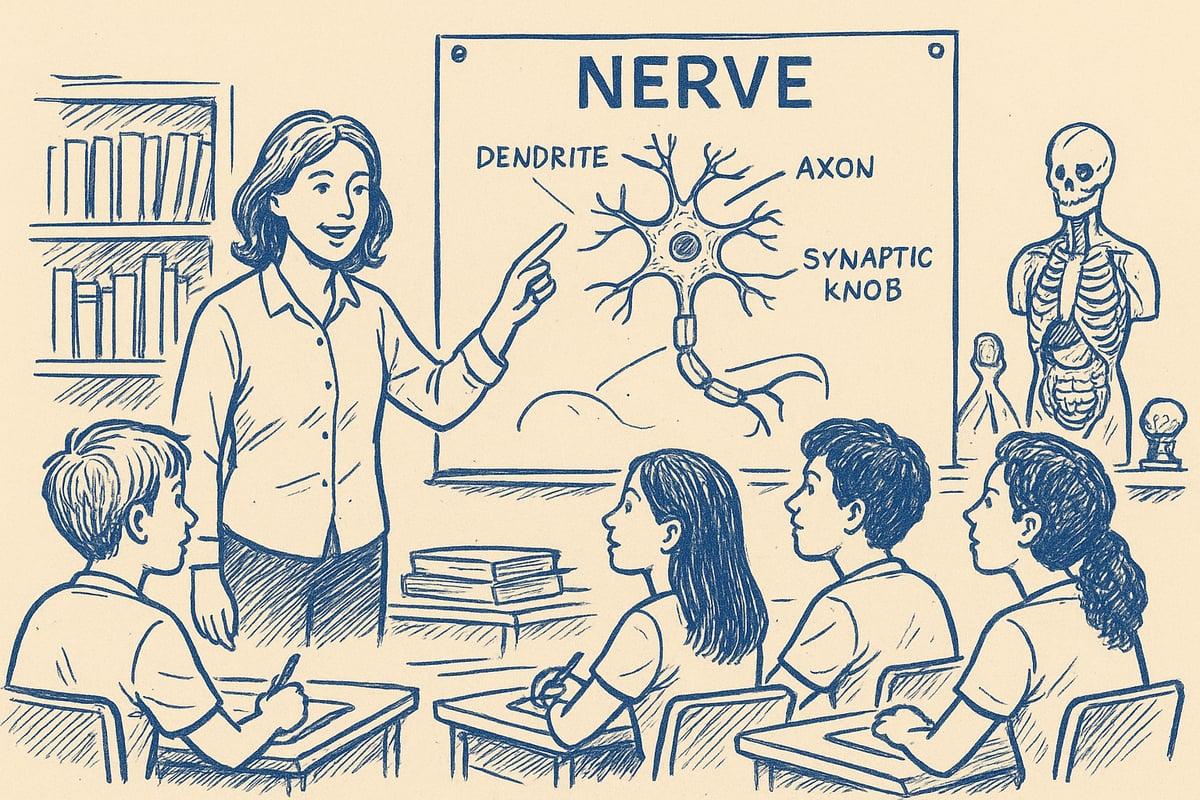
Always start by presenting the Nerve Poster as a key tool for understanding the nervous system. Use the poster to explain the main parts such as the brain, spinal cord and peripheral nerves. Speak at a calm pace and use the poster actively by pointing to the illustrations as you explain.
For children, you can create short stories about how signals travel through the body. For adults or specialists, you can highlight complex connections or disease mechanisms. In this way, the nerve poster becomes an educational anchor point, regardless of the target group.
Interactive learning and communication
To make learning come alive, the nerve poster should be used interactively. Invite students or patients to point to specific areas, ask questions, or discuss how nerves work. Let them find specific structures or pathways on the poster, which strengthens both engagement and understanding.
- Make small quizzes based on the nerve poster.
- Use the poster as a starting point for group work.
- Encourage them to draw their own nerve pathways on copy paper.
The interactive approach makes the nerve poster more than a passive image – it becomes an active learning tool.
Integration with other learning tools
A nerve poster works best when integrated with supplementary materials. Combine the poster with 3D models, digital apps, or videos to provide a more nuanced view of the nervous system. Alternating between different media increases understanding and maintains attention.
For example, you can have students compare structures on the nerve poster with models or virtual simulations. This way, they get both visual and tactile input, which enhances learning.
Follow-up and repetition
Effective use of the nerve poster requires repeated exposure and follow-up. Use the poster to review key concepts, and introduce visual cues to aid memory. Studies show that repetition and visual aids, such as a nerve poster, can significantly increase learning effectiveness. You can read more about this in Learning in School: Factors That Affect Learning Effectiveness .
- Repeat important points at regular intervals.
- Change the focus of the poster to highlight new aspects.
- Use the poster for quick summaries before exams or consultations.
By making repetition a regular part of your teaching, you exploit the full potential of the nerve poster.
Adaptation to individual needs
A nerve poster can be easily adapted to different users and situations. For children, you can use color codes or stickers to highlight nerves, while adults or specialists can benefit from more detailed explanations and notes directly on the poster.
- Differentiate explanations according to age and academic level.
- Use post-its or whiteboard markers for temporary markings.
- Add your own comments to create personal relevance.
This flexibility makes the nerve poster a versatile tool that can be used across disciplines and target groups.
Errors and pitfalls
Although a nerve poster is a powerful tool, there are typical mistakes to avoid. A common pitfall is confusing the course or function of nerves, especially if the poster is oversimplified. It is also important to ensure that the nerve poster is always up-to-date and scientifically accurate.
- Only use posters from reputable sources.
- Replace the poster with new research results.
- Avoid information overload on one poster.
By consciously avoiding these mistakes, you ensure that the nerve poster remains a reliable and effective learning tool.
[Nerve Posters from eAnatomy: Quality and Scientific Accuracy]
When choosing a nerve poster, quality and scientific accuracy play a crucial role in both teaching and patient communication. eAnatomi specializes in delivering nerve posters that meet the highest demands on the market. Below you will gain insight into how eAnatomi works with experts, offers a wide selection and tailored solutions, and ensures access for both private and professional users.
![[Nerve Posters from eAnatomy: Quality and Scientific Accuracy]](https://xqvnmkjynbkcujcrtubi.supabase.co/storage/v1/object/public/article-images/1c904710-ad39-451a-96b0-a69a8f334748/article-1c904710-ad39-451a-96b-skitse-af-et-lyst-kontormilj-hvor-en-gruppe-sundhe-3-s4vfi3.jpg)
Collaboration with experts
At eAnatomi, each nerve poster is developed in close collaboration with doctors, specialists and experienced educators. This ensures that the content of the nerve posters is always up-to-date and based on the latest research. The experts contribute their knowledge of anatomy and pedagogy, so that the posters are both professionally correct and easy to understand for different target groups. The result is nerve posters that enhance both learning and patient understanding.
Wide selection and specialization
eAnatomi offers a comprehensive range where you can find a nerve poster for every need. The selection ranges from classic posters on the central nervous system to detailed overviews of peripheral nerves and specialized topics such as cranial nerves. The posters are available in different sizes and materials, so you can choose the variant that best suits your teaching environment, clinic or private home. Each design ensures that the content of the nerve poster is clear and targeted to the relevant user group.
Customized solutions and large formats
If you need a nerve poster in a particularly large format or with unique illustrations, eAnatomi offers the option of customized solutions. This is especially valuable for institutions, clinics or educational environments that want their own touch on the poster. You can read more about the options for Custom Work and Special Posters at eAnatomi, where individual needs and wishes are met. This ensures that the nerve poster matches both professional and aesthetic requirements.
Global availability and service
eAnatomi makes it easy to access a nerve poster, no matter where you are. With international delivery and customer support in multiple languages, it is possible for both private and professional customers to order posters tailored to their needs. Focus on service and accessibility means that you can always get answers to questions about nerve posters, delivery and material selection. This makes eAnatomi an obvious choice for anyone who wants quality and reliability.
Maintenance and updating of nerve posters
Maintaining and updating a nerve poster is essential for both learning and communication. A well-maintained nerve poster ensures that the information remains clear and easy to understand, whether it is used in teaching, clinic or at home. With the right care and attention, you can extend its lifespan and maintain its professional benefits.
Cleaning and care
To keep your nerve poster looking good and legible, proper cleaning is important. Laminated posters can be wiped down with a soft, slightly damp cloth. Avoid harsh cleaning agents as they can damage the surface.
Keep the nerve poster out of direct sunlight to prevent fading. Hang it in a location without high humidity to prevent wrinkling or discoloration. Roll the poster carefully if it is not to be hung in public, and always use a protective tube or folder.
By following these simple tips, you will extend the life of any nerve poster and ensure that the illustrations remain sharp and clear.
Updating knowledge
It is important to stay up to date with new knowledge when working with a nerve poster. New research results can make older posters obsolete, which can negatively affect learning and communication.
Always check the version and year of publication on your nerve poster, especially if you use it in teaching. Replace the poster when there are significant updates. Variation and updating of visual aids strengthens learning outcomes, which is also emphasized in the report The Effect of Varied Learning on Student Engagement .
By having updated posters, you ensure that both students, patients and professionals receive correct and up-to-date information.
Digitalization and future trends
Digital posters are gaining popularity, and many today choose to combine physical and digital solutions. A digital poster can be easily updated and integrated into online learning platforms, making it suitable for distance learning and interactive learning.
Apps and web-based tools allow you to zoom in on details, create quizzes, and tailor content to different audiences. Digital brainstorming posters can also be quickly shared between students or colleagues.
If you want to keep up with developments, consider a digital version of the nerve poster that can supplement or replace the printed version, depending on your needs.
Environment and sustainability
When choosing a nerve poster, you should also think about the environment. Several manufacturers now offer posters printed on recycled paper or with sustainable colors. This reduces the environmental impact and makes it easier to take responsibility in everyday life.
Old nerve posters should be disposed of properly so that the materials can be reused. Also consider donating used posters to institutions or schools where they can still be of benefit.
An environmentally friendly choice of nerve poster combines professional quality with consideration for the future, so that both learning and the planet receive the best conditions.
The Nerve Poster in Practice: Cases and Inspiration
The use of the nerve poster is wide-ranging, both in education, clinic, home and creative environments. Through concrete cases, you will get inspiration for how the nerve poster can create value and engagement across target groups and professional areas.
Examples from teaching
In teaching, nerve posters are used as a central visual tool. Many teachers find that students understand the structure of the nervous system more easily when they can follow the course of the nerves on a clear nerve poster.
A high school teacher reported that integrating nerve posters into anatomy lessons led to a 30 percent increase in students' exam scores. Combining nerve posters with group work, quizzes, and discussion creates an active learning environment.
For further inspiration, you can read about didactic tools for teachers and get concrete ideas for integrating nerve posters into your teaching.
Clinical application
In clinical contexts, nerve posters are an indispensable tool for both doctors and physiotherapists. When the patient sees a nerve poster, it becomes easier to understand diagnoses, treatment courses and why certain symptoms occur.
Studies show that using nerve posters in patient communication can increase understanding and compliance by up to 25 percent. The doctor can point to specific nerves and explain the connections, making complex explanations more accessible.
Nerve plaque is therefore an important link between healthcare professional and patient, especially during long-term treatments.
Home use and self-study
Nerve posters are also popular for home use, especially among students and parents. Many students hang a nerve poster by their desk to review the main structures of the nervous system before exams.
Parents use nerve posters as an educational tool to explain the functions of the body to children in an easy-to-understand way. Visual aids like nerve posters make learning more fun, and repetition in everyday life strengthens memory.
The accessibility of the Nerve Poster makes it suitable for both individual study and shared learning within the family.
Interdisciplinary collaboration
The development and use of nerve posters often takes place in close collaboration between teachers, health professionals and designers. This interdisciplinary collaboration ensures that the nerve poster is both pedagogical, scientific and visually appealing.
One example is the creation of teaching packages where nerve posters are included together with models and digital resources. Here, each subject group contributes unique perspectives, so that nerve posters appeal to multiple learning styles.
The result is a strong learning environment where the nerve poster functions as a common reference point across subjects and levels.
Inspiration for creative uses
Nerve posters have also found their way into creative environments. They are used as artistic decoration in waiting rooms, workplaces and private homes. Some combine nerve posters with augmented reality technology to create interactive experiences.
Digital solutions are growing in popularity, and reports on the use of digital teaching materials in high school indicate that integrating physical and digital neuroposters can strengthen engagement and learning.
The possibilities are many, and nerve posters can be both a conversation starter and a learning tool in new contexts.
After getting an overview of how nerve posters enhance both learning and communication in everyday life, you can now take the next step and find the right solution for your needs. Whether you teach, work with patients or simply want to understand the nervous system better, it is important to choose materials that are based on high professionalism and up-to-date knowledge. At eAnatomi you will find a wide selection of nerve posters developed in collaboration with specialists, so you get quality and precision.
Read more here Read more here
0 comments