

Have you ever sat with an anatomy book and felt like the details of the musculoskeletal system just slipped from your memory? You're not alone. Many people find it challenging to keep track of muscles, bones, and joints.
The purpose of this article is to guide you step by step on how to learn and remember musculoskeletal anatomy effectively in 2026. Whether you are a student or working in the healthcare sector, anatomical knowledge is essential for both understanding and practice.
Here you will gain insight into the best techniques and strategies that work. From mnemonics and mind maps to digital tools and practical exercises. Read on if you want to know how to best remember the anatomy of the musculoskeletal system.
Understanding the Basic Anatomy of the Musculoskeletal System
Understanding musculoskeletal anatomy is the foundation for anyone who wants to learn how the body moves and functions in practice. Here you will get an overview of the most important components, concepts and challenges you will encounter, as well as why visual learning is crucial when it comes to remembering musculoskeletal anatomy.
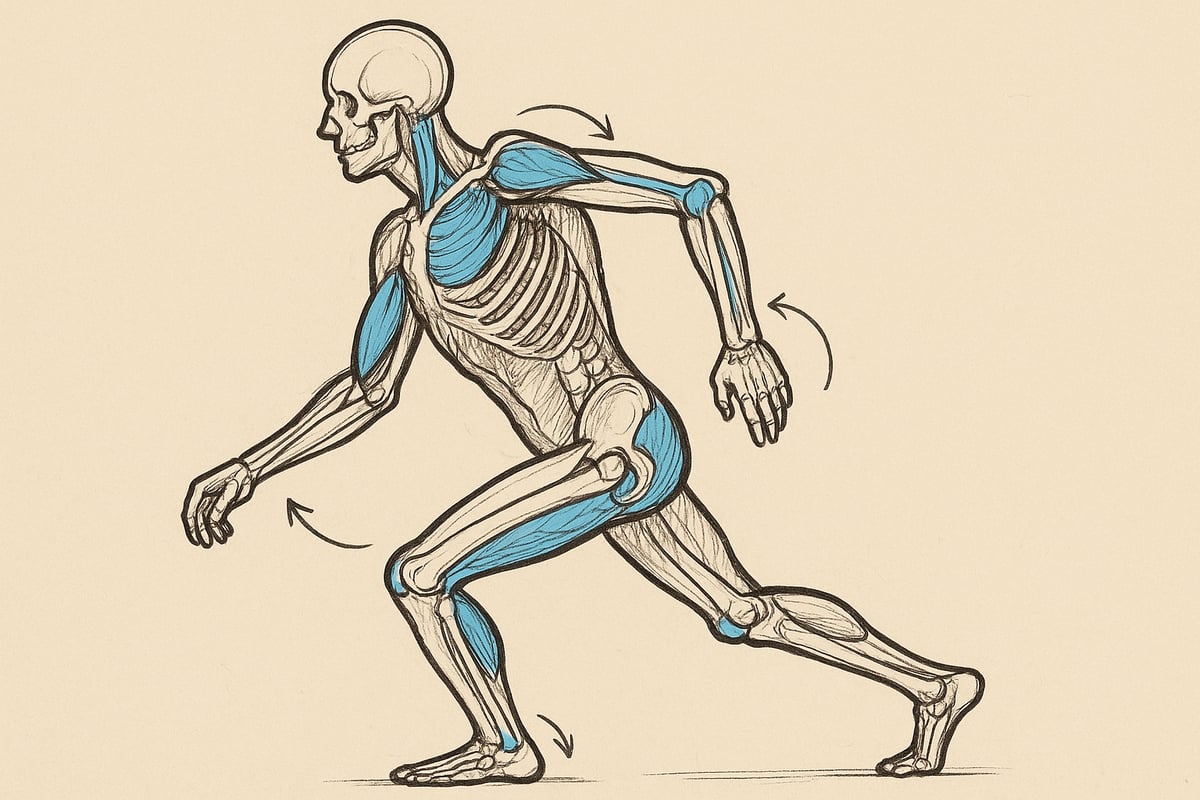
What is the musculoskeletal system?
The musculoskeletal system includes the body's muscles, bones, joints, and tendons. These structures work closely together to make it possible to move, maintain balance, and perform daily activities.
Muscles contract and create movement, while bones form the body's skeleton and serve as support. Joints connect the bones and enable movement, while tendons attach muscles to bones.
When focusing on how to best remember musculoskeletal anatomy, it is crucial to understand how these parts together create the foundation for all of the body's movements.
Central components and their interaction
The central components of the musculoskeletal system work in close cooperation. When a muscle contracts, it pulls on a tendon, which then moves a bone via a joint. The structure of the joint determines what type of movement can be performed, such as bending or rotation.
For example, both the biceps muscle and the elbow joint are activated when you bend your arm. By thinking in terms of examples, it becomes easier to see how musculoskeletal anatomy is about understanding the dynamic relationships between structures.
Anatomical terms and concepts
When you delve into the anatomy of the musculoskeletal system, you will encounter many technical terms. Key terms include flexion (bending), extension (stretching), abduction (movement away from the center of the body), and adduction (movement toward the center of the body).
A good strategy is to create little mnemonics or associate the words with movements you know. In this way, how to best remember musculoskeletal anatomy becomes a process where you connect theory to practice and strengthen your understanding.
Challenges of learning musculoskeletal anatomy
Many students find it challenging to learn and remember all the details of musculoskeletal anatomy. In fact, studies from Danish universities show that up to 70% have difficulty retaining anatomical knowledge.
Typical mistakes include confusing muscles and tendons or forgetting which joints are involved in certain movements. When working with how to best remember musculoskeletal anatomy, it is important to be aware of these pitfalls and look for strategies that strengthen your memory.
The importance of visual learning
Visual tools play a key role in how you best remember the anatomy of the musculoskeletal system. Pictures, models and posters make it easier to create an overview and understand complex relationships.
An effective tool, for example, is a Musculoskeletal Anatomy poster , which can help you visualize muscles, bones, and joints in interaction. By using visual media, you strengthen your ability to recall and apply anatomical knowledge in practice.
Effective Memory Techniques for Anatomy
Learning musculoskeletal anatomy requires more than just reading books. For many students and professionals, it is crucial to use techniques that strengthen memory and make it easier to recall details. When looking for ways to improve how you learn and remember, you can benefit from using several strategies, which we will review here. It is precisely this combination that makes the difference when the question is: how to best remember musculoskeletal anatomy.
Mnemonics and memory rules
Mnemonics, or memory rules, make it easier to store large amounts of information. When it comes to how to best remember musculoskeletal anatomy, mnemonics are a classic method. For example, you can use sentences where each initial letter corresponds to a muscle or bone. A popular mnemonic for the bones of the hand is: "Sharp Lips Press Thin Hands," where each word stands for a bone name.
You can also build your own mnemonics that suit your personal learning needs. The most important thing is to make the rules visual or humorous so that they are easier to remember. For more concrete examples of mnemonics, read Tips for Learning Anatomy .
By using mnemonics, you can quickly get an overview of complex structures and avoid mixing up concepts.
Mind maps and diagrams
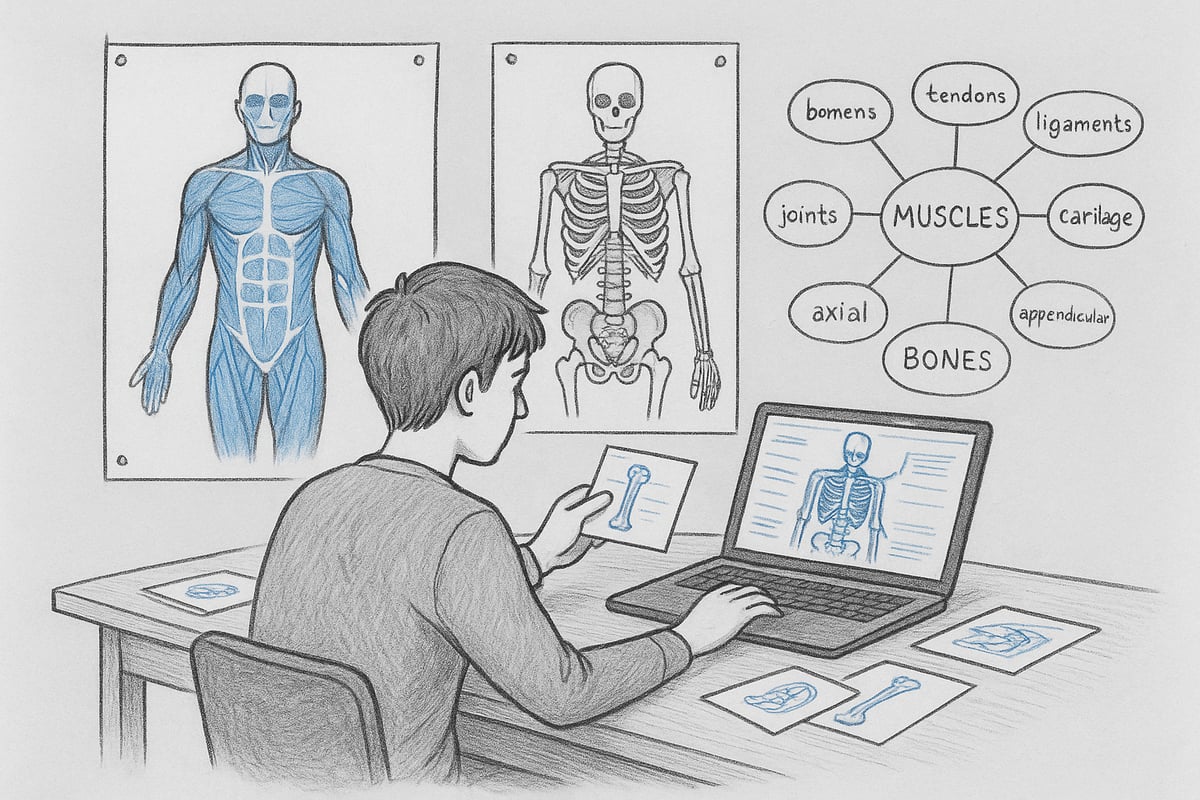
Mind maps and diagrams are excellent tools for figuring out how to best remember musculoskeletal anatomy. By organizing knowledge visually, you get an overview of the connections between muscles, bones, joints, and tendons.
Start by drawing a central circle with the "Musculoskeletal System" in the middle. From here, draw branches out to the major regions, such as the upper limb, lower limb, and back. Under each region, you can add muscles, bones, and joints.
Mind maps help you see connections and remember which parts work together. Diagrams can also be used to illustrate movements, such as which muscles are activated during flexion or extension. Try making your own mind maps and use colors or icons to make them even more memorable.
Flashcards and spaced repetition
Flashcards are an effective tool when the focus is on how you best remember musculoskeletal anatomy. Write questions on one side and answers on the other, such as "Which muscle flexes the elbow?" and "Biceps brachii." Use the cards daily to test your knowledge.
Spaced repetition, or repeated review at increasing intervals, strengthens long-term memory. Digital flashcard apps like Anki or Quizlet can automate this process and remind you when to review. Table of benefits of flashcards:
| Technique | Advantage |
|---|---|
| Flashcards | Quick knowledge test |
| Spaced repetition | Better long-term learning |
With regular use of flashcards, you will find that difficult details stick and your understanding of anatomy becomes more robust.
Active use and teaching of others
One of the most effective methods for remembering musculoskeletal anatomy is to explain the material to others. When you are teaching a fellow student or participating in a study group, you are forced to articulate knowledge clearly.
Peer teaching can take the form of short presentations or discussions where you take turns explaining different anatomical structures. You can also make short quizzes for each other or solve cases together.
This active use strengthens your memory because you hear, say, and think through the material several times. Teaching others quickly reveals where you lack knowledge, so you can target your repetition.
Use of digital tools and apps
Digital tools are playing an increasingly important role when researching how to best remember musculoskeletal anatomy. Apps like 3D anatomy platforms, interactive quizzes, and videos enable learning through multiple senses. Statistics show that students who use digital tools score up to 20% higher on tests compared to traditional methods.
Popular apps offer features such as 3D visualization, gamification, and individual learning plans. Using digital resources means you can practice wherever you are and adapt your learning to your own pace.
By combining digital and traditional methods, you get the best of both worlds and increase the chance of retaining detailed knowledge about the musculoskeletal system.
Step-by-Step Guide: How to Remember Musculoskeletal Anatomy
Mastering musculoskeletal anatomy requires a focused strategy. Many people find that the material quickly becomes overwhelming, but with a systematic approach you can achieve significantly better results. Here you will get a step-by-step guide on how to optimize your learning and ensure that you consistently remember the details. Follow these seven steps and discover how you can best remember musculoskeletal anatomy in practice.
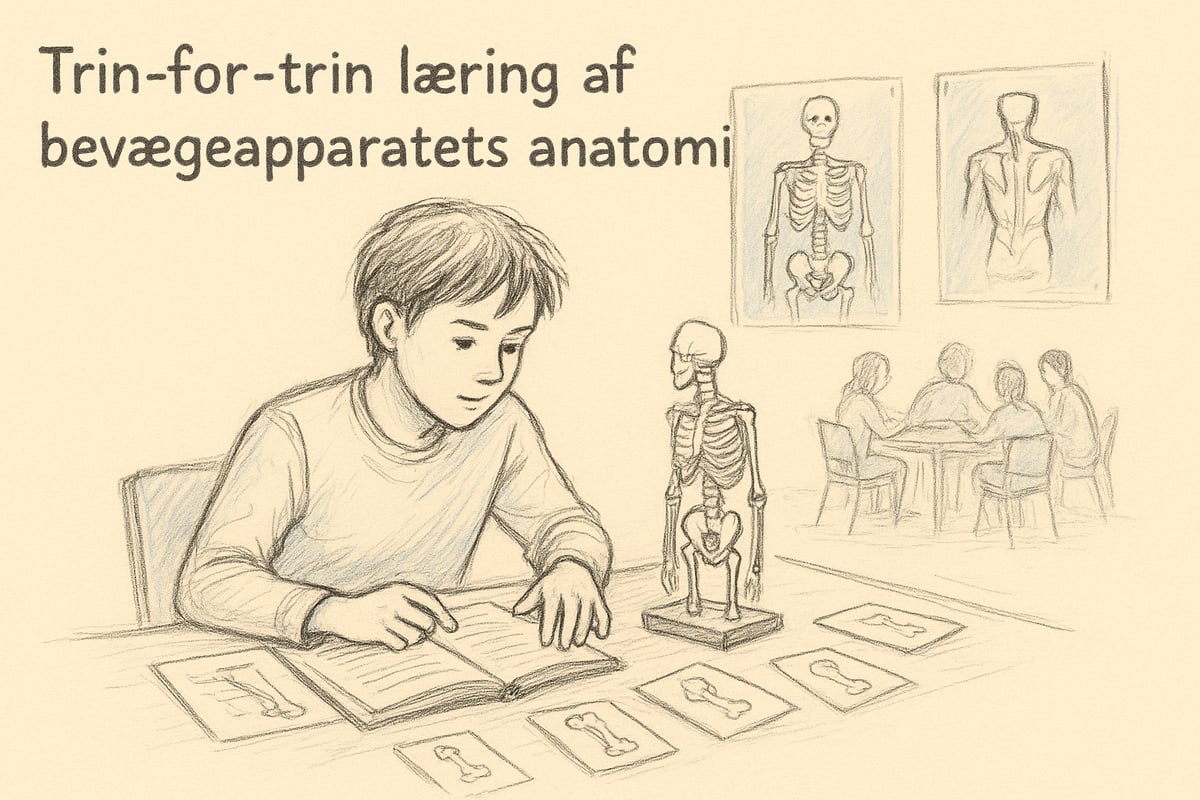
Step 1: Create a solid overview
Start by creating an overview of the entire musculoskeletal system. Before you delve into the details, you should understand the big picture. Outlines, posters, and models can give you a visual foundation. Many people choose to hang a muscle poster for anatomy lessons at home or in the studio.
When you see the whole, it becomes easier to place new information in context. This first step is crucial if you want to ensure that you best remember musculoskeletal anatomy.
Step 2: Divide into smaller units
Divide the material into manageable regions such as upper limb, lower limb and back. This makes it possible to focus on one area at a time and avoid overload. Make small sub-goals and, for example, only review the muscles in the arm before moving on to the leg.
This method helps you maintain an overview and is the best way to remember the anatomy of the musculoskeletal system because you avoid mixing up different areas.
Step 3: Apply active learning
Move from passive reading to active application. Use quizzes, role-plays or simulations to engage with the material. Working on assignments or participating in small cases makes learning come alive.
Active learning forces you to think and act, which proves that you best remember musculoskeletal anatomy when you involve multiple senses and methods.
Step 4: Repetition and repetition
Plan regular repetitions of the material you have learned. Use spaced repetition, where you revisit the material at increasing intervals. This strengthens long-term memory and prevents forgetting.
By repeating the material systematically, you ensure that you best remember the anatomy of the musculoskeletal system and that the knowledge remains fresh and accessible.
Step 5: Combine multiple learning methods
Combine different learning methods: use both visual (drawings, models), auditory (podcasts, lectures) and kinesthetic (hands-on exercises) approaches. Combined exercises make learning more nuanced.
When you activate multiple senses, you experience how you best remember the anatomy of the musculoskeletal system because the brain gets more input to the material.
Step 6: Test yourself continuously
Take short tests and quizzes along the way. Use feedback to identify weak areas and work on them. Self-testing increases your ability to recall knowledge under pressure.
Testing yourself is an effective way to remember musculoskeletal anatomy because it promotes active recall and strengthens understanding.
Step 7: Integrate knowledge into practice
Use your knowledge in practical situations, for example through cases or simulation training. Participate in clinical teaching where you apply anatomy in realistic scenarios.
It is in practice that you really experience that this is how you best remember the anatomy of the musculoskeletal system, because you see the theory come to life and connect it to concrete actions.
Visual and Practical Learning Tools
Understanding and retaining musculoskeletal anatomy requires more than just reading. Visual and hands-on learning tools can make a significant difference when working with this to help you remember musculoskeletal anatomy best. When you involve multiple senses and actively engage with the material, your understanding and memory are significantly enhanced.
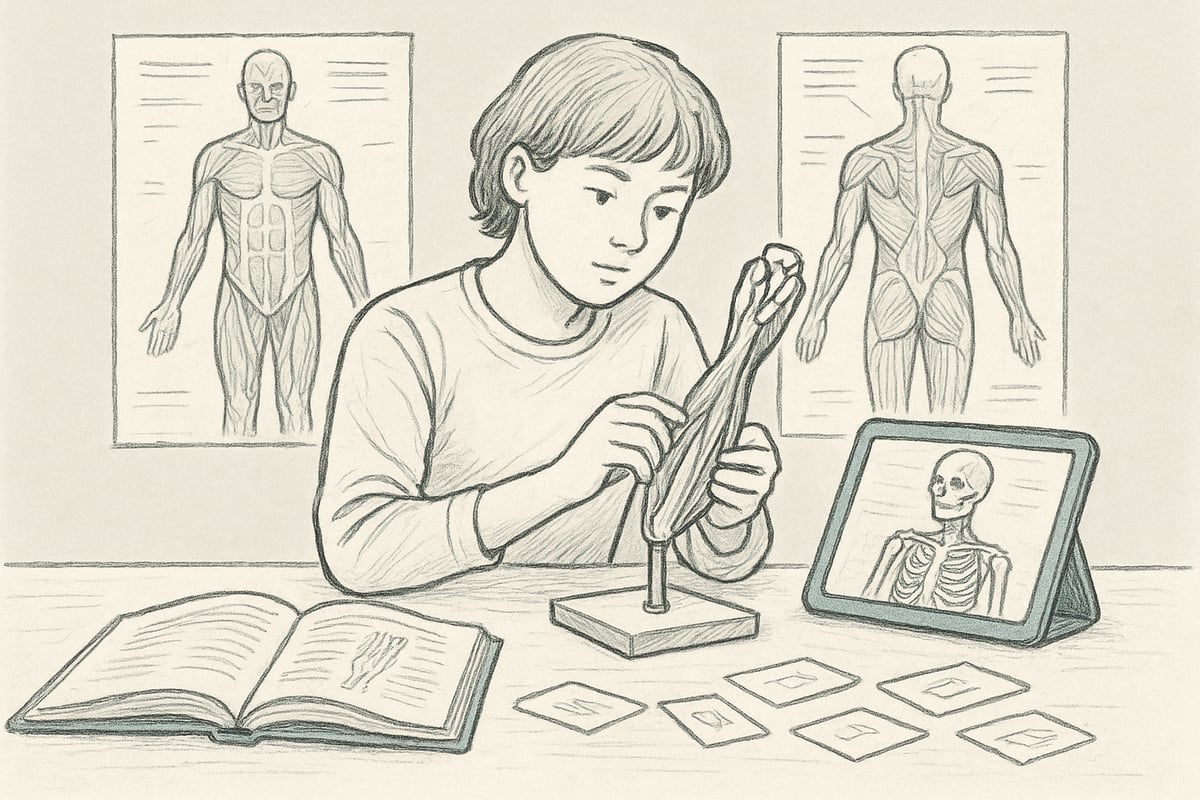
Anatomical models and posters
Physical models and posters are classic and very effective tools when it comes to how to best remember musculoskeletal anatomy. By touching and seeing the anatomical structures from different angles, you get a three-dimensional overview that books and pictures alone cannot provide.
Models allow you to take apart and put parts together, which strengthens your spatial understanding. Posters act as visual overviews that you can quickly consult. Read more about how to use anatomical models in teaching to optimize your learning process.
By combining these tools, you will get a solid foundation for remembering the complex anatomical relationships.
Interactive digital resources
Digital resources like 3D software and web-based platforms have revolutionized how you best remember musculoskeletal anatomy. By rotating, zooming, and exploring the body digitally, you can see exactly how muscles, bones, and joints are connected.
According to international studies from 2025, the use of 3D visualization increases understanding by up to 30 percent. Many platforms offer interactive exercises where you can practice naming or follow anatomical movements in real time.
Digital solutions make it possible to adapt learning to your own pace and level, which strengthens both learning and retention.
Hands-on exercises and dissection
Practical experience is essential to ensure that how to best remember musculoskeletal anatomy is successful. When you actively participate in dissections or do hands-on exercises, both your motor and visual memory are engaged.
Even simple exercises with modeling clay or homemade models can provide a deeper understanding of the relationships between muscles, bones, and tendons. Dissection exercises are often used in teaching to make anatomy tangible and concrete.
Working practically with the material helps you recall details more easily when you need to use them in clinical situations.
Use of video and animations
Videos and animations are invaluable when it comes to ensuring that you remember musculoskeletal anatomy better. Movement and dynamic images make it easier to understand how structures work together in practice.
There are many great YouTube channels and educational videos that cover everything from joint movements to muscle function. Animations can show complex processes in just a few minutes, increasing your understanding and retention.
By combining visual and auditory input, a more vivid and engaging learning experience is created.
Integrating multiple senses into learning
Multisensory learning is one of the most effective tools when the focus is on how you best remember the anatomy of the musculoskeletal system. By combining sight, hearing and touch, both understanding and memory are strengthened.
For example, you can draw anatomical structures, listen to podcasts about anatomy, and work with models at the same time. This approach engages the brain on multiple levels and makes it easier to retain knowledge in the long term.
A varied and sensory-stimulating learning process increases your motivation and makes learning more fun.
How to Maintain Your Knowledge Long-Term
Ensuring that your knowledge of musculoskeletal anatomy remains fresh requires focused effort. Many people find that even thoroughly learned material can be forgotten over time if it is not maintained. Here you will find concrete strategies on how to best maintain and develop your anatomy knowledge in the long term.
Update and maintain your anatomy knowledge
Regular repetition is key to ensuring that you remember musculoskeletal anatomy best. Schedule regular periods where you return to the material so that your knowledge doesn't fade over time. For example, set aside one day a month to review key areas.
It is also important to keep up to date with new research and materials. Use solid reference books such as Anatomical Guide to the Musculoskeletal System , which make it easy to refresh details. By combining repetition and updating, you reduce the risk of forgetting important anatomy.
Adapt learning strategies to your development
To ensure that you are best able to remember musculoskeletal anatomy, you should continually evaluate your learning style. Perhaps visual methods work best for you, or perhaps you learn better through sound and movement. Try different approaches and note which ones give you the most benefit.
Switch between methods to avoid routine and stagnation. Use mind maps for a period of time, then try quizzes or peer-teaching. By varying your strategies, you keep your brain active and strengthen your memory in both the short and long term.
Overcome forgetting with active recall
One of the most effective ways to remember musculoskeletal anatomy is active recall. It involves testing yourself without aids and trying to recreate knowledge from memory. Use daily routines like short quizzes or explaining a topic out loud to yourself.
This method forces the brain to work and makes it easier to retain details. You can also use flashcards or digital apps with spaced repetition to reinforce this process. Active recall helps you identify weak points and target your repetition.
Network and community
Being part of a community makes a big difference when it comes to remembering musculoskeletal anatomy. Join study groups or online forums where you can discuss topics, exchange questions, and learn from others' experiences. Statistics from Nordic universities show that students in communities have a 25% higher passing rate.
Collaborating with others not only provides motivation, but also the opportunity to explain and hear explanations in different ways. This strengthens your understanding and retains knowledge over time. Therefore, seek out both physical and digital networks as a regular part of your learning routine.
Frequently Asked Questions about Remembering Musculoskeletal Anatomy
Learning anatomy can raise many questions. Below you will find answers to the most common questions about how to best remember musculoskeletal anatomy. Each section provides specific advice and tips to help you optimize your learning and retain your knowledge.
How long does it take to learn musculoskeletal anatomy?
The time frame varies greatly depending on your background, study habits, and the methods you choose. For most people, it takes several months to gain a solid overview and remember the details, especially if you follow the advice on how to best remember musculoskeletal anatomy.
Some can learn basic structures in a few weeks, but mastering all the details requires repetition over time. Using visual tools and regular repetition can shorten the learning time significantly.
What mistakes do most students make?
One of the most common mistakes is trying to learn everything at once without structure. Many also skip repetition, which makes it difficult to retain knowledge. To avoid this, it is recommended to use a step-by-step approach, where you break up the material and repeat it continuously.
Additionally, some forget to include practical or visual elements, even though they are crucial for how you best remember musculoskeletal anatomy. Learn from the experiences of others and adjust your strategy along the way.
Is it best to use digital or physical materials?
It depends on your learning style. Digital resources like apps and videos are great for interactive training and visual understanding. Physical models and posters can provide a more concrete overview. Many find that a combination of both gives the best results.
An example is to supplement classic books with musculoskeletal anatomy videos , so you get both the theoretical and visual aspects. Regardless of your choice, think about how you best remember musculoskeletal anatomy in practice.
How can I stay motivated?
Motivation can be strengthened by setting clear goals, tracking your progress, and celebrating small successes. Switch between different learning methods to avoid monotony. Join study groups where you can support and challenge each other.
Reward systems also work for many, especially if you link them to your progress in the area of musculoskeletal anatomy. Remember that variety and community often make learning more fun and effective.
Can I learn anatomy outside of the classroom?
Absolutely, there are many options for self-study and online learning, so you can adapt your pace and method. Digital tools like the Body Anatomy AR app make it easy to train where and when it suits you. Combine your own notes, videos and apps to reinforce understanding.
The best way to remember musculoskeletal anatomy is to vary your learning methods and integrate technology into your daily life. Independent learning requires discipline, but offers great flexibility.
Once you master musculoskeletal anatomy by combining visual models, effective mnemonics, and digital tools, you will discover how much easier it becomes to remember even the smallest details. Whether you are a student or a professional working with anatomy, the right resources can make all the difference to your understanding and learning. For even more inspiring anatomy models, posters, and learning tools that can strengthen your knowledge well into the future, you can read more here:
Read more here
0 comments